
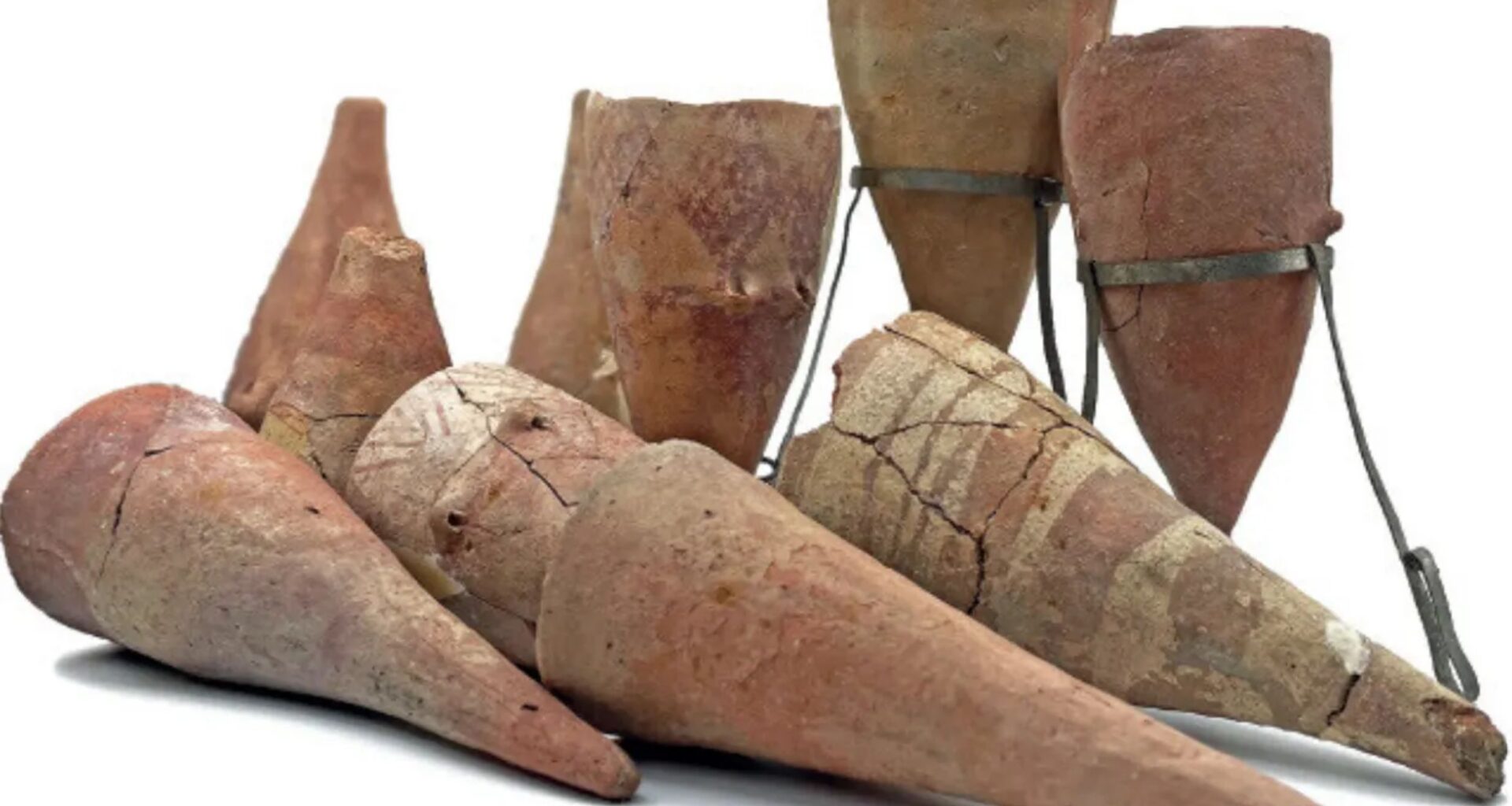
New experiments show that small cone-shaped clay vessels from 6,000 years ago can hold burning beeswax and work as steady lamps for hours.
That finding suggests these objects were likely used to light ceremonies or gatherings, not for everyday cooking or food preparation.
Residue on the cones

A paper pulled 35 intact cones and about 550 fragments from a Jerusalem collection into focus.
By matching soot stains with waxy residue, Sharon Zuhovitzky, an archaeologist at Tel Aviv University (TAU), tied several cones to burning wax.
Inside the pointed bases, Zuhovitzky found soot that stayed on interior surfaces, suggesting the blackening formed before breakage.
With physical traces in hand, TAU researchers could test whether the cones handled hot wax safely during real movement.
Testing the wax lamp
One report tracked cornets, cone-shaped ceramic vessels from that era, as replicas filled with beeswax lit up.
Once lit, the wick drew liquid wax upward, and the burning vapor released heat while leaving the holder’s hand protected.
“In my experimental work, beeswax-filled cornets burned for up to nine hours,” Zuhovitzky said.
Burn time rose and fell with how much wax sat inside, so real ancient lamps likely varied by supply and choice.
Why soot was missing
Lack of soot once undercut the lamp idea, because many excavated cones looked clean inside.
Centering the wick allowed wax to harden around it, keeping the flame from touching the ceramic wall.
In the replica tests, the flame stayed stable in wind and walking, and most vessels ended with little soot.
Without heavy smoke marks as a requirement, archaeologists could judge these cones by wax residues and their archaeological context.
Wax clues elsewhere
Organic residue analysis, chemical testing that spots ancient fats and wax, found heated beeswax traces in cornets from five sites.
Heat changed the wax, and some of its compounds soaked into pottery pores, leaving markers that survived long burial.
Even with that chemical match, many archaeologists kept pushing dairy or metalwork explanations, partly because soot rarely appeared.
Teleilat Ghassul joined chemistry, replicated burning, and ritual context, so the lamp idea rested on more than one clue.
Conserving precious beeswax
Beeswax would have been precious, and unfired clay beehives vanish, so proof comes thousands of years later at Tel Rehov in northern Israel.
Filling the lower tip with clay reduced the wax volume and lifted the flame so its light spread farther.
“This would reduce the volume of wax required and improve the lighting function by positioning the flame higher in the vessel,” said Zuhovitzky.
Such thrift would matter if wax was scarce, and it helps explain why some cones carried ready-made hanging handles.
Suspended lighting design
Pierced handles showed up on many cones, and their sideways holes made sense for threading cord, not decoration.
Running cord through two holes let the lamp hang, while four holes steadied it so wax stayed inside.
Shape mattered too, since long-tailed bases often lacked handles, while flatter bases usually carried them.
Hanging and hand-held options meant light could follow a moving crowd, then linger overhead in a packed room.
Damage with intention
Blow marks on solid bases showed where someone struck a cone hard, yet the first hit did not always break it.
Under a microscope, a matching patina – a slow-building surface film from burial – covered the dents and scratches.
Pits filled with broken fragments sat in places judged sacred, so the authors considered deliberate breaking and burial.
Ritual damage would mean the lamp’s life ended on purpose, and it pulls attention to who made them.
Making cones in minutes
Hands-on replica work at TAU suggested a single cone could be formed in about ten minutes, without a master potter.
Using a round-cut stick, a maker hollowed the clay and thinned walls, then pulled the base longer with wet fingers.
Local minerals in the clay matched soils near Teleilat Ghassul, yet recipes varied, hinting at many makers.
Easy production fits a ceremony where visitors arrived with clay and wax, then fashioned light before joining a night ritual.
Lighting painted sanctuaries
Teleilat Ghassul lies in today’s Jordan, about 3 miles (4.8 kilometers) northeast of the Dead Sea, and it drew crowds.
Colorful wall paintings showed processions and masks, and the authors argued that flame-lit cones suited outdoor movement and indoor rooms.
Clusters of these vessels turned up near painted spaces and a sanctuary area, matching the idea of shared vigils.
Seen this way, the cones stop looking like tools for food or metal, and start looking like ritual equipment.
Cones as ritual lamps
Evidence from residue, replica burning, and context links a simple ceramic cone to communal nights where people carried and shared light.
Future residue tests could sort lamps from other cone uses, and they might show how often wax fueled these gatherings.
The study is published in the Journal of the Institute of Archaeology of Tel Aviv University.
—–
Like what you read? Subscribe to our newsletter for engaging articles, exclusive content, and the latest updates.
Check us out on EarthSnap, a free app brought to you by Eric Ralls and Earth.com.
—–