
A “search and destroy” treatment has been found to halt tumours in some men with incurable prostate cancer.
The early-stage trial investigated a form of radiotherapy on patients who had stopped responding to other treatments. Data show tumours shrunk or stopped growing in 83 per cent of cases.
The phase I trial will need to be followed up with larger studies but experts said the “guided missile” method of radiology had the potential to help more than half of the 10,000 men in the UK diagnosed with advanced prostate cancer annually.
The treatment, known as 225Ac-PSMA-Trillium, uses a “homing device” to seek out cancers all around the body by detecting the presence of prostate-specific membrane antigen (PSMA) on the surface of cancer cells.
The treatment, injected into the blood, is based on imaging techniques that light up tumours, in order to plan future treatment.
Delivers ‘a bullet’
The new technique simultaneously delivers a radioactive payload, which experts have described as delivering “a bullet instead of a light”.
The method, called PSMA radiotherapy, has been called a “search and destroy” method of treatment. It uses a radioactive isotope that binds to a protein on the surface of malignant cells, attacking them without damaging surrounding tissues. Once in contact, it delivers a radioactive payload to kill them.
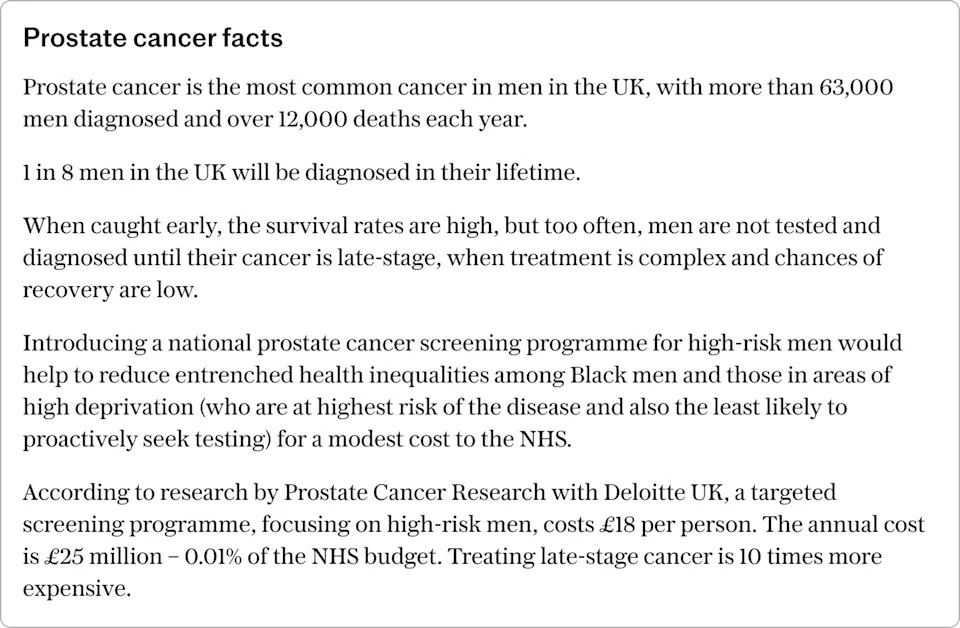
Prostate cancer is the most common cancer in the UK, with 65,000 diagnoses and around 12,000 deaths annually.
Despite this, it is the only major cancer without a screening programme.
The Telegraph is campaigning for the introduction of targeted screening for those most at risk, including black men and those with a family history of the disease.
So far, the UK National Screening Committee has only recommended it for men with particular genes, in draft proposals.
The new advances offer hope for men whose disease is detected late.
The results from the global PanTHa trial, led by Prof Johann de Bono at the Institute of Cancer Research and the Royal Marsden NHS Foundation Trust, are being presented at the American Society of Clinical Oncology (ASCO) Genitourinary Cancers Symposium in San Francisco.
The trial of 50 men, sponsored by Bayer, comes after experts said results from the first cases were “game-changing”.
Prostate-specific antigen (PSA) is another marker of disease that can be elevated when men have prostate cancer. In the trial, 83 per cent of patients saw their PSA level halved, and 58 per cent of patients saw their PSA level drop by 90 per cent.
The drug’s target molecule, PSMA, is present at increased levels on the surface of cancer cells in some prostate cancer patients, and it is these men who can benefit from the treatment.
The clinical trial involved 50 participants with PSMA-positive advanced prostate cancer which has spread around the body, and who had previously received multiple other treatments, including hormone therapies.
Prof de Bono, the trial lead, said: “I’m very pleased to see these positive results from this early trial. This next-generation treatment seeks out cancer cells wherever they are in the body and acts as a guided missile – delivering radiation directly to the cancer to destroy it.
“Once prostate cancer stops responding to hormone therapies, treatment options are really limited for patients. If 225Ac-PSMA-Trillium provides benefit to patients in larger trials, the drug could offer fresh hope to patients who urgently need more effective treatments.”
Overcoming treatment resistence
Prof Kristian Helin, chief executive of the Institute of Cancer Research, said: “Finding new ways to overcome treatment resistance remains a key priority in cancer research, and innovative approaches like this are essential if we are to open up new options for patients with advanced disease.
“By delivering radiation with high precision, this represents a smarter, more targeted approach, with the potential to improve survival while reducing the risk of side effects.
“At the ICR, together with our partner hospital the Royal Marsden, we are researching, developing and trialling radioisotopes such as this for the use of imaging and treating cancer. We are committed to driving this research forward and to translating discoveries from the laboratory into the clinic, so that patients can live longer, healthier lives.”
 ‘Results have been remarkable’
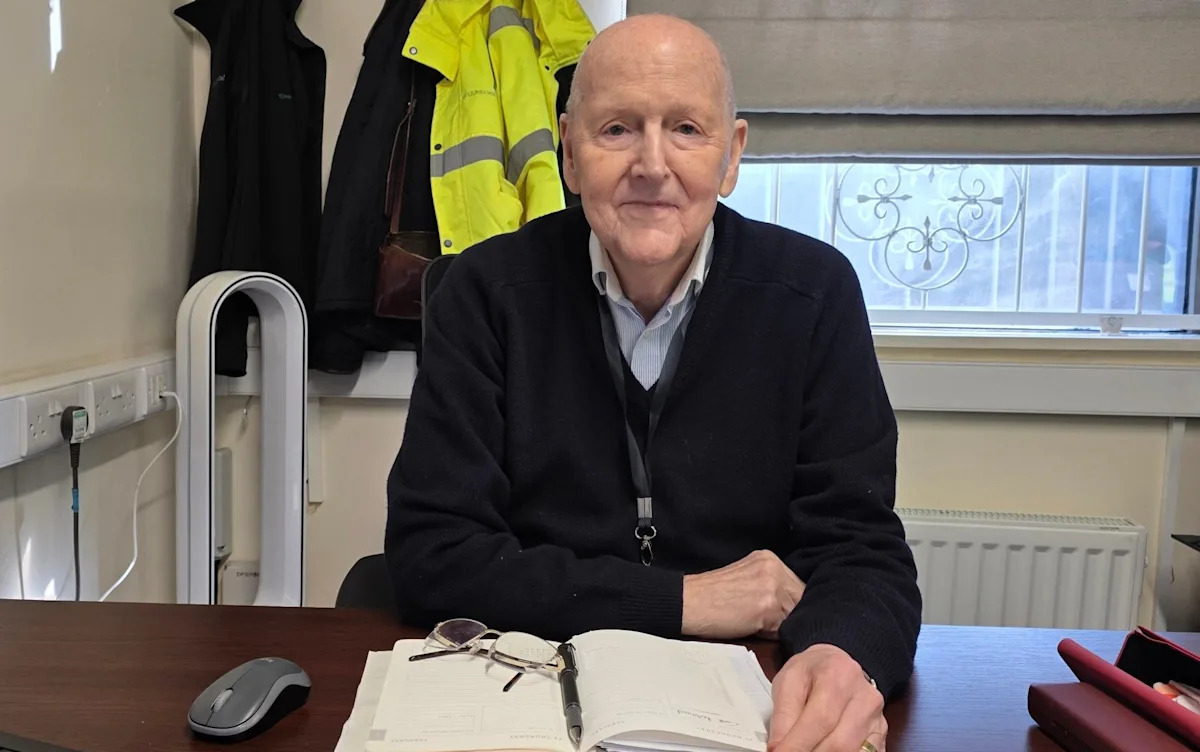
Jim Hilson, 79, from Leicestershire was diagnosed with advanced prostate cancer in 2015 and was told he had around five years to live. After running out of treatment options, he joined the trial at the Royal Marsden in 2024.
He said: “Since being diagnosed with prostate cancer I’ve had chemotherapy, radiotherapy and hormone treatment, but when the treatment stopped working there were no other standard treatments available.
“I joined the trial and the results have been remarkable. Across three consecutive scans, the cancer has remained stable and the treatment has successfully targeted the cancer in my vertebrae and other bones.
“I still run my own businesses, feel well and can do everything I want to do, including driving through France and Spain on holiday. If I hadn’t joined the trial, I honestly don’t know where I would be now.”