

In the Middle East, the most consequential shifts rarely arrive with fanfare.
When Recep Tayyip Erdoğan traveled to Riyadh earlier this month, the visit was framed as routine diplomacy. It was anything but.
Beneath the ceremonial optics, Saudi Arabia and Turkey signaled something far more significant: the quiet formation of the Middle East’s most consequential military partnership since the Camp David Accords — and the first one built entirely outside Washington’s orbit.
No treaty was signed. None was needed. What emerged instead was industrial integration: factories, shipyards, joint production lines, and technology transfer.
These are the foundations of modern military power, and Saudi Arabia and Turkey are now building them together at speed.
The Middle East’s Emerging Industrial Axis
The most meaningful development was not a press conference but a factory floor.
ARES Shipyard, one of Turkey’s most dynamic naval manufacturers, is establishing production facilities in Saudi Arabia. Dammam and Jeddah will soon host assembly lines for patrol vessels and corvettes, alongside maintenance and sustainment infrastructure.
At the same time, Erdoğan confirmed that Saudi Arabia is exploring investment in KAAN, Turkey’s next-generation fighter program.
As of early 2026, Turkish officials say Saudi participation is in the final stages of decision-making, and KAAN has already been publicly showcased with Saudi markings — a deliberate signal of intent.
If formalized, Riyadh would become the first Gulf state with a stake in a fifth-generation aircraft project outside direct US control. That alone marks a strategic departure from decades of near-total Western dependency.
For Israel, the implications are complex. The concern is not imminent confrontation. It is structural change: a wealthy regional actor accelerating aerospace and naval competencies beyond Washington’s traditional oversight mechanisms.
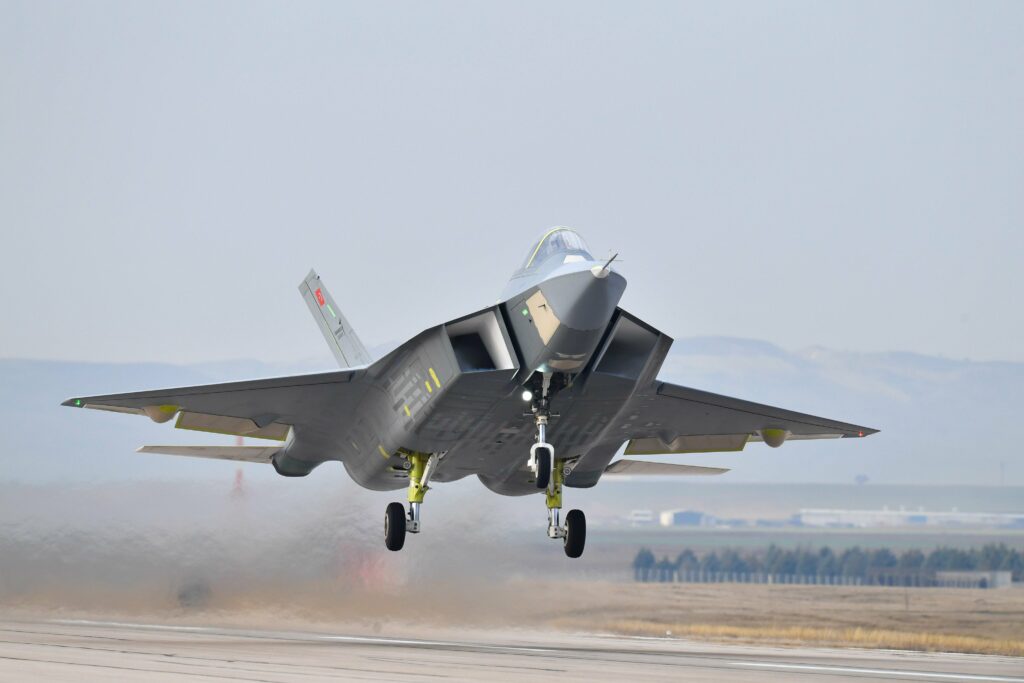 Turkey’s fifth-generation combat jet “KAAN.” Photo: Turkish President Recep Tayyip Erdogan via X
Why This Matters More Than Iran
For years, Israel’s defense planning has focused primarily on Iran’s missile architecture and proxy network. That threat remains central. But Iran’s industrial base is constrained by sanctions, limited financing, and technological bottlenecks.
Saudi Arabia and Turkey represent a different trajectory. Together, they combine Gulf capital, Turkish production experience, political alignment around defense autonomy, and a shared interest in reducing external leverage.
Neither state is seeking direct confrontation with Israel. In fact, quiet coordination between Jerusalem and Riyadh against Iran continues.
But structural military capacity does not require hostile intent to alter the balance of power. It simply requires time, financing, and institutional commitment.
This is the first time in decades that Israel faces the emergence of a potential conventional peer — not because Riyadh seeks conflict, but because it seeks independence.
Washington’s Strategic Blind Spot
The United States continues to celebrate diplomatic frameworks like the Abraham Accords while missing the deeper structural shift: Riyadh is diversifying away from American defense dependence.
Turkey offers what Washington cannot: No congressional delays. No political conditions. No restrictions on drones, ships, or fighter technology. No fear of sanctions or export freezes.
Ankara, in turn, gains access to Gulf financing that could accelerate its defense programs at a critical stage of maturation.
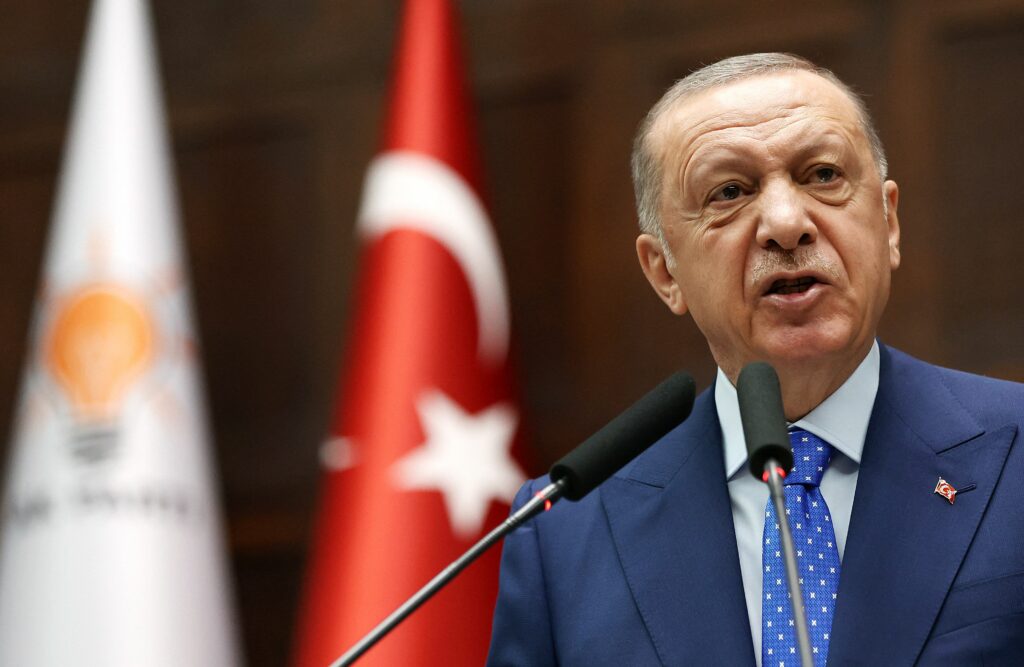 Turkey’s President Recep Tayyip Erdogan delivers a speech. Photo: Adem Altan/AFP/Getty Images
The Qualitative Military Edge Question
Israel’s qualitative military edge has long rested on two pillars: advanced US-backed technology and a fragmented regional landscape without peer industrial competitors.
The Saudi–Turkish partnership erodes both.
Riyadh gains access to advanced systems outside US oversight. Ankara gains Gulf financing to accelerate its defense programs. The Gulf’s largest military spender is no longer tied exclusively to Western suppliers.
While Israel retains unmatched operational integration, combat experience, intelligence capabilities, and layered missile defense systems, over time, expanded Saudi production capacity and Turkish program acceleration could narrow specific gaps — particularly in naval systems, drones, and potentially advanced aviation.
The Drone and Shipyard Revolution
Turkey’s drone industry has already altered battlefields from Libya to Ukraine. Its naval sector is expanding just as quickly.
Saudi Arabia’s decision to localize production alongside Turkish firms introduces increased manufacturing depth, shared intellectual property, sustainment independence, and potential regional export ambitions.
These are the ingredients of a defense ecosystem, not a buyer–seller relationship. Once built, they cannot be undone.
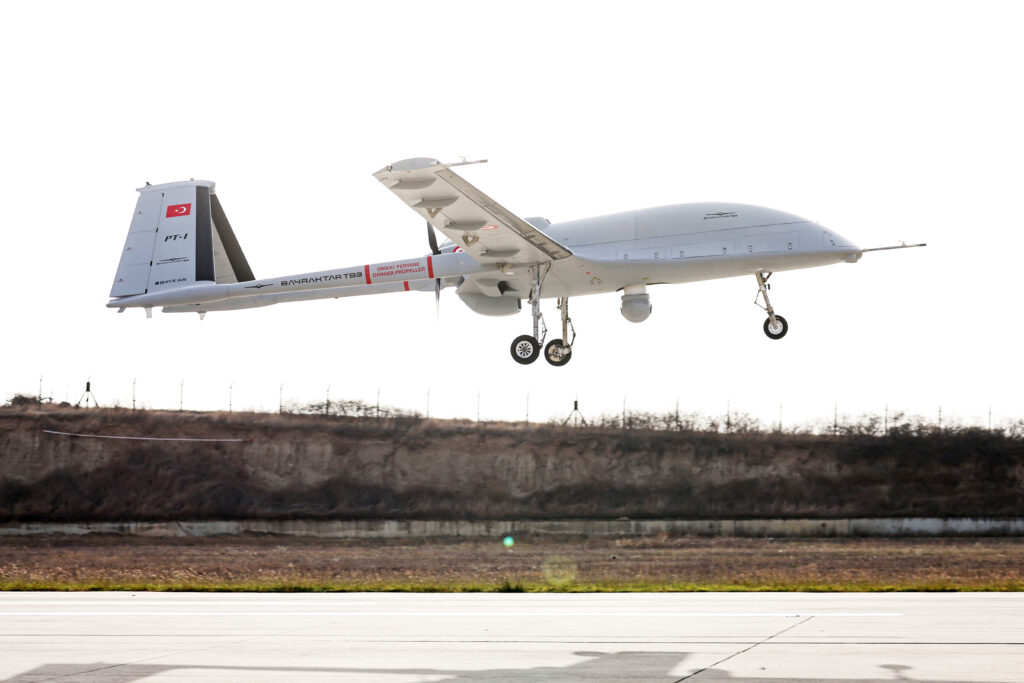 The Bayraktar TB3 drone. Photo: Baykar
A Region in Transition
Israeli planners are unlikely to ignore this trend. Nor should Washington.
The Middle East may be entering a post-American procurement era — one in which regional powers seek autonomy alongside alliances, not instead of them.
Saudi Arabia is not turning against the United States. Turkey is not abandoning NATO. And neither state has declared hostility toward Israel.
But together, they are constructing industrial capabilities that could, over time, compress the technological distance that has long defined the region’s hierarchy.
Iran grabs headlines. The Saudi–Turkish defense machine rewrites the balance of power. And it is already under construction.

Charbel A. Antoun is a Washington-based journalist and writer specializing in US foreign policy, with a focus on the Middle East and North Africa.
He is passionate about global affairs, conflict resolution, human rights, and democratic governance, and explores the world’s complexities through in-depth reporting and analysis.
The views and opinions expressed here are those of the author and do not necessarily reflect the editorial position of The Defense Post.
The Defense Post aims to publish a wide range of high-quality opinion and analysis from a diverse array of people – do you want to send us yours? Click here to submit an op-ed.