
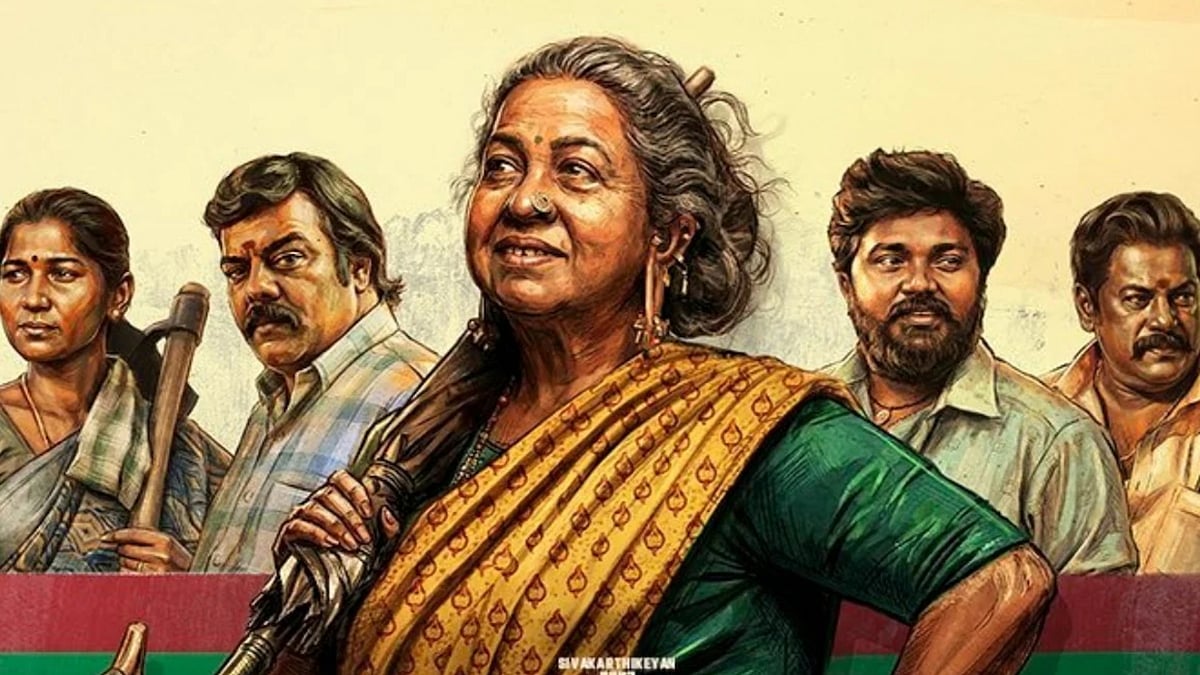
Just as every actor, including Radikaa, serves the film without overshadowing the filmmaker’s vision, composer Nivas K Prasanna and cinematographer Vivek Vijayakumar wonderfully play along with the narrative without ever putting the cart before the horse. Even the various Kamal Haasan songs used throughout the film wonderfully elevate the proceedings and fuel an emotional upheaval. At the same time, the writing effectively brings us back to the story of Pavunuthayi and her family. Sivakumar has used every tool at his disposal to tell the story he wants, and he has used it not just effectively but judiciously.
Of course, a strong message comes to the fore in the final act, like in movies of yore. There are questions asked about the sanctity of marriage. There are points put forth about the need for financial freedom. There are insights alluded to about being a woman in a man’s world. But Sivakumar Murugesan’s strength not just lies in the direct questions he poses, but also in the subtle nudges he peppers throughout the film. When Pavunuthaayi ensures her friends, who are now relegated to the outside of the house, hoping to be fed a meal or two, are fed the choicest of meats, the film tells us how actually caring for someone is completely different from looking after someone. When Pavunuthaayi’s grandson points out how it is stupid to pray for the death of someone at the slightest inconvenience, it reminds us that empathy doesn’t always have to be taught or spelled out. And thankfully, Thaai Kizhavi doesn’t take the conventional line that there are other things in the world more important than money.
At the end of the day, our worth is determined by the money we have. It is what we have that decides who we are in this society. Of course, having the right people around us doesn’t hurt, but money is the ultimate power. Thaai Kizhavi urges women worldwide not just to know how to amass it but also to wield it responsibly. This power, much like energy, can be transformed, and unlike energy, can also be transferred. And if the financial freedom associated with money isn’t exercised to its fullest and used to empower oneself and those around, money is just powerless paper. If this isn’t the most important kizhavi kadhai out there, then what is?