
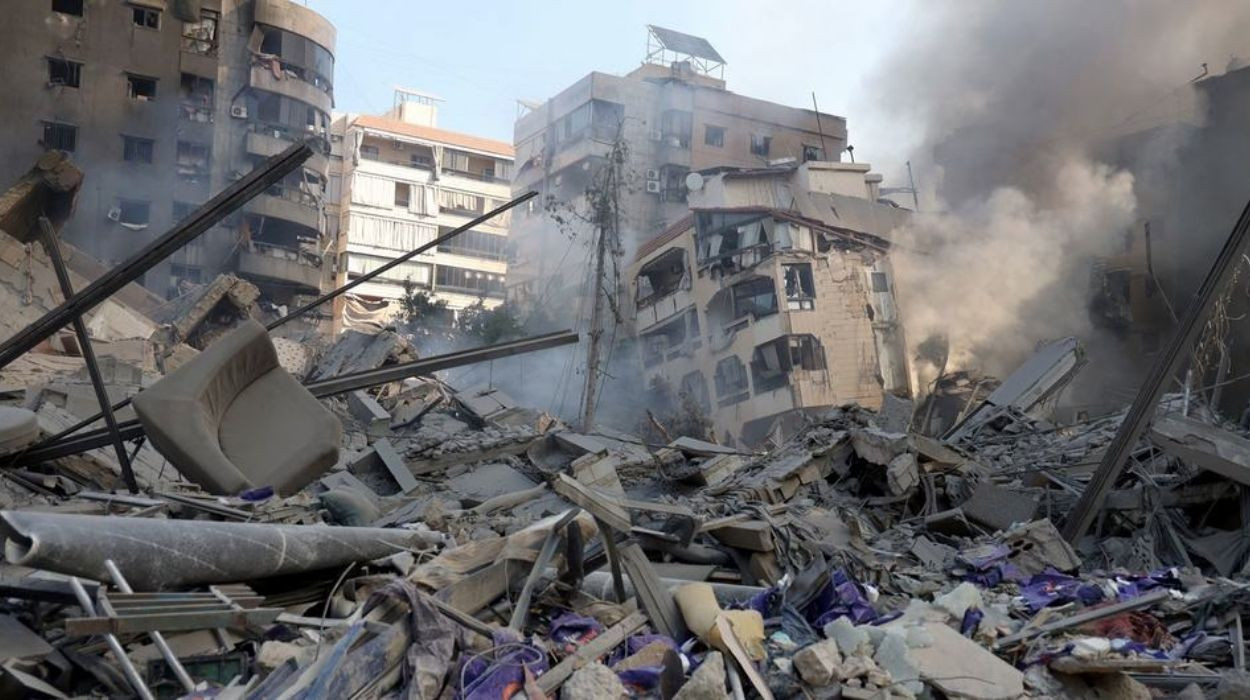
Lebanon’s post-ceasefire rights crisis has emerged as a defining challenge in the fragile aftermath of the November 2024 Israel-Hezbollah ceasefire, placing immense pressure on Beirut to confront entrenched Human Rights failures through decisive State Policy shifts. This crisis, spotlighted by an open letter from Amnesty International and allied organizations on February 25, 2026, to Lebanon’s justice minister and deputy prime minister, underscores a profound disconnect between international expectations and governmental capacity.
The letter’s core demand for “clarity and reparations” reveals how post-conflict civilian suffering lingers without accountability, amplifying calls for Human Rights-centered State Policy overhauls in a nation reeling from economic devastation and political gridlock. As southern Lebanon grapples with the scars of airstrikes, this moment tests whether Beirut can prioritize victim support over perennial inaction, setting precedents for regional stability.
Historical Context of the Ceasefire Breakdown
The November 2024 ceasefire was initially viewed as a pivotal de-escalation in the protracted Israel-Hezbollah conflict, yet its implementation exposed deep fissures in enforcement mechanisms. Reports of continued Israeli operations in the ceasefire’s wake inflicted widespread civilian harm, including destruction of homes, infrastructure, and livelihoods in Hezbollah-stronghold areas. This period transitioned from active warfare to a shadowy phase of violations, where the absence of robust monitoring allowed ambiguities to flourish, directly fueling the current Lebanon’s post-ceasefire rights crisis. Human Rights advocates have long warned that such lapses perpetuate cycles of trauma, demanding that State Policy incorporate proactive safeguards like independent verification teams to prevent recurrence.
Lebanon’s pre-existing vulnerabilities—exacerbated by a 2022 presidential vacuum and hyperinflation—magnified these impacts. Families in affected regions faced not just physical devastation but systemic exclusion from aid, highlighting how State Policy neglect transforms temporary ceasefires into prolonged humanitarian ordeals. The open letter’s urgency stems from this timeline, where months of unaddressed harm have eroded trust in state institutions, pushing Human Rights imperatives to the forefront of national discourse.
Scale and Nature of Civilian Harm
Civilian casualties and displacement from post-ceasefire strikes, though not quantified with precise figures in initial reports, are described as extensive, affecting thousands in southern villages. Homes reduced to rubble, farmlands scorched, and access to essentials severed paint a grim picture of unchecked aggression persisting beyond formal hostilities.
This Lebanon’s post-ceasefire rights crisis manifests in acute Human Rights breaches, from violations of proportionality under international law to the denial of safe return for displaced populations. State Policy must evolve to include rapid damage assessments and compensation frameworks, yet bureaucratic inertia has left victims in limbo.
The psychological toll compounds physical losses, with communities reporting heightened anxiety and intergenerational trauma amid ongoing border tensions. Human Rights frameworks like the UN Guiding Principles on Internal Displacement emphasize state obligations here, obligations Beirut has flouted through delayed responses. Integrating these into State Policy could mitigate long-term societal fractures, but current trends suggest a deepening chasm between rhetoric and reality.
Economic Ramifications and State Capacity
Lebanon’s economic meltdown, with poverty engulfing over 80% of the population, intersects catastrophically with the Lebanon’s post-ceasefire rights crisis, rendering State Policy reforms not optional but existential. Reconstruction demands in southern Lebanon could exceed billions, straining a treasury crippled by debt and corruption scandals like the 2020 Beirut port explosion. Victims require not just reparations but sustained support—medical care, housing, and income restoration—areas where Human Rights standards mandate state leadership. The open letter implicitly critiques this shortfall, urging
“the Lebanese government must provide clarity and reparations”
to break the impasse.
Foreign aid from Gulf states like Saudi Arabia and the UAE, often tied to governance benchmarks, offers a pathway, yet political paralysis hampers absorption. State Policy must prioritize anti-corruption measures and transparent fund allocation to harness these resources effectively for Human Rights recovery. Without such pivots, economic despair risks fueling unrest, echoing the 2019 “thawra” protests and destabilizing the post-ceasefire equilibrium further.
Legal and International Obligations
Under international humanitarian law, Lebanon bears duties to protect civilians and seek redress for violations, duties amplified post-ceasefire when hostilities ostensibly end. The Lebanon’s post-ceasefire rights crisis challenges these norms, as State Policy lags in establishing accountability mechanisms like independent commissions. Human Rights bodies advocate for reparations funds modeled on global precedents, such as those for Bosnian war victims, financed via international pledges or asset freezes. This approach aligns with UN Resolution 1701’s calls for southern disarmament and security, linking justice to broader peace.
The silence from key actors post-letter amplifies the void, where
“Since a ceasefire went into effect between Hezbollah and Israel in November 2024, the Israeli [actions have caused harm]”
contextualizes the urgency without direct rebuttals. Lebanon’s non-ratification of the ICC Rome Statute limits external probes, placing the onus on domestic State Policy to uphold Human Rights. Regional parallels in Syria and Yemen illustrate the perils of inaction, urging Beirut toward preemptive compliance.
Societal and Political Repercussions
At the societal level, the Lebanon’s post-ceasefire rights crisis erodes communal cohesion, particularly in Shiite-dominated south where Hezbollah wields influence. Displaced families’ pleas for aid strain sectarian ties, potentially igniting protests against perceived elite indifference. Human Rights education and community dialogues, embedded in State Policy, could foster resilience, countering narratives of abandonment. Yet, caretaker governance’s legitimacy deficit perpetuates delays, risking radicalization among youth facing bleak futures.
Politically, this crisis intersects with stalled presidential elections and cabinet infighting, where State Policy paralysis shields perpetrators. Human Rights victories here could rebuild legitimacy, signaling a break from impunity cultures that define Lebanese politics. International pressure, via UN Human Rights Council sessions, bolsters this, but domestic will remains the linchpin.
Pathways to Reparations and Reform
Crafting reparations demands a multi-tiered State Policy strategy: immediate cash transfers, phased reconstruction, and judicial probes. Human Rights experts propose victim registries and blockchain-tracked funds to ensure transparency, addressing corruption head-on. The open letter’s call for clarity suits this blueprint, transforming critique into actionable governance. Collaborations with NGOs for on-ground delivery could bypass state bottlenecks, piloting scalable models.
Internationally, leveraging Paris Conference pledges or new donor summits ties aid to milestones, enforcing State Policy accountability. Human Rights monitoring by OHCHR rapporteurs would provide oversight, pressuring compliance without sovereignty erosion.
Challenges in Implementation
Foremost among hurdles is evidentiary collection amid destroyed sites and restricted access, demanding forensic investment beyond Lebanon’s means. State Policy must facilitate NGO teams, as Amnesty has deployed, to document claims rigorously. Economic divestment from essentials diverts justice budgets, perpetuating the Lebanon’s post-ceasefire rights crisis.
Politically, vested interests resist probes that implicate allies, mirroring port blast stalls. Human Rights advocacy must counter this through public campaigns, embedding demands in national dialogue.
Regional and Global Parallels
This crisis resonates across the Middle East, where post-conflict Human Rights vacuums invite opportunism. In Gaza and Yemen, similar State Policy failures highlight patterns, urging collective GCC-EU frameworks for Lebanon. Ethical business influxes from Saudi locales could model reconstruction, prioritizing local firms over foreign chains.
Globally, 2026’s human rights ledger—in Ukraine or Sudan—mirrors these stakes, positioning Lebanon as a testbed for adaptive State Policy.
Long-Term Stability Imperatives
Sustaining ceasefire gains hinges on resolving the Lebanon’s post-ceasefire rights crisis through Human Rights-infused State Policy. Judicial independence, economic stabilization, and inclusive governance form the triad. Bold leadership could catalyze this, redeeming state credibility.
Community-led initiatives, backed by policy, promise grassroots healing, preventing relapse into violence. International solidarity remains vital, but Lebanese agency defines success.
Innovation in Human Rights Delivery
Emerging tech like AI-driven damage mapping offers State Policy tools for precision aid, enhancing Human Rights efficacy. Partnerships with translation platforms ensure multilingual outreach, vital for diverse Lebanon.
Capacity-building via World Bank programs targets justice sectors, embedding reforms durably.
Conclusion Toward Justice
Ultimately, transcending Lebanon’s post-ceasefire rights crisis demands visionary State Policy that honors
“the Lebanese government must provide clarity and reparations”,
forging a just future from ashes.