
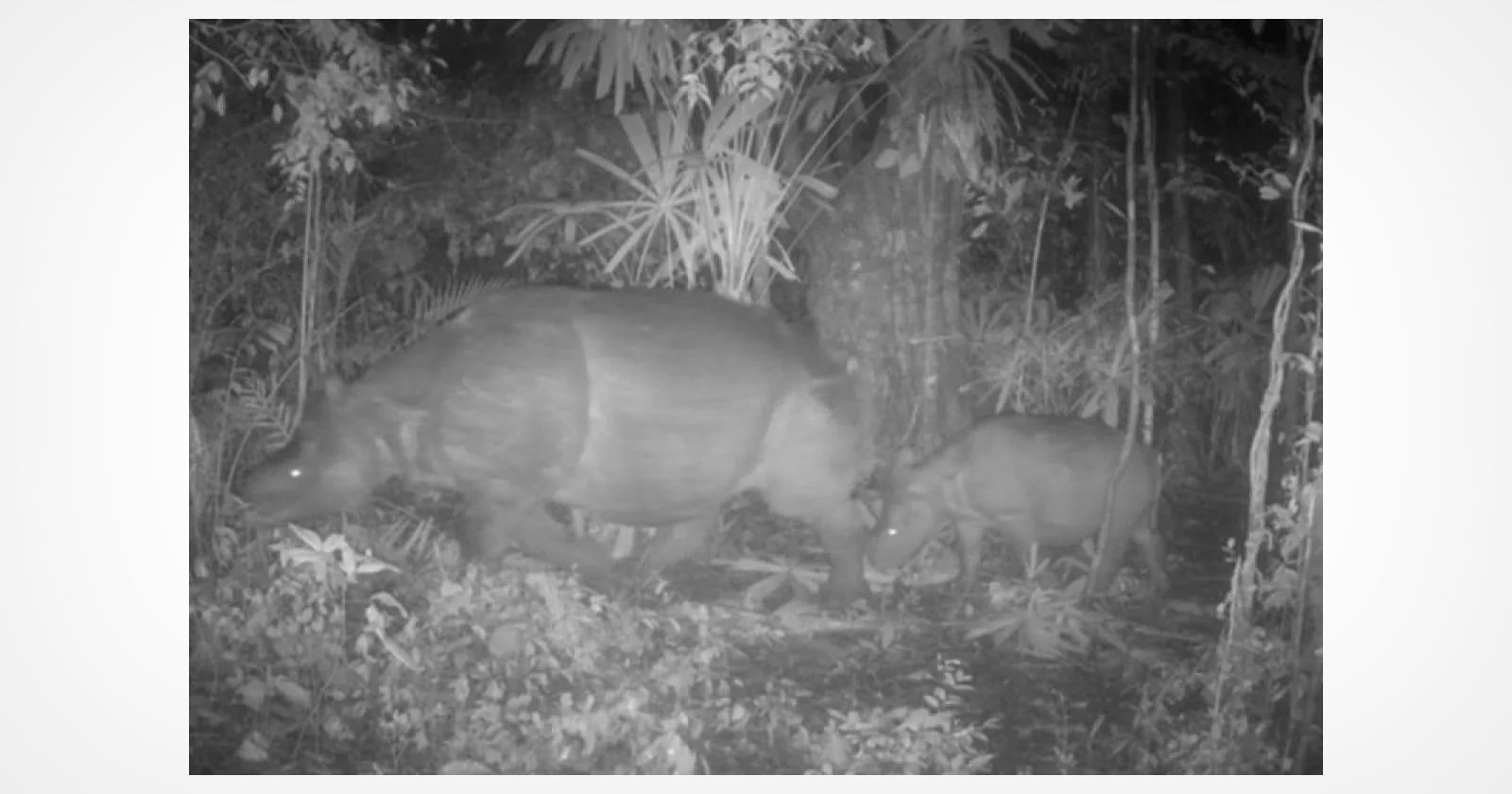
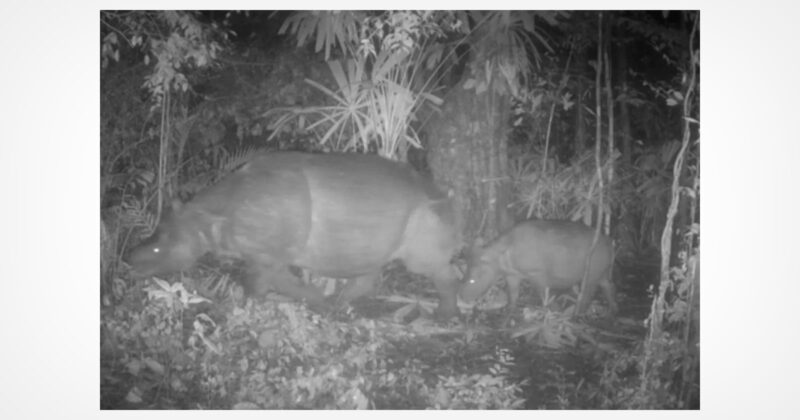
Conservation efforts for the critically endangered Javan rhinoceros (Rhinoceros sondaicus) have yielded promising results with the recent sighting of a female and her newborn calf in Ujung Kulon National Park in Indonesia, the critically endangered species’ last remaining natural habitat.
The sighting, captured via camera trap on January 29 at 10:17 PM local time, represents the first recorded birth of 2026 and offers renewed optimism for the survival of one of the world’s rarest large mammals.
As reported by Antara News, officials from Indonesia’s Ministry of Environment and Forestry confirmed that the mother is likely “Arum,” an adult rhinoceros previously monitored in the park. The calf, estimated to be less than five months old, is a new addition to the population. With fewer than 80 Javan rhinos believed to exist in the wild, all confined to Ujung Kulon, every new birth is considered a significant milestone for conservation.
Javan Rhinoceros: One of the World’s Rarest Species
The Javan rhinoceros is considered the rarest of all rhino species, with fewer than 80 individuals remaining in the wild, all confined to Ujung Kulon National Park on Java’s western tip. Once widespread across Southeast Asia, including Vietnam, Thailand, and Malaysia, the species has suffered dramatic population declines over the past century due to habitat loss, poaching, and human encroachment. Unlike other rhinos, Javan rhinos are largely solitary and highly elusive, making them difficult to monitor and study.
This species has a single horn, and adults can weigh between 900 and 2,300 kilograms (about 2,000 to 5,000 pounds). They primarily feed on a variety of leafy plants, shoots, fruits, and small branches, playing a key ecological role in maintaining forest biodiversity.
Habitat loss is the most pressing threat, historically driven by agricultural expansion, logging, and settlement. Poaching has also contributed to their near-extinction, primarily for their horns, which are prized in traditional medicine despite being made of keratin. Conservation efforts over the past few decades, including strict protection of Ujung Kulon and intensive monitoring programs using camera traps, have helped stabilize the population.
The recent sighting of a mother and calf not only signals successful reproduction but also serves as a reminder of the fragile balance required to preserve a species teetering on the brink of extinction. Protecting this population is crucial not only for biodiversity but also as a symbol of Indonesia’s commitment to conserving its unique natural heritage.
Conservation Efforts and Future Monitoring
“This recording demonstrates that the habitat in Ujung Kulon remains well-preserved,” said Satyawan Pudyatmoko, Director General of Natural Resources and Ecosystem Conservation.
“Strong and consistent protection, along with collaboration among multiple stakeholders, has enabled the Javan rhinoceros to reproduce naturally.”
The Ministry of Forestry and Ujung Kulon National Park authorities plan to continue intensive monitoring of the mother and calf, alongside broader efforts to protect the park’s endangered species. Measures include strengthened patrols, technology-based surveillance, habitat management, and collaboration with conservation partners, non-governmental organizations, law enforcement, local governments, and communities.
Pudyatmoko emphasized the importance of continued public support for the species’ survival, noting that the Javan rhinoceros is both a national treasure and a symbol of Indonesia’s commitment to biodiversity.
“We urge all parties to support preservation efforts to ensure the species endures for future generations,” he said.
The sighting adds to a growing body of evidence that targeted conservation initiatives and habitat protection can contribute to the gradual recovery of species on the brink of extinction.
Image credits: TNUK/Ujung Kulon National Park Service, ANTARA/Handout–Ministry of Environment and Forestry, Ministry of Forestry Indonesia