
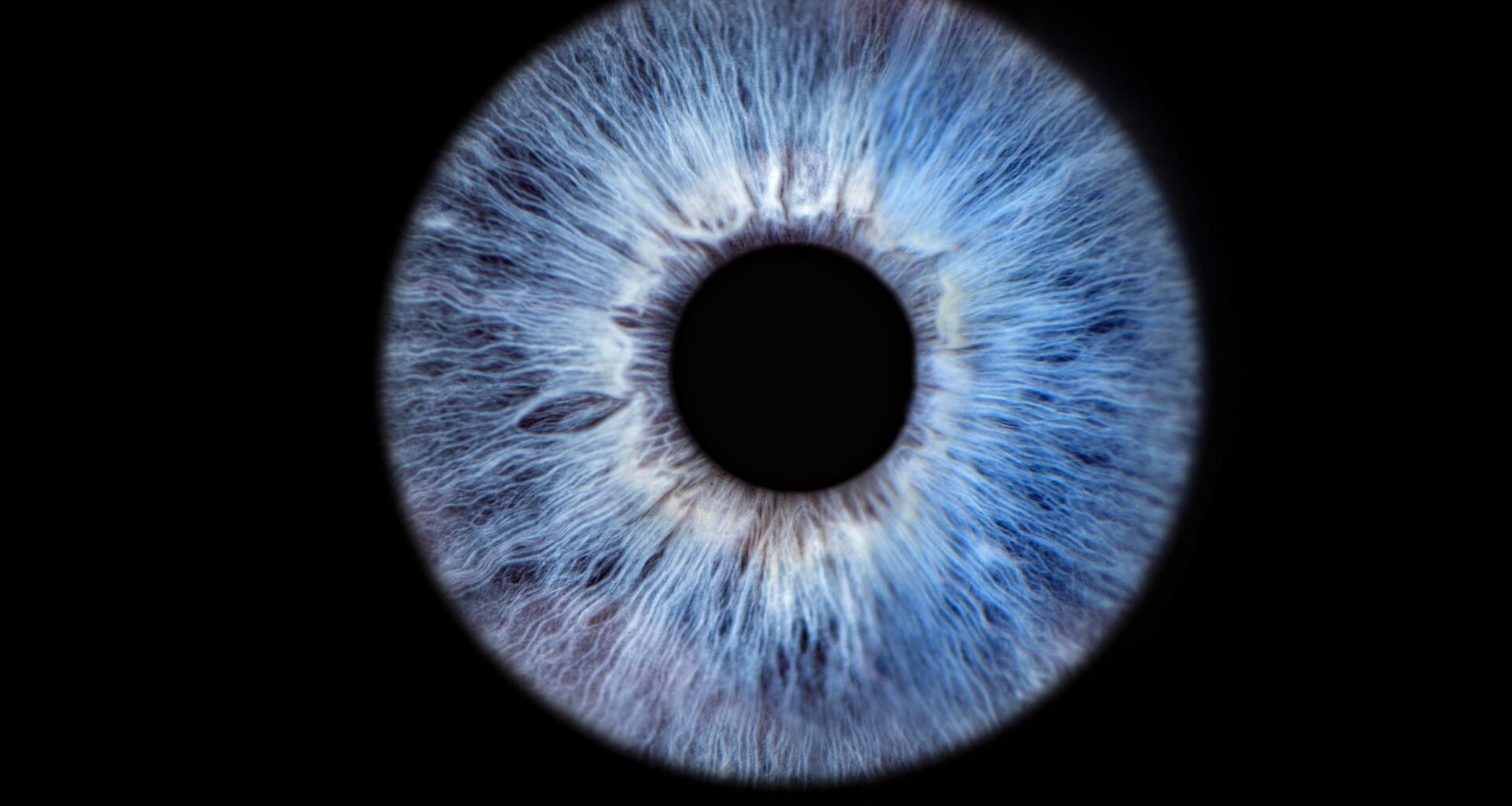
What if the story of your eyes begins with just one? New research suggests that all vertebrate eyes – including our own – evolved from a single midline light-sensing organ that once sat atop an ancient ancestor’s head.
Instead of starting as two separate structures, vision may have grown out of one central “cyclops” eye.

By comparing light-sensitive cells across living animals, scientists reconstructed this lost structure and showed that modern retinas descend from it.
The work by a team at Lund University indicates that this ancestral eye was not a simple light patch, but a complex organ with multiple photoreceptors and neural connections.
That built-in complexity may have allowed evolution to split one median eye into two image-forming eyes, reshaping an early brain sensor into the visual systems vertebrates use today.
Humans go from one eye to two
Far back in animal history, the proposed ancestor lived like a small, worm-like filter feeder that mostly stayed put. A calmer lifestyle reduced the need for steering, easing the evolutionary pressure to maintain paired eyes.
“We only know that the organism later lost them,” said study co-author Dan-E Nilsson, a biologist at Lund University.
After that loss, the remaining midline cells formed a simple median eye that sensed day, night, and body orientation.
Later, as the lineage returned to active swimming, the need for paired image-forming eyes re-emerged. During development, parts of the median eye spread sideways, transforming one central organ into two visual organs.
In the research, the authors argue that early vertebrate relatives split this structure into paired retinas while leaving behind a smaller remnant.
This scenario links modern eyesight to an older light-sensing tool that once sat above the head rather than along the skin.
The retina began as brain tissue
In embryos, the retina does not form from surface skin. It grows directly out of early brain tissue, becoming the light-sensing layer at the back of the eye.
The lens, by contrast, develops from skin-like surface cells, meaning vertebrate eyes begin as extensions of the brain with added optical parts layered on top.
“The film of our eyes – the retina – developed from the brain, whereas the eyes of insects and squid originate in the skin on the sides of the head,” said Nilsson.
That origin helps explain why vertebrate eyes are wired in stacked, brain-like layers. Instead of functioning as a simple surface sensor, the retina processes contrast, motion, and light intensity before signals even reach deeper brain centers.
The brain’s hidden light sensor
In the brain, the pineal gland, a small organ that helps regulate sleep timing, may be the median eye’s remnant.
The pineal gland helps align sleep with night by releasing the hormone melatonin, a chemical signal that tells the body it is dark.
Humans no longer use that structure to see, but light still changes its activity through signals from the eyes.
“It’s mind-boggling that our pineal gland’s ability to regulate our sleep according to light stems from the cyclopean median eye of a distant ancestor 600 million years ago,” said Nilsson.
An ancient clock still runs
Bright morning light cuts melatonin release, so the body treated daytime as a signal to stay alert.
Morning light does more than brighten the sky – it flips a biological switch. As sunlight reaches the eyes, melatonin levels fall, and the body shifts into alert mode.
Signals from the retina travel to a small brain clock that keeps time for the body. That clock then directs the pineal gland, telling it when to release melatonin after dark. The cycle repeats every day, tying sleep to the rising and setting of the sun.
In constant darkness, the internal clock keeps ticking, but it slowly drifts without those daily light cues.
Even modest late-night light can interfere, lowering melatonin and pushing sleep later into the night – and the next morning.
An ancient light-sensing system that once helped a simple organism track day and night still governs when we feel awake, tired, and ready for rest.
How the retina processes light
Inside the retina, signals moved through stacked layers, so the eye started interpreting contrast and motion before the brain joined in.
Rods and cones turned light into chemical changes, and downstream neurons converted those changes into electrical spikes.
Between those layers sat bipolar cells, relay neurons that pass signals between layers, linking older circuits into one pathway.
“For the first time, we now also understand the origin of the neural circuits that analyze the image in our retina,” said Nilsson.
Rebuilding vision from old parts
Most animal eyes rely on one main kind of light-sensing cell, but vertebrate retinas mix two older cell families.
One family became rods and cones, while another supplied many inner neurons that route signals toward the brain.
Lateralizing a median eye that already held both families could have solved that wiring problem without inventing new parts.
Such reuse explained why the pineal gland and retina share many cell features, even though one no longer forms images.
Rebuilding the first human eye
Still, this is a reconstruction, not a fossil snapshot, so the proposed cyclops remains an evidence-based stand-in.
Strong tests will compare light-sensing cell genes across animals to see whether pineal and retinal cells match the predicted lineages.
Finding similar circuits in early-branching vertebrates, especially jawless fish, would tighten the link between a median eye and paired retinas. Clearer evidence could also show where the story fails, since evolution often reaches similar solutions by different routes.
Seen as a whole, the model reframes the eye as a repurposed brain sensor shaped by shifting lifestyles over deep time.
Better maps of shared cell types could guide research on sleep disorders and eye disease – without pretending that humans were inevitable.
The study is published in the journal Current Biology.
—–
Like what you read? Subscribe to our newsletter for engaging articles, exclusive content, and the latest updates.
Check us out on EarthSnap, a free app brought to you by Eric Ralls and Earth.com.
—–