
Artificial intelligence has been flagged as a disruptive force for India’s services economy, particularly the software sector, but warnings of a doomsday scenario have been played down by former Reserve Bank of India Governor Raghuram Rajan.
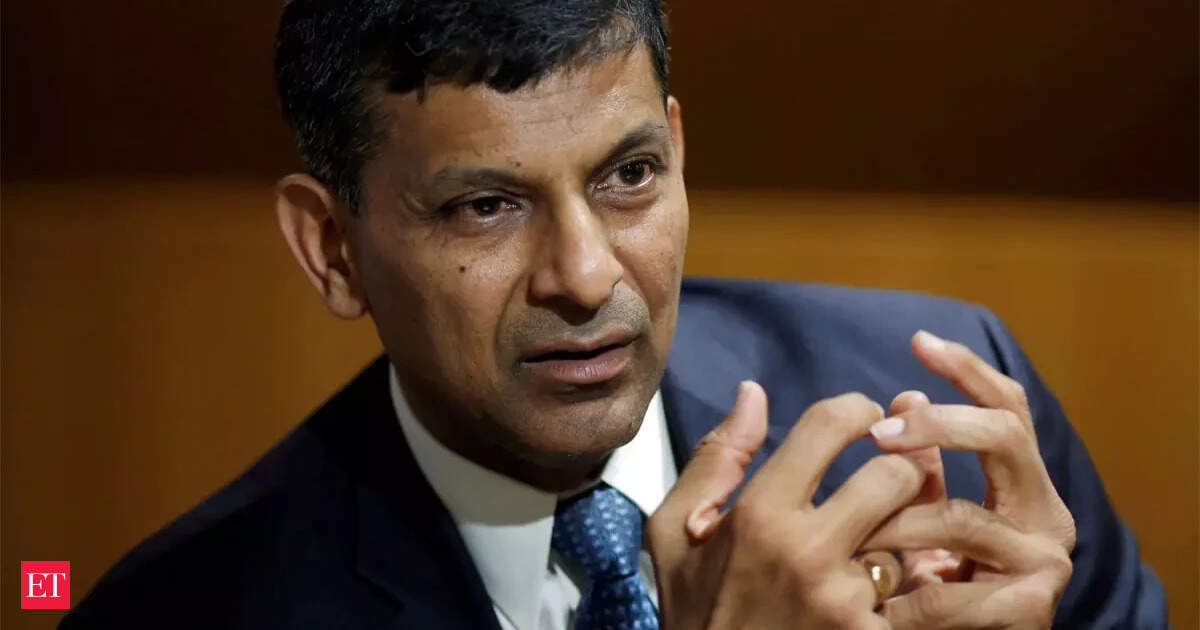
Speaking in an interview with Bloomberg Television, Rajan framed AI not as an existential threat but as a force that will demand adjustment. “The Indian services story can still persist in many other areas outside of software, but yes, AI will be a challenge,” Rajan, now a professor at the University of Chicago Booth School of Business, said. “Things take time. The firms that are not technology-savvy will take more time. That is it.”
Also Read: India is the AI world’s most valuable unpaid intern
His remarks come at a time when India’s IT sector — long seen as the engine of its services-led growth — is beginning to feel the early tremors of AI adoption. As companies deploy automation tools, some firms have already started trimming their workforce. Yet Rajan pointed out that the same technology could expand demand in new areas, provided companies and workers move quickly to adapt.
He stressed that reskilling will be critical. India’s software firms and their employees will need to retool “really fast,” but “this is not something they cannot overcome.”
 Live Events
The concern is not unfounded. India’s position as a global hub for back-office operations — from call centres to IT outsourcing — makes it particularly exposed to AI-led automation. Routine coding tasks and customer support roles, which employ millions, are especially vulnerable. A recent note by Citrini Research flagged potential pressure on revenues for Indian IT firms, triggering a market selloff earlier in the week.
Rajan, however, pushed back against alarmist interpretations. “Let’s not get overly wound up in science fiction and think that is the outcome,” he said, referring to the report. “The fastest users of technology are the people creating the technology. Sometimes there is a sense that this is going really, really fast. What they don’t see is adoption outside the frontier is much longer.”In his view, the pace of real-world adoption remains uneven. Many global firms are still far from deploying AI at scale, leaving room for Indian companies to reposition themselves. At the same time, multinational corporations continue to expand their global capability centres in India, increasingly shifting higher-value engineering and digital work to the country.
Cost competitiveness remains a strong advantage.
“The reason many firms are moving to India is because of its highly skilled service people,” Rajan said, noting that a consultant in India can cost “one-fifth the price of a consultant in the West.” Combined with access to the same AI tools, this pricing edge could help Indian firms stay relevant even as the technology evolves.
Beyond services, Rajan also pointed to AI’s growing influence on manufacturing, where advances in robotics are beginning to reshape production. He argued that policy priorities should reflect this shift. Rather than heavily subsidising expensive semiconductor ambitions without reaching global cutting-edge levels, he suggested India would gain more by investing in human capital — training, education, and research and development.
With inputs from Bloomberg