
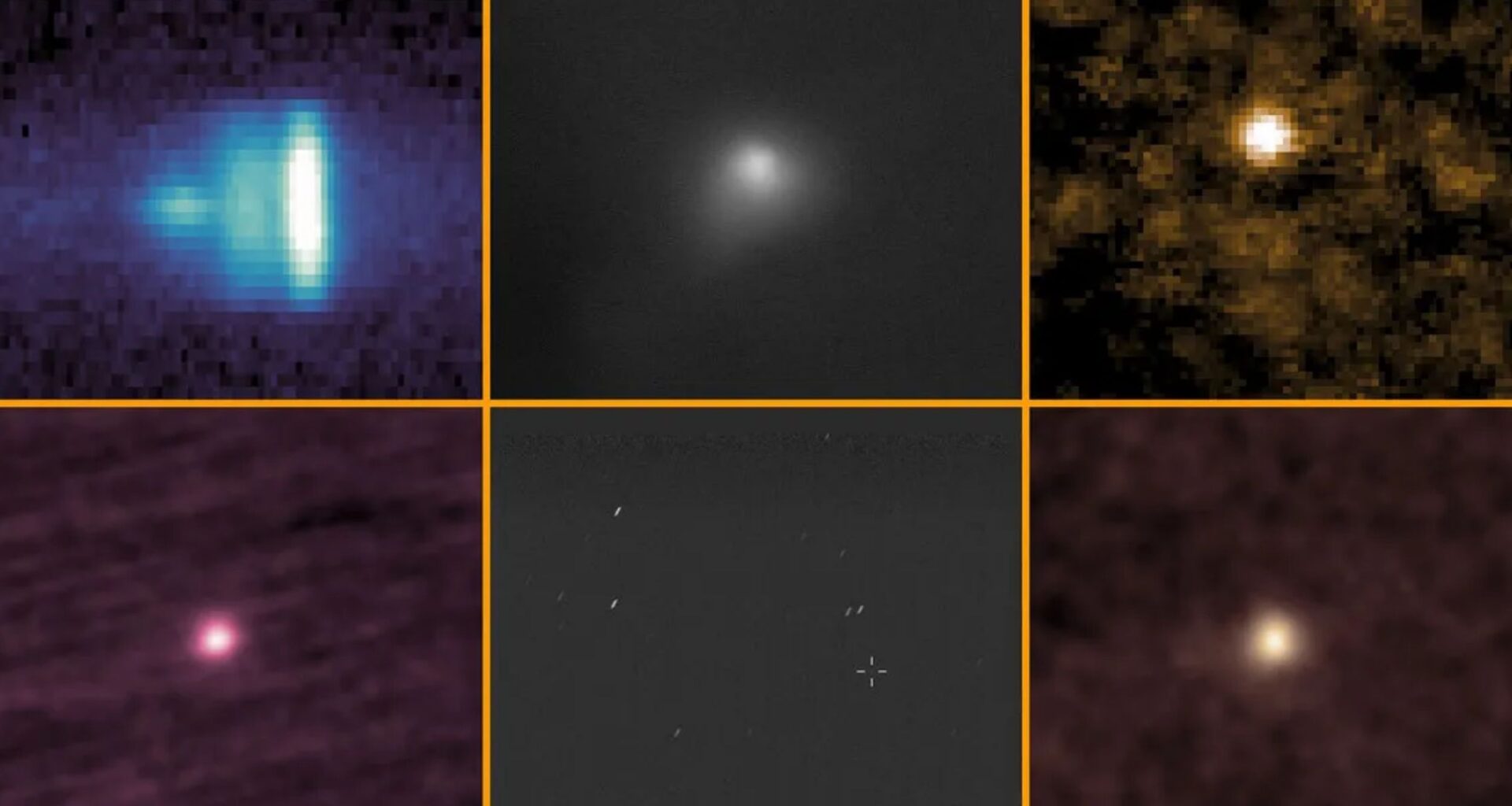
Astronomers have identified a newly discovered comet that could become bright enough to see without a telescope in 2026.
As it passes close to the Sun in late April, scientists will learn whether it releases enough dust and gas to shine clearly in the night sky.
How the comet was found

In September 2025, images from Pan-STARRS, a telescope system in Hawaii that scans the sky for moving objects, showed a faint blur with a growing glow and tail.
After reviewing the September 8, 2025 observations, the Minor Planet Center officially confirmed the object as Comet C/2025 R3 (Pan-STARRS).
Reports described a visible cloud around the core and, in three cases, a tail long enough to measure.
Early activity matters, because a quiet comet can fade, while an active one can brighten fast near the Sun.
Orbit hints at origin
Long before it was noticed, the comet followed a steep track that tilted far above the planets’ flat orbital plane.
Astronomers classify it as a long-period comet, an icy traveler that needs more than 200 years for one lap. Only a short arc of observations exists so far, so its full loop could span thousands of years.
Those details suggest the comet likely came from the Oort cloud – a vast, distant shell of icy objects that surrounds our solar system far beyond the planets.
Key April dates
On April 20, the comet reaches perihelion, the point when a comet is closest to the Sun, at 47.4 million miles (76.3 million kilometers).
Seven days later, it swings within 44 million miles (70.8 million kilometers) of Earth, but the Sun may crowd it low on the horizon.
Near April 17, a new moon darkens the sky, which helps if the comet hovers near the edge of visibility.
Those tight dates leave little time for forecasts to settle, so brightness estimates will keep changing right up to April.
Brightness predictions diverge
Estimates for how bright the newly discovered comet will appear range from magnitude 8 to about 2.5.
Astronomers express that scale as apparent magnitude, a number where smaller values mean brighter objects to the eye.
At magnitude 8, the comet would stay a binocular target, while a 2.5 result would put it among the night sky’s showpieces.
Because the estimates depend on how much dust and gas it sheds, early guesses can miss badly in either direction.
Solar heat and activity
Closer to the Sun, comets absorb heat and start venting frozen material from their surfaces.
Heat triggers sublimation, ice turning straight into gas, and the escaping flow pulls dust out to reflect more sunlight.
Once sunlight hits that dust, the comet can grow a broad head and a tail that stretches away from the Sun.
If the nucleus cracks or runs out of easily heated ice, the brightening can stall long before skywatchers expect.
Forward scattering boost
Late in April, the comet’s tail may point roughly toward Earth, setting up a brightness bump that surprises observers.
In forward scattering, dust sending sunlight onward in a preferred direction, the tail can look brighter when Earth sits behind it.
Small changes in viewing angle can make that dust look brighter for a short window, even if the comet stays steady.
For the new comet, that bonus depends on timing, and it could arrive when it also sits uncomfortably near the Sun.
Where it will sit
In late April, the comet tracks through Pisces, a dim constellation that sits beneath the easily spotted Great Square of Pegasus.
Before dawn from the Northern Hemisphere, that patch of sky rises in the east, which can put the comet low and hazy.
After sunset in early May, observers south of the equator may see it higher, because the geometry favors their evening sky.
Any viewing plan has to follow its elongation, the angle between it and the Sun in the sky, as that gap shrinks.
How to look safely
Binoculars will likely show the comet sooner than naked eyes, especially if its glow stays near the edge of visibility.
A small telescope helps separate the comet from background stars, but it also narrows the view and makes finding it slower.
Use a sky map app or printed chart to check its position, and stop if the line of sight nears the Sun.
Even a brief sweep too close to the Sun can damage vision, so daylight searches should stay strictly on the night side.
Defining a great comet
Skywatchers have started calling it the “Great Comet of 2026,” but the term “Great Comet” stays informal and purely comparative.
A Jet Propulsion Laboratory catalog shows past great comets and makes clear how often early hype falls apart.
Even when a comet approaches relatively close, its surface can stay sealed, or it can flare and then break apart into dust.
Uncertainty leaves room for a different comet to steal attention later in 2026, even if C/2025 R3 behaves well.
What to watch next
C/2025 R3 now has a solid track record, but the real test comes as heat, geometry, and moonlight collide in April.
Updated observations in March and early April should tighten brightness calls, and that will decide whether backyard observers get a rare naked-eye comet.
The study is published in Minor Planet Center.
—–
Like what you read? Subscribe to our newsletter for engaging articles, exclusive content, and the latest updates.
Check us out on EarthSnap, a free app brought to you by Eric Ralls and Earth.com.
—–