
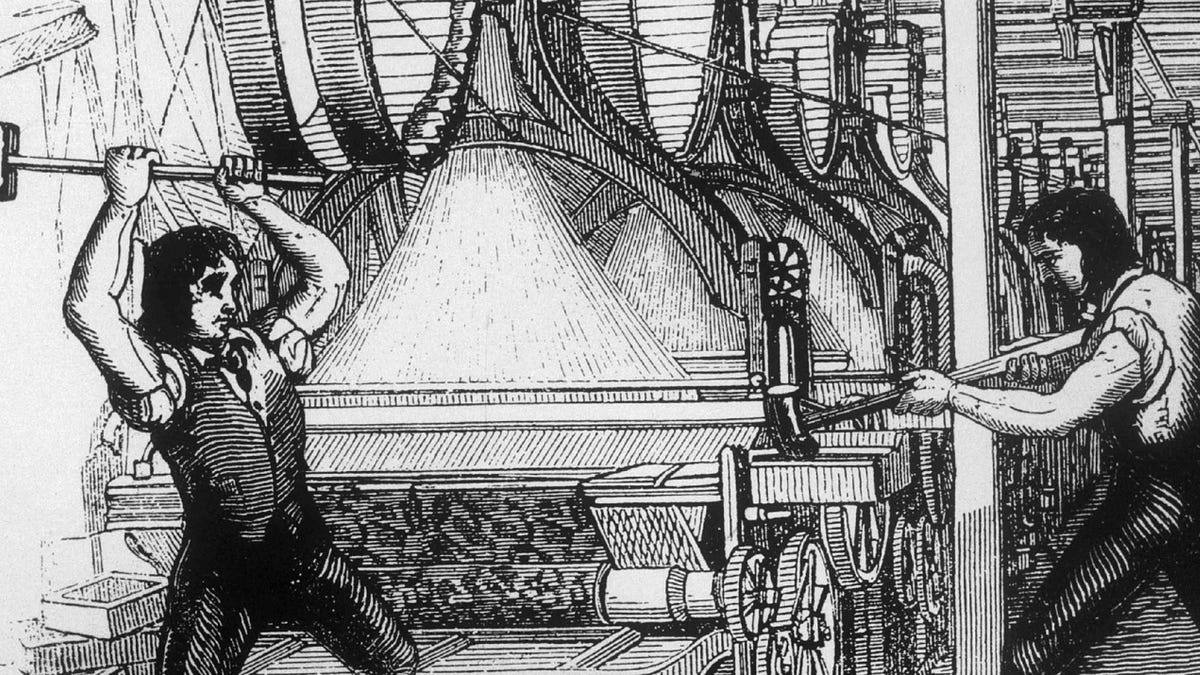
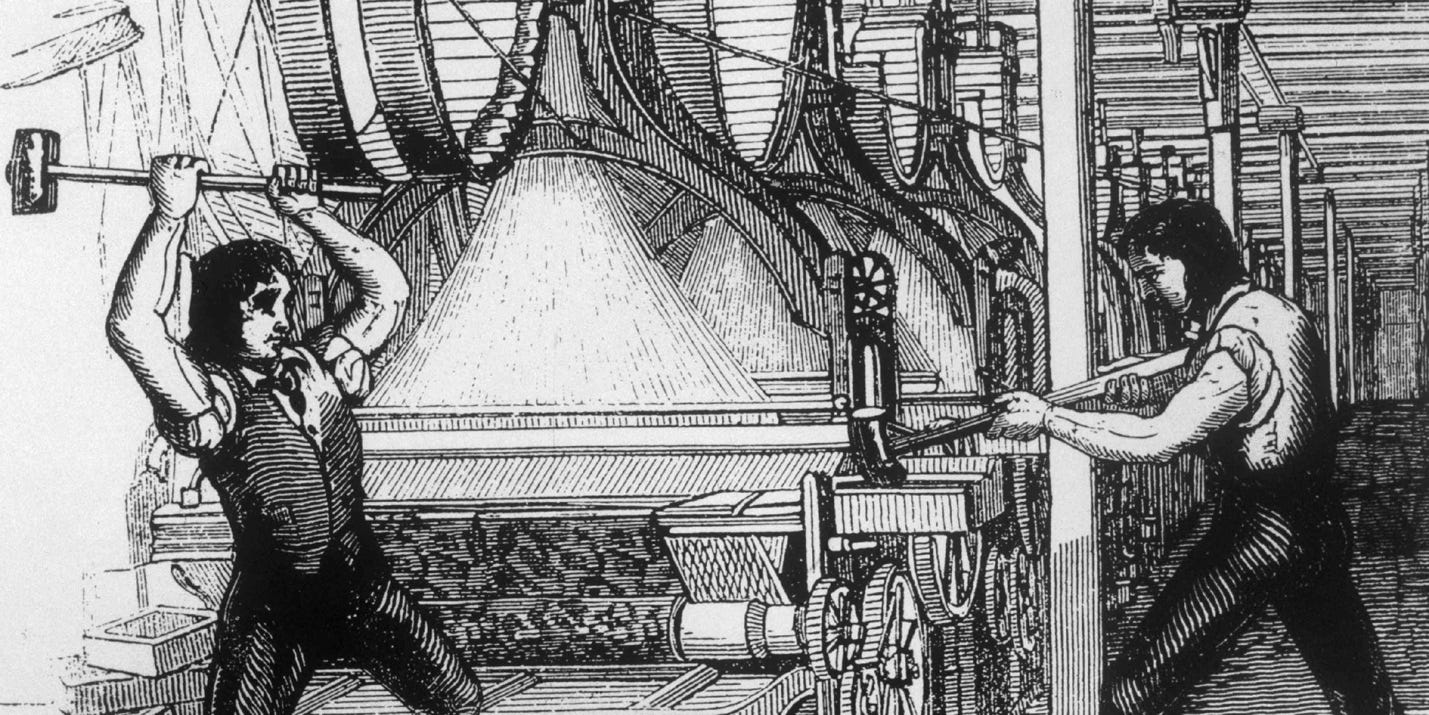
Rampaging Luddites
The rise of generative AI has led to alternating waves of hype and fear. One day the S&P 500 is soaring, led by AI-adjacent companies. A few months later the S&P is falling due to fears that too much money is being spent on datacenters and that AI will undermine business models.
It’s still difficult to predict what AI will actually do, and I have no special insights on that front. But while AI is an unprecedented technology, hype and fear about the impacts of new technology — together with hard thinking about the issue — are anything but new. In fact, concerns about the effects of new technology and attempts to model those effects go back more than two centuries, to the early days of the Industrial Revolution and the dawn of economics as an intellectual field.
The purpose of today’s primer is to provide an overview both of this intellectual tradition and of the effects of past technological progress. Such an overview can’t tell us what will happen next, but it provides important context for any economic scenarios for AI one might propose.
Beyond the paywall I will address the following:
1. Technology and jobs: Should we worry about technology causing mass unemployment?
2. Technology and wages: Can workers lose ground even as their productivity rises?
3. Technology, monopoly and oligarchies: How technologies can create monopolies — or destroy them — and how this affects the concentration of wealth at the top.