
“The fact is still that Europe imports most of its energy from other countries. And I think events like this just highlight how problematic, how risky that is as a strategy and how unsustainable,” said Jan Rosenow, professor of energy and climate policy at Oxford University.
“The structural solution has to be renewable energy produced in Europe, electrification, and improving the efficiency of the economy. The less we use, the less exposed we are,” Rosenow said.
OPEC+, the cartel of oil producing and exporting countries, said Sunday it would increase oil output by 206,000 barrels a day in April, potentially reducing the risk of a price spike — though Jorge León, head of geopolitical analysis at Rystad Energy, said this would not address the problem of getting the oil out of the Gulf.
“There are too many unknowns at the moment,” Latvian Energy Minister Kaspars Melnis told POLITICO. He downplayed the prospect of soaring prices, citing European efforts to diversify since the invasion of Ukraine. “The situation is different from 2022, when there was a price peak,” Melnis said. “The first and most important differentiating element [is that] EU countries have reserves, which allow them to build a long-term strategy.”
EU member countries have emergency oil reserves that will last 90 days. However, some neighboring European countries, particularly in the Balkans and Eastern Europe, have struggled to meet that target, according to two people familiar with the matter.
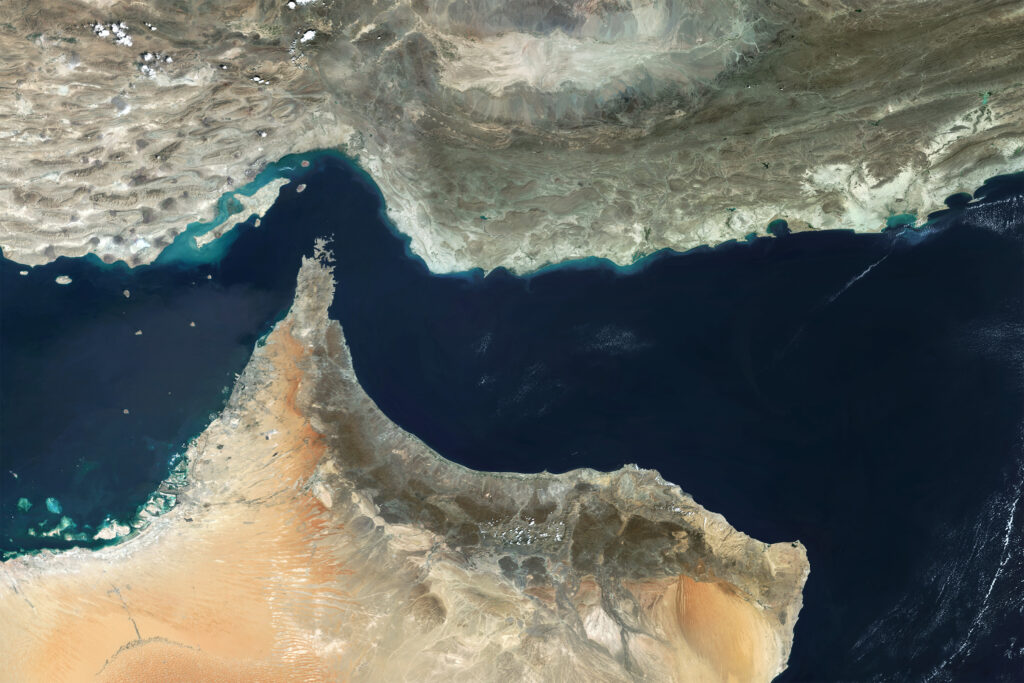 The risk of Iran closing the Strait of Hormuz was discussed at meetings of EU diplomats in Brussels Sunday. | Gallo Images/Orbital Horizon/Copernicus Sentinel Data 2025
‘Panic moment’
The EU currently imports the majority of its oil from the U.S., Norway, Kazakhstan and Libya, according to official EU data, none of which is transported through the Strait of Hormuz. Saudi Arabia and Iraq, which do export via that route, accounted for only around 7 percent and 5 percent of Europe’s oil imports respectively in the third quarter of 2025.