
Climate has always had a say in human history. When rain falls at the right time, crops grow and cities thrive. When it does not, people move, adapt, or sometimes disappear.
About 4,200 years ago, the planet went through a major climate shift. Civilizations from the Middle East to Asia struggled. In central China, a large and organized society known as the Shijiahe culture began to fade.

For years, researchers debated why the ancient city at Shijiahe was abandoned. Drought seemed like an obvious suspect.
A team of scientists has now traced the Shijiahe collapse to repeated, long-lasting rainfall in the Yangtze Valley. Their findings point to overwhelming floods as the tipping point.
Rainfall written in stone
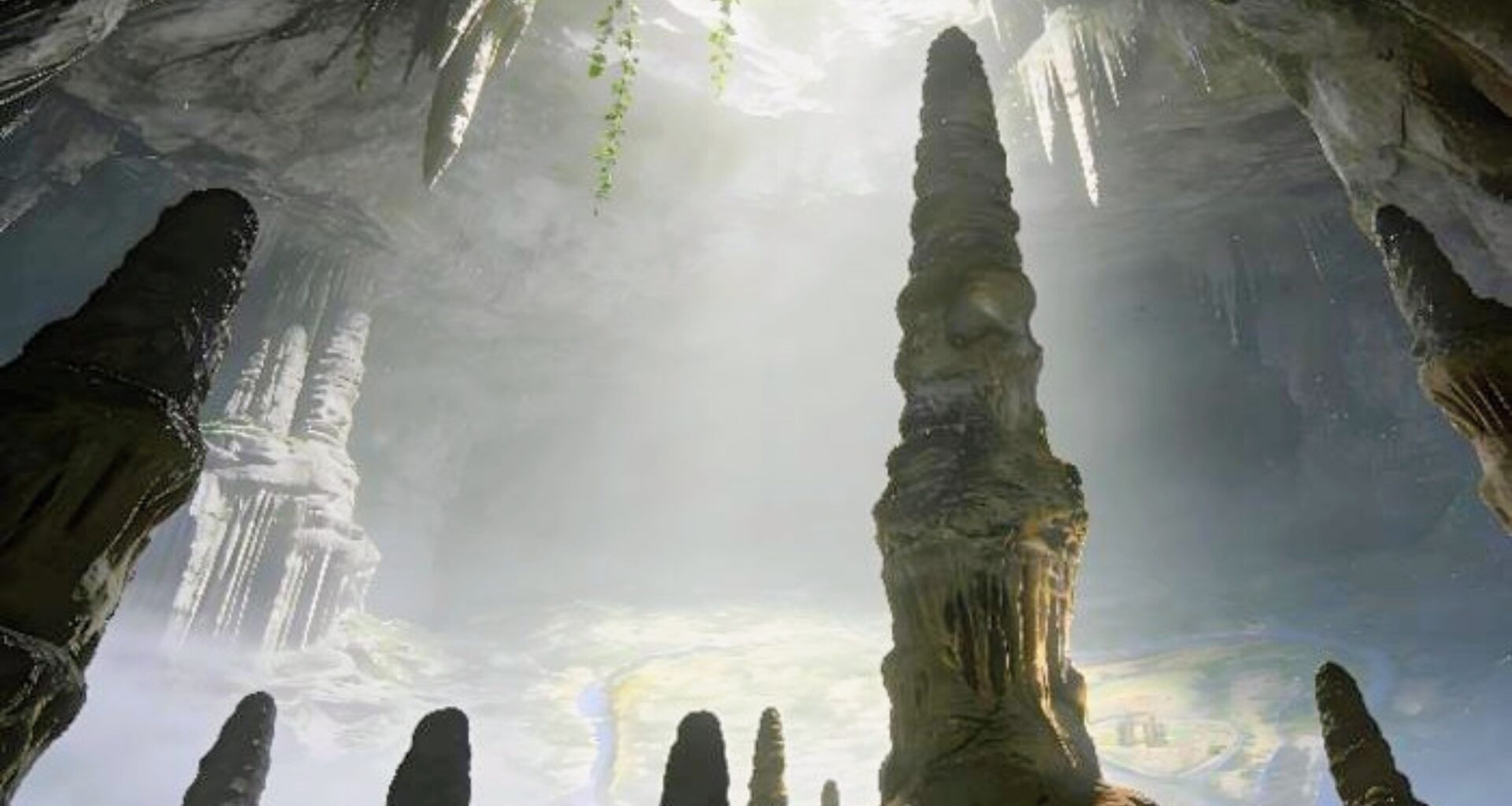
To understand what happened, the researchers went underground. Inside Heshang Cave in the middle Yangtze Valley, they studied a stalagmite that had been growing slowly from the cave floor.
Stalagmites form when rainwater drips from the ceiling, leaving behind tiny layers of calcium carbonate. Year after year, those layers stack up like pages in a history book.
By measuring the chemical makeup of those layers, the team built what they called a precisely dated “rainfall yearbook.” They performed 925 sample measurements to reconstruct how much rain fell each year over a 1,000-year stretch.
The results were clear. The valley went through three dry spells, each lasting between 40 and 150 years, when rainfall dropped below 700 millimeters per year (about 28 inches).
It also endured two very wet periods, one lasting 80 years and the other 140 years, when rainfall topped 1,000 millimeters per year (more than 39 inches).
Flooded land, shrinking cities
When the researchers compared the rainfall record with archaeological evidence, the pattern stood out. The wet periods lined up with signs of serious flooding, expanding wetlands, and a sharp drop in population.
Around 3,950 years ago, the region entered the longest stretch of heavy rainfall in the record. Lakes expanded. Low-lying land turned soggy. Farmland shrank.
At that same time, the number of archaeological remains linked to the Shijiahe culture began to decline. The drop was not brief. It lasted for centuries. Evidence suggests that the people who survived left their urban center in the valley and moved to higher ground.
Teams from the University of Oxford’s Department of Earth Sciences and China University of Geosciences (Wuhan) led the research behind these findings. Their work connects climate records from deep inside a cave to the fate of a complex society above ground.
More rainfall than Shijiahe could handle
One striking detail stands out. The study found that even the peak precipitation during the high-rainfall period linked to the collapse of the Shijiahe civilization was lower than some extreme rainfall events recorded in modern times.
That matters. Ancient societies did not have dams, levees, advanced drainage systems, or large-scale flood planning.
They relied heavily on stable seasonal patterns. When those patterns broke down for decades at a time, options were limited.
The Shijiahe culture had built large settlements and developed sophisticated crafts and trade networks.
But it could not outbuild rising lakes or reclaim fields that stayed underwater year after year. Over time, moving away may have been the only viable choice.
Lessons for a warming world
This research does more than explain one ancient collapse. It shows how sensitive human systems can be to long-term shifts in rainfall. Too little water is dangerous. Too much can be just as destructive.
The story of Shijiahe is not just about the past. It is about limits. Climate extremes do not need to break records to disrupt a society. They only need to last long enough.
Four thousand years ago, steady rain turned into relentless rain. Fields drowned. Cities emptied. A culture that once flourished in the middle Yangtze Valley scattered to higher ground. The cave in Heshang kept track of every drop. Now, it has told the story.
The full study was published in the journal National Science Review.
Image Credit: ©Science China Press
—–
Like what you read? Subscribe to our newsletter for engaging articles, exclusive content, and the latest updates.
Check us out on EarthSnap, a free app brought to you by Eric Ralls and Earth.com.
—–