
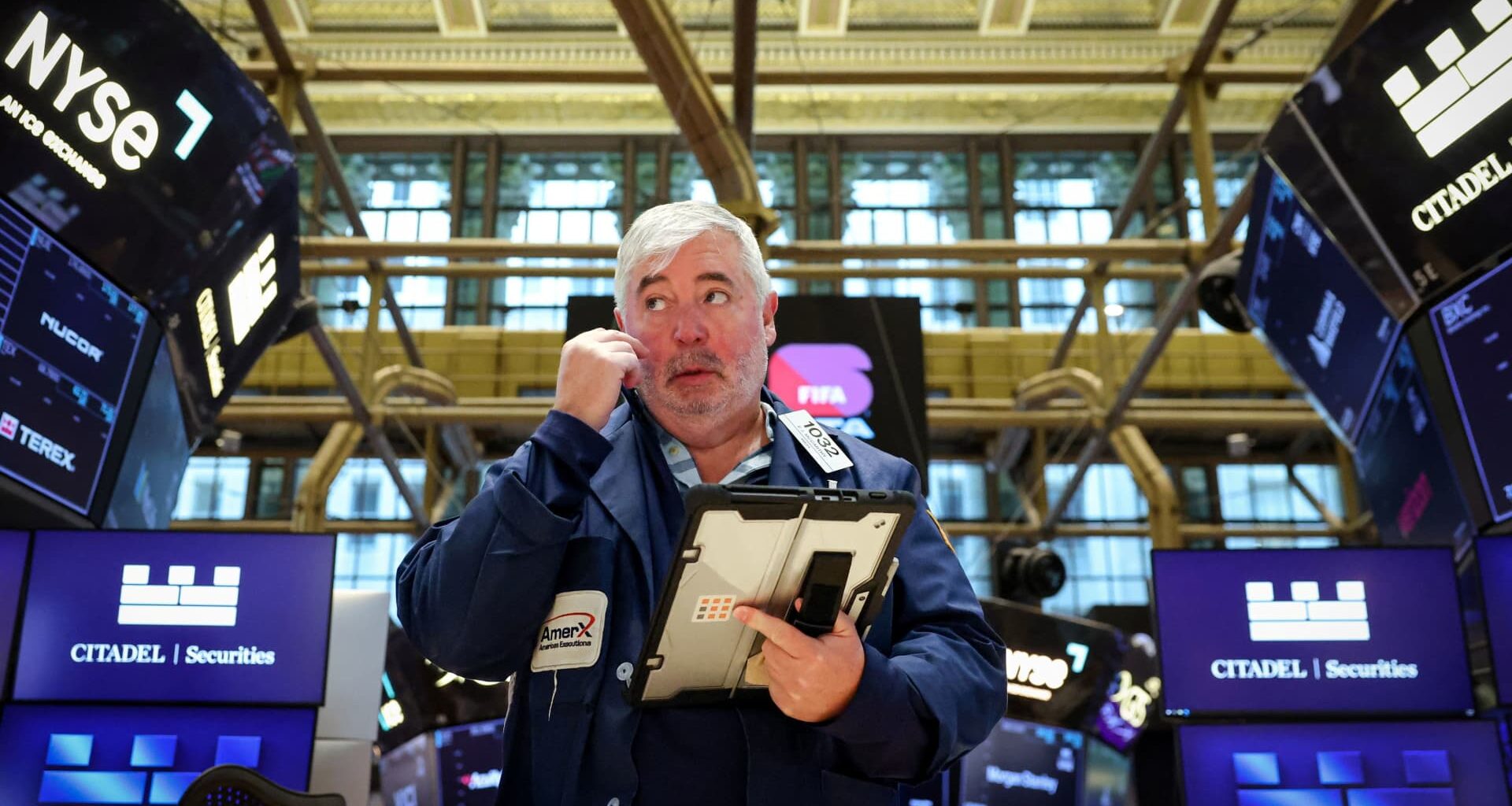
Traders work on the floor at the New York Stock Exchange (NYSE) in New York City, U.S., March 2, 2026.
Brendan McDermid | Reuters
U.S. Treasury yields rose on Tuesday as the U.S.-Iran conflict caused oil prices to surge for a second day.
The benchmark 10-year Treasury yield rose more than 1 basis point to 4.063%. It had risen as high as 4.117% during the day. The 30-year Treasury bond added less than 1 basis point to a yield of 4.707%. The yield on the 2-year Treasury note was up almost 2 basis points at 3.506%.
One basis point equals 0.01%, and yields move inversely to prices.
The war between the U.S. and Iran is intensifying as it enters its fourth day, with the American Embassy in Riyadh attacked Tuesday and President Donald Trump cautioning that the conflict may last far longer than the four weeks he initially projected.
Israel said it was striking both Iran and Lebanon at the same time after Tehran-backed Hezbollah launched missiles and drones toward Tel Aviv.
U.S. West Texas Intermediate crude oil topped $73 a barrel on Tuesday, advancing for a second day. Brent crude oil, the international benchmark, topped $80 a barrel. The day’s gains in oil prices simmered after President Donald Trump said the U.S. Navy would offer support, if needed, to tankers moving through the Strait of Hormuz.
Traders are worried rising energy prices may ripple through the economy, raising prices at a time when investors are hoping for inflation to ease enough to spur the Federal Reserve to cut interest rates again later this year.
While stock markets have shifted firmly into risk-off mode, the bond market has had a puzzling reaction to some. Normally during geopolitical conflicts, bond prices rise and yields fall as investors go into the Treasury market for safety. But the opposite has occurred, with prices falling and yields rising as investors feared the impact of energy prices on inflation.
Energy supply disruption concerns have mounted after Iran reportedly closed the Strait of Hormuz and warned it would fire on vessels attempting to pass through the strategic chokepoint, pushing oil prices higher.
On the economic front, the ISM Manufacturing Index on Monday pointed to increasing price pressures at the factory level.
While the headline index nudged lower to 52.4, the prices paid component soared 11.5 points to 70.5, indicating the percentage of companies seeing higher prices in February. That represented the highest level since June 2022 and followed a much higher than expected gain in the producer price index for January.
— CNBC’s Jeff Cox contributed reporting