
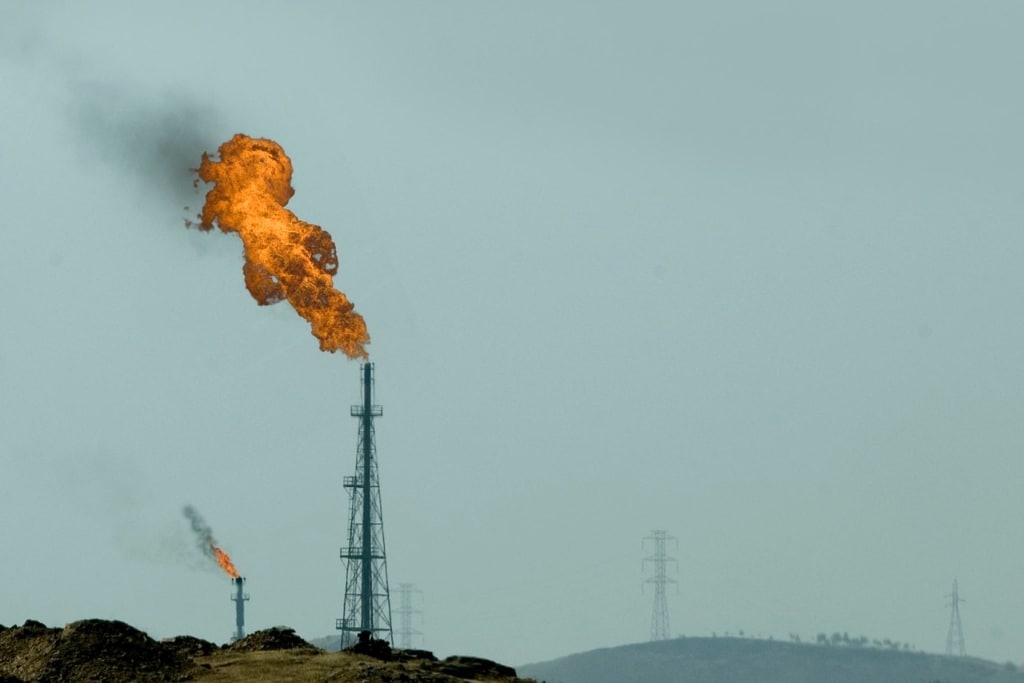
The regional fallout from last week’s joint US-Israeli strikes on Iran underscores how far the global energy transition still has to go: as long as strategic decisions are tied to fossil fuel supply chains, climate goals remain exposed to geopolitical instability.
—
On February 28, the United States and Israel launched a coordinated military campaign against Iran, marking a dramatic escalation in Middle Eastern geopolitics with repercussions that extend far beyond the region. The military operation targeted hundreds of sites across Iranian territory, including military and nuclear facilities, and reportedly eliminated top Iranian leaders. Tehran immediately retaliated with missile strikes against Israeli and US military bases in neighboring Gulf states, underscoring the risk of a broader conflagration.
While US officials publicly framed the operation as an effort to neutralize perceived nuclear threats and curb Iranian regional influence, underlying strategic imperatives tied to global energy markets and great-power competition cannot be ignored.
Iran’s Role in the Global Energy Market
Iran remains a significant hydrocarbon producer. Despite decades of sanctions that have restrained output, Iran holds some of the world’s largest deposits of proved oil and natural gas reserves, estimated at about 209 billion barrels at the end of 2024, representing roughly 12% of global reserves and 24% of those in the Middle East. In January, the country produced 3.4 million barrels of crude oil per day – about 3% of global oil supply.
Much of Iran’s oil flows through the Strait of Hormuz, connecting the Persian Gulf to the Arabian Sea. This critical checkpoint carries 30% of global seaborne crude oil and gives Iran significant influence over global energy flows. In 2024, oil flow through the strait averaged 20 million barrels per day, resulting in nearly US$500 billion in annual energy trade.
The immediate market reaction to the strikes was a sharp rise in crude oil prices, with benchmarks like Brent crude climbing to multi-month highs above $72 amid fears of disrupted supplies. Analysts and observers warn that geopolitical instability and further escalation could push oil prices above $100 per barrel.
China’s Energy Stakes in Iran
A crucial but often overlooked dimension of the conflict is China’s deepening energy relationship with Iran. China has steadily become the dominant buyer of Iran’s crude oil, increasing its share from 25% in 2017 to nearly 90% in 2023. Much of this oil is purchased by Chinese independent refiners, known as “teapots,” primarily located in Shandong province. Data shows that Iran’s exports continued to grow, averaging 1.5 million barrels per day during the first eight months of 2024. In 2025, over 80% of Iran’s shipped crude went to China, amounting to about 1.38 million barrels per day, or roughly 13% of China’s total seaborne oil imports. These teapots, representing around a quarter of Chinese refining capacity, are attracted to the discounted, sanctioned Iranian crude oil – though they operate on narrow or even negative margins.
Any disruption affecting Iran would not only reduce Tehran’s export capacity but also constrain China’s energy inflows and unsettle global oil markets, potentially forcing Beijing to secure alternative suppliers as well as reroute shipments along longer and more costly trade corridors while drawing on strategic reserves. The most direct consequence would be the elimination of the discounted Iranian barrels on which Chinese refiners have relied. Using 2025 export volumes as a benchmark, a price differential of $10-14 per barrel would raise China’s daily import bill by roughly $13-18 million, with knock-on effects on the Chinese economy and domestic energy security.
Energy Security and Strategic Rivalry: US vs. China
For Washington, energy security carries a complex legacy, yet it has re-emerged prominently in public discourse, particularly during the Trump administration. President Trump’s strategy of achieving “energy dominance” has translated into fossil fuel- and critical mineral-friendly policy aimed at strengthening US leverage in global markets.
This approach prioritized deregulation and the rollback of subsidies and previously approved projects in the renewable sector, reflecting a strategic shift toward conventional energy sources as instruments of economic and geopolitical power.
In parallel, the US has maintained a substantial military presence in the Gulf for decades. The US military network, comprising air, naval, and ground installations across the region. This network serves not only as a deterrent against Iranian disruption but also as a guarantor of uninterrupted energy flows through critical chokepoints like the Strait of Hormuz.
Meanwhile, China has framed its engagement in the Gulf primarily in an economic and development-oriented approach, avoiding overt political alignment. Its partnership with Iran is driven by energy security: heavily discounted Iranian crude supports China’s industrial base, while helping Tehran keeps its economy afloat amid Western sanctions that have restricted its access to global markets and finance. By sustaining these ties despite US pressure, Beijing positions itself as a global power capable of countering the US influence in Southwest Asia.
Yet this relationship also exposes China’s vulnerability. As the world’s largest crude importer, it depends on stable Gulf energy flows, particularly from Iran. Therefore, military escalation against Tehran will force Beijing to secure alternative suppliers at higher prices, increasing its import bill and exposing its economy to inflationary pressures. It will also constrain Beijing´s expanding role in the Gulf energy landscape, linking the conflict directly to broader US-China strategic competition over access, influence, and control in global energy markets.
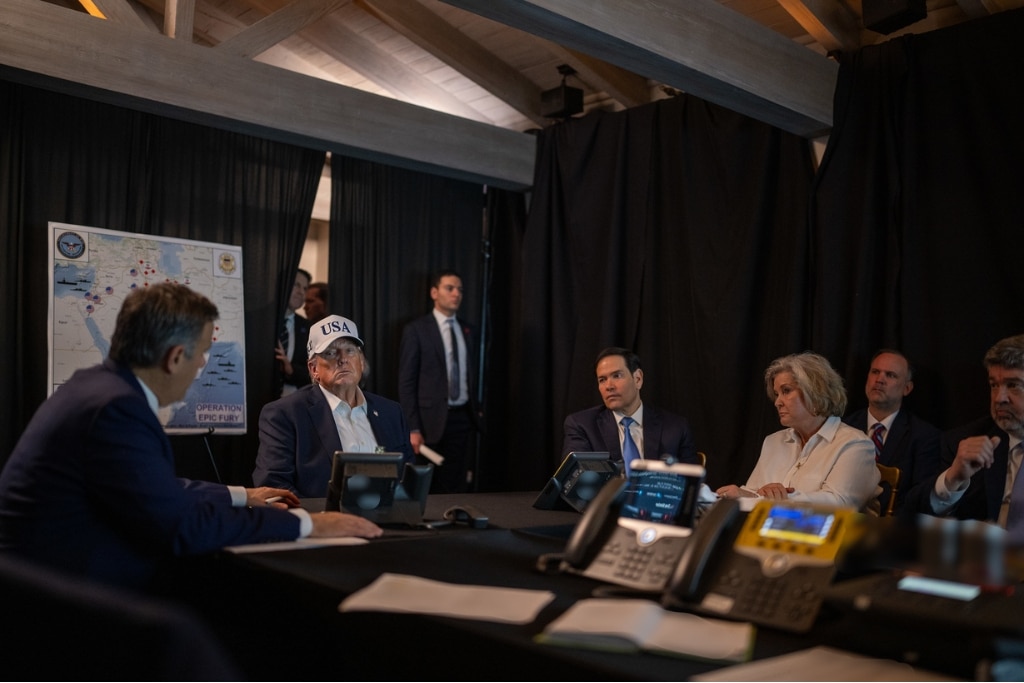
President Donald J. Trump oversees Operation Epic Fury at Mar-a-Lago, Florida, on February 28, 2026. Photo: Daniel Torok/The White House via Flickr.
Oil Shapes the Next Era of Geopolitics
While Trump has framed the US-Israeli military campaign against Iran as a counterproliferation effort in response to Iran’s refusal to renounce its nuclear ambitions, the confrontation cannot be understood solely through the lens of regime change or nuclear containment. The campaign is also embedded in a broader struggle over energy security and great-power rivalry.
The escalation underscores how far the global energy transition still has to go: as long as strategic decisions are tied to fossil fuel supply chains, climate goals remain exposed to geopolitical instability. This crisis is more than a regional security issue – it reveals a systemic tension at the core of the global energy system, where reliance on oil, climate vulnerability, and international power rivalries are tightly linked and increasingly unpredictable.
Featured image: youngrobv/Flickr.
This story is funded by readers like you
Our non-profit newsroom provides climate coverage free of charge and advertising. Your one-off or monthly donations play a crucial role in supporting our operations, expanding our reach, and maintaining our editorial independence.
About EO | Mission Statement | Impact & Reach | Write for us
Free, non-profit and independent environmental journalism.