

Make better investment decisions with Simply Wall St’s easy, visual tools that give you a competitive edge.
Rocket Lab (NasdaqCM:RKLB) recently completed a successful hypersonic test mission for the U.S. Defense Innovation Unit using its HASTE launch vehicle.
The company also launched advanced silicon solar arrays designed to power future gigawatt scale, space based data centers.
These developments highlight Rocket Lab’s growing role in both defense focused hypersonic testing and commercial space infrastructure.
Rocket Lab, trading at $70.97, sits at the intersection of defense and commercial space services, with its recent missions adding fresh context for investors watching the stock. Over the past year, NasdaqCM:RKLB has returned 280.3%, and over three years the return has been very large, which puts more attention on how new contracts and technologies might influence sentiment from here.
For investors, a key consideration is how much value the hypersonic work and space based power solutions could add alongside Rocket Lab’s core launch business. These projects point to a broader space infrastructure platform, so upcoming updates on contract flow, customer adoption and execution milestones are likely to be important markers to track.
Stay updated on the most important news stories for Rocket Lab by adding it to your watchlist or portfolio. Alternatively, explore our Community to discover new perspectives on Rocket Lab.
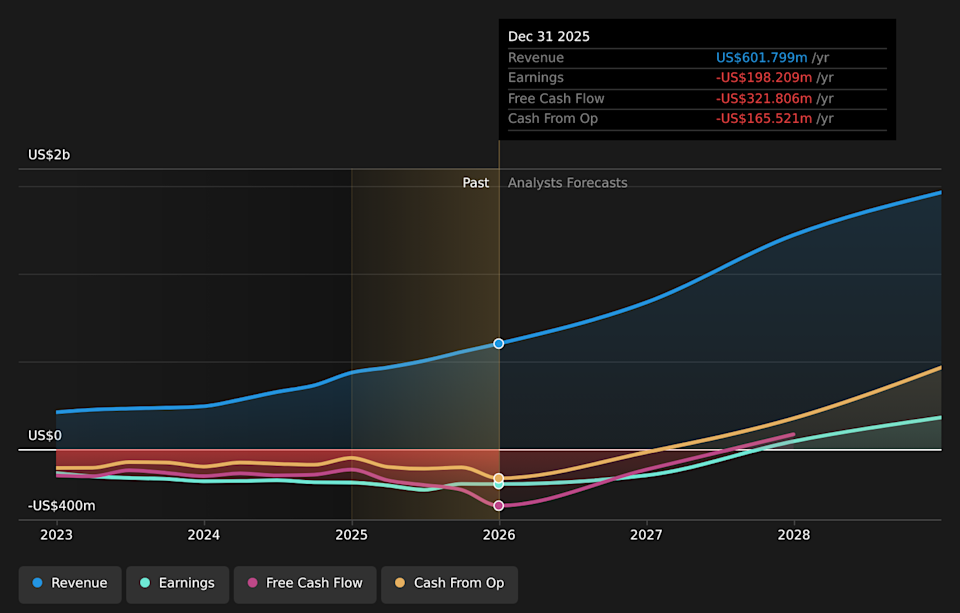 NasdaqCM:RKLB Earnings & Revenue Growth as at Mar 2026
For Rocket Lab, the hypersonic test and new silicon solar arrays speak directly to two large markets investors often focus on: defense and space-based infrastructure. The HASTE hypersonic mission for the Defense Innovation Unit extends a run of 100% mission success on this platform, which may help Rocket Lab argue for more recurring test work in an area where peers like Lockheed Martin and Northrop Grumman are also active. On the commercial side, silicon solar arrays aimed at gigawatt-scale, space-based data centers lean into growing interest in orbital computing, where power cost and scalability are major constraints. This product line builds on Rocket Lab’s existing solar capacity and moves it into a silicon-based alternative that targets supply chain resilience and constellation-scale deployments. For you as an investor, the key angle is how these offerings might complement launch revenue by deepening the space-systems portfolio and supporting larger contracts over time, especially as competitors such as SpaceX and Blue Origin also pursue multi-segment space businesses.
The successful HASTE missions and silicon solar arrays align with the narrative that Rocket Lab is building end-to-end space solutions that can support large defense contracts and satellite constellations.
Ongoing R&D and product expansion into hypersonics and space power could keep costs high, which fits with concerns in the narrative about elevated spending and the need for clear contract visibility.
The focus on space-based data centers and silicon supply chains adds a power and infrastructure angle that is not fully captured by earlier emphasis on Neutron and traditional launch and satellite services.
Knowing what a company is worth starts with understanding its story. Check out one of the top narratives in the Simply Wall St Community for Rocket Lab to help decide what it’s worth to you.
⚠️ High R&D and capital spending for hypersonics, Neutron and new solar technologies could keep Rocket Lab in a loss-making position for longer than some investors expect.
⚠️ Dependence on government and defense programs introduces contract timing, budget and regulatory risks, especially in competition with well-capitalized peers.
🎁 Expanding into hypersonic testing and space-based power solutions could broaden the addressable market beyond small-launch services and support more diversified revenue streams.
🎁 Vertical integration across launch, spacecraft components and power systems may help Rocket Lab offer bundled solutions that appeal to customers planning constellations and data-center-in-orbit concepts.
From here, it is worth watching whether the Defense Innovation Unit and other agencies convert successful HASTE flights into longer-term or larger-scale test campaigns, and how often Rocket Lab can repeat these missions. On the space systems side, look for signs that the silicon solar arrays gain traction with constellation operators or companies exploring space-based data centers, including any disclosed orders or partnerships. Together with existing launch deals, such as agreements with Earth observation players, these developments could show how much of Rocket Lab’s growth story is tied to recurring, multi-mission relationships rather than one-off projects.
To ensure you’re always in the loop on how the latest news impacts the investment narrative for Rocket Lab, head to the community page for Rocket Lab to never miss an update on the top community narratives.
This article by Simply Wall St is general in nature. We provide commentary based on historical data and analyst forecasts only using an unbiased methodology and our articles are not intended to be financial advice. It does not constitute a recommendation to buy or sell any stock, and does not take account of your objectives, or your financial situation. We aim to bring you long-term focused analysis driven by fundamental data. Note that our analysis may not factor in the latest price-sensitive company announcements or qualitative material. Simply Wall St has no position in any stocks mentioned.
Companies discussed in this article include RKLB.
Have feedback on this article? Concerned about the content? Get in touch with us directly. Alternatively, email editorial-team@simplywallst.com