
 Armed terrorist operatives in Rafah (IDF spokesperson, February 27, 2026)
 Flotilla press conference (IHH X account, February 25, 2026)
 Azzam al-Ahmad (Quds Agency, February 24, 2026)
IDF forces continued operations within the Yellow Line in the Gaza Strip to locate and destroy weapons and terrorist infrastructure. The forces eliminated terrorist operatives who attempted to approach the forces and attacked in response to violations of the ceasefire agreement.
Hamas reportedly smuggled essential materials by sea, enabling it to manufacture dozens of rockets.
Hamas and the Palestinian Islamic Jihad (PIJ) condemned the Israeli-American war against Iran and the elimination of Iranian leader Ali Khamenei, but said they would not intervene due to the consequences of the Gaza Strip War. According to reports, the Iranian-backed Palestinian terrorist organizations fear complete collapse because of the economic pressure on Tehran.
Israel closed the crossings to the Gaza Strip because of the state of emergency inside the country, but stressed that there was sufficient humanitarian aid in the Strip. Sharp price increases of basic commodities were reported in the markets of Gaza.
The Turkish IHH said a flotilla of more than 100 vessels carrying thousands of activists was expected to depart in April 2026 for the Gaza Strip to “break the siege,” along with the dispatch of land convoys.
A member of the American mediation team said the administration was preparing a proposal for the “gradual disarmament” of Hamas, adding that employees in the Hamas administration would be integrated into the new governing mechanisms under the Palestinian technocrat committee for the management of the Gaza Strip.
The secretary of the PLO Executive Committee said he opposed disarming Hamas or designating it as a terrorist organization, calling the October 7, 2023 terrorist attack and massacre a “strategic mistake” [sic].
The IDF
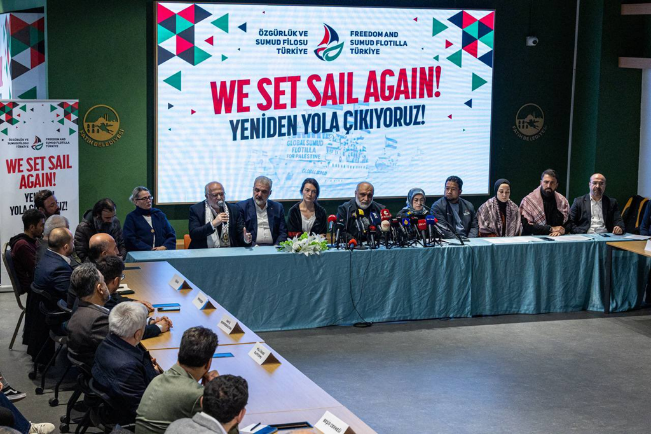
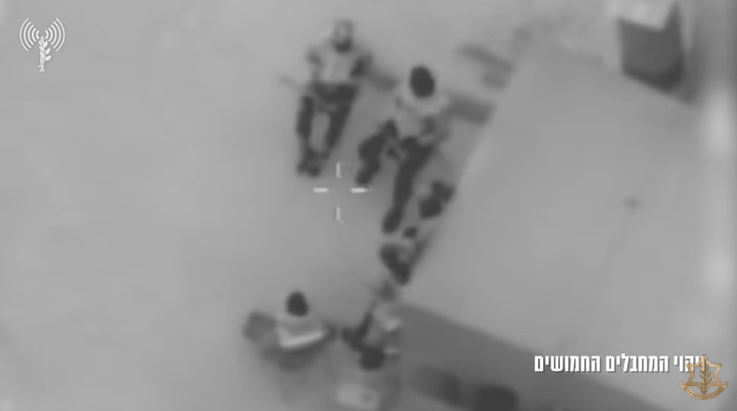
IDF forces continued operations within the Yellow Line and attacked in various areas of the Strip. The forces located weapons, destroyed terrorist infrastructure above and below ground and eliminated terrorist operatives who remained in the area, approached the line or attempted to cross it to attack the fighters. Armed terrorists seen exiting tunnels in eastern Rafah were eliminated and designated as violating the ceasefire agreement (IDF spokesperson, February 24-March 3, 2026).
Armed terrorist operatives in Rafah (IDF spokesperson, February 27, 2026)
The Hamas police claimed that three policemen were killed in an attack on a police post in western Khan Yunis, while one policeman was killed and another wounded in an attack on a police checkpoint at the entrance to the al-Bureij refugee camp (Palinfo, February 27, 2026; Hamas police Telegram channel, February 27, 2026; al-Ayyam, February 28, 2026). Palestinian sources said the IDF continued carrying out extensive earthworks and demolishing residential buildings in the Bani Suheila area, east of Khan Yunis, to expand the area of the Yellow Line (Shehab, February 24, 2026).
Hamas’ Military Buildup[2]
Reportedly, Hamas shifted to smuggling materials from Egypt by sea to renew the production of rockets. According to information received from a foreign intelligence organization operating in the Strip, Hamas uses containers with their weight adjusted to move them below the surface of the water, based on the assessment that it helps them evade radar. According to the report, the smugglers throw the equipment into the sea about nine kilometers off the coast of al-Sheikh Zuweid in the northern Sinai Peninsula, and the current brings the containers to the shores of Deir al-Balah and Khan Yunis within approximately 12 hours. According to the source, the operation is managed by several cells operating in the Sinai Peninsula, in the maritime space and in the Gaza Strip, while UAVs are launched at the Israel-Egypt border as a diversion to occupy IDF monitoring systems, allowing Hamas to smuggle materials into the Strip for its rocket array (Israeli TV Kan News X account, February 23, 2026; Kan website, February 24, 2026). It was subsequently stated by sources in the Strip that Hamas had manufactured dozens of rockets using the smuggled materials, production that takes place in several decentralized workshops in Deir al-Balah and Gaza City. It was further stated that Hamas also transferred some of the rockets to the Palestinian Islamic Jihad (PIJ) (Kan News X account, February 26, 2026). In response, Hamas claimed that the accusations were completely baseless, especially since Israeli naval forces control the entire sea of the Gaza Strip, and their sole purpose is to give IDF forces a green light to attack new targets in the Gaza Strip. They further noted that the “resistance”[3] had the “right” to preserve all its weapons to confront any “new aggression,” adding that the leadership of the military wing was currently focused on reorganizing the ranks while preparing to “confront attacks” (al-Sharq al-Awsat, February 24, 2026).
The Terrorist Organizations in the Gaza Strip and the War on Iran
The Palestinian terrorist organizations, led by Hamas and the PIJ, expressed their full support for Iran, claiming the objective of the war was to advance the vision of “Greater Israel.” They condemned the elimination of Iran’s leader Khamenei and praised him for his support of the “resistance.” However, the organizations claimed that they would not join the fighting alongside Iran because of the consequences of the Gaza Strip War.[4]
Before the outbreak of the war, field commanders and operatives in Iranian-funded Palestinian terrorist organizations in the Gaza Strip, including the PIJ, the Popular Resistance Committees and the Mujahideen Brigades, did not hide their fear of complete collapse from a growing economic crisis caused by sanctions imposed on Iran. One source noted that the average payment for each member declined to sums of 200-400 shekels (about $65 to $130) every 60 or 70 days, compared to 800 to 2,000 shekels (about $260 to $646) every month or every 40 days for prominent members and operatives before the war. According to the source, payments to commanders also declined to no more than 1,000 shekels (about $323) every two months or more, compared to more than 3,000 shekels (about $970) almost every month before the war. A source in one of the small terrorist organizations said they had received nothing for more than three months, and relied on donations that arrived intermittently from other sources to distribute 200 shekels to each operative. According to sources in the PIJ, the depletion of resources affected the organization’s “charitable associations,” and allocations to other “humanitarian institutions” were reduced, forcing them to operate at a minimal level, despite their direct ties to the Iranian regime. According to sources in the organization, the PIJ is facing an unprecedented economic crisis both in the Gaza Strip and abroad, especially in Lebanon due to the blows inflicted on Hezbollah, and in Syria, where it has weakened significantly since the collapse of the Bashar al-Assad regime. According to sources in the field, some operatives were forced to seek ordinary jobs to support their families despite Israel’s pursuit of them, although they claimed that only a few had abandoned “security measures” under the economic pressure (al-Sharq al-Awsat, February 26, 2026).
The Impact of the War in Iran on the Situation in the Gaza Strip
The Israeli Coordinator of Government Activities in the Territories (COGAT) stated that due to the war against Iran that began on February 28, 2026 and in light of the missile threat and the declaration of a state of emergency and public restrictions in Israel, all crossings to the Gaza Strip would be closed to prevent risk to human life. He noted that the crossings would be opened as soon as the security situation allowed, however he stressed that since the beginning of the ceasefire a quantity of humanitarian aid four times greater than the nutritional needs of the residents of the Strip had been brought in, therefore the existing stocks inside the Strip were expected to suffice for the foreseeable future (COGAT X account, March 2, 2026). The World Central Kitchen warned that if the crossings remained closed, it will be forced to stop meal distribution on March 5, 2026 because it had no surplus meals waiting in warehouses (World Central Kitchen website, March 1, 2026).
With the outbreak of the war in Iran, markets and shops in the Strip reported a large volume of customers and a high demand for basic commodities, especially flour, cooking oil, rice and sugar. At the same time, market traders raised prices by more than 300% while ignoring pleas from citizens, dignitaries and officials not to do so. Gazans said they rushed to purchase basic commodities because they feared Israel would close the crossings again (al-Ayyam, March 1, 2026). Hussam al-Houthi, acting chairman of the Gaza Chamber of Commerce, stocks of food and clothing in the Gaza Strip were sufficient for at least six months, and therefore there was no need for panic or price increases. He called for the firm, immediate punishment of rogue traders who exploited the situation (alresala.net, February 28, 2026).
The Rada force of Hamas’ “resistance security” announced it had deployed in the markets to monitor prices (Telegram channel of the Rada force, February 28, 2026). The Hamas ministry of the interior and national security announced that the supply investigations department of the police, in cooperation with teams from the ministry of economy, had begun extensive deployment and patrols in markets and businesses throughout the Strip to monitor product availability and prices and to prevent hoarding and price gouging (Telegram channel of the Hamas police, February 28, 2026).
Before the outbreak of the war in Iran, the chairman of the Gaza Bakeries Association, Abd al-Nasser al-Ajrami, announced the renewal of the contract with the World Food Programme (WFP) to fund the sale of subsidized bread in Gaza for an additional six months, starting March 1, 2026. He said the mechanism for selling subsidized bread would remain the same, it would be possible to return some bakeries to commercial activity by integrating additional bakeries which would operate in the private sector, receive fuel for operation, purchase flour themselves, and produce and sell bread at a price different from subsidized bread. He said a loaf of subsidized bread cost three shekels (a little less than $1), while higher quality, non-subsidized commercial bread would cost seven shekels (about $2.25). He also said there was no shortage of bread during Ramadan. Twelve bakeries operate in Gaza City and the northern district of the Strip, and 25 in the Khan Yunis district and the central Gaza Strip (Safa, February 26, 2026).
The Palestinian Red Crescent announced the launch of a logistical operation to transport essential medical supplies from its central warehouses in Judea and Samaria to the Gaza Strip via the Kerem Shalom crossing. Five trucks left Judea and Samaria carrying 111 pallets containing 3,284,684 units of medicines and medical solutions, and subsequently four more trucks departed carrying 83 pallets of medicines funded by the European Union and the International Federation of Red Cross and Red Crescent Societies, stored in World Health Organization warehouses (Facebook page of the Palestinian Red Crescent, February 23, 2026).
The Aid Organizations
The Supreme Court of Israel issued a temporary injunction allowing international aid organizations to continue operating in the Gaza Strip and in Judea and Samaria, following a petition by 17 organizations against a decision by the Government of Israel to revoke their operating licenses due to their refusal to comply with new rules set by the government. According to the report, Israel announced that until March 1, 2026, it would prevent the activity of 37 organizations on the grounds of failure to comply with requirements to register employee details, sources of funding and activities, while the organizations argued that the requirements were intrusive and arbitrary, and prohibiting their activity would harm the supply of aid. The injunction preserves the existing situation and does not require the organizations to leave, and it will remain in effect until a court ruling at a date yet to be determined (al-Quds al-Arabi, February 27, 2026).
International Activity to “Break the Siege”
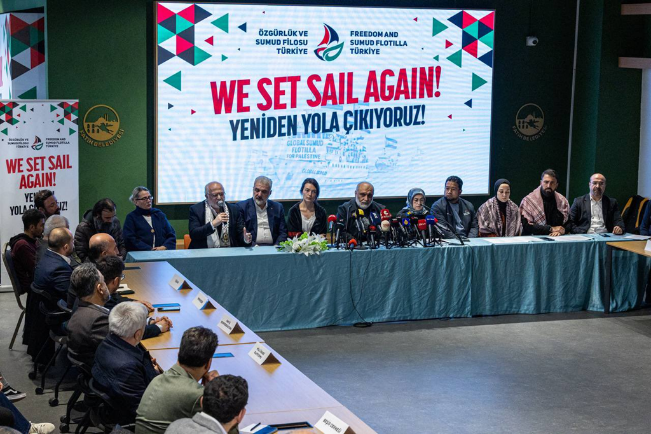
The Turkish organizers of the so-called Freedom and Resilience Flotilla announced today they were planning to dispatch a flotilla of 100-200 vessels to the Gaza Strip from Spain and other countries on April 12, 2026. The organizers, led by the Turkish IHH, the anti-Israeli organization which was behind the Mavi Marmara flotilla in 2010 and outlawed in Israel and other countries, stated that they expected the participation of “thousands of activists” from 150 countries, and in addition to humanitarian aid, they would attempt to bring medical personnel, educators, ecological construction experts, lawyers and war crimes investigators. The head of IHH, Bulent Yildirim, said that in addition to the maritime flotilla, they planned to dispatch land convoys to the Rafah crossing at the same time. He expressed confidence that the vessels would “disrupt the order established after World War 2,” adding, “We will mobilize the squares and the Mediterranean and we will break the siege from land and sea.” The press conference was rife with anti-Israel incitement. Salman Asmarer, president of the Association of Industrialists and Businessmen of the New World, said, “The free peoples of the world will defeat the Zionists. We will not stop until ‘Palestine’ and al-Aqsa Mosque are ‘liberated’ and a free ‘Palestine’ is established (IHH website, February 25, 2026).
Flotilla press conference (IHH X account, February 25, 2026)
The Ceasefire Agreement
Reportedly, a Palestinian contracting company from Gaza called Masoud & Ali Contracting Co (MACC) received, through intermediaries, a contract funded by the UAE to establish a temporary residential complex near Rafah for tens of thousands of displaced persons, in an area currently under Israeli military control. According to the report, MACC is to work with two Egyptian companies, and the plan includes the construction of multi-story caravans on an area of approximately 74 dunams (about 18 acres) (Reuters, February 25, 2026).
The Palestinian-American mediator Bashara Bahbah said Washington was preparing a proposal for disarming Hamas and it would be presented to the movement in the near future. He said it was a proposal for “gradual disarmament” which would begin with heavy weapons and a Hamas declaration of its commitment not to develop, manufacture or smuggle weapons. The plan will also address the issue of tunnels and afterward the personal weapons that Hamas seeks to keep in the possession of its [terrorist] operatives for “self-defense.” Bahbah said a proposal was also being discussed for amnesty for Hamas [terrorist] operatives who surrendered their weapons and declared they would not “fight.” The possibility exists of integrating some of them into the future Palestinian police forces, but only after screening and verifying they will be loyal to the local Palestinian forces and not to any other entity. Bahbah also noted that the first contingent of international stabilization forces was expected to arrive at the beginning of April 2026, with each force having responsibility for a specific geographic sector (al-Sharq al-Awsat, February 25, 2026).
The PIJ deputy secretary general, Muhammad al-Hindi, criticized the Board of Peace in Washington, calling it a “theatrical show” which did not prevent Israel from continuing the war in the Gaza Strip despite the declaration of a ceasefire in accordance with the American plan, adding that the American president wanted to control the future of the Strip, “Palestine” and the Middle East. He said the mediators’ role had ended with the completion of negotiations on the prisoner exchange deal. Regarding the international stabilization force, he accused the Americans of seeking to deploy it to occupy the Strip, and the Palestinians had no choice but to endure and cling to their land to overcome the crisis (Arabi21, February 24, 2026).
The National Committee for Managing Gaza
Bahbah said the technocrat committee for managing the Gaza Strip would enter along with the stabilization forces because it required security and protection. He added that the connection between Hamas and the committee was superficial and noted that there were points of disagreement which were subject to negotiation, the most important of which was the integration of Hamas policemen into the new security forces. He said there were about 40,000 employees in the Hamas administration and not everyone who worked with the movement believed in its ideology or was loyal to it. He said deciding whom to absorb lay with the committee, but it could be possible to reemploy people who had previously worked in the Gaza Strip (al-Sharq al-Awsat, February 25, 2026).
A source in the national committee for managing Gaza said the committee was not yet active on the ground because its members had not received permission from Israel to enter the Strip, despite assurances that chairman Ali Shaath received from Nikolay Mladenov, the high commissioner for the Strip on behalf of the Board of Peace. A Palestinian diplomatic source said the committee also did not respond to requests by many foreign ambassadors and diplomats in Cairo to meet with Shaath and the committee members due to restrictions imposed by Nikolay Mladenov, as part of the American plan to keep all communication regarding projects in the Strip and their implementation in the hands of senior American officials and Mladenov. Regarding the Palestinian liaison office, which was recently established to serve as a channel of communication between the Palestinian Authority and the Board of Peace, the diplomatic source said that it is headed by PA Prime Minister Muhammad Mustafa, and included two ministers, one of whom was the minister of interior. He said the liaison office began operating immediately upon its establishment (al-Quds al-Arabi, February 26, 2026).
Counterterrorism Activities
Israeli security forces continued extensive counterterrorism activity throughout Judea and Samaria, especially in light of the war in Iran (IDF spokesperson, March 1, 2026). The forces detained wanted persons and suspects in terrorist activity, including six suspected of planning to carry out an attack in the immediate future. A Palestinian who was photographed celebrating the sight of missiles launched from Iran at Israel was also detained (Israel Police Arabic Facebook page, March 1, 2026). A suspect in an attempted vehicular attack targeting policemen near the Tunnels Checkpoint turned himself in to security forces (IDF spokesperson, February 24, 2026).
Friction between Settlers and Palestinians
Masked Israeli civilians attacked Palestinians and Israeli civilians in the village of Qusra in the Nablus area, injuring two Israelis (IDF spokesperson, February 27, 2026). Additional incidents of violence were reported in the villages of Jalud, al-Dik near Salfit, Idhna near Tarqumia, and al-Maniya in the Bethlehem area (Palestinian media, February 27, 2026).
The ministry of health in Ramallah reported two Palestinian brothers killed and three additional residents wounded after Israeli settlers opened fire at residents and buildings in the village of Qaryut, south of Nablus (Wafa, March 2, 2026). The IDF condemned the incident and stated that the event was under investigation; the Israel Police also opened an investigation (Israeli media, March 2, 2026).
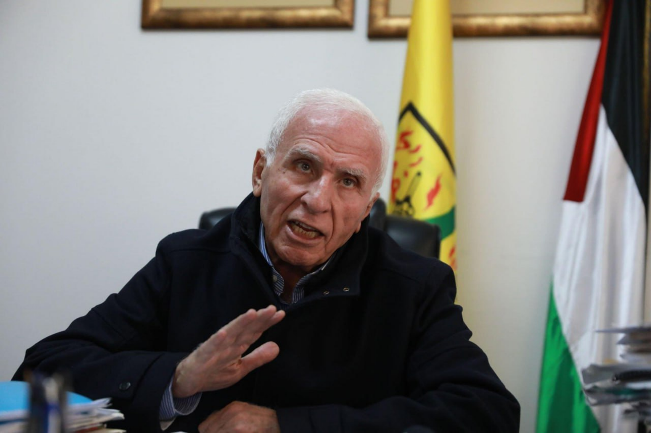
The secretary of the PLO Executive Committee, Azzam al-Ahmad, claimed the American administration’s demand that the PA carry out reforms as a condition for receiving a role in the Gaza Strip was intended to sideline the Palestinians in general, and to prevent Hamas from having a role in particular. The PLO rejected the demand on the grounds that Hamas was “part of the national fabric.” He added that there was an ongoing dialogue with Hamas for it to join the PLO, and discourse on disarming it or designating it as a terrorist organization was unacceptable. He firmly rejected interference in the school curricula, particularly demands to remove “Palestine,” the map and the flag, and claimed they were “artificial reforms” whose objective was to buy time. He also said that under the current American administration it would be difficult to advance a two-state solution, just as the president had failed in the past to impose the Deal of the Century. Regarding the Hamas terrorist attack and massacre on October 7, 2023, al-Ahmad claimed it was a “strategic mistake” [sic] which caused “enormous damage” to the Gaza Strip and to the Palestinians, and rejected the claim that the attack had returned the Palestinian issue to negotiations. He also noted that a clause included in the municipal elections law, which required candidates to commit to the PLO program and to recognize Israel, was removed after it was defined as a “mistake,” since local councils dealt with services and not with political activity (al-Shorouk, February 23, 2026).[6]
Azzam al-Ahmad (Quds Agency, February 24, 2026)
The deputy chairman of the PA, Hussein al-Sheikh, held talks with the foreign ministers of Qatar, Saudi Arabia, Jordan, the UAE, Bahrain and Kuwait, during which he said the Palestinian leadership rejected the Iranian attacks on Arab countries, and expressed full solidarity and support for every step taken to safeguard their security and sovereignty. The PA issued a statement condemning the Iranian attacks on Arab states, calling them a violation of the UN Charter and the principles of international law. At the same time, PA chairman Mahmoud Abbas demanded an emergency meeting of Arab foreign ministers be convened and a discussion in the Security Council in light of what he called dangerous challenges threatening the Middle East and the sovereignty of regional states (Wafa, February 28, 2026).
[1] Click https://www.terrorism-info.org.il/en to subscribe and receive the ITIC’s daily updates as well as its other publications.
[2] See the February 2026 ITIC report, Hamas Deploys to Recover and Retain Its Military Strength and Influence over the Gaza Stri
[3] The Palestinian terrorist organizations operating in the Gaza Strip.
[4] See the March 2026 ITIC report, “The Resistance Axis Reacts to the Israel-United States War against Iran and the Elimination of Ali Khamenei.”
[5] See the October 2025 ITIC report, The Turkish IHH, which led the Mavi Marmara flotilla, operates in the Gaza Strip and is involved in its reconstruction
[6] Nevertheless, the requirement appears in the municipal elections law as published on the website of the Palestinian Central Elections Commission. https://www.elections.ps/Portals/0/Local%20Elections%20Law%202025%20as%20amended%202026%20EN%20.pdf
Related Articles