

Within a week, the US and Israel “will have complete control over Iranian skies,” US War Secretary Pete Hegseth asserted on Wednesday during a press conference at the Pentagon alongside Gen. Dan Caine, chairman of the Joint Chiefs of Staff, exclaiming that Iran was “toast.”
Hegseth also promised to rain “death and destruction” down on Iran, and vowed that the US can keep fighting “as long as we need to,” although he admitted that the US “can’t stop everything” fired by Tehran, hinting at the likelihood of future US casualties and further damage to American assets.
Iran is “toast, and they know it,” Hegseth said in comments to reporters on the fifth day of the US-Israeli war against Iran, “or at least, soon enough, they will know it.”
He stressed that the US and Israel “have only just begun” hunting and degrading Iranian capabilities, but that soon enough they will have “uncontested airspace.”
That means “we will fly all day, all night, day and night, finding, fixing and finishing the missiles and defense-industrial base of the Iranian military. Finding and fixing their leaders, and their military leaders,” Hegseth said.
Get The Times of Israel’s Daily Edition
by email and never miss our top stories
By signing up, you agree to the terms
He said that Iranian leaders will look up and only see US and Israeli airpower, “every minute of every day until we decide that it’s over.”
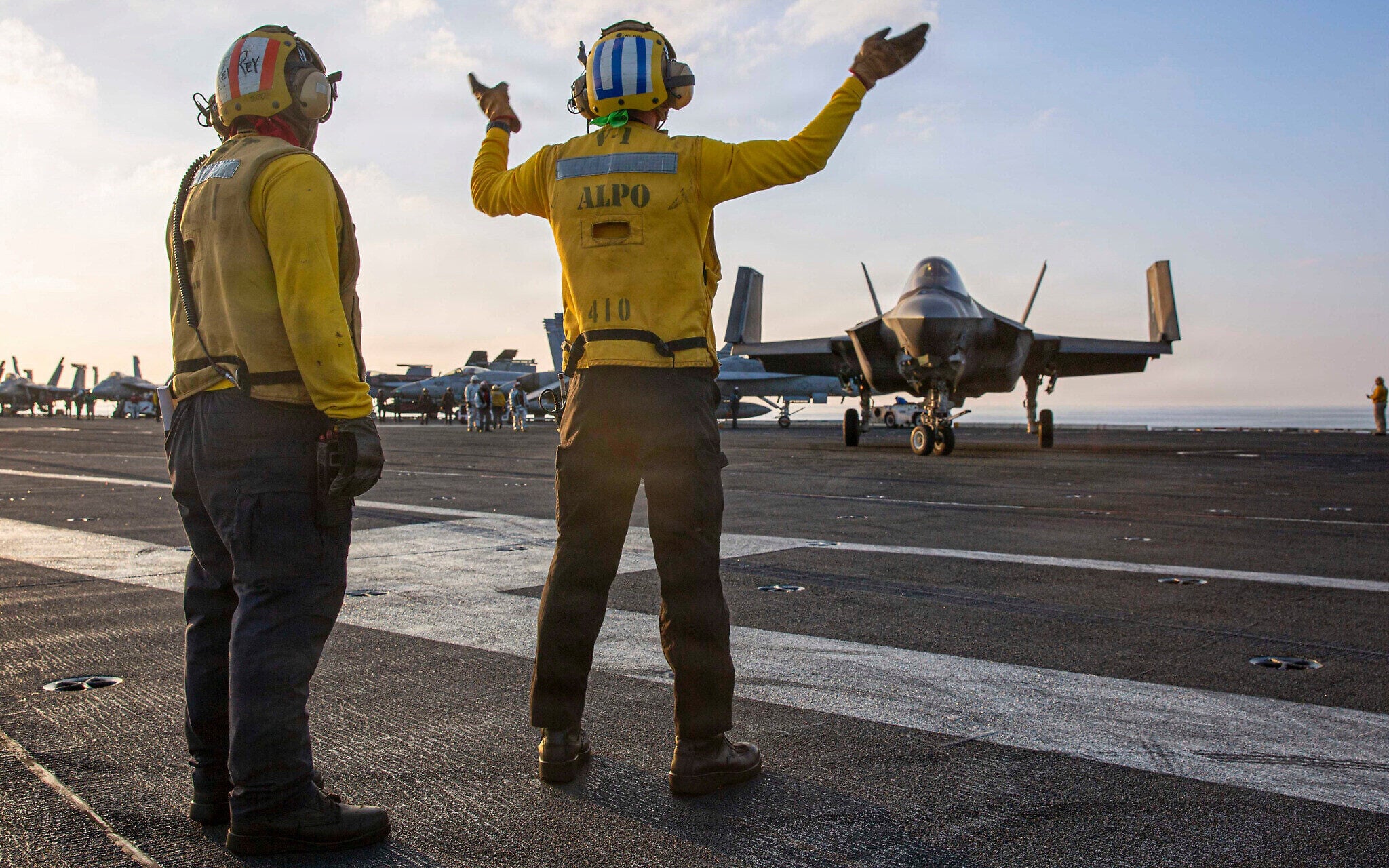
This image provided by US Central Command shows Navy sailors signaling to an F-35C Lightning II on the flight deck of the USS Abraham Lincoln (CVN 72) during operations in support of the war in Iran, on March 3, 2026. (US Navy via AP)
“Iran will be able to do nothing about it,” he warned. “Death and destruction from the sky. All day long.” US pilots “have maximum authorities granted personally by the president and yours truly,” he added. Rules of engagement “are designed to unleash American power, not shackle it.”
“This was never meant to be a fair fight, and it is not a fair fight,” Hegseth continued. “We are punching them when they’re down, which is exactly how it should be.”
This campaign “has seven times the intensity” of Israel’s June operation against Iran, the war secretary added. “More and larger waves are coming; we are just getting started. We are accelerated.”
Once air supremacy is established, the US will begin dropping 500-, 1000- and 2000-pound precision bombs, of which the US has a nearly unlimited stockpile, said Hegseth.
US stockpiles of stand-off guided missiles and Patriot missiles remain “extremely strong,” he said, amid concerns the campaign against Iran could deplete American defenses ahead of a potential war with China.
“We can sustain this fight easily, for as long as we need to,” Hegseth said, dismissing concerns that air defense of America’s Arab allies could run out amid a concerted Iranian missile and drone assault. “Our air defenses and that of our allies have plenty of runway.”
“We will take all the time we need to make sure we succeed,” Hegseth said.
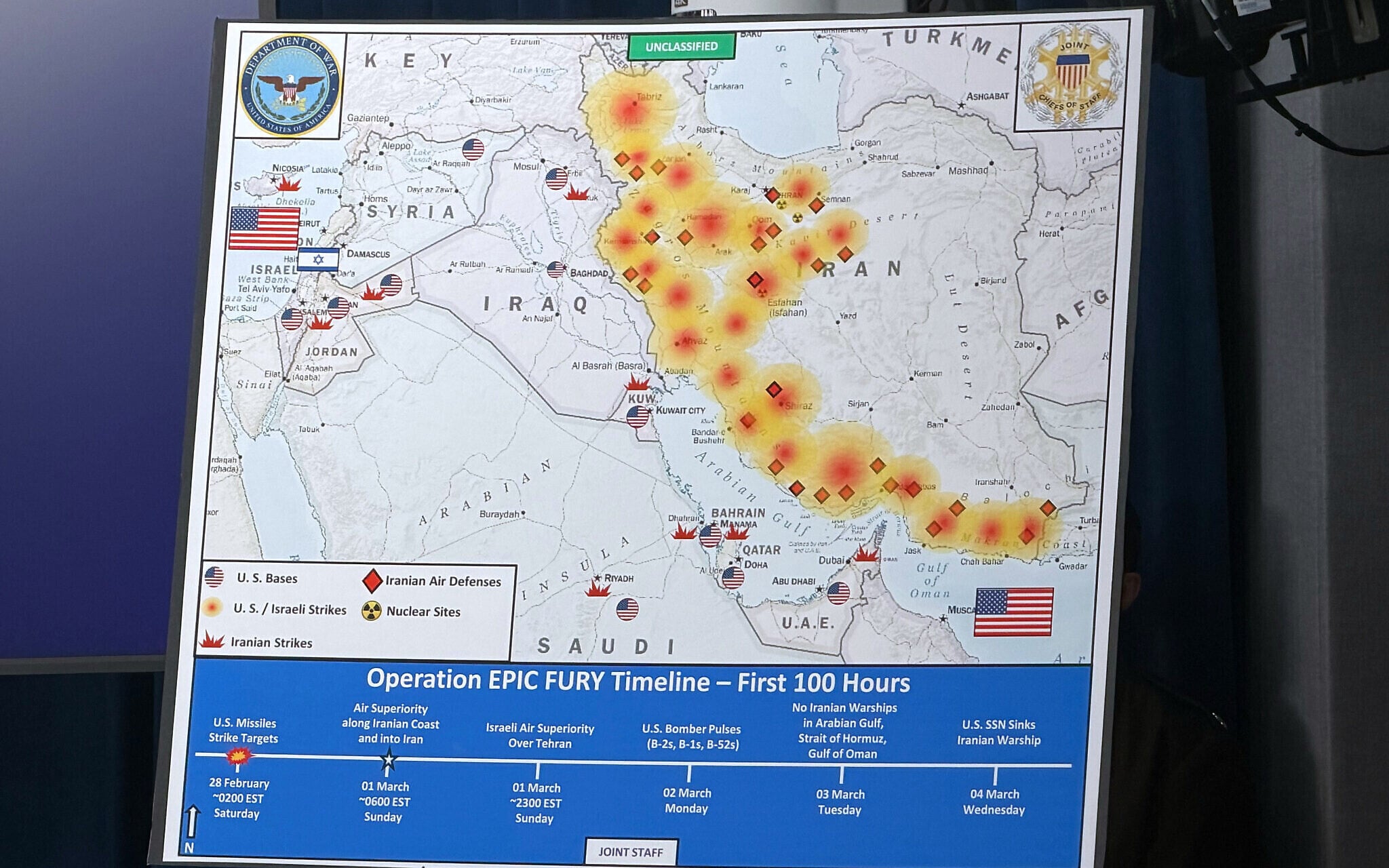
A US War Department map entitled, Operation EPIC FURY Timeline – First 100 Hours, is displayed during a news conference with US War Secretary Pete Hegseth and Chairman of the Joint Chiefs of Staff Gen. Dan Caine, at the Pentagon, March 4, 2026, in Washington. (AP/Konstantin Toropin)
The war secretary said the timeline of the war could go further than previously speculated, after US President Donald Trump has himself offered varying assessments of the war’s length in interviews over the past few days.
“You can say four weeks, but it could be six, it could be eight, it could be three,” Hegseth said. “Ultimately, we set the pace and the tempo.”
Iran can’t adapt to the new challenges it faces, he argued: “Iran’s senior leaders are dead. The so-called governing council that might have selected a successor are dead, missing, or cowering in bunkers, too terrified to even occupy the same room.”
“The Iranian air force is no more,” he boasted. “The Iranian navy rests at the bottom of the Persian Gulf.”
“We’ve taken control of Iran’s airspace and waterways without boots on the ground,” he continued. “We control their fate.”
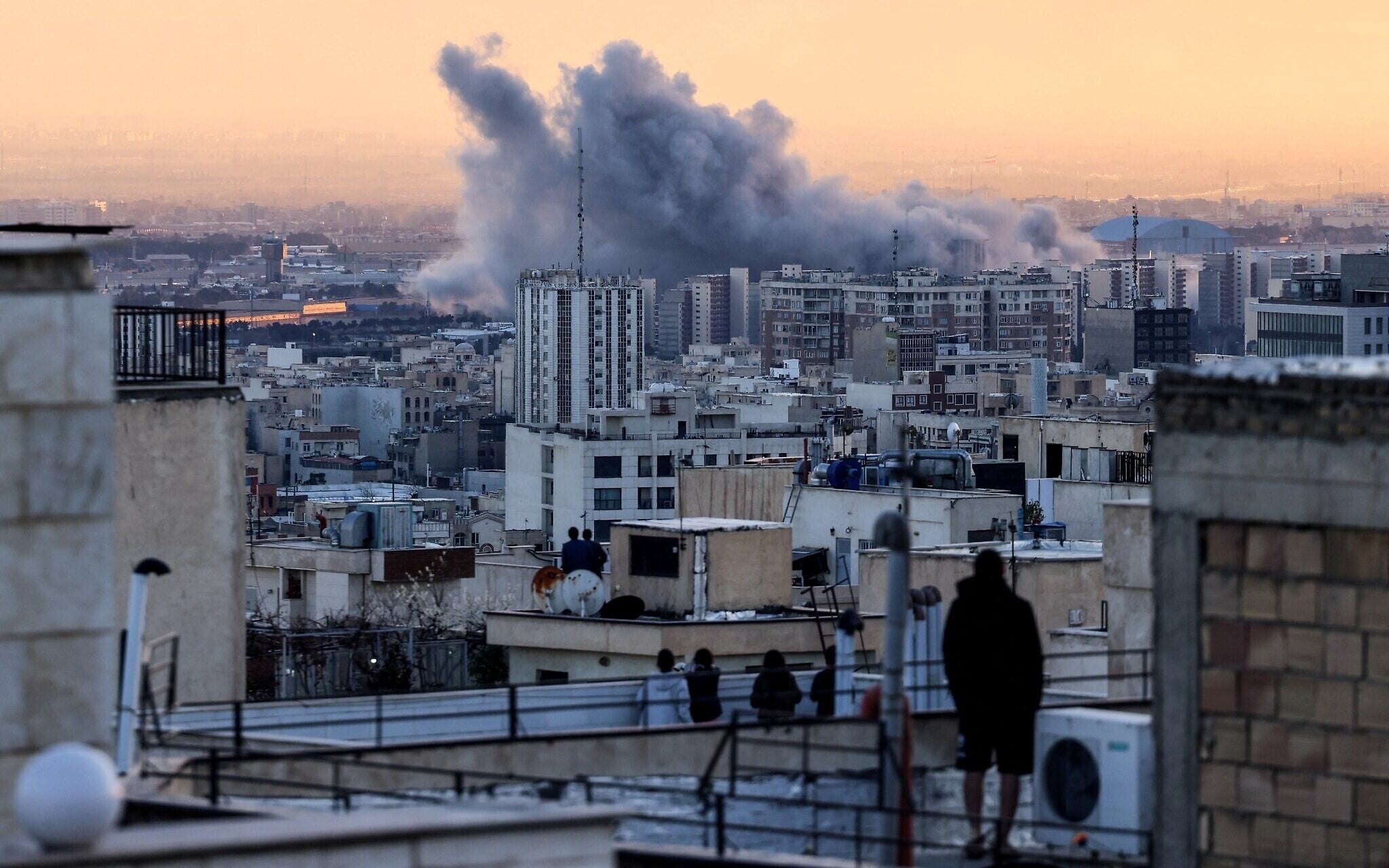
A person stands on the roof of a building looking at a plume of smoke rises after a strike on the Iranian capital Tehran, on March 3, 2026. (Atta Kenare/AFP)
Hegseth, however, acknowledged that some Iranian air attacks may still hit their targets. The US has spared “no expense or capability” to enhance air defense systems to protect American forces and allies in the Middle East, he said.
“This does not mean we can stop everything, but we ensured that the maximum possible defense and maximum possible force protection was set up before we went on offense,” he added. The US has put defending its troops “ahead of everything else,” and 90% of US troops in the region were moved outside the range of Iranian fire, Hegseth said.
On Sunday, six American soldiers were killed at an operations center targeted by an Iranian drone strike in the heart of a civilian port in Kuwait. The husband of one of the slain soldiers, who was part of a supply and logistics unit based in Iowa, said the center was a shipping container-style building and had no defenses.
The New York Times on Tuesday reported that Iranian strikes have also succeeded in damaging US communications systems on at least seven US military sites so far.
The war secretary accused the press of wanting to make the US president look bad by focusing on Iranian drones that make it through air defenses.
Nevertheless, Hegseth asserted, the US “is winning” in its war on Iran “devastatingly, decisively, and without mercy.”
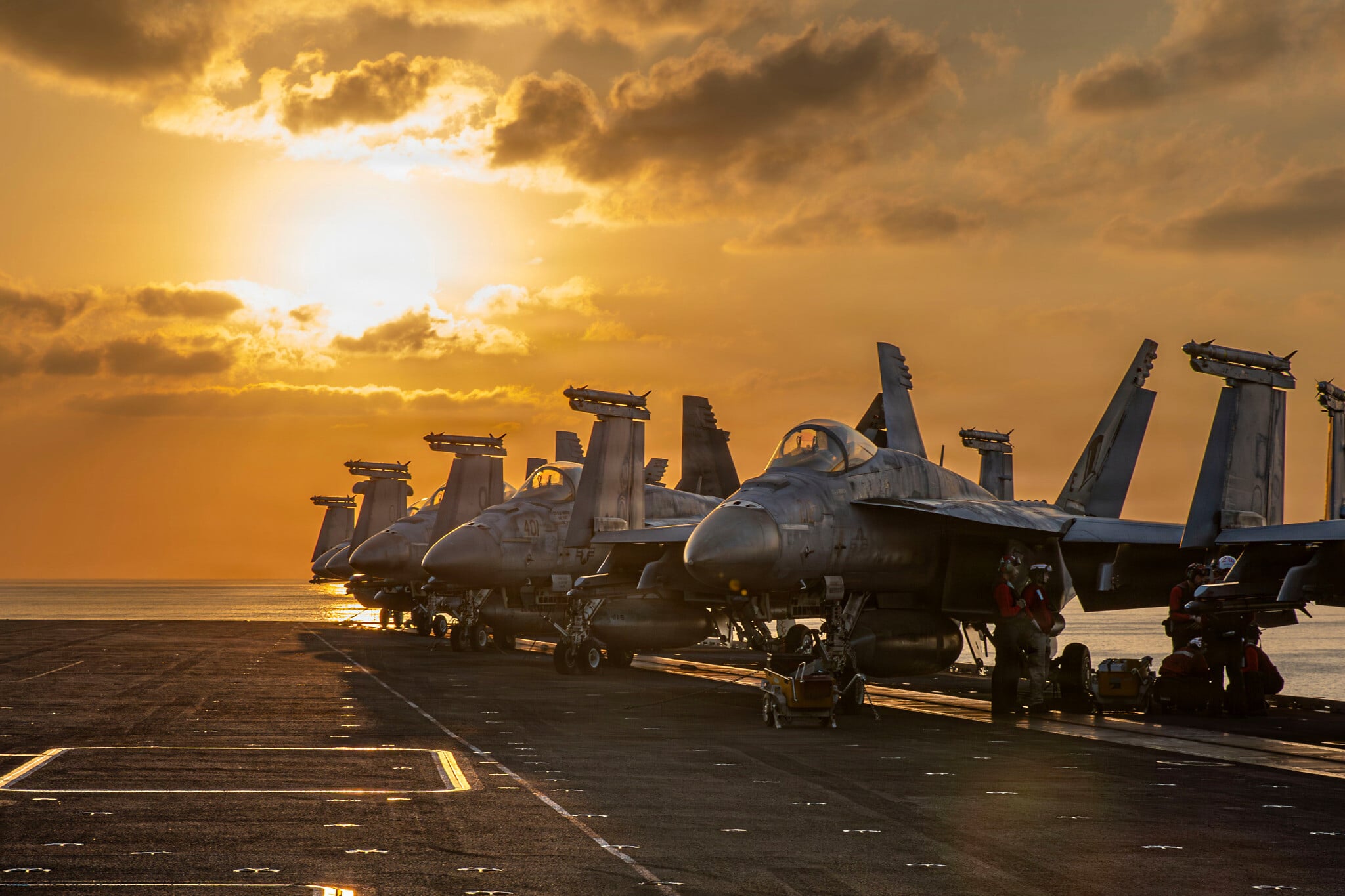
This handout image shows aircraft on the flight deck of the USS Abraham Lincoln (CVN 72) that are operating in support of the war in Iran, March 3, 2026. (US Navy via AP)
Only four days into the campaign, “metrics are shifting, dust is settling and more forces are arriving,” he added.
Hegseth says that the US is “leading” the campaign. “But when you add the Israeli Defense Forces, a devastatingly capable force, the combination is sheer destruction for our radical Islamist Iranian adversaries.”
He called Israel a “steadfast partner,” and said it’s a “breath of fresh air” to fight with such a capable ally. “We salute your courage and your contribution.”
The secretary also appeared to suggest that the US’s Gulf allies, who have been heavily bombarded by Iran, will be “going on offense.”
“What you’re seeing right now is a response in the region to the belligerence of Iran,” he said.
“On different levels, they’re reaching out to us,” he said, “whether they’re going on offense, which they are, whether they’re giving us additional access, basing and overflight, we working very closely and collaborating with them.”
He also said that none of the US objectives in Iran are “premised on the support or arming of any particular force,” in response to a question about reports the US is planning to arm an Iranian Kurdish uprising.
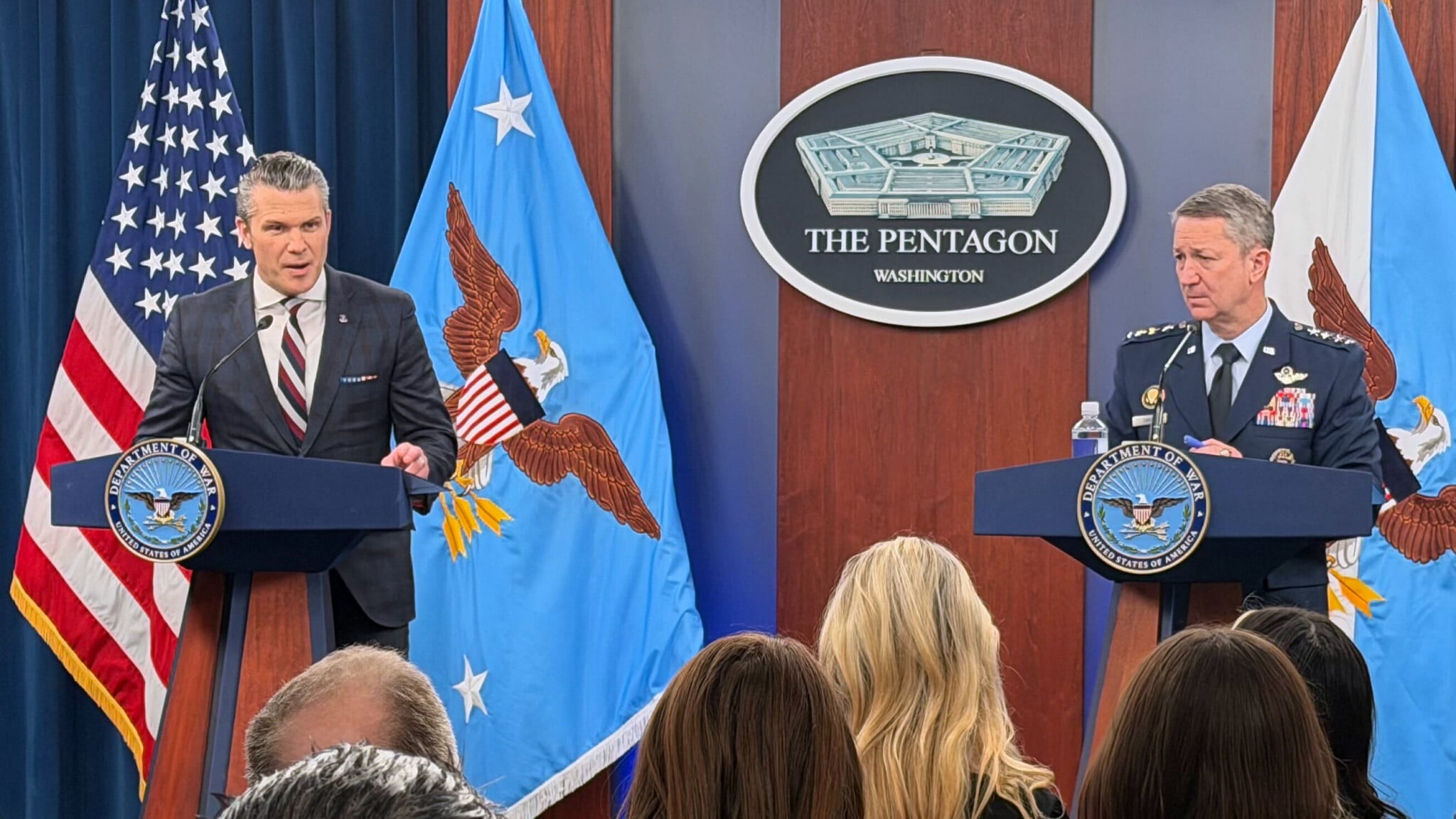
US War Secretary Pete Hegseth and Chairman of the Joint Chiefs of Staff Gen. Dan Caine, speak during a press briefing at the Pentagon, March 4, 2026, in Washington. (AP/Konstantin Toropin)
Speaking after Hegseth at the Pentagon press conference, top US general Caine described a significant decline in Iranian missile and drone launches since the start of Operation Epic Fury.
“Iran’s theater ballistic missile shots fired are down 86% from the first day of fighting, with a 23% decrease just in the last 24 hours… Their one-way attack drone shots are down 73%,” Caine said.
Nevertheless, he noted, US service members “remain in harm’s way, and we must be clear-eyed that the risk is still high.”
Caine said the three military goals of the operation are currently to neutralize Iran’s ballistic missile threat, degrade or destroy the Iranian navy, and prevent Iran from quickly rebuilding its military capabilities.
The general said the US has struck more than 2,000 targets during the campaign, and that over 20 Iranian naval vessels have been destroyed, largely neutralizing Iran’s main naval presence in the theater.
“This progress has allowed CENTCOM to establish localized air superiority across the Southern flank of the Iranian Coast,” he continued. “We will now begin to expand inland, striking progressively deeper into Iranian territory.”
Nava Freiberg and Times of Israel staff contributed to this report.