
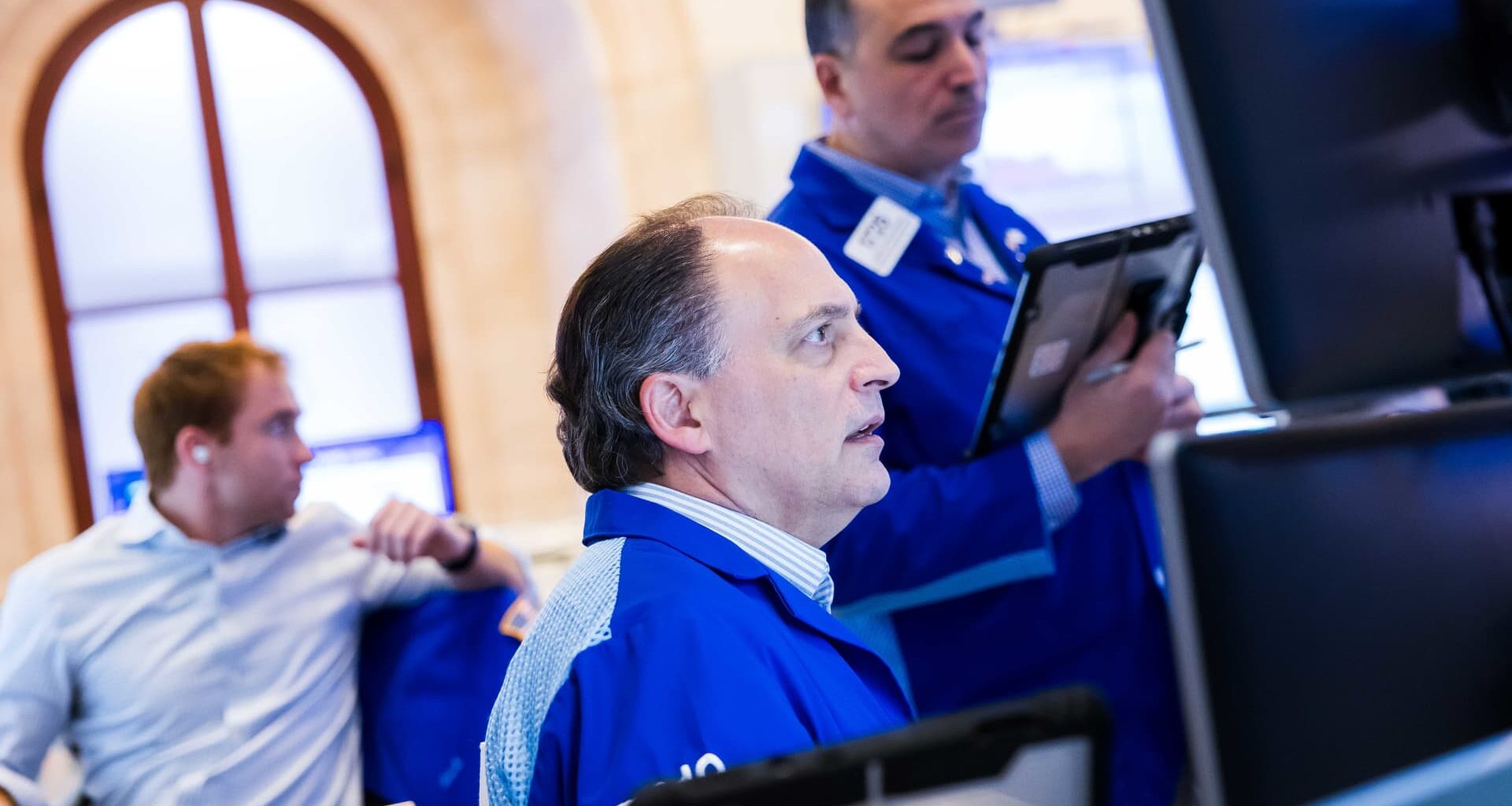
Traders work at the New York Stock Exchange on Feb. 27, 2026.
NYSE
U.S. Treasury yields edged higher on Wednesday but came off their highest levels of the morning after the Trump administration pledged to ensure that oil markets are well supplied and energy shipments can transit through the Strait of Hormuz.
Investors also absorbed the latest domestic economic data.
The benchmark 10-year Treasury yield rose more than 3 basis points to 4.094%. The 30-year Treasury bond added more than 2 basis points to yield 4.727%. The yield on the 2-year Treasury note was higher by more than 4 basis points, reaching 3.547%.
One basis point is equal to 0.01%, and yields and prices move in opposite directions.
The U.S.-Iran war remains a focus in fixed income markets, largely due to the impact it may have on U.S. and world inflation and economic growth. Investors are worried about a spike in oil prices, which could cause inflation to surge.
Those fears eased somewhat on Wednesday after Treasury Secretary Scott Bessent sought to calm concerns about a potential energy shock, arguing that oil markets are well supplied even as tensions escalate in the Middle East. Bessent said on CNBC’s Squawk Box that the U.S. will make “a series of announcements” that aim to stabilize oil shipments through the Persian Gulf.
President Trump said on Tuesday that the U.S. would provide risk insurance to all maritime trade in the Gulf in an effort to get tankers moving through the Strait of Hormuz. Iran had earlier threatened to target any ships on the route.
U.S. Treasurys have sold off in the wake of the conflict, exhibiting “no signs of safe haven demand,” said Tim Baker, macro strategist at Deutsche Bank. The 10-year yield was below the 4% level last week prior to the war.
“The market may just be most worried about inflation risks that work against any more rate cuts, and it actually is typical for bond yields to rise when oil rallies more than 10% over two days,” he wrote in a note published Tuesday.
In the U.S., investors received a positive sign about the state of the U.S. economy on Wednesday, with ADP reporting that hiring in the private sector in February was better than expected. Companies added 63,000 jobs last month, up from a downwardly revised 11,000 in January, and above the Dow Jones forecast for 48,000.
Investors are also anticipating February’s jobs report, unemployment figures and retail sales data on Friday. Nonfarm payrolls in February are estimated by Wall Street economists surveyed by FactSet to have risen by 60,000 jobs, and the unemployment rate to have remained steady at 4.3%.
— CNBC’s Chloe Taylor and Pia Singh contributed to this report