
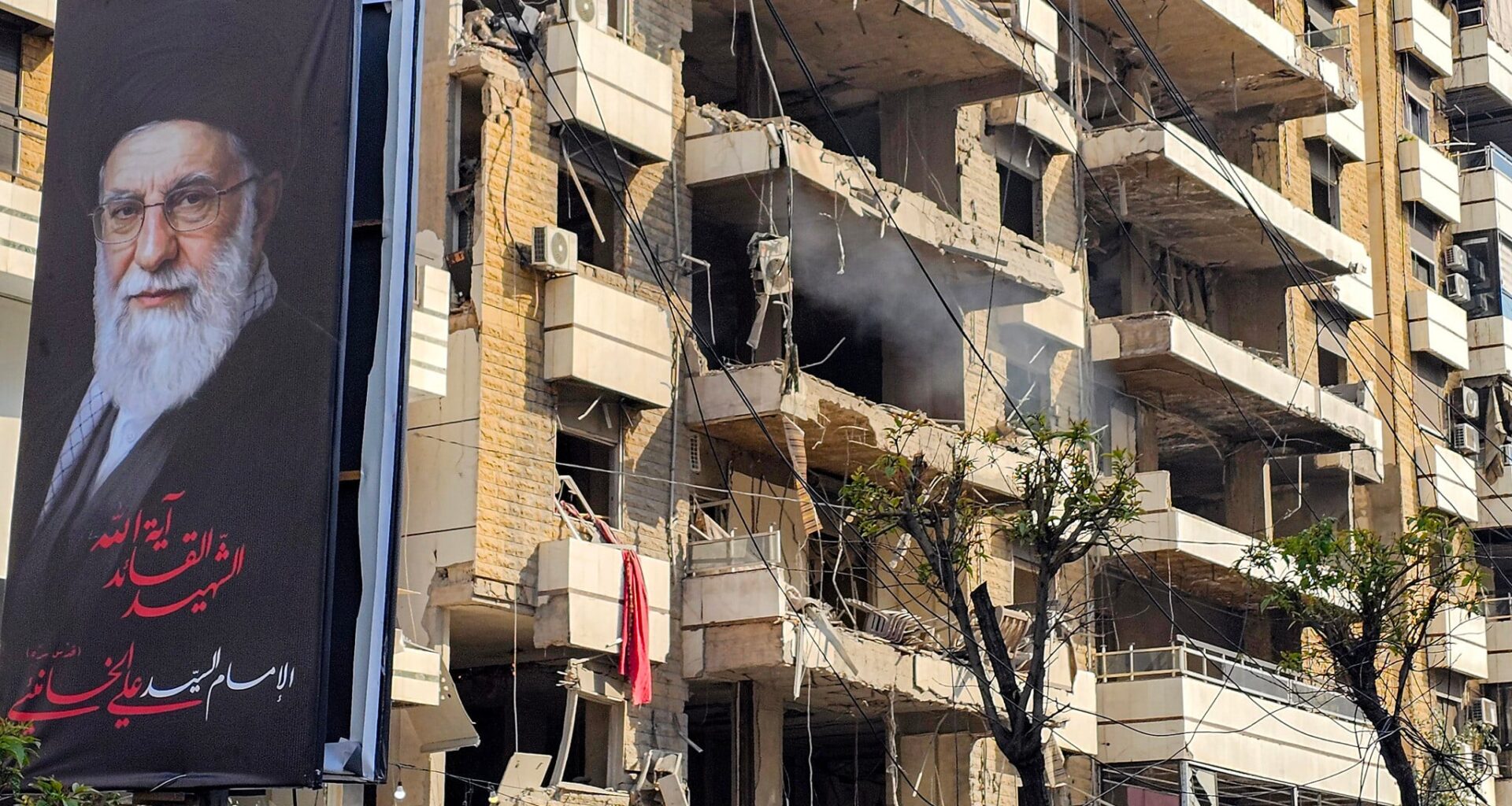
Hezbollah’s decision to start firing on Israel overnight Monday — ending months of relative quiet along the northern border — was not just a military move. It was a signal.
Despite being pounded by Israel in the 2024 war, Hezbollah retains one of the largest missile arsenals of any non-state actor in the world.
According to estimates from the Alma Research and Education Center, which analyzes security challenges on Israel’s northern borders, as of February 26, the terror group had as many as 25,000 rockets and missiles — largely short and medium range — along with roughly 1,000 suicide drones. Its manpower is equally formidable: up to 100,000 regular and reserve operatives, including 5,000 fighters in the elite Radwan Force, described by Alma as “the core of the ground offensive force.”
According to Sarit Zehavi, founder and president of Alma, Hezbollah’s decision to join Iran’s fight against Israel came as no surprise.
“We knew that once they got the orders from Iran, they would join,” she said.
Get The Times of Israel’s Daily Edition
by email and never miss our top stories
By signing up, you agree to the terms
And yet, when Hezbollah launched its rocket attack on Israel — its first since the US-brokered Israel-Lebanon ceasefire took effect in November 2024 — the strike was limited in comparison to previous engagements.
Residents of Southern Lebanon filmed the launch of several rockets earlier by Hezbollah at Haifa in Northern Israel, with several of the rockets falling short and at least one being intercepted by the Israeli Air Force. pic.twitter.com/IG4oTfW7JF
— OSINTdefender (@sentdefender) March 1, 2026
Rather than unleashing sustained barrages or deploying significant portions of its long-range arsenal, the group has fired only a relatively small number of rockets and drones at Israel, and only began sending longer-range projectiles toward Tel Aviv on Tuesday.
Israeli officials have acknowledged some surprise at the ranges involved, with a senior official telling Channel 13 that Israel “didn’t think they would fire at these ranges.”
Still, the relatively measured pace of attacks, despite Hezbollah’s far larger arsenal, has led analysts to conclude that the group is calibrating its involvement rather than committing fully to the fight.
“That was them signaling [to Tehran], that ‘we’re still your proxy, but we’re going to do the bare minimum,’” Gregg Roman, executive director of the Middle East Forum, told The Times of Israel, adding that Hezbollah knew the price they were going to pay if they got involved.
Yossi Kuperwasser, director of the Jerusalem Institute for Strategy and Security, agreed with that assessment, emphasizing that Hezbollah’s renewed and restrained offensive is not enough to tip the scales in the current military exchange between Israel and Iran, triggered by Jerusalem’s Operation Roaring Lion on Saturday.
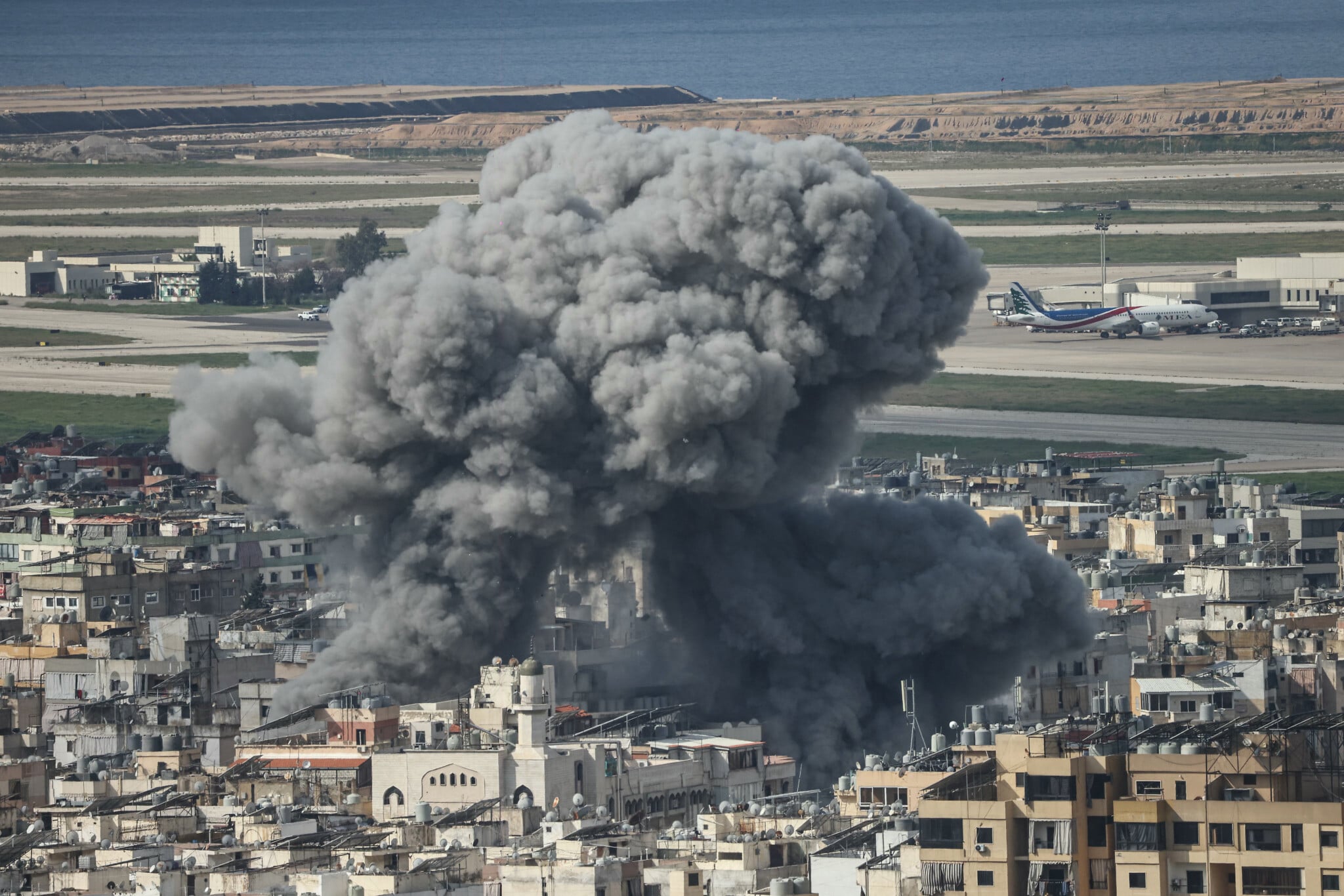
Smoke rises from the site of an Israeli airstrike that targeted the Al Lailaki neighbourhood in Beirut’s southern suburbs, with the city’s international airport visible in the background, on March 4, 2026. (IBRAHIM AMRO / AFP)
“It doesn’t change the scope of the battle against Iran,” he said. “It does mean [Israel] will have to dedicate some of [its] assets in order to deal with Hezbollah, not a major part of them, but some.”
In practice, Israel largely uses different air defense resources to counter Hezbollah’s threats than it does against those from Iran. Hezbollah’s largely short- and medium-range rockets are typically intercepted by Israel’s Iron Dome and David’s Sling systems, while Iran’s long-range ballistic missiles are countered by the Arrow defense system.
Roman assessed that Hezbollah is likely trying to preserve its long-range artillery, precision-guided munitions and middle-range rockets.
The group “realizes that if they use them, they’ll immediately be taken out by Israeli jets,” he said.
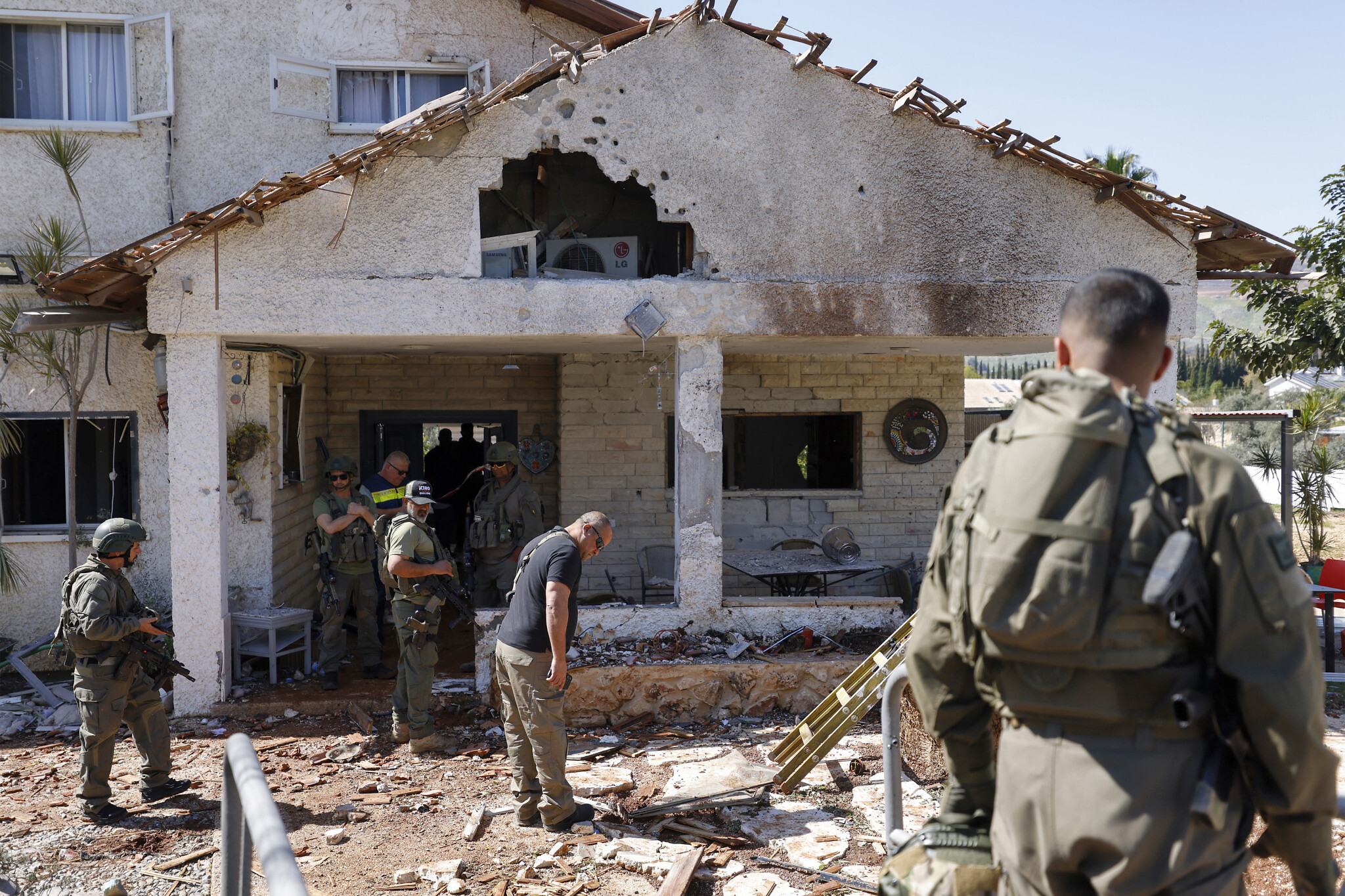
Israeli army and security forces conduct a sweep of a house that was hit by Hezbollah projectiles in Moshav Kfar Yuval in northern Israel near the border with southern Lebanon, March 3, 2026. (Jalaa MAREY / AFP)
He also argued that anti-tank guided missiles — which played a major role in displacing some 100,000 Israelis from northern Israel during Hezbollah’s attacks between October 8, 2023, and November 2024 — no longer pose the same threat after Israel sent troops deeper into southern Lebanon on Tuesday.
“To prevent the possibility of direct fire at Israeli communities, Prime Minister Benjamin Netanyahu and I have authorized the IDF to advance and hold additional dominant terrain in Lebanon and defend the border communities from there,” Defense Minister Israel Katz said in a statement.
Yet Zehavi noted that despite Hezbollah’s relative restraint, northern Israeli communities have faced near-constant red alert sirens in recent days — mainly due to drone infiltrations — both day and night.
While she does not expect the kind of mass evacuations seen in 2023-2024, Zehavi stressed the ongoing strain on residents living under rocket and drone threats from Lebanon.
“The communities next to the border have zero time to get to the bomb shelter,” she said. “It will be a challenge to manage life in this atmosphere.”
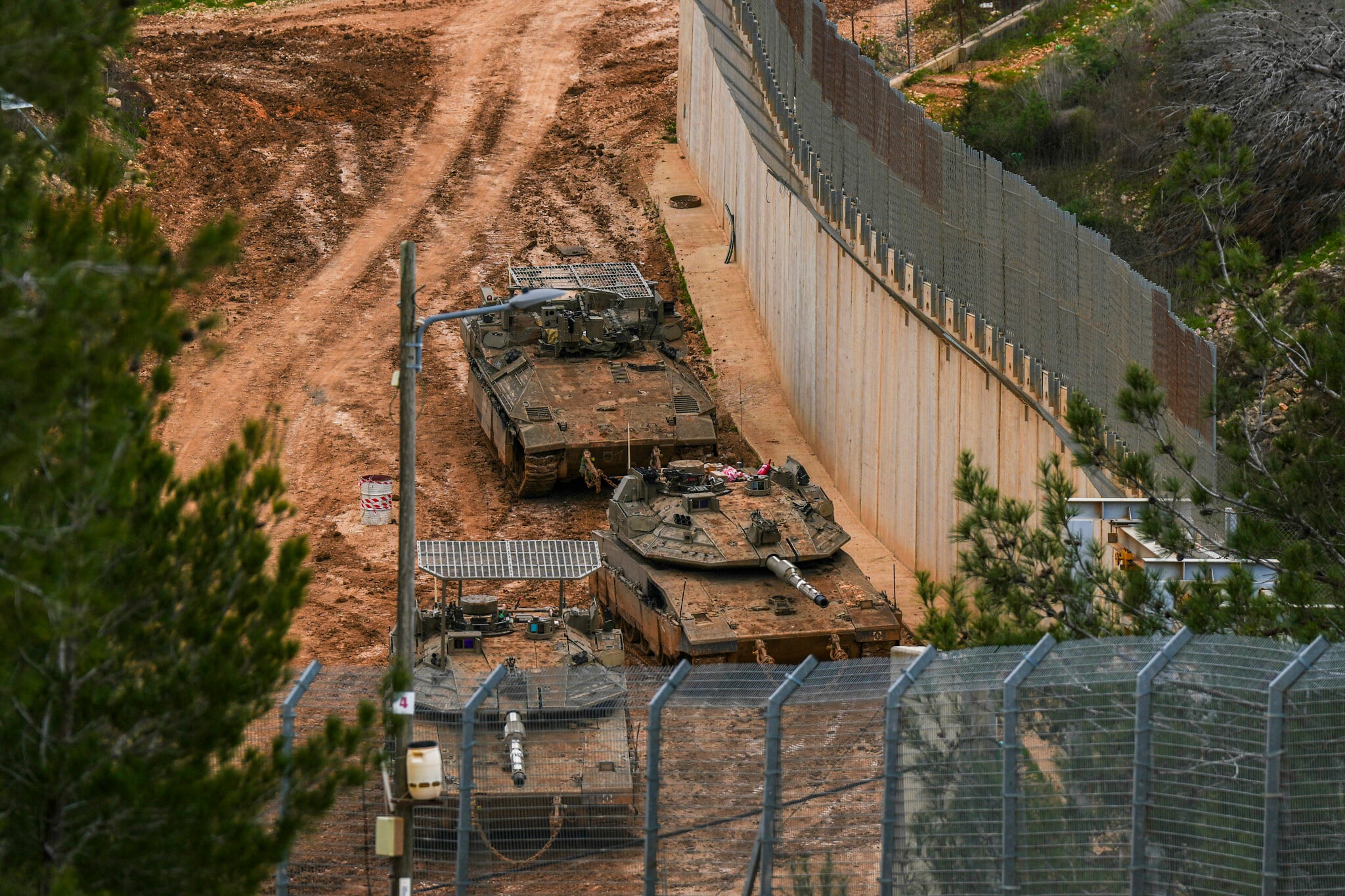
Israeli tanks seen along the Israeli border with Lebanon in northern Israel, March 2, 2026. (Ayal Margolin/Flash90)
Another emerging development is that of concurrent attacks by Iran and Hezbollah, which began on Wednesday.
At around 2 p.m., sirens sounded in central Israel due to one Iranian ballistic missile and some five rockets launched by Hezbollah timed to arrive at around the same time.
The timing raised questions about whether the attacks were coordinated. However, the IDF said later that evening it had no intelligence indicating that the concurrent fire from Iran and Hezbollah in Lebanon was the result of direct coordination.
According to Kupperwasser, regardless of whether the launches were synchronized, both actors likely share the same objective: “hoping to stretch Israel’s missile defense, and cause severe damage to deter Israel and convince it to stop the war before achieving its goals.”
However, he emphasized that Israel’s multilayered missile defense system was designed to handle different types of threats simultaneously and is capable of intercepting them — even when they arrive from multiple directions.

A man stands next to a stroller at a shelter after incoming missile sirens wailed in Tel Aviv on March 4, 2026. (Ilia YEFIMOVICH / AFP)
Lebanese victims
After Monday’s attack triggered widespread Israeli strikes on Hezbollah targets in Lebanon, Lebanese Prime Minister Nawaf Salam called the terror group’s military operations “illegal acts.”
“We declare a ban on Hezbollah’s military activities and confine its role to the political realm,” Salam said in a statement, demanding that Lebanon’s military prevent further attacks.
Roman explained that Hezbollah’s move provided Lebanese leadership with a political opening to formally proscribe Hezbollah’s armed wing, which was supposed to give up its weapons following the 2024 war.
Hezbollah’s attack gave Beirut a “reason to say we are now outlawing all militant Hezbollah non-state activity,” Roman said, while also signaling to Israel that the Lebanese government is not involved in Hezbollah activity and that the IDF should not target state infrastructure, such as power plants and ports.
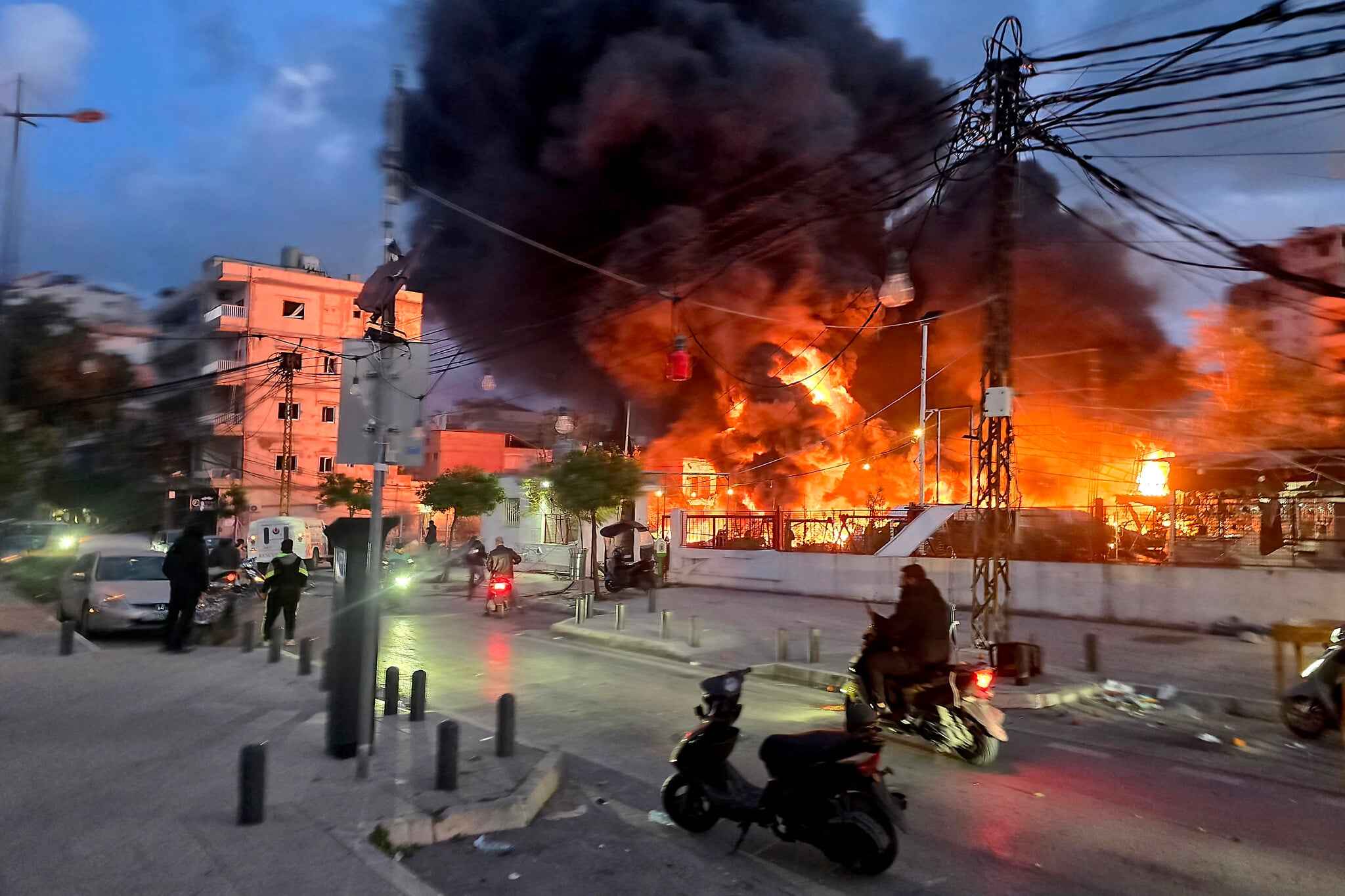
A blaze sweeps following Israeli bombardment on a solar farm and electricity generation facility in Lebanon’s southern coastal city of Tyre on March 4, 2026. (Kawnat HAJU / AFP)
“The Lebanese government is doing everything they can to distance themselves from Hezbollah without actually having a conflict with them,” Roman said.
Kuperwasser said Salam’s statements reflect broader public frustration in Lebanon, with many civilians likely asking, “Why are we putting ourselves in the middle of something we are not directly involved in?”
The toll on Lebanon’s civilian population was evident on Monday, with many fleeing the country’s south following IDF strikes on Hezbollah infrastructure, causing major traffic jams.

A handout photo released by the Lebanese Government Press Office on March 2, 2026 shows Lebanese Prime Minister Nawaf Salam speaking at the end of the ministerial council at the Presidential Palace of Baabda, east of Beirut (Handout / Lebanese Government Press Office / AFP)
Over 70 people have been killed in the Israeli strikes, according to Lebanon’s Health Ministry. The country’s president Joseph Aoun has asked the US to step in to halt the Israeli attacks.
Speaking to evacuees Wednesday, Salam assured them that they were “victims of policies not of their making.”
Pressured in
During the 12-day war between Israel and Iran in June, Tehran reportedly asked Hezbollah to fire at Israel, but the terror group refused. This time, it seems, they had no choice.
“They had to adhere to the orders from Tehran,” Kuperwasser said. “They try to pretend that… they are the protectors of Lebanon… Now it is clear that this is an Iranian organization that operates according to the orders from Tehran and totally ignores the needs of Lebanese security.”
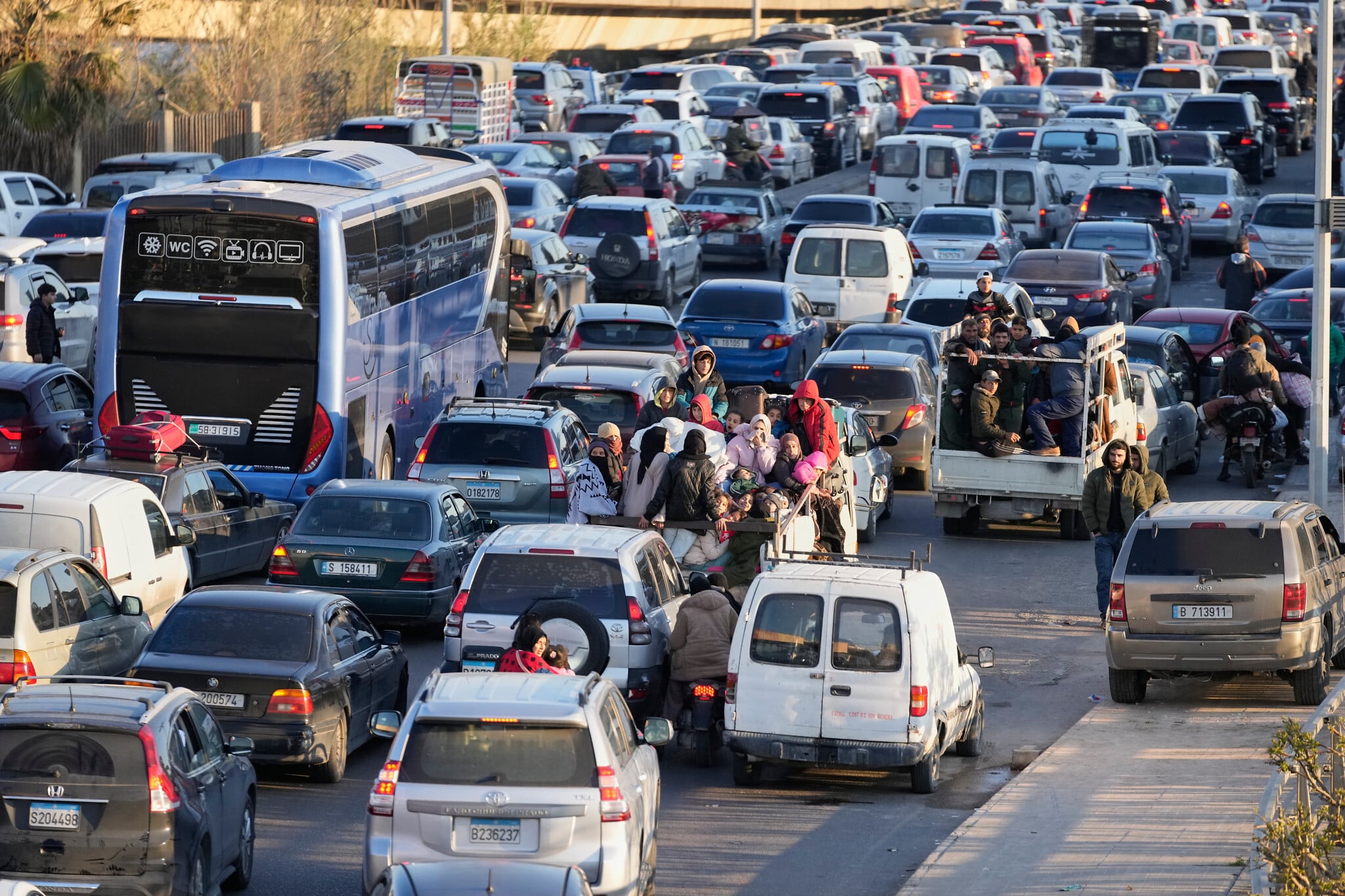
Displaced people fleeing Israeli strikes in southern Lebanon sit in traffic at a highway linking to Beirut, in the southern port city of Sidon, Monday, March 2, 2026, after Hezbollah fired rockets into Israel (AP Photo/Mohammed Zaatari)
Kuperwasser said that the turning point may have come with the killing of Iran’s supreme leader Ali Khamenei in the opening salvo of the US-Israeli bombing campaign on the Islamic Republic on Saturday.
“The Iranian pressure was building up, and the elimination of Khamenei just may have been the straw that broke the camel’s back,” he said.
Zehavi speculated that the reason why Hezbollah didn’t join earlier was because of the “chaos in Iran,” following Operation Roaring Lion’s dismantlement of the regime’s top brass.
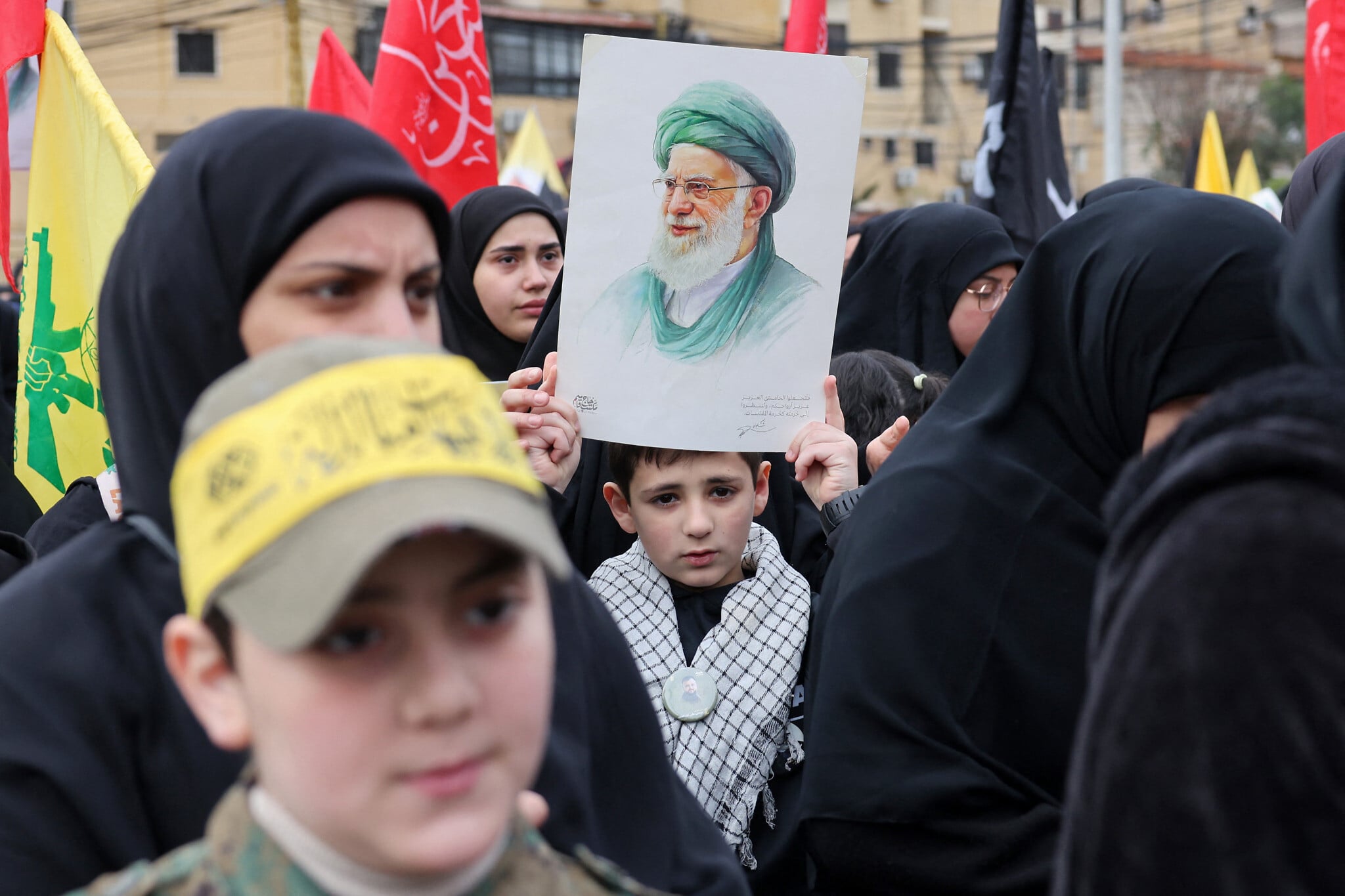
A young mourner holds a picture of Iran’s supreme leader Ali Khamenei during a memorial rally held by supporters of Lebanon’s Shiite Muslim Hezbollah movement a day after he was assassinated in Iran during a US and Israeli offensive, in Beirut’s southern suburbs, March 1, 2026. (Anwar AMRO / AFP)
According to Roman, pressure to get involved came not only from Iran, but from some parts of Hezbollah’s domestic Shia base.
“If Hezbollah did not engage, I think they would find themselves in a situation where they would lose complete legitimacy with any diehard Khamenei supporters who are left in [Lebanon],” he said.
Potent, and wide, threat
Despite the restrained nature of Hezbollah’s opening attacks — and the damage the group has sustained after months of Israeli airstrikes — Kuperwasser cautioned against dismissing the threat it still poses.
“We cannot underestimate Hezbollah, not even after everything [Israel] did to them,” he said, referring to Israel’s sustained targeting of the group’s terror infrastructure during the 2024 conflict and in the more than a year of fighting that followed.
Zehavi agreed that Israeli operations have significantly degraded Hezbollah’s capabilities, saying the group no longer has the capacity to launch a ground invasion into Israel. Still, she stressed that the IDF’s work in Lebanon is far from finished.
“You need to go deeper [into Lebanese territory],” she said, noting that while Israel has cleared much of the terror infrastructure in the country’s south, Hezbollah continues to maintain strongholds farther north — some 10 kilometers (6 miles) or more from the border, particularly north of the Litani River.
“There is a lot of work to be done,” she said.
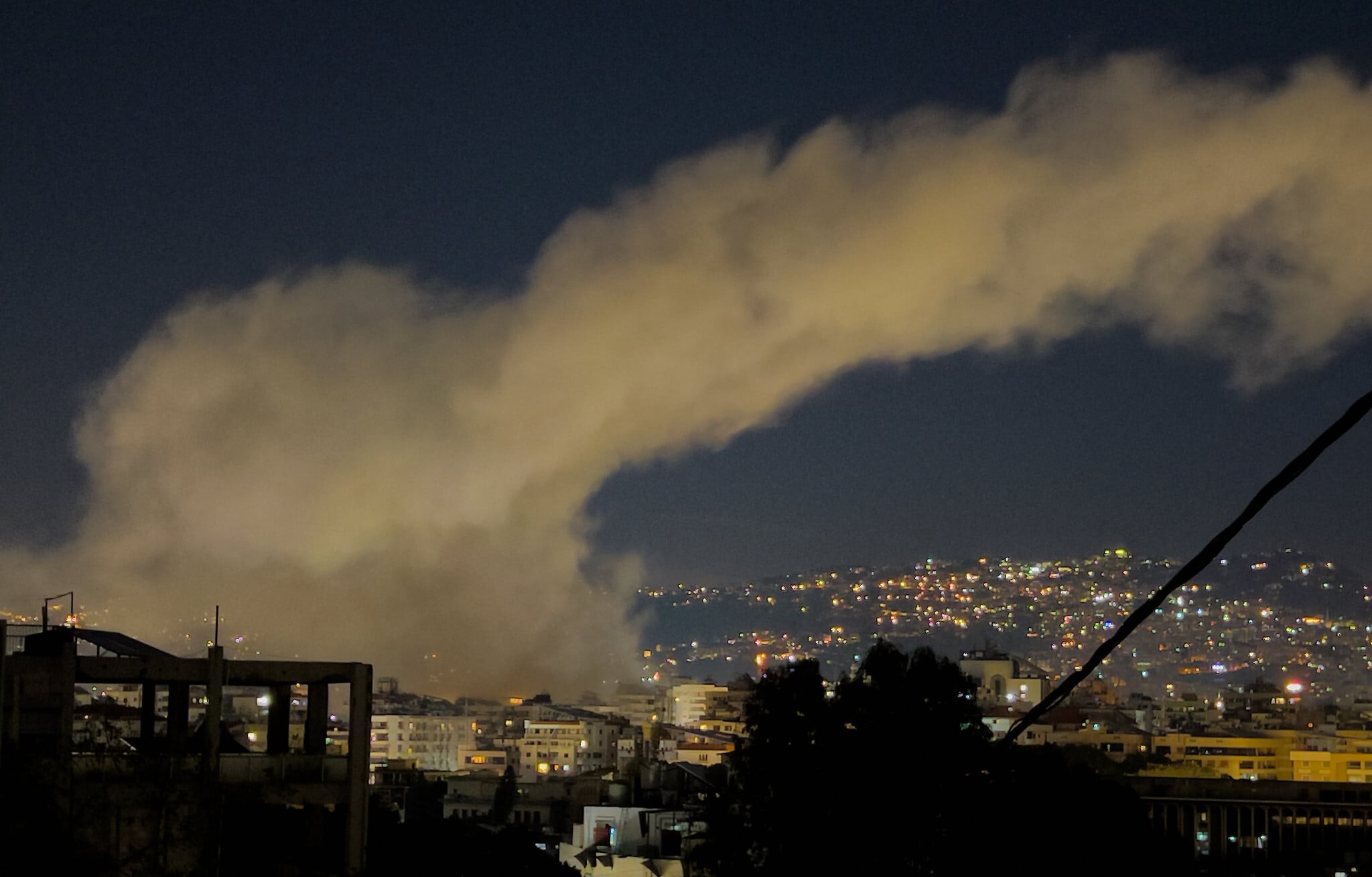
Smoke rises from Israeli airstrikes on Dahiyeh in the southern suburb of Beirut in response to Hezbollah rocket fire, early Monday, March 2, 2026. (AP Photo/Hussein Malla)
However, Roman noted that Hezbollah could shift away from attacking from Lebanon and instead unleash terror in Western countries far from the front lines.
“If there is a Hezbollah response against Israel, we may not see it on the northern border. We may see it in the realm of asymmetrical warfare with attacks in Europe,” Roman said.
The group has been known to carry out terror attacks on Israeli and Jewish targets in Europe and elsewhere, including the July 2012 bus bombing at Burgas airport in Bulgaria that killed five Israeli tourists and a Bulgarian bus driver. On Wednesday, Iran threatened that it could target Israeli embassies worldwide, a task that Hezbollah has taken on in the past.
Roman pointed to Latin America as a possible arena for Hezbollah activity, with the organization having maintained a documented presence there since the early 1980s, establishing networks across at least 12 countries from Mexico to Argentina, according to the RAND Corporation, an American nonprofit global policy think tank.
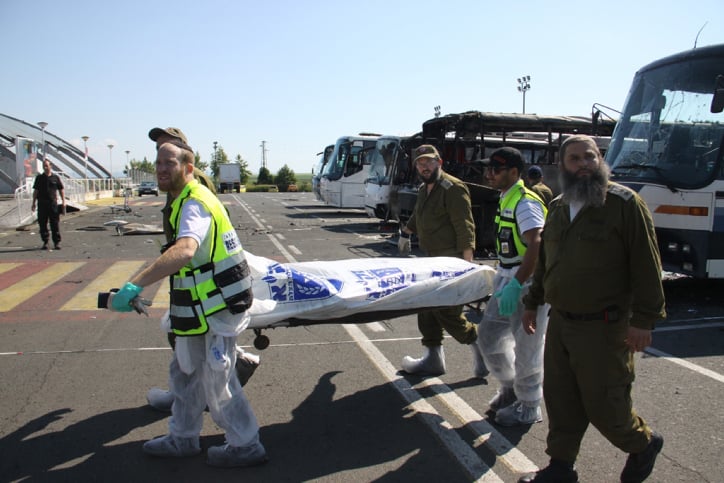
Israeli emergency workers carry a body bag away from the site of the Burgas bus attack at Burgas airport, Bulgaria, July 18, 2012. (Dano Monkotovic/FLASH90/JTA)
“That’s where I’m expecting Hezbollah to operate — not in border-to-border conflict,” he said.
A message to the proxies
Hezbollah is considered Iran’s strongest proxy, but it’s far from the only group in the region that backs the country and that could follow suit and enter the war, including Iraqi militias and Yemen’s Houthi rebels.
“We have this whole mantra: Go for the head of the octopus. The thing is, people don’t realize the appendages have their own minds too,” Roman said about Iran’s “Axis of Resistance.”
Israel’s response to Hezbollah — marked by extensive strikes on terror infrastructure and the elimination of senior figures, including the head of Hezbollah’s intelligence arm — is intended as a clear warning to the others, he said.
“It’s definitely telegraphing a message to the Houthis and Shia militias in Iraq.”
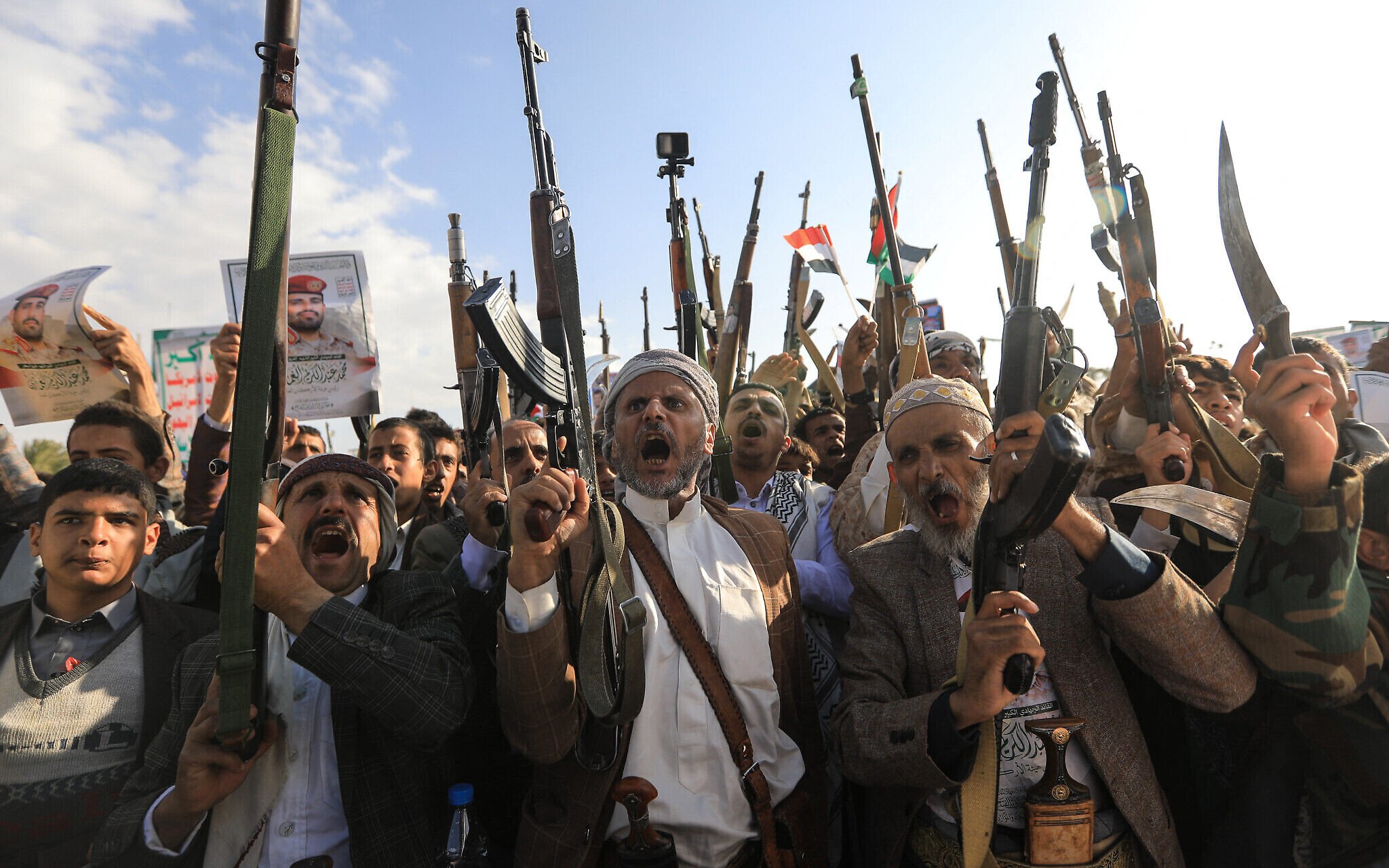
Supporters of Yemen’s Iran-backed Houthi rebels brandish weapons during an anti-Israel rally in Sanaa on October 17, 2025. (Mohammed HUWAIS / AFP)
Kuperwasser agreed that Israel’s military response is something those groups “have to take into account.”
“I think the Houthis are still licking their wounds from last time,” Roman said, referring to Israel’s August 28, 2025, strike on Yemen that killed Houthi Prime Minister Ahmed al-Rahawi, along with several other ministers and top Houthi officials.
Still, he did not rule out their involvement. During the war with Gaza, the Houthis launched hundreds of ballistic missiles and drones at Israel, and partially shut down shipping in the Red Sea, a tactic the group could resume.
“I think you can expect at least token attacks on Red Sea shipping in the next week,” Roman said.