
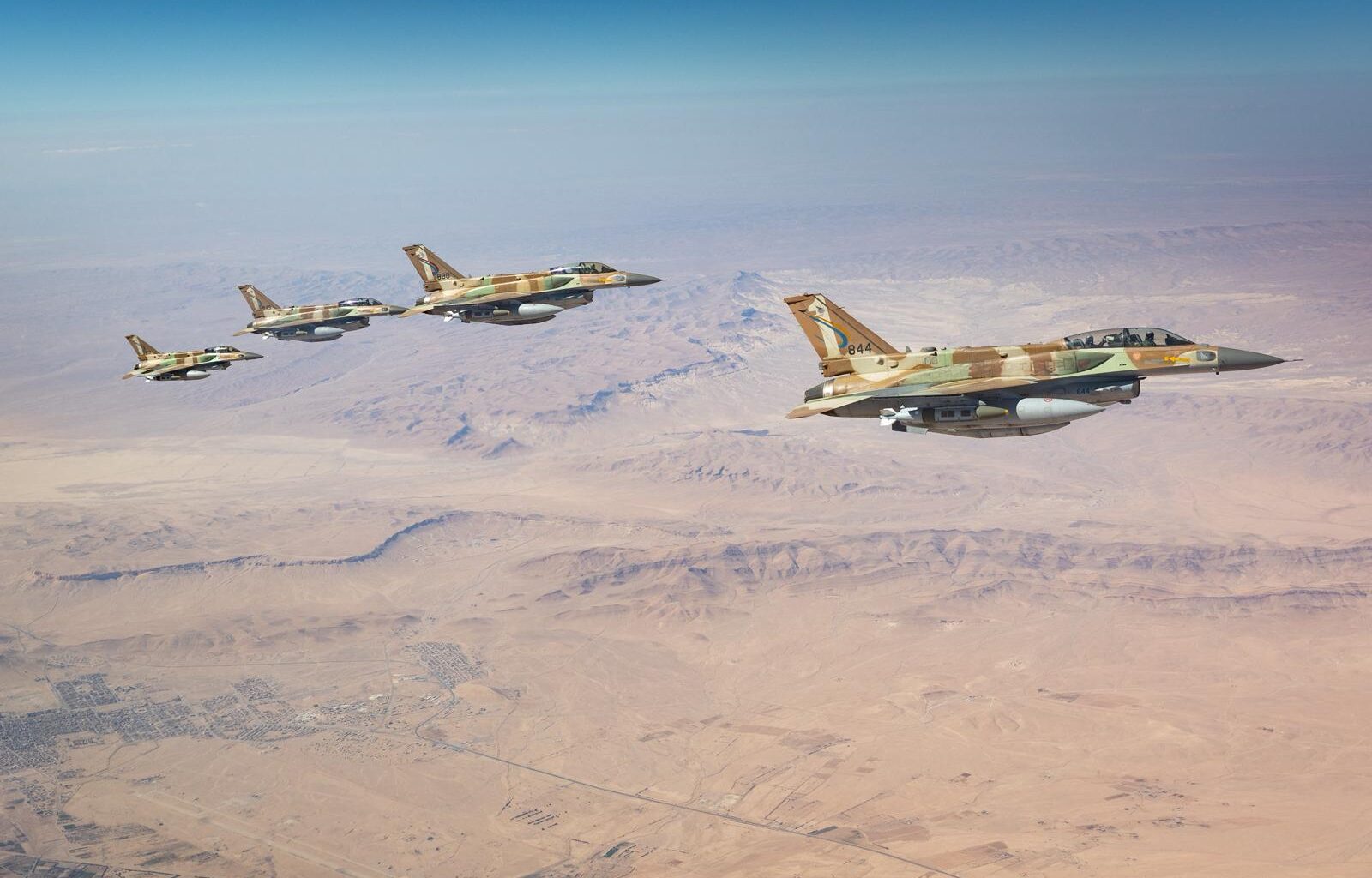
The Israeli military is planning for at least one or two more weeks of operations against Iran, during which it aims to hit thousands more Iranian regime targets, The Times of Israel learned on Wednesday.
Israel’s goal is a systematic degradation of the Iranian regime and its military sites.
The plans were announced several days into an extensive bombing campaign against Iran.
As of Wednesday, the Israeli Air Force had dropped more than 5,000 bombs during strikes in Iran since the start of the conflict, the military said.
The military added that IAF fighter jets “continue to deepen air superiority throughout Iran, with an emphasis on the Tehran area.”
Get The Times of Israel’s Daily Edition
by email and never miss our top stories
By signing up, you agree to the terms
A senior Israeli air force officer said Israel’s strikes have killed thousands of Iranian soldiers.
“In the past two days, we have killed thousands of Iranian forces,” said Col. “Aleph,” the commander of the Ramat David Airbase -— identified only by his first initial in Hebrew — in a video published by the military.
The airbase commander said he had participated in a wave of strikes on a massive Iranian military compound in eastern Tehran.
“Seconds before I dropped the bombs, I looked right and left, and saw dozens of fighter jets beside me. They’re flying freely, dropping hundreds of tons of precise munitions and destroying the targets,” he added.
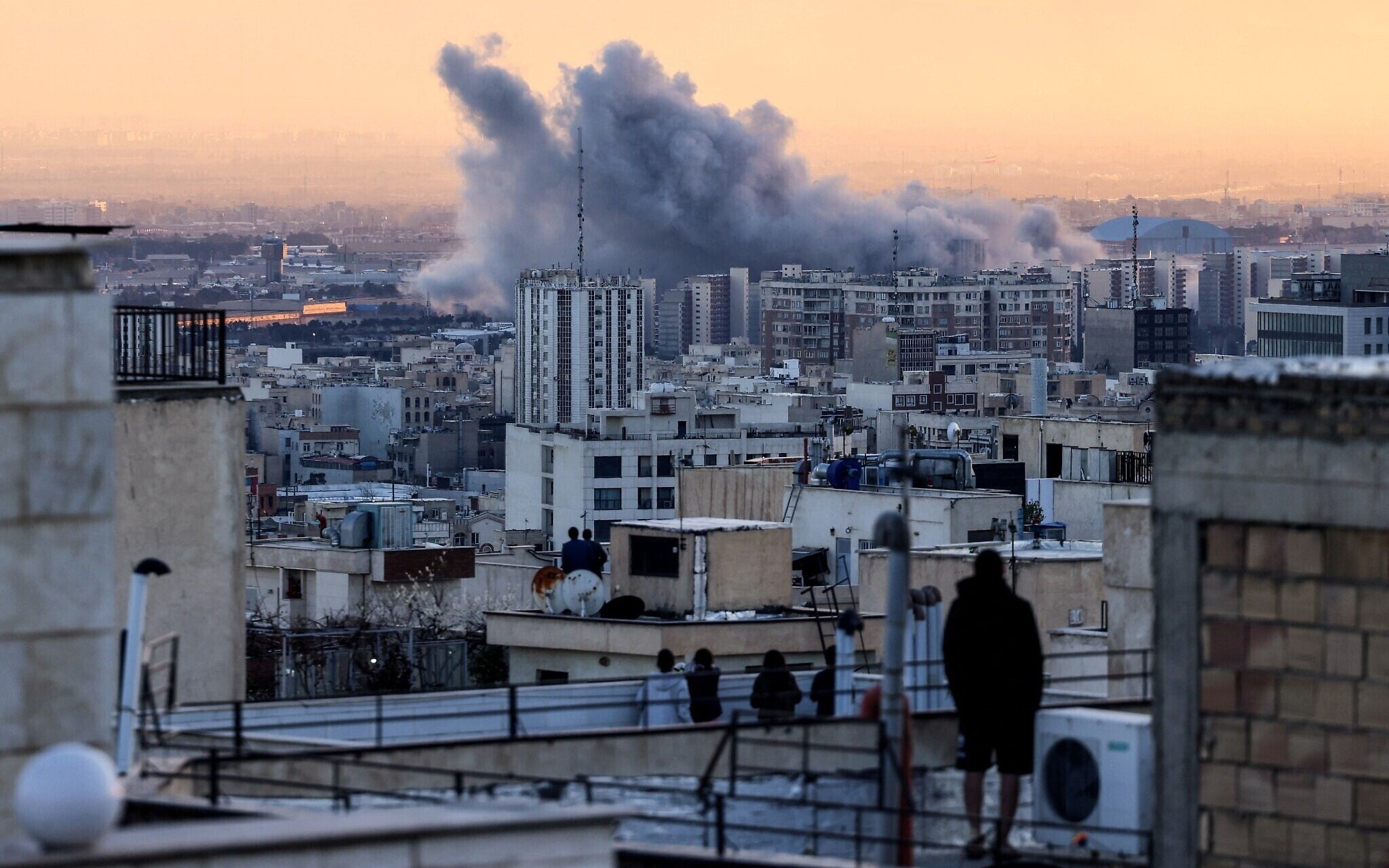
A person stands on the roof of a building looking at a plume of smoke rises after a strike on the Iranian capital Tehran, on March 3, 2026. (Atta Kenare/AFP)
Among the airstrikes reported on Wednesday, the IAF said it carried out “large-scale” attacks in Tehran targeting a massive Iranian military compound, which housed headquarters and personnel from across Iran’s security apparatus.
More than 100 fighter jets carried out the airstrikes against the compound in eastern Tehran, dropping more than 250 bombs, the IDF said.
At the complex, the IDF said, it hit the headquarters of Iran’s Islamic Revolutionary Guard Corps, the IRGC Quds Force, intelligence directorate, Basij paramilitary force, Iran’s cyber unit, the special forces unit of Iran’s internal security forces, and a “protest suppression” unit of the internal security forces.
“The headquarters were struck while personnel of the Iranian terror regime responsible for managing the campaign, advancing terror plans against the State of Israel and countries in the region, and suppressing Iranian civilians were operating from them,” the military said.
Additionally, an armed Iranian ballistic missile launcher in the Kermanshah area in western Iran was destroyed by an Israeli F-35I fighter jet, the military said.
“The Israeli Air Force continues to strike missile launch sites and missile launchers in order to remove the threat posed to the State of Israel,” the military added.
An “extensive” wave of Israeli airstrikes in central and western Iran destroyed dozens of Iranian ballistic missile launchers and air defense systems. According to the IDF, some of the missile launchers were armed for attacks on Israel, and they were struck while Iranian soldiers were operating them.
The IAF also destroyed Iranian air defense and detection systems at Mehrabad Airport in Tehran.
There have been at least 11 waves of strikes in Tehran since the start of the conflict, including at least two on Wednesday, the IDF said.
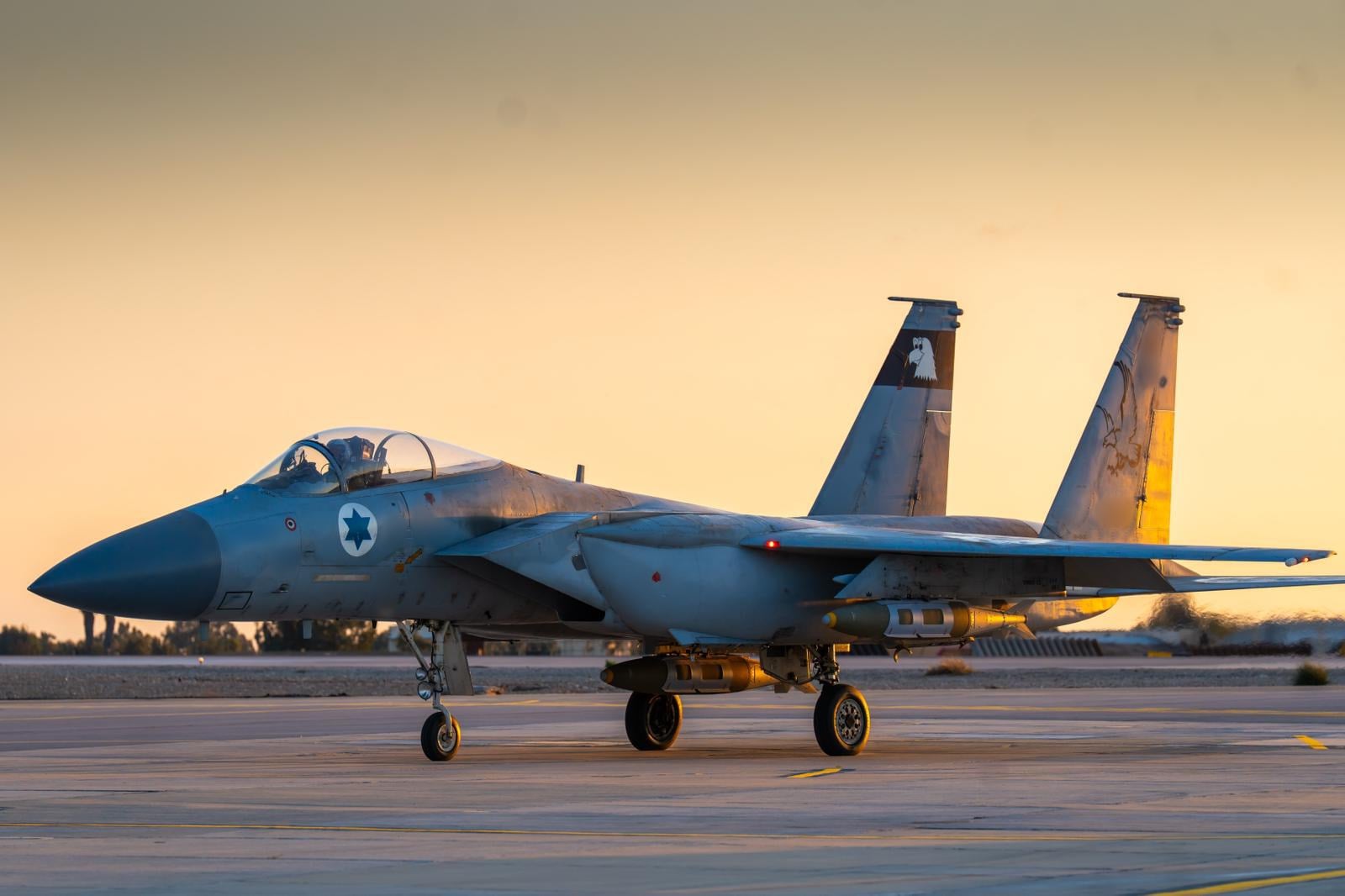
An Israeli Air Force F-15 fighter jet takes off from an airbase in Israel for strikes in Iran, in a handout photo published on March 2, 2026. (Israel Defense Forces)
Division of labor between Israel and US
The Israeli military also revealed how it was dividing the work with the American military during the campaign — geographically, by target types and by relative advantage.
Geographically, the IAF was operating against Iranian ballistic missile launchers and other military assets in western and central Iran, because Iran fires long-range ballistic missiles at Israel from those areas.
Meanwhile, the American military was operating against Iranian missile launchers in Iran’s south, as it has used those areas to fire shorter-range missiles on US bases in the Gulf.
For target types, Israel and the US have also split their work. The American military, for example, has taken responsibility for targeting the entire Iranian Navy. Israel has meanwhile focused on other targets, based on relative advantage, such as regime sites in Tehran.
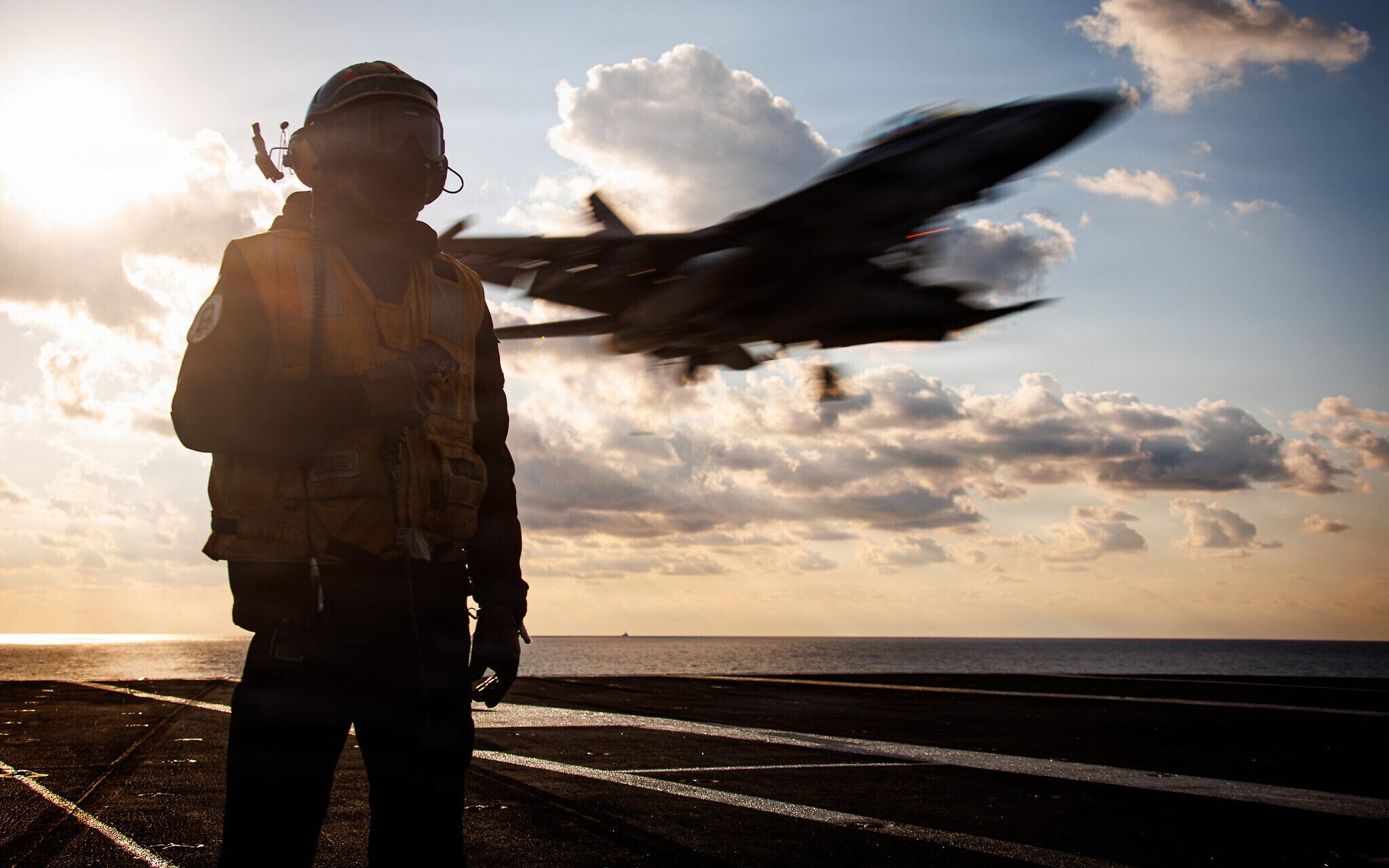
A US sailor stands by as an F/A-18F Super Hornet aircraft lands on the flight deck aircraft carrier USS Gerald R. Ford while operating in support of Operation Epic Fury in the Eastern Mediterranean Sea, March 2, 2026. (US Navy)
Additionally, the IAF has relied heavily on the US military’s aerial refueling capabilities, as the US military has roughly 10 times the IAF’s refueling fleet. Dozens of US refueling tankers have been stationed in Israel amid the conflict.
Israeli military officials described the conflict as the first full-scale joint war between Israel and the US, following extensive joint planning in recent months.
There are “joint coordination cells” in both Israel and the US operating amid the campaign, synchronizing intelligence, targets, and defense, according to the IDF. More than 1,000 American troops are stationed in Israel.
“This is a war in English,” a military official said.
IDF Chief of Staff Lt. Gen. Eyal Zamir has been speaking daily with US CENTCOM chief Adm. Brad Cooper, according to the military.
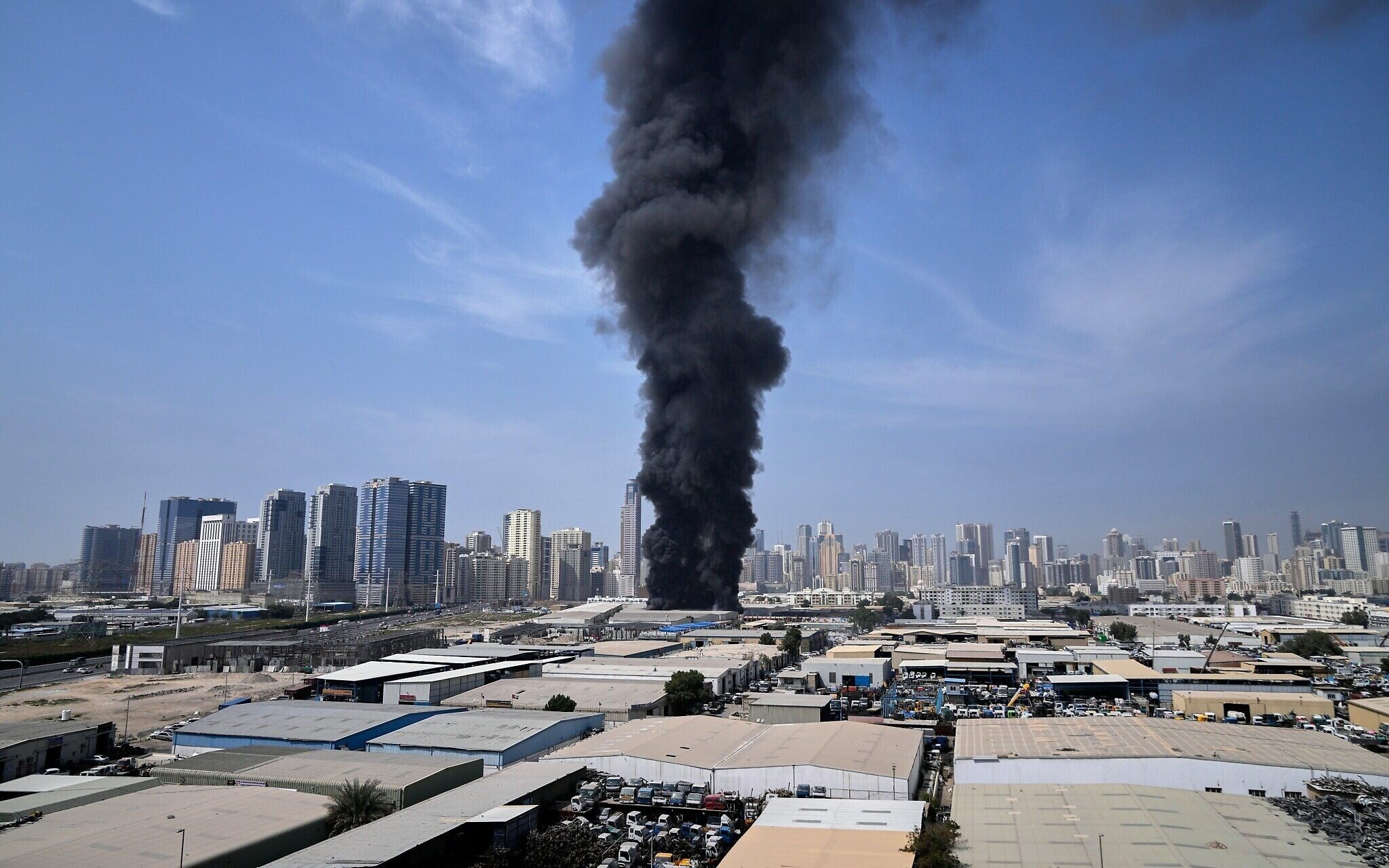
A black plume of smoke rises from a warehouse at the industrial area of Sharjah City in the United Arab Emirates following reports of Iranian strikes in Dubai, United Arab Emirates, March 1, 2026. (AP Photo/Altaf Qadri)
Meanwhile, some officials in the IDF believe that Gulf states — which have been attacked by Iran amid the conflict — will join the campaign offensively.
The Gulf states are mainly involved defensively, shooting down Iranian ballistic missiles and drones aimed at their countries.
Also, IAF chief Maj. Gen. Tomer Bar said Wednesday that Israeli special forces have been conducting “extraordinary” operations during the ongoing conflict with Iran.
“The troops of the air force’s special units are currently carrying out extraordinary missions that can spark one’s imagination,” Bar wrote in a missive to IAF soldiers.
Bar did not elaborate further on the nature of the operations or where they were conducted.
You appreciate our wartime journalism

You clearly find our careful reporting of the Iran war valuable, at a time when facts are often distorted and news coverage often lacks context.
Your support is essential to continue our work. We want to continue delivering the professional journalism you value, even as the demands on our newsroom have grown dramatically during this ongoing conflict.
So today, please consider joining our reader support group, The Times of Israel Community. For as little as $6 a month you’ll become our partners while enjoying The Times of Israel AD-FREE, as well as accessing exclusive content available only to Times of Israel Community members.
Thank you,
David Horovitz, Founding Editor of The Times of Israel