
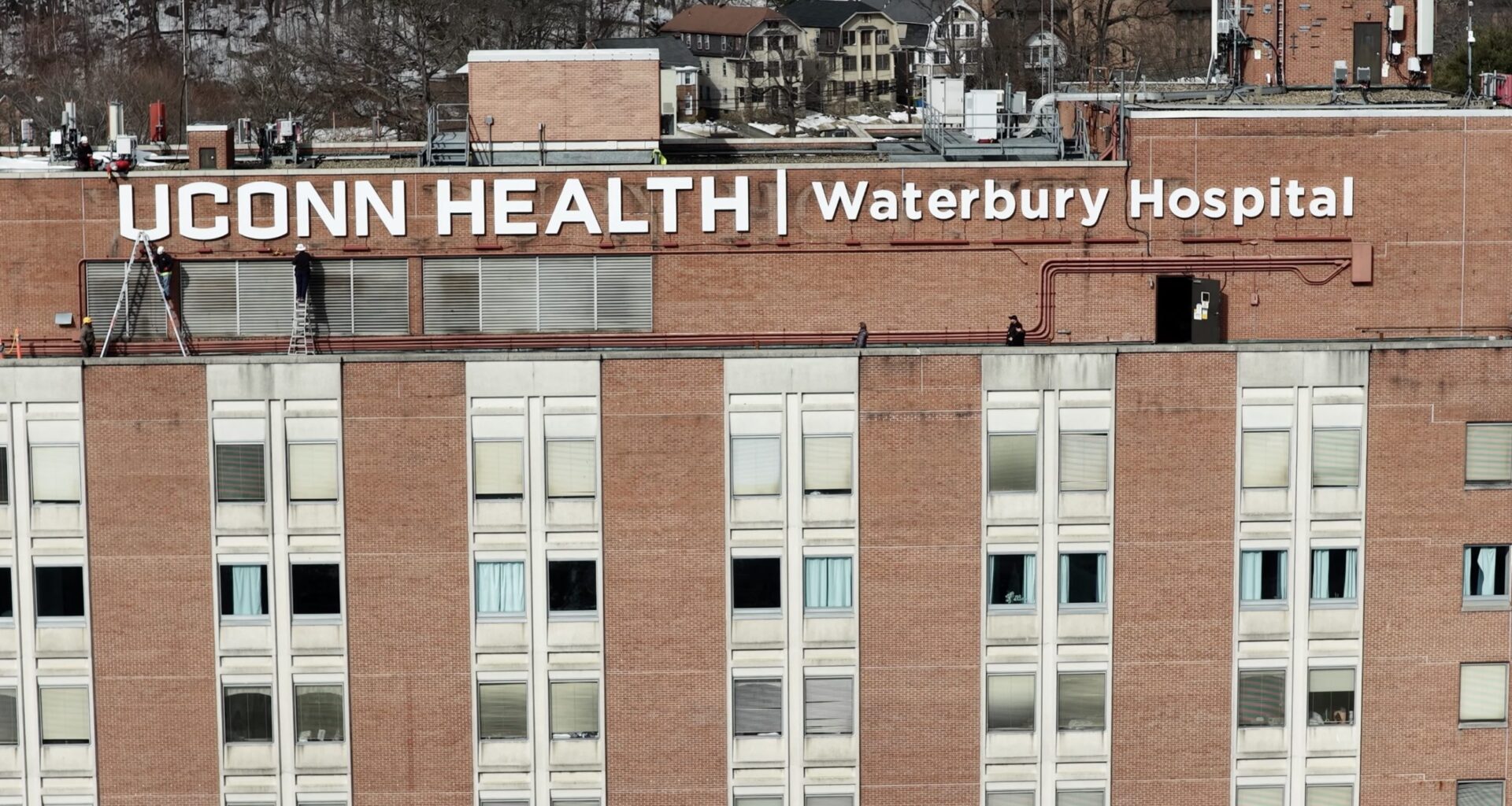
On Wednesday morning, state officials celebrated the University of Connecticut Health Center’s acquisition of Waterbury Hospital and bid good riddance to the now-bankrupt, formerly private-equity backed hospital operator, Prospect Medical Holdings.
After Hartford HealthCare acquired Manchester Memorial and Rockville General hospitals in January, the UConn Health deal marked the final step in a lengthy search to find buyers for Prospect’s Connecticut hospitals — a process that often seemed on the brink of failure.
But Prospect still owes the state $127 million in unpaid hospital provider taxes going back more than three years.
During the Wednesday press conference, Gov. Ned Lamont said the state would try to recoup what it could, but acknowledged that it’s unclear to what degree that would be possible.
“They bled this system dry. I think we’re going to try and get whatever we can. Am I overly optimistic? Not right now,” Lamont said.
Prospect Medical Holdings did not respond to a request for comment.
When a company files for bankruptcy, the parties it owes money to — or “creditors” — won’t all necessarily get paid back in full. It depends on how high up on the priority list they sit.
The taxes Prospect owed to Connecticut were previously classified as a combination of $73.8 million in “secured claims” and $54 million in “priority tax claims.” “Secured claims” are the highest priority and get paid back first; “priority claims” sit a couple levels below.
In February, as part of the deal to sell Waterbury Hospital to UConn Health, the state agreed to reclassify those claims as “general unsecured claims,” which get paid out after “secured claims” and “priority tax claims.”
“Unsecured creditors in most Chapter 11s today don’t get very much,” Ken Rosen, a bankruptcy attorney with experience in the health care industry, said.
The move pushes Connecticut further back in the line of parties jockeying to get paid what they’re owed by Prospect, making it less likely that the state will ever see the full $127 million it’s owed.
“That’s a big number,” Rosen said. “The state may have said to themselves, ‘The last thing we want is for this hospital to shut its doors. And we’re not going to take the risk that pressing to collect the taxes results in a closed hospital.’”
Prospect owed Connecticut for what is known as the “hospital provider tax,” which is intended to help finance the state’s Medicaid program. The revenue generated by the tax is used to receive matching federal funds and to offset other Medicaid costs. If hospitals are not paying the tax, the state’s federal match is less.
When Prospect filed for bankruptcy in January, Gov. Ned Lamont insisted that he didn’t think keeping the hospitals open necessitated “taxpayer subsidies.”
In October 2023, the governor rejected a plea from Yale for $80 million in state funding to help close its $435 million deal with Prospect Medical. That deal eventually fell through, and Yale recently paid Prospect $45 million to end the litigation over the failed deal.
But by October of last year, state officials indicated that they were negotiating a tax settlement with Prospect and its landlord, Medical Properties Trust, as part of the discussions to acquire Waterbury Hospital.
“The situation has deteriorated over the last year, two years,” Lamont said at the time. “We really want to keep these hospitals going. I know how important they are to the community.”