

The role has evolved a lot since you came into it, given the expansions and changes to the organization. Is that what has kept you there for so long?
When I came, we were a wonderful hospital — [Beth Israel Deaconess Medical Center] and [Beth Israel Deaconess-Needham]. That was one role. And as we grew to what was the BID system, that was another role. And as we formed the Beth Israel Lahey Health system seven years ago, that was another role. I think you’re on to something. It’s been multiple roles over several years. That’s part of the joys of doing this.
I believe it’s time for someone new to come and to be here for the next 10 to 15 years. And to take up that mantle and think about the coming challenges … someone who will be here again for a long period of time.
How do you think back on your tenure? There’s been a lot — bruising regulatory battles to merge Beth Israel and Lahey Health, the regulatory process of the deal with Dana-Farber Cancer Institute. That’s on top of the challenging work of just running a health system.
I’m still reflecting back on the last decade and a half. I’ve loved a lot of it. Not everything. But I’ve loved a lot of it. I keep coming back to the word “privileged.”
When I think about the things that were hard — I don’t know that they were harder for me. I think about the pandemic, and how hard it was for all the caregivers. And I think about things like the Boston Marathon bombing, when tens of wounded appeared all at once. It puts it into perspective when I think about what’s hard and what’s not. The regulatory stuff, the economic environment — that’s the job. But I remind myself of both what’s hard for the people who work here and our patients, and also why I’m doing it. I don’t let the other things get me down.
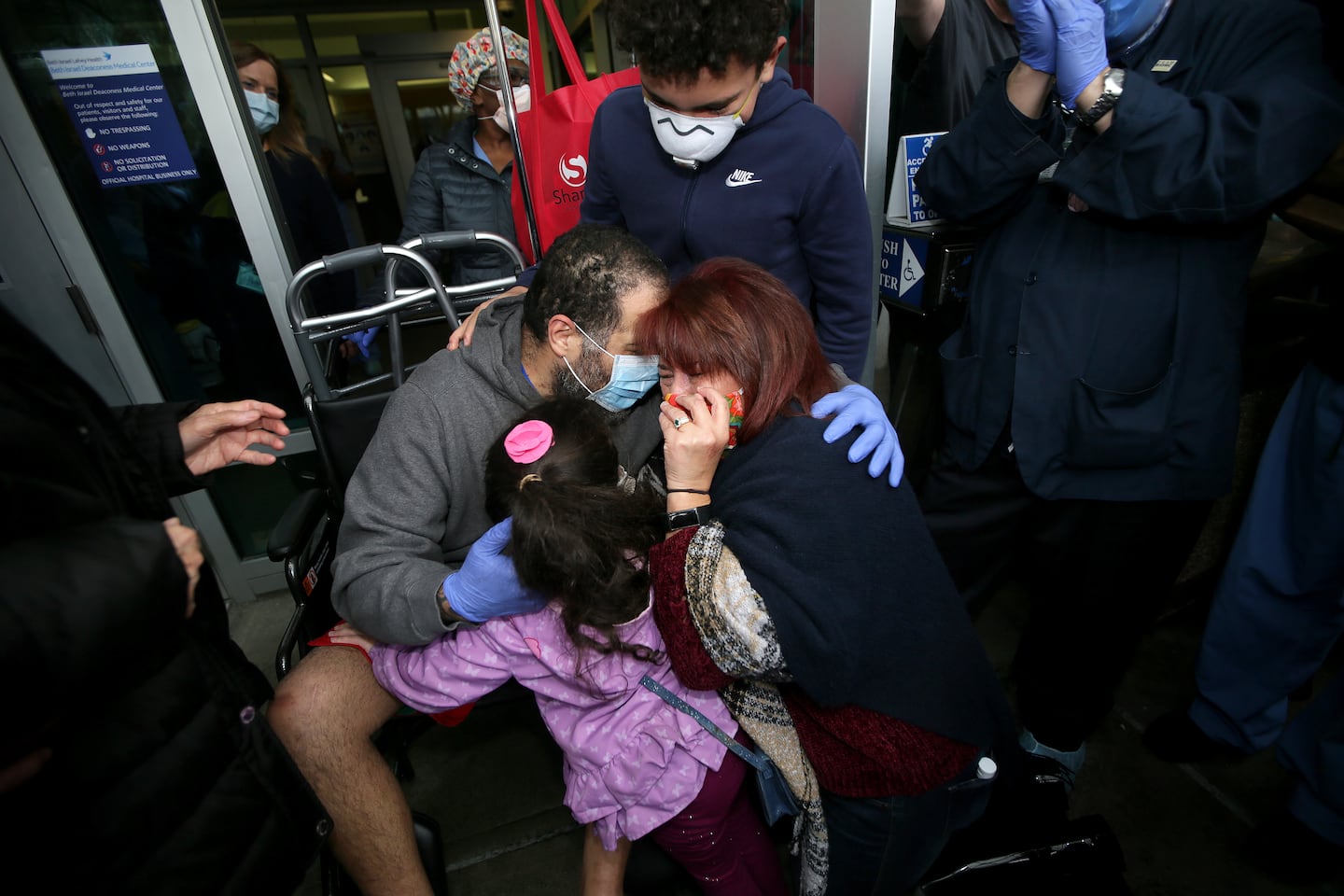 Omar Borges was reunited with his wife and children after his release from Beth Israel hospital after contracting COVID on April 24, 2020.Barry Chin/Globe Staff
What would you say has been the most challenging?
I think back to the early days of the pandemic, when we didn’t know what was going to happen. I remember being worried about not having enough ventilators. I remember feeling horrible [and] worried we were going to run out of PPE. And we didn’t, thankfully. Those were the things that were the hardest. I want to be clear — I think they were harder for the people taking care of patients every day. But I felt a lot of that responsibility.
What are you most proud of?
I’m incredibly proud of the culture we built. I think we have a unique, wonderful culture here that is not something to be taken for granted. Particularly when you create a new organization — we brought together all these legacy organizations, many of whom had histories of more than 150 years — proud and independent. It’s a difficult thing to do, for legacy organizations to come into a new system and maintain the thing they are proud of, but also to develop a unified, uniform culture. I’m proud of the way people came together to do that.
It’s not about how big we are, or any of that stuff. It’s about the culture. And I do think size is important in that it means we can serve more people. I’m proud of that, too. I’m proud of the fact that we forged our own path as an organization and said things like, ‘Primary care will be really important here.’ We will deliver complex care, but we will do it also in the community. And we will actually change it in a way that’s measured.
And here we are, seven years to the week (of the Beth Israel Lahey Health merger).
Wow. Congrats on the anniversary. I feel as though I should have gotten you a card. What timing with this announcement.
One of the things I wrote about in [my email to staff announcing this change] is — in my Jewish tradition, every seventh year has a meaning. Shmita — like a sabbatical of rest and renewal. It feels really fitting to me in a way that BILH is marking its seventh year just at the time I’m bringing my tenure to a close.
For lots of reasons, it’s the right time. And I’m proud of our people and this organization.
Given the time you’ve spent as a leader, what is the advice you’d give to other health system and hospital leaders in this time?
Figure out what is important. Figure out those things that really matter. And then drive everything to that goal. All of the other things that contribute to getting there — whether that’s financial stability or size or anything, those are only means to an end. I think we sometimes forget that. And don’t forget what is most important and why we are here — to serve our missions. To take care of people and to generate new knowledge and to educate the next generation of caregivers.
It’s easy, in the fray, to forget the why we’re here and doing this and focus on the mechanics. The mechanics are important. But the mechanics are only a means to an end. That’s the most important piece of advice I would give. And focus is almost more important than anything else. It’s too easy to get distracted, to chase after the latest problem or idea or whatever it may be. Focus — figure out what is important and focus on that. The rest will work itself out.
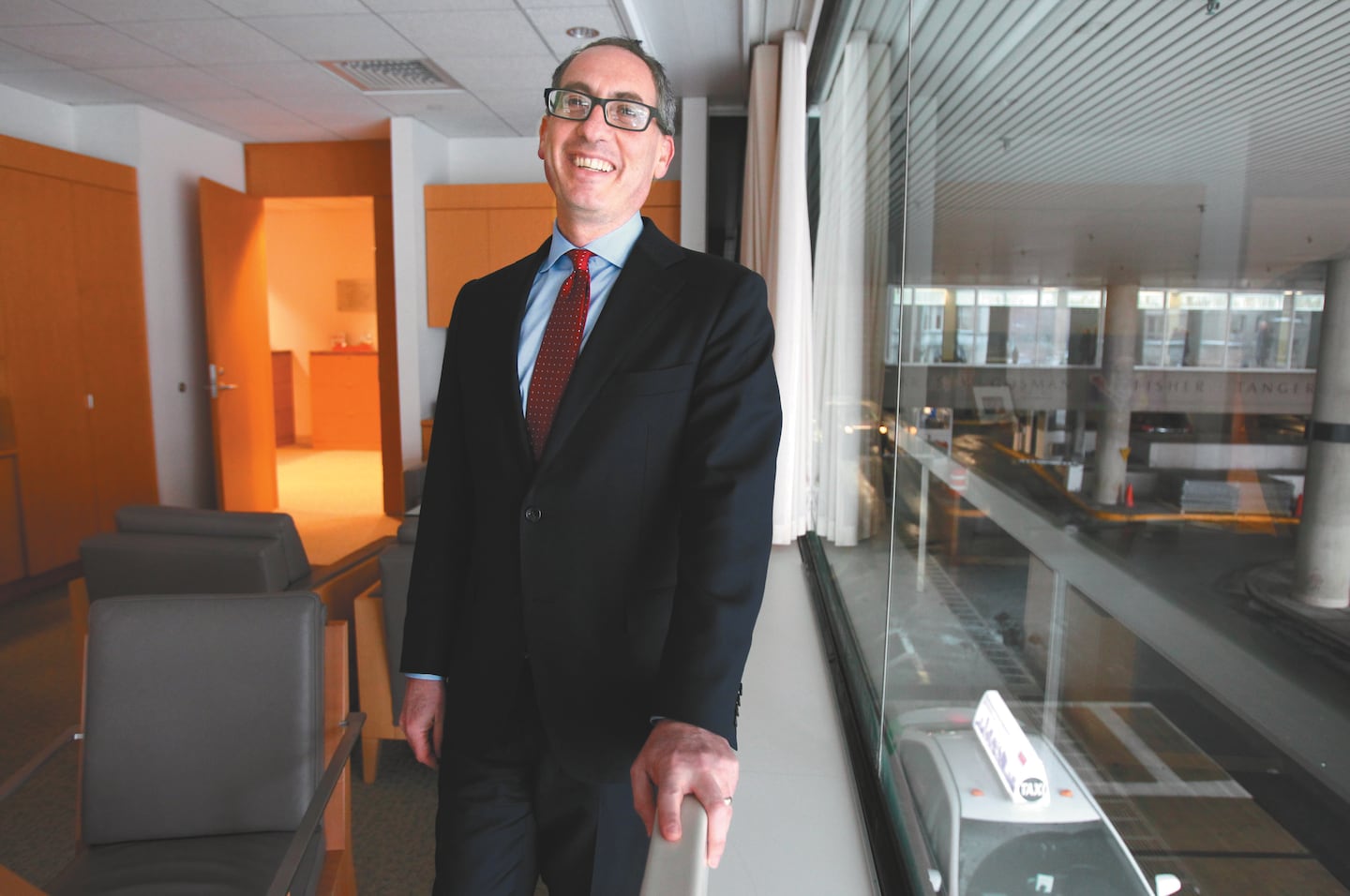 Dr. Kevin Tabb posed for a portrait on Feb. 13, 2017, in Boston.Suzanne Kreiter/Globe staff
You leave the organization as health systems are preparing for massive amounts of change and challenges in the years ahead. There’s also still a lot of unfinished work, particularly with plans to build a new cancer hospital with Dana-Farber. Why now? What happens with the Dana-Farber deal in your absence, for instance?
I think [the Dana-Farber project is] just one example. The way we structure the relationship with Dana-Farber together is we are in a relationship for the next 60 years. And it’s not dependent on who the leaders will be … we’re inextricably linked for the next 60 years at least. That was deliberate on the part of [former Dana-Farber Cancer Institute CEO] Laurie Glimcher and myself. Knowing neither of us would be here for those 60 years.
I’ve been asked, ‘But wait, there will be a new hospital. Don’t you want to stay until the hospital is built and open?’ There is an old adage about the most important part of the building is the foundation. And I feel like we put the foundation in place. The building itself will happen, the opening will happen. But we have this strong foundation.
All the other issues that we talk about frequently — the changing reimbursement model and difficulties in health care — they are there and not going away. It’s the perfect time for someone to come and be here the next 15 years to come work on those things.
To reiterate, I’m here in this role for the next year. Not half in the role.
Not lame duck?
Not lame duck at all. I don’t feel that way. There’s a lot of work to do. I come out of this decision even more energized. And I fully intend to be here working on this stuff until the day my successor gets here.
Jessica Bartlett can be reached at jessica.bartlett@globe.com. Follow her @ByJessBartlett.