
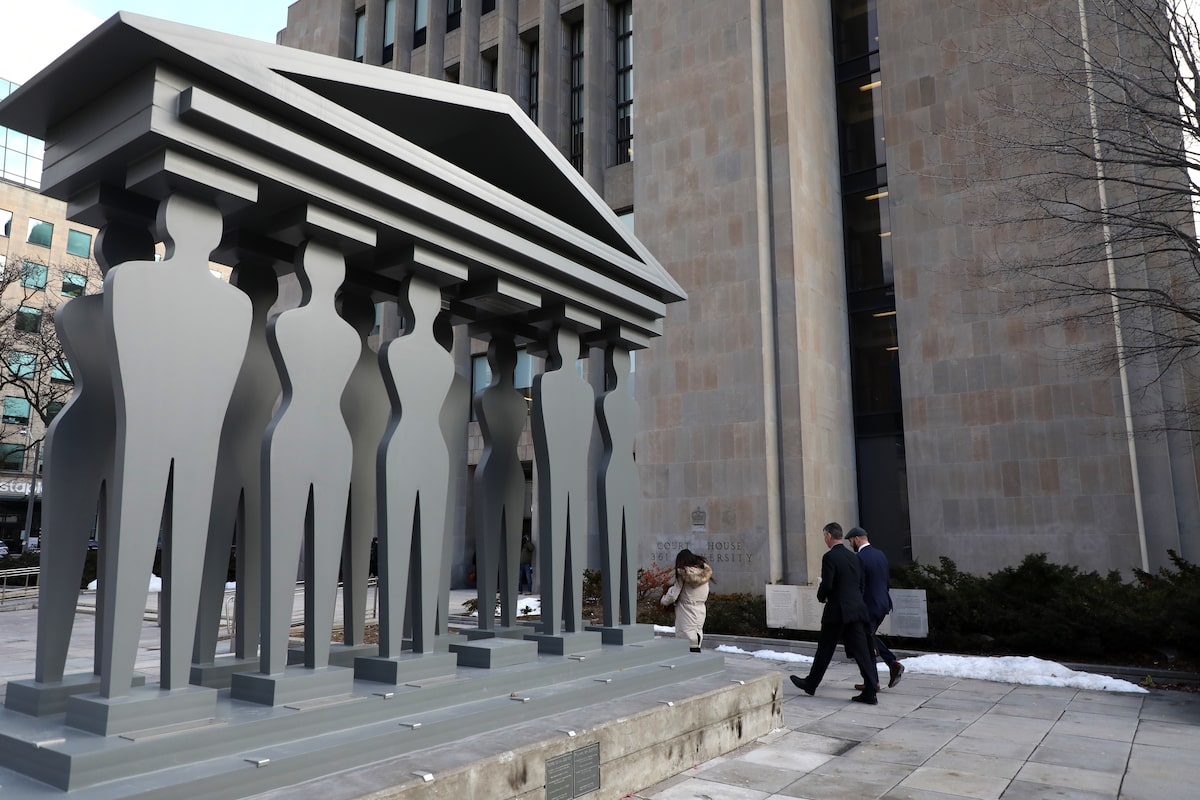
The Ontario Superior Court building in Toronto. In Ontario, probate applications must be filed at the courthouse that serves the area the deceased lived at the time of their death.Colin Perkel/The Canadian Press
Maxwell Shiffman, a lawyer based in Cambridge, Ont., calls the process of dealing with a loved one’s estate an emotional “pressure cooker.”
There’s the grieving: the fact that money is at stake – sometimes significant amounts of it and, often, tricky family dynamics to manage. And then there’s navigating a legal process enveloped in opaque, low-tech bureaucracy.
Mr. Shiffman recently got in touch with me to speak about the bureaucracy hurdle. In Ontario, he said, even lawyers sometimes aren’t quite sure which courthouse to turn to for probate processing. And timelines can vary dramatically by location, with no ability to track an application’s progress.
Here’s an edited excerpt of my Q&A with Mr. Shiffman. I would love to hear from Canadians in other provinces. Is Ontario a laggard compared to other jurisdictions or have you run into similar issues? You can contact me at the e-mail address below this interview.
Q: First things first. What is probate processing, in plain language?
A: It’s a court validation exercise; it involves submitting an application to the court after someone has passed away to obtain a certificate to administer the deceased’s estate. Not every estate needs to be probated, but often a bank or a land registry office requires this probate process to transfer bank accounts or real estate.
Q: It sounds like figuring out which courthouse to apply to isn’t always straightforward. Why?
A: In Ontario you must apply to the Superior Court of Justice at the courthouse that serves the area the deceased lived at the time of their death. This isn’t always the closest superior court. For example, Sheffield lies almost in the middle of Hamilton, Brantford and Kitchener. How do you know which court to send the application to?
That’s why I created a free online tool that shows the appropriate estate court based on a given address. I had to consult a variety of different sources to cobble together all the necessary information, a process that took several months.
The tool also shows the address, phone number and e-mail for the estate department, information that is often scattered across different Ontario websites.
For Sheffield, for instance, the tool sends you to Hamilton. But let’s say you didn’t know and submitted the paperwork to the wrong courthouse. Your application will be rejected and you’ll have to start over, which will just delay the whole process.
(The Ontario government has a court lookup tool, but it shows only the closest courts in proximity to an address, not the specific Superior Court of Justice for probate, Mr. Shiffman said by e-mail. Not every Superior Court of Justice has an estate department, he said.)
Q: You’ve mentioned wait times for probate processing can vary significantly. Can you give us some examples?
A: I had anecdotal data from my practice suggesting there might be big discrepancies. To gather more information, I sent out a survey to estate lawyers and law associations across the province. I received 75 responses that suggest there are indeed big variations.
In Hamilton, for example, survey respondents indicated that applications are normally processed within three to six months. In Toronto, it’s common to see applications that take more than nine months or even over a year.
Overall, Toronto, London and Kingston stood out for having the longest wait times. People can’t choose where to apply, which is why these discrepancies create a postal code lottery.
Tell me about probate applications outside Ontario. What was your experience? ealini@globeandmail.com
Subscribe to the On Money newsletter
Are you reading this newsletter on the web or did someone forward the e-mail version to you? If so, you can sign up for On Money here.
Erica’s personal finance reading list
The motherhood pay gap is alive and well
There’s a pay gap between men and women. And then there’s a pay gap between women who have children, particularly young ones, and those who don’t. In Canada, the “motherhood penalty” is still hefty, writes CIBC’s Katherine Judge.
Forget about bogus CRA e-mails with typos and questionable formatting. With the help of AI, scammers are getting closer and closer to crafting polished fakes that look like the real thing.
The Canadian Food Inspection Agency (CFIA) slapped a Loblaw-owned Superstore with a $10,000 fine for incorrectly labelling a President’s Choice broccoli slaw as a Canadian product when it was, in fact, imported from the U.S. The takeaway: for elbows-up shopping, trust the product label, not the grocery-store tag.
Chart of the day
Calling young investors
Investing with an online brokerage has never been easier. Are you a relatively new, young investor who trades from their phone? What do you like – or dislike – about your app? To share your DIY investing experience on our Stress Test podcast, please e-mail Globe editor Roma Luciw.New products that caught my eye
Wealthsimple is getting ready to offer wire transfers for less, reports my colleague Stefanie Marotta.
ICYMI
Worried about geopolitical risk and your retirement portfolio? There’s a bigger issue at play.