
This story will run in Buffering, Vulture’s newsletter about the streaming industry. Head to vulture.com/buffering and subscribe today!
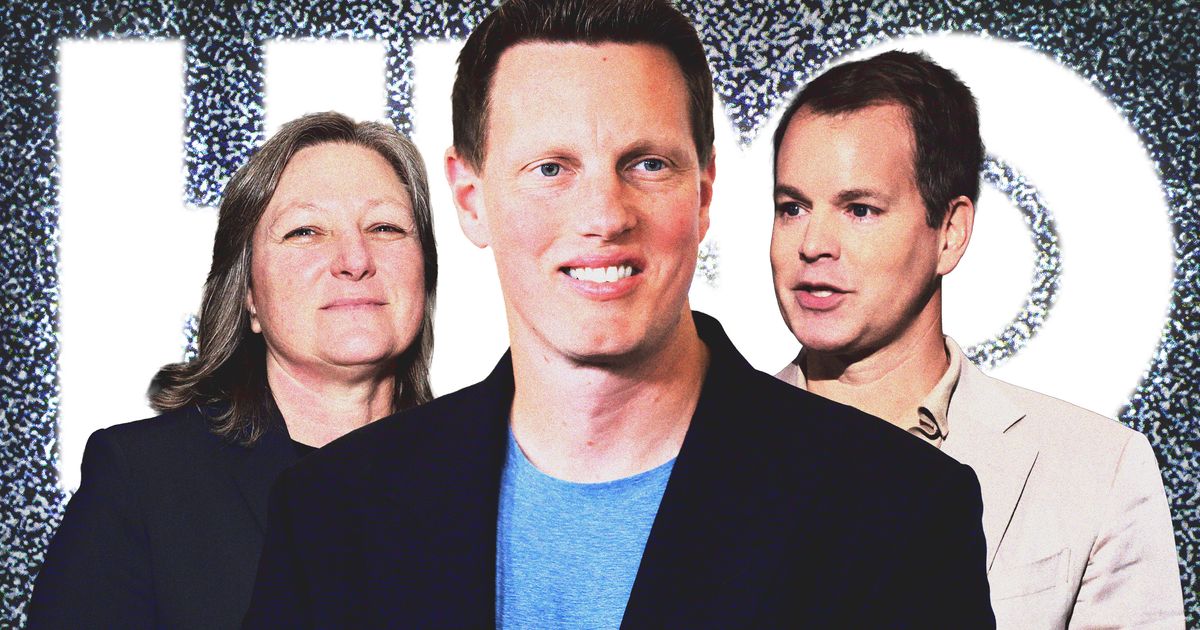
Integrating Paramount’s new “crown jewel” into the merged Paramount–Warner Bros. could prove difficult. (Left to right: Cindy Holland, David Ellison, and Casey Bloys.)
Photo-Illustration: Vulture; Photos: Getty
With a signed deal to take over Warner Bros. finally in hand, Paramount CEO David Ellison this week began the process of trying to sell Wall Street and Hollywood on the value of his megamerger. Some of what he told investors during a Monday conference call and on CNBC on Thursday fell into the category of eye-rolling spin, but Ellison also offered up one nugget of news designed to send a message that this acquisition wouldn’t be all about layoffs and budget cuts. “HBO is a crown jewel in this business,” he said, singling out HBO/HBO Max CEO Casey Bloys for praise and vowing that under Paramount ownership, the storied brand “will continue to have the resources and independence to do what it does best.” Nice words — but it’s doubtful anyone at HBO or HBO Max is breathing any easier as a result.
That’s because of something else Ellison revealed on the call, namely that he plans to combine HBO Max and Paramount+ into a single offering. It’s not that this was a surprise or even necessarily a bad idea: We’ve known for a while that consolidation of streaming apps was inevitable, and we’ve already seen that happen at Disney (where Hulu and Disney+ are in the process of merging) and Amazon (which folded its Freevee service into Prime Video). But HBO hasn’t meant just HBO for years now, and merging it with Paramount+ isn’t as simple as what Disney did when it redefined FX, transforming it from linear channel to streaming brand and giving it a tile on Hulu. HBO — and by extension Bloys — is now intrinsically linked to the broader HBO Max.
And because all content for both HBO and HBO Max report into Bloys, the exec long ago stopped being the guy in charge of just making a curated collection of “not TV” HBO Emmy-bait titles. His purview, and that of his team, extends to producing more network-y style shows such as The Pitt; expanding the portfolio of international productions (such as the series version of Like Water for Chocolate); managing HBO’s library of current and classic movies; and overseeing acquisitions of both classic and new TV shows from outside providers (think Heated Rivalry). So when Ellison says Bloys and HBO will be given the “resources and independence to do what it does best,” these are the obvious next questions: How does he define the “what they do” part? And will it be enough to keep the current HBO brain trust in place?
This question is a thorny one. Ellison already has a chairman-level exec whose job description overlaps more than a little with Bloys’s portfolio: former Netflix content chief Cindy Holland. She’s CEO of all streaming at Paramount, overseeing not just content but also the nuts and bolts of the platform business. Her job combines everything Bloys does with many of the functions of Bloys’s colleague JB Perrette, the CEO of streaming and games at Warner Bros. Discovery. But as broad as her mandate is, Holland is primarily known as a creative executive, one who landed her current gig because she works well with producers and actors and whose mere presence at Paramount was intended to woo top-name talent to the company. And she’s done exactly that, signing up the likes of Nicole Kidman and Anne Hathaway for new shows.
In theory, it’s possible that Ellison just lets Bloys hold on to the bulk of his development team — particularly top programming lieutenants Francesca Orsi and Sarah Aubrey — and allows them to make the same number and kinds of shows they’re currently making at HBO Max while Holland keeps doing what she’s doing as well. For that to work, however, Bloys would almost surely need to report to Ellison rather than Holland, so he could maintain the direct line to the top of the company he has now at WB Discovery, where he answers only to CEO David Zaslav. Would Holland be okay with ceding so much programming power to Bloys when she would still ostensibly be head of all streaming? It seems a stretch, and yet, if you look at how Ellison has structured Paramount so far, it’s not completely far-fetched.
Late last year, he recruited former Facebook exec Dane Glasgow to serve as chief product officer, putting him in charge of building a new tech stack to house Paramount+ and Pluto. But while those services are overseen by Holland, Glasgow reports to Ellison and not Holland. Similarly, even though CBS News, on paper, still answers to CBS CEO George Cheeks, the woman who actually runs that division — Bari Weiss — answers to Ellison, not Cheeks. So there is precedent at Ellison’s Paramount for … an unconventional org chart.
But while you can game out scenarios where Bloys and Holland worked together side by side, running separate streaming brands within the same streaming platform, such an outcome still seems unlikely. Even if Ellison’s goal is for the new Paramount+ to scale up and become the No. 2 streaming power behind Netflix, is he really willing to let Bloys keep spending what he’s been spending at HBO Max while Holland and her team also invest billions to expand the current Paramount+ slate? The newly combined Paramount–Warner Bros. is going to be knee-deep in debt and desperate to cut costs. How much content can Ellison really afford?
There’s also a real danger of creative overlap. As noted earlier, Bloys’s job description has greatly expanded in the last six years, as has the definition of the HBO/HBO Max brand. Combining his team and their content with Paramount+ is not the same as weaving Showtime into Paramount+ or moving FX over to Hulu. Plus, in the six months or so she’s been at Paramount, Holland has recruited her own exec team and started green-lighting projects that feel less like what the company had been making under its previous regime (which was lots of Taylor Sheridan or Star Trek) and more like shows you’d see on … HBO Max.
Disney was able to make the FX-Hulu integration work because their programming chiefs, John Landgraf and Craig Erwich, have very different tastes and programming mandates and very distinct brands, minimizing the chances of the two men stepping on each other’s turf. That’s not the case with Holland and Bloys. So while Ellison says he wants to give HBO “resources and independence” to do what it does best, he is first going to have to define exactly how he sees that mission — and whether Bloys and Holland agree with it.
If all this sounds like a battle is shaping up between Holland and Bloys over who controls the streaming platform at Paramount–Warner Bros., well … maybe? Because of their overlaps, it would be naïve to not think Ellison might eventually have to choose between the two, just as he will also have to figure out whether to use HBO Max or Paramount+ as the brand name for his new supersize single streamer — or, God help us all, decide to go with a totally new moniker. Disney’s consolidation of Hulu and Disney+ was delayed for years because of Comcast’s lingering stake in the former. Ellison faces no similar issues and has strong incentive to be decisive.
That said, it is still early. The path to finalizing his Warner Bros. Discovery purchase looks pretty smooth right now, but if the last year has shown us anything, it’s to not count your deals before they’re closed. Ellison will need to have many meetings and conversations with the current HBO Max team (not to mention leaders at Warner Bros. TV, which has given Max big hits like The Pitt) so that he can understand their brand and output. Similarly, it would probably make sense for Holland and Bloys to talk, at least to the extent they can, given restrictions on communications between two merger parties prior to the consummation of a deal.
Those of us on the outside can make all the assumptions we want about whether execs can or should work together and what each party wants. But Holland and Bloys are both respected leaders focused on The Work rather than egomaniacs looking to protect their personal brands or future ambitions. So even if it seems likely that only one of them can remain with the company when all the dust settles, it’s entirely possible that they get together and figure out a way forward. Whatever happens, getting this right promises to be a massive test for Ellison — and a crucial bellwether for the future of HBO.
Related