
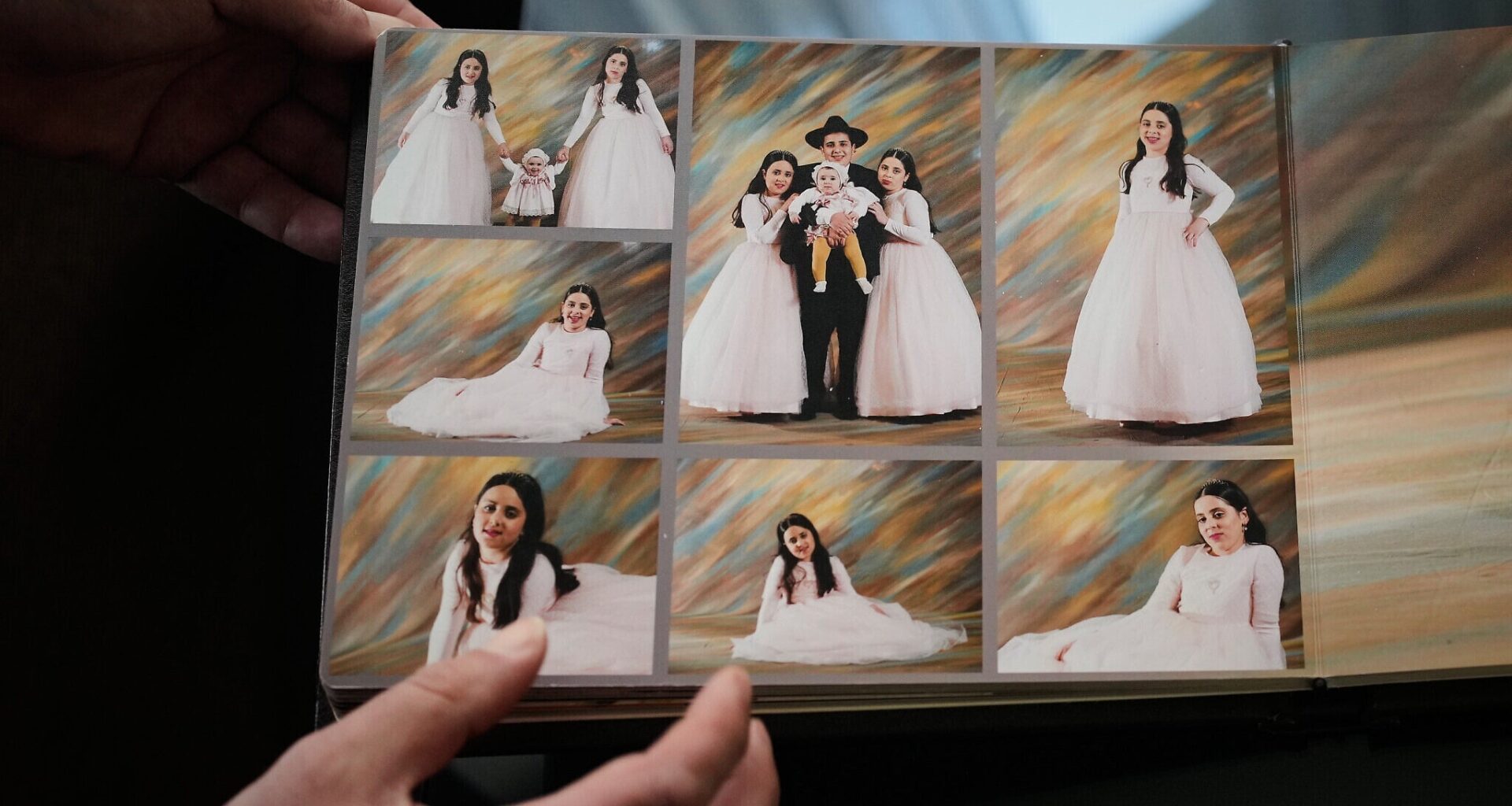
Tamar Biton was in the kitchen when an explosion rocked her home in the central city of Beit Shemesh on Sunday, shattering the windows and collapsing the ceiling with a boom louder than anything she had ever heard.
Making her way to what was left of a window, she saw fire and destruction everywhere, she said.
“I couldn’t find my kids, but I was sure they would be able to rescue them from underneath the rubble,” she said.
That was not to be. It took 24 hours to identify the bodies of three of her four children: Yaakov, about to celebrate his 17th birthday that evening; Avigail, 15; and Sarah, 13.
They were among nine people killed Sunday when an Iranian missile strike demolished a synagogue and several homes in Beit Shemesh. Israel’s rescue services said 65 people were hospitalized in the attack, including two seriously wounded.
Get The Times of Israel’s Daily Edition
by email and never miss our top stories
By signing up, you agree to the terms
Tamar Biton, her husband Yitzhak, and their surviving daughter, 4-year-old Rachel, are observing the shiva, the seven days of mourning in the Jewish tradition, at a Jerusalem hotel where they were placed after their house was destroyed.
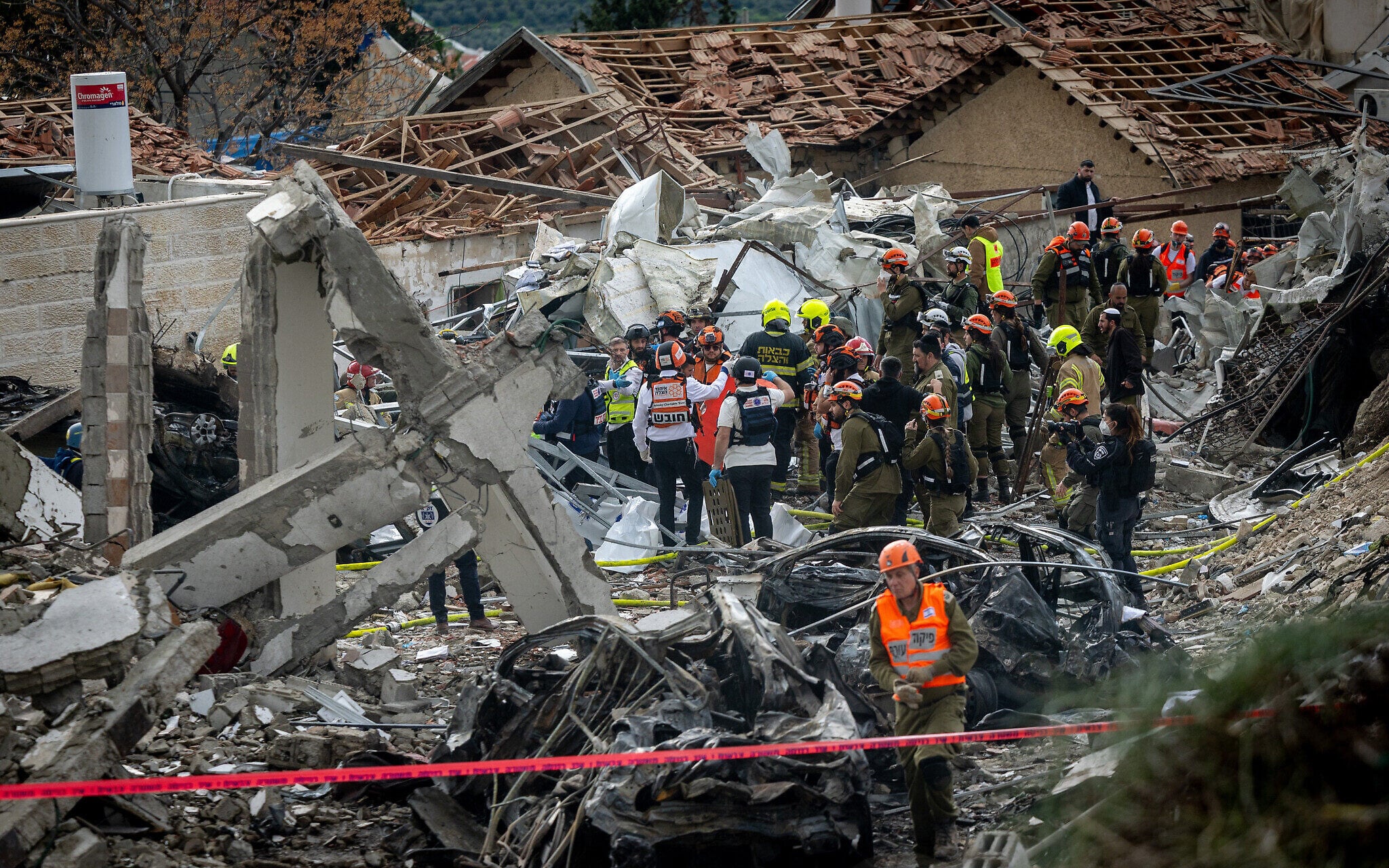
The scene where a ballistic missile fired from Iran hit Beit Shemesh, March 1, 2026. (Yonatan Sindel/Flash90)
For hours on end, as neighbors, friends and strangers gathered around, stories poured from Tamar about her three children.
Yaakov, a natural-born leader and orator, studied at the yeshiva that her husband ran, and was known for bringing friends closer to Jewish observance. Avigail was smart, sensitive and thoughtful, and Sarah was a whirlwind of activity always helping around the house and the community.
As Tamar spoke, she lit up, remembering details of each of the children she had buried Monday in a late-night funeral at Jerusalem’s Mount of Olives cemetery, one of the holiest places Jews can be buried. But when Tamar stopped speaking, she seemed to collapse in on herself, remembering what had happened.
Yitzhak Biton, a rabbi, had taught a class in Jewish texts that deadly morning at the Jewish seminary he runs; his son had attended along with his best friend, 16-year-old Gavriel Ravach. Both were killed in the missile attack.
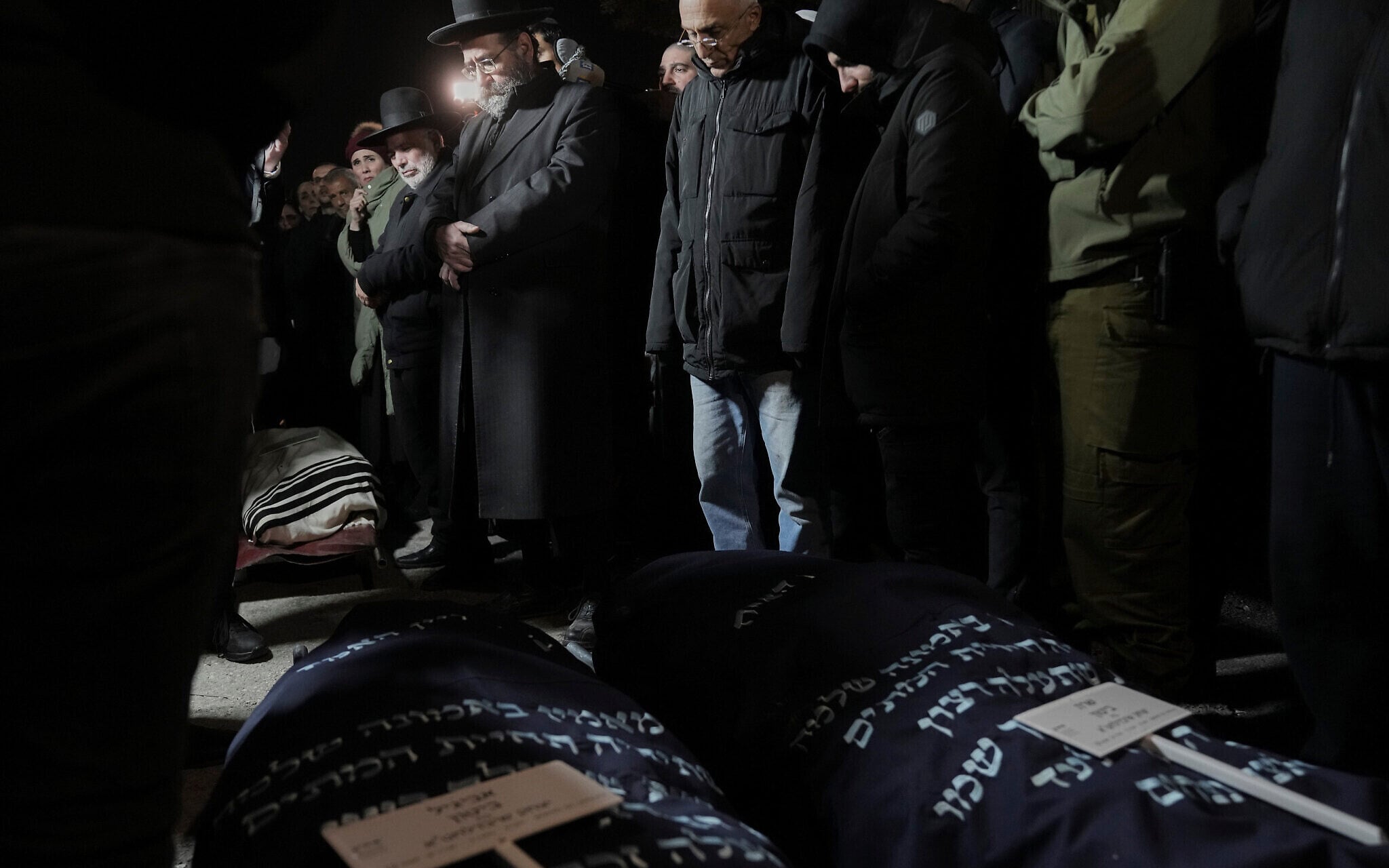
Mourners attend the funeral of Yaakov Biton, 16, and his two sisters, Avigail, 15, and Sarah, 13, who were killed in a March 1 Iranian missile attack that hit Beit Shemesh, at the cemetery in Mount of Olives in Jerusalem, March 2, 2026. (AP Photo/Mahmoud Illean)
Other families also lost multiple members, including volunteer paramedic Ronit Elimelech, 45, and her mother, Sara Elimelech. Penina Cohen lost her husband, Yosef, and mother-in-law, Bruria, in the attack. Her son was supposed to have celebrated his bar mitzvah, the Jewish coming of age ceremony, on Monday. Instead, he buried his father and grandmother, Cohen told President Isaac Herzog when he visited her at the hospital.
When the alarms blared to warn of an incoming missile attack Sunday afternoon, Yitzhak Biton said he decided to stay in the house, but Yaakov, Avigail and Sarah went toward the shelter under the synagogue, following Israel’s guidelines for civilians.
While Yaakov was found inside the shelter, it’s unclear whether Avigail and Sarah were able to make it in time, Tamar Biton said. The impact flattened the synagogue over the shelter and homes on several surrounding streets.
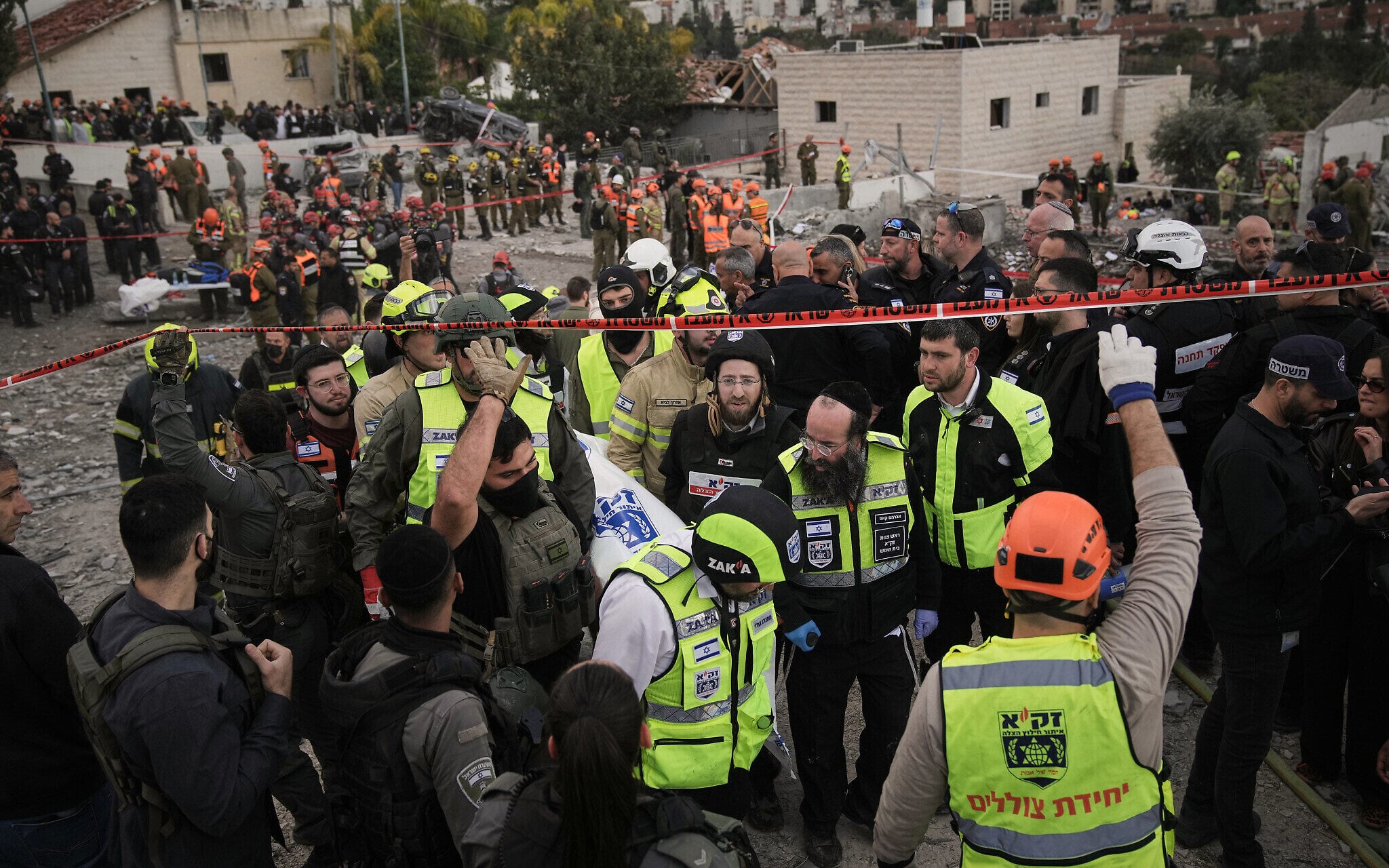
Rescue workers and military personnel carry a body of a victim from the scene where several people were killed by an Iranian missile strike in Beit Shemesh, March 1, 2026. (AP Photo/Leo Correa)
As hope for her children’s survival dimmed, Tamar Biton changed her prayers.
“I said to my husband, ‘Please let something be left of them — or do you think it’s just ash and that’s why they can’t identify them?’” she said Thursday.
Yitzhak said he tried to search for his children, despite terror at what he might find.
“They started taking out bodies, and I kept saying, ‘Where are my children? Where are my children?’ When they came and asked for a DNA sample, I knew the answer,” he said.
Both parents continue to cling to their faith, telling visitors who came to pay condolences of Yaakov’s sincerity in swearing off any form of digital devices considered forbidden by some ultra-Orthodox Jews and their daughters’ acts of kindness.
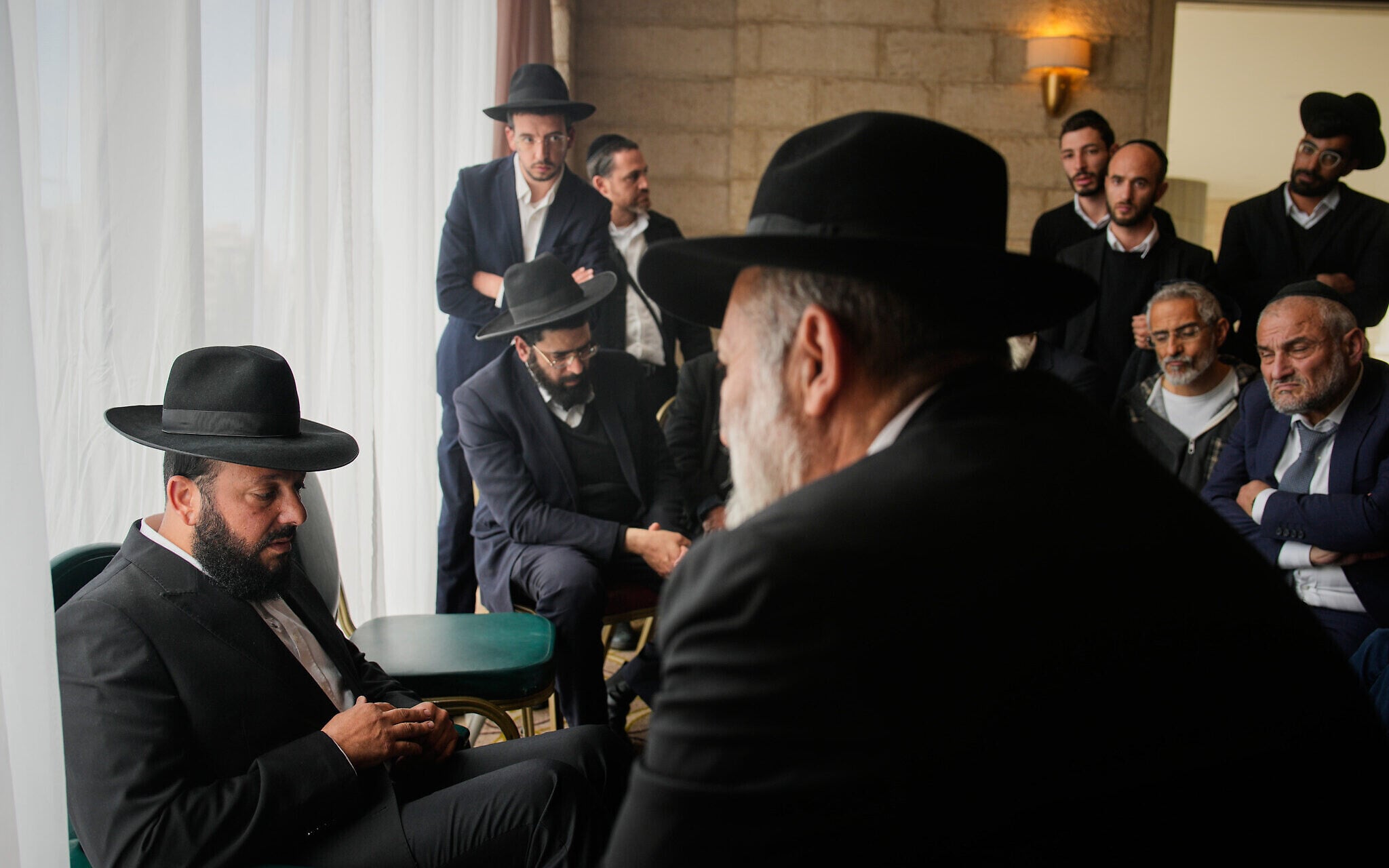
Friends and relatives comfort Rabbi Yitzhak Biton, left, whose three children, Yaakov, Avigail and Sarah, were killed in a March 1 Iranian missile strike that hit their home in the city of Beit Shemesh, in Jerusalem on March 5, 2026. (AP/Ohad Zwigenberg)
Yitzhak Biton says he hopes to open a yeshiva in honor of his children, aimed at encouraging unity among Israel’s youth and countering issues driving the country apart, such as baseless hatred and negativity.
“They sanctified God’s name with their life, and also after their death, they continue sanctifying his name,” Yitzhak said, a tear rolling down his cheek.
Tamar Biton said she has been able to maintain her faith because she works to cultivate it every day.
“Faith isn’t built in a day,” she said. “Faith is a gift from God, and faith is what gives you the ability to stand in front of these challenges, these experiences, in front of these waves.”
The missile strike that hit Beit Shemesh was the deadliest Iranian attack on Israel since the US and Israel launched a bombing campaign in Iran on Saturday.
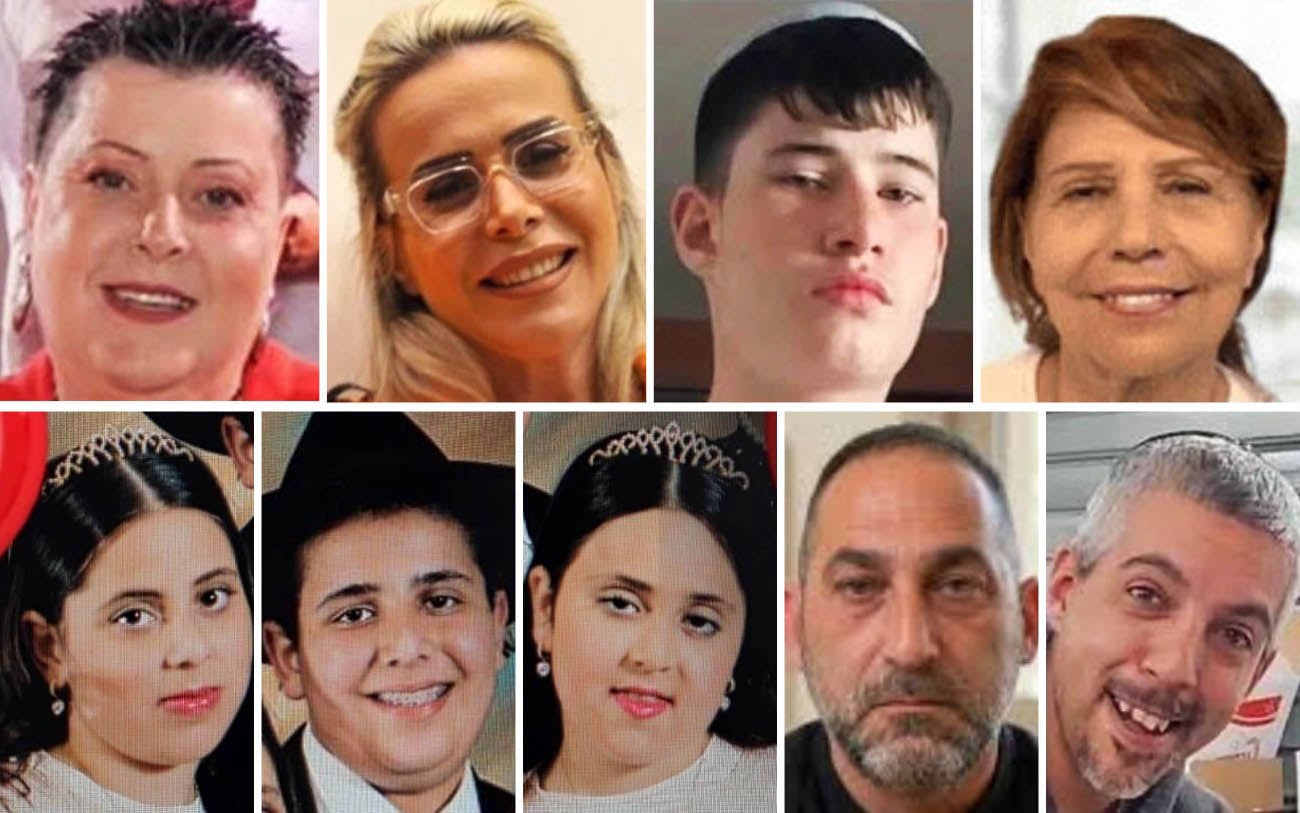
Clockwise from top left: Sara Elimelech, Ronit Elimelech, Gavriel Baruch Ravach, Bruria Cohen, Yosef Cohen, Oren Katz, and siblings Sara, Yaakov, and Avigail Biton, who were killed in an Iranian missile attack in Beit Shemesh on March 1, 2026. (Courtesy/United Hatzalah/Social media; used in accordance with Clause 27a of the Copyright Law)
Twelve people have died and more than a thousand have been wounded in Iran’s missile strikes on Israel since Saturday, according to health officials.
The outbreak of the war followed a massive US military buildup in the region, and repeated threats by US President Donald Trump to strike Iran, first over its bloody crackdown on anti-regime protesters in January and more recently over its nuclear program.
The conflict has escalated each day, with Iran striking over a dozen other countries in the Middle East, and Israel launching massive strikes in Lebanon after local Iranian proxy group Hezbollah earlier this week started launching rocket attacks on Israel for the first time since the November 2024 Israel-Hezbollah war.
At least 1,230 people have been killed in Iran and more than 100 in Lebanon, according to local authorities. The slain include dozens of top Iranian officials, including Supreme Leader Ayatollah Ali Khamenei, as well as senior commanders in Iran-backed armed groups across the region.