
Military chiefs in Israel and the US said Thursday that the countries’ airstrikes had notched major successes in taking out Iran’s missile threat and warned that the offensive was set to intensify in the coming days, even as ballistic missile and drone attacks continued to harass Israel and Gulf states.
IDF Chief of Staff Lt. Gen. Eyal Zamir said waves of strikes had destroyed 80 percent of Iran’s air defenses and 60% of its missile launchers, though he cautioned that “the threat has not yet been removed.”
Hours after he spoke, a fresh ballistic missile attack on central Israel, including a cluster warhead, sparked a fire and caused damage but no injuries, authorities said.
Central Command head Admiral Brad Cooper, who leads US forces in the Middle East, said Iran’s ballistic missile attacks had decreased by 90% since the first day of the war, while drone attacks had decreased by 83% in that time frame.
Cooper said that B-2 bombers had dropped dozens of 2000-pound penetrator bombs late Thursday, targeting deeply buried ballistic missile launchers, and that bombings were also targeting Iran’s missile production facilities.
Get The Times of Israel’s Daily Edition
by email and never miss our top stories
By signing up, you agree to the terms
Israel’s military said earlier it had hit hundreds of Iranian missile launchers above ground that could target Israeli cities, and two sources told Reuters that an upcoming second phase of the air campaign would target bunkers storing ballistic missiles and equipment, buried deep underground.
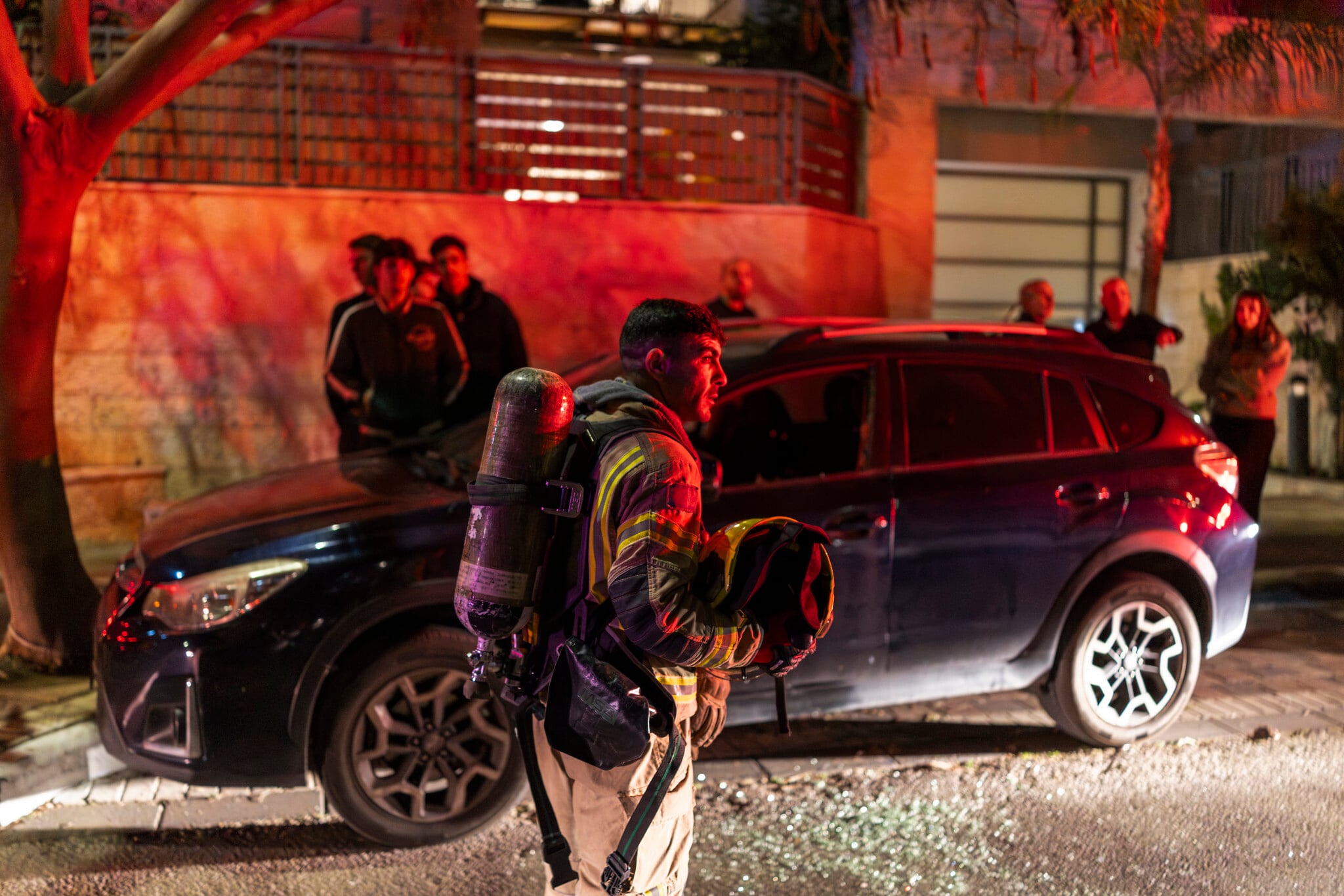
A firefighter holds a helmet as he operates outside a building hit by a projectile in a city in outskirts of Tel Aviv on March 6, 2026. (ILIA YEFIMOVICH / AFP)
The US’s B-2 bombers are considered key to delivering the heavy bunker-buster bombs needed to penetrate Iran’s heavily fortified underground ballistic missile sites.
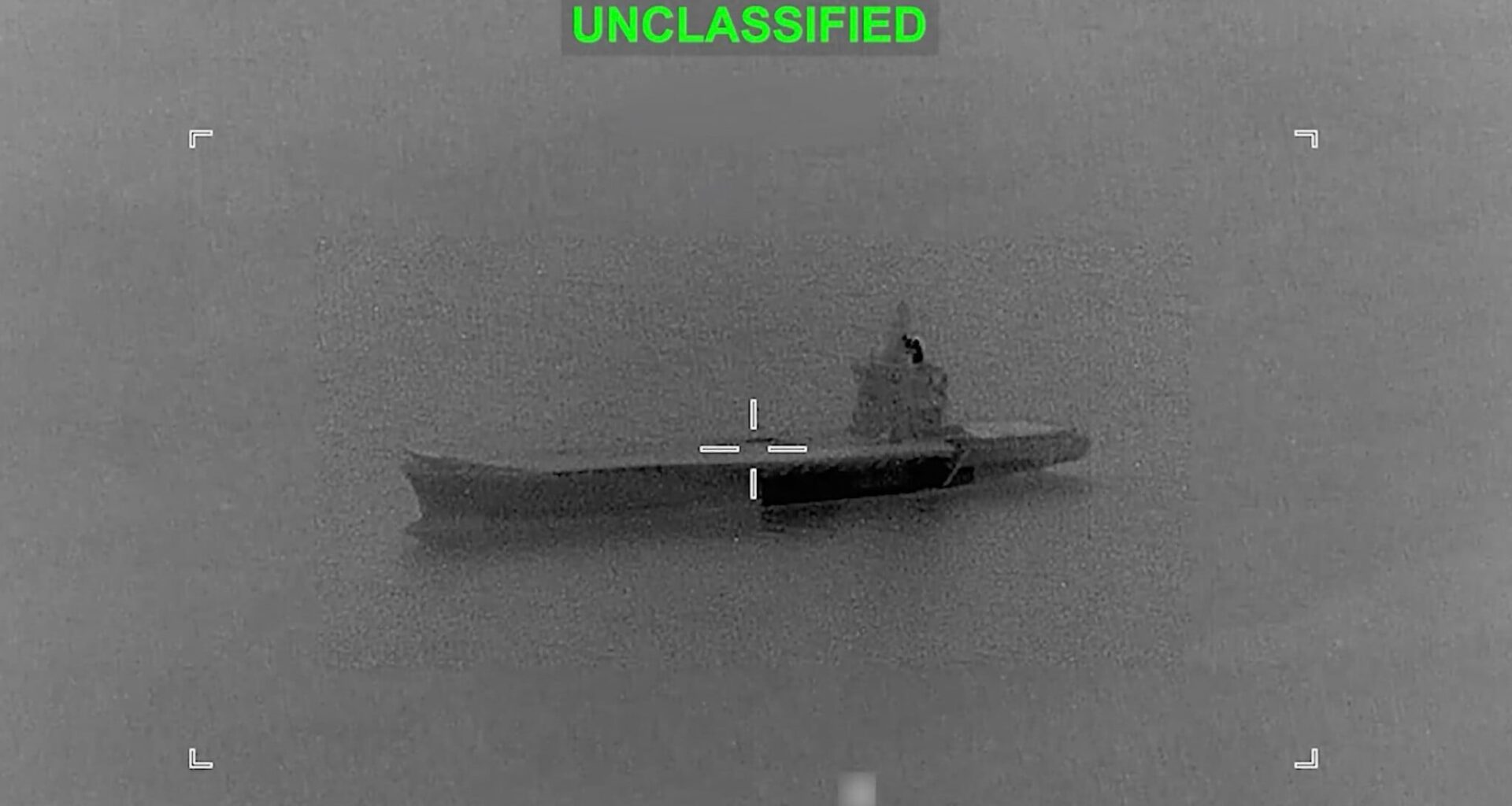
Cooper said the US had now hit at least 30 Iranian ships, including a large drone carrier that he said was the size of a World War Two aircraft carrier.
U.S. forces aren’t holding back on the mission to sink the entire Iranian Navy. Today, an Iranian drone carrier, roughly the size of a WWII aircraft carrier, was struck and is now on fire. pic.twitter.com/WyA4fniZck
— U.S. Central Command (@CENTCOM) March 6, 2026
And US Defense Secretary Pete Hegseth said that the US had enough munitions to continue its bombardment indefinitely.
“Iran is hoping that we cannot sustain this, which is a really bad miscalculation,” Hegseth told reporters at Central Command headquarters in Florida. “Our munitions are full up, and our will is ironclad.”
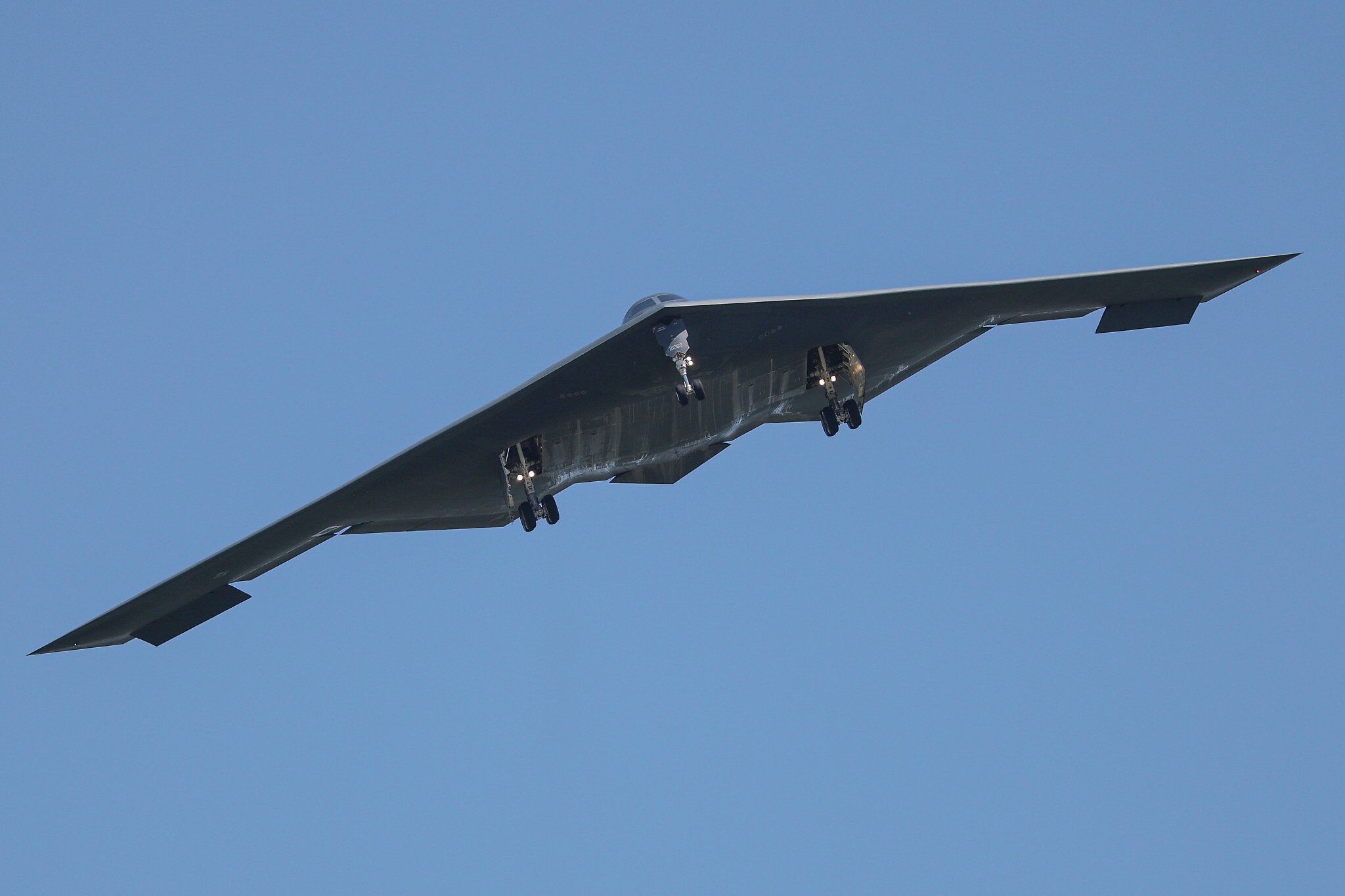
A B-2 bomber arrives at Whiteman Air Force Base in Missouri, June 22, 2025. (AP Photo/David Smith)
He added that American firepower over Tehran was “about to surge dramatically.”
“It’s more fighter squadrons, it’s more capabilities, it’s more defensive capabilities,” Hegseth said. “And it’s more bomber pulses more frequently.”
Both Cooper and Zamir said forces would be transitioning to a second stage of operations as the war entered its sixth day.
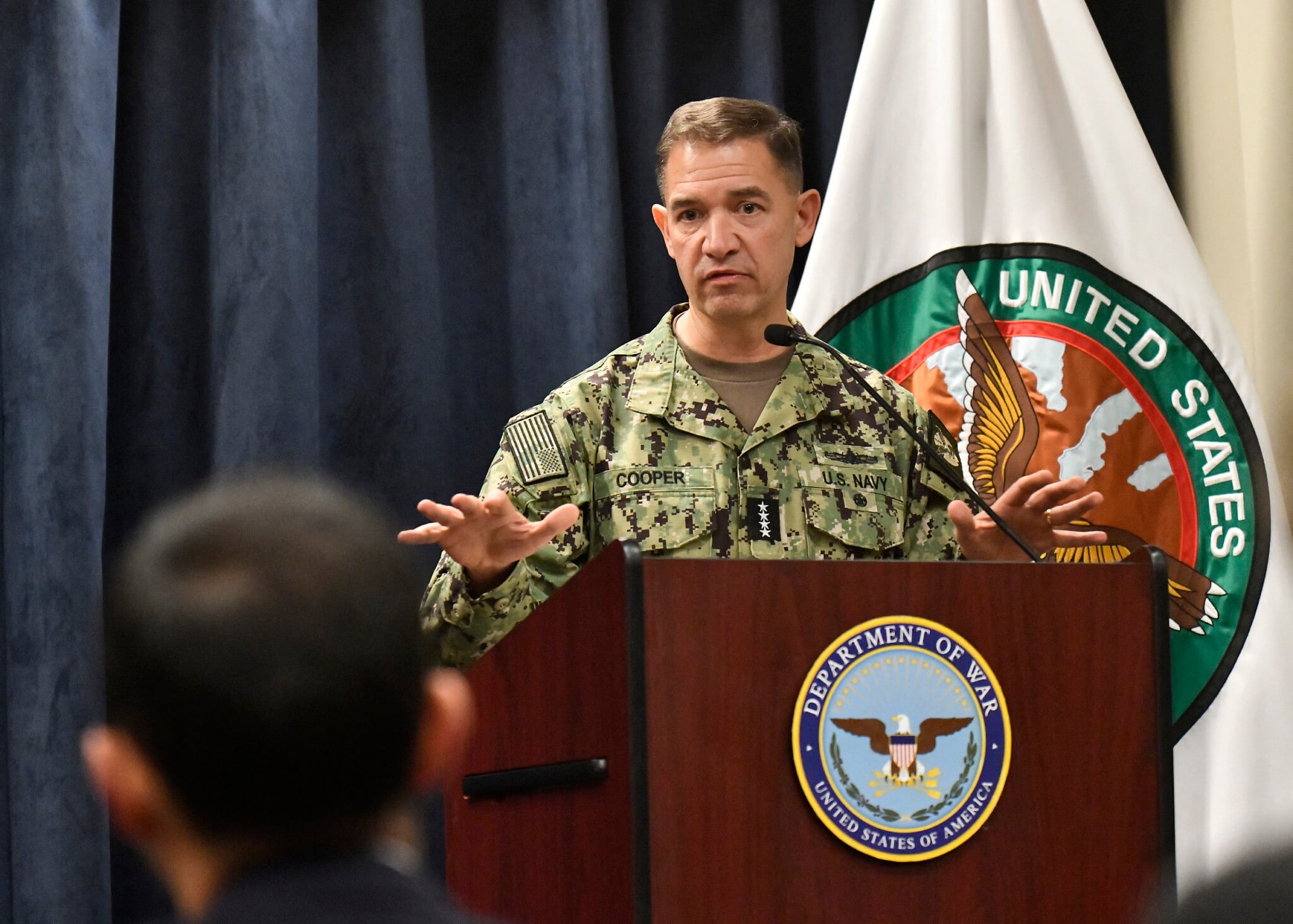
Admiral Charles Bradford “Brad” Cooper II, Commander of US Central Command speaks during a joint press conference with US Secretary of Defense Pete Hegseth, at US Central Command (CENTCOM) headquarters at MacDill Air Force Base in Tampa, Florida, on March 5, 2026. (Octavio Jones / AFP)
“After completing the stage of the surprise opening blow, in which we created air superiority and suppressed the ballistic missile array, we are now moving to the next phase of the campaign, in which we will intensify the strike on the foundations of the regime and its military capabilities,” Zamir said in a statement to the press.
“We have additional surprising moves in our hands, which I do not intend to reveal,” Zamir added, touting the “historic cooperation” between the Israel Defense Forces and the US military.
“We are fighting out of shared interests and values. In synchronized action, we are stripping the regime of its military capabilities and bringing it to strategic isolation and to a point of weakness it has never experienced before,” he said.
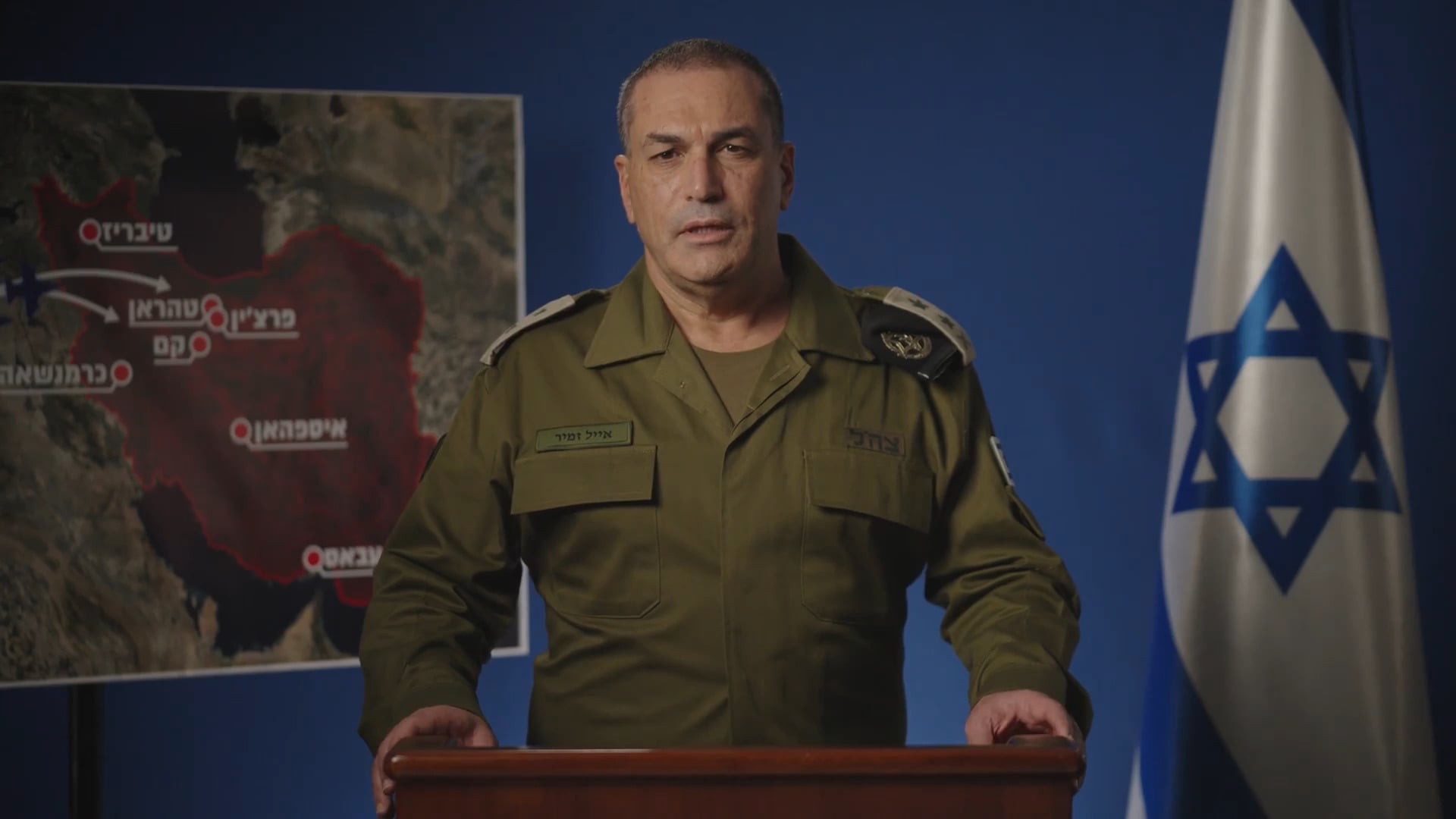
IDF Chief of Staff Lt. Gen. Eyal Zamir speaks in a video statement, March 5, 2026. (Israel Defense Forces)
On Wednesday, The Times of Israel reported that the Israeli military was planning for at least one or two more weeks of operations against Iran, during which it aims to hit thousands of targets, with the goal of systematic degradation of the Iranian regime and its military capabilities.
The military said early Friday it was launching a fresh round of strikes on the “infrastructure of Iran’s terror regime” in Tehran. It announced late Thursday that it had hit some 200 targets in an earlier wave of strikes across central and Western Iran, including dozens of ballistic missile launchers.
תיעוד מחיסול חיילים של משטר הטרור האיראני: הושלם גל תקיפה רחב של כ-200 מטרות במערב ובמרכז איראן
חיל האוויר השלים לאורך היום גל תקיפה רחב נוסף, במסגרתו הוטלו חימושים רבים על כ-200 מטרות במערב ומרכז איראן, בהם עשרות משגרי טילים בליסטיים.
בתיעוד שמתפרסם כעת מאחד האתרים שהותקפו,… pic.twitter.com/mIk4XRfloz
— צבא ההגנה לישראל (@idfonline) March 5, 2026
Despite the success, Iran continued to fire missiles at Israel throughout the day on Thursday, including several attacks overnight.
Most projectiles in the volleys — containing a small number of missiles — were intercepted, though falling shrapnel continued to cause damage and spark fires in central Israel. Footage from one attack late Thursday showed what appeared to be a cluster munition breaking into small bomblets that fell around central Israel, sparking a blaze but causing no injuries.
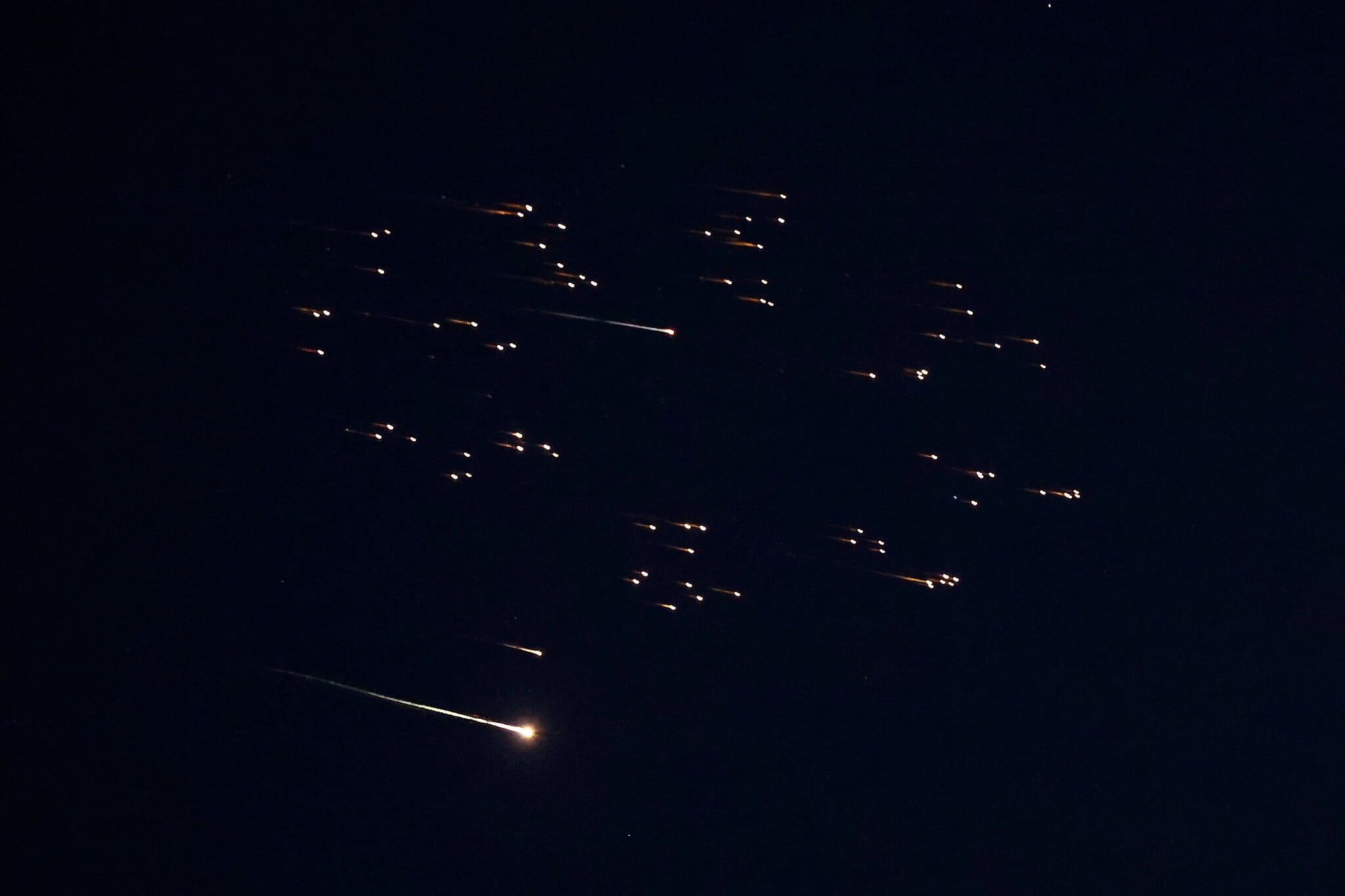
Rocket trails are seen in the sky above Netanya on March 5, 2026 in an apparent cluster munition attack from Iran. (Jack Guez/ AFP)
Air raid sirens blared repeatedly throughout the day in some areas, including around Tel Aviv, with even a single ballistic missile liable to trigger alerts across a wide geographic area, sending millions scrambling back and forth between their homes and shelters.
The seemingly incessant but limited attacks spoiled attempts by many in the country to return to some semblance of normalcy, with the Home Front Command lifting some restrictions on businesses and Ben Gurion International Airport opening for limited repatriation flights after being closed all week.
Ten people in total have been killed by Iranian missile strikes in Israel over the course of the war, which began on Saturday.
Iran has launched over 500 ballistic and cruise missiles and over 2,000 drones since the start of the war, a military source told the Iranian Fars news agency on Thursday, in numbers that could not be confirmed.

Israelis take cover at an underground parking lot in Tel Aviv as a siren sounds warning of incoming ballistic missiles fired from Iran toward Israel, March 5, 2026. (Chaim Goldberg/Flash90)
The report claimed that 40% of the Iranian attacks targeted Israel and the other 60% targeted American sites in the region, despite Iranian attacks hitting civilian sites in Gulf nations.
Bahrain reported overnight that a hotel and two residential buildings were damaged by “Iranian aggression.” It earlier said that an Iranian missile hit a state-run oil refinery on Thursday, sparking a fire that was extinguished. It said no casualties were reported.
The US State Department earlier announced it was closing its embassy in Kuwait, which activated air defense systems in response to incoming missiles.
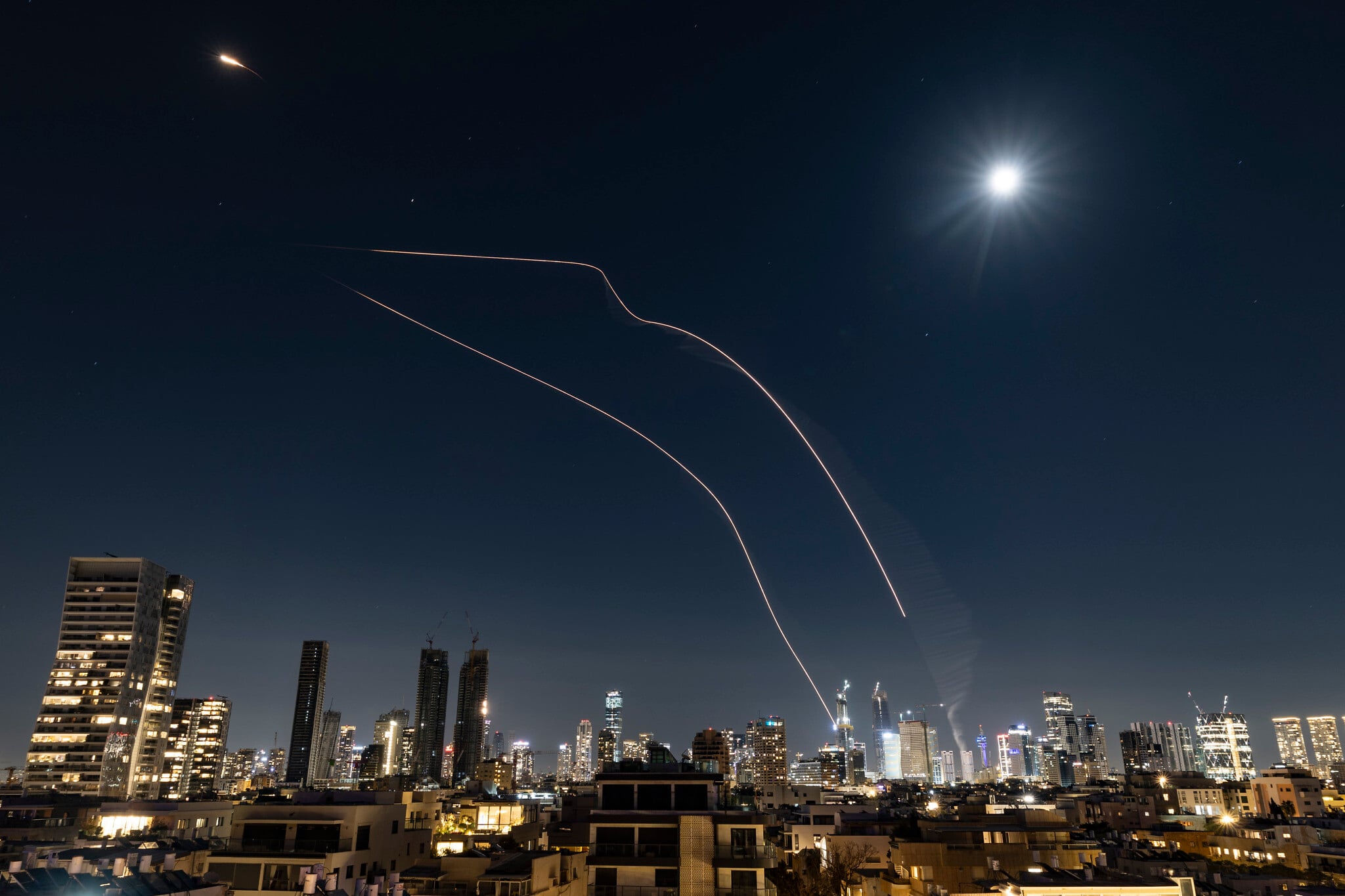
Anti-missile batteries fire interception missiles toward incoming ballistic missiles launched from Iran, as seen over Tel Aviv, during the war with Iran and ongoing missile fire toward Israel, March 5, 2026. (Chaim Goldberg/Flash90)
In the United Arab Emirates, a drone was shot down near the Al Dhafra Air Base, which hosts US forces. Authorities said falling shrapnel wounded several people.
Qatar evacuated residents near the US Embassy in Doha as a temporary precaution and later reported a missile attack, as well as the thwarting of a drone strike early Friday morning that targeted the Al Udeid airbase, the largest American military base in the Middle East. Saudi Arabia said it destroyed a drone in a province bordering Jordan.
Azerbaijan’s President Ilham Aliyev accused Iran of “a groundless act of terror and aggression” after a drone crashed Thursday near an airport, injuring four civilian workers. Another drone fell near a school.
Iran denied it launched drones toward Azerbaijan. Iran has also repeatedly denied targeting oil infrastructure and other civilian targets, even as its missiles and drones have hit such sites.
Israel launched the war on Saturday with an attack that killed Iran’s supreme leader Ali Khamenei and other top officials, kicking off a wave of airstrikes by Israeli and US forces that have focused on destroying the country’s firepower and paving the way for the Islamic regime that has ruled the country with an iron fist since 1979 to be toppled.
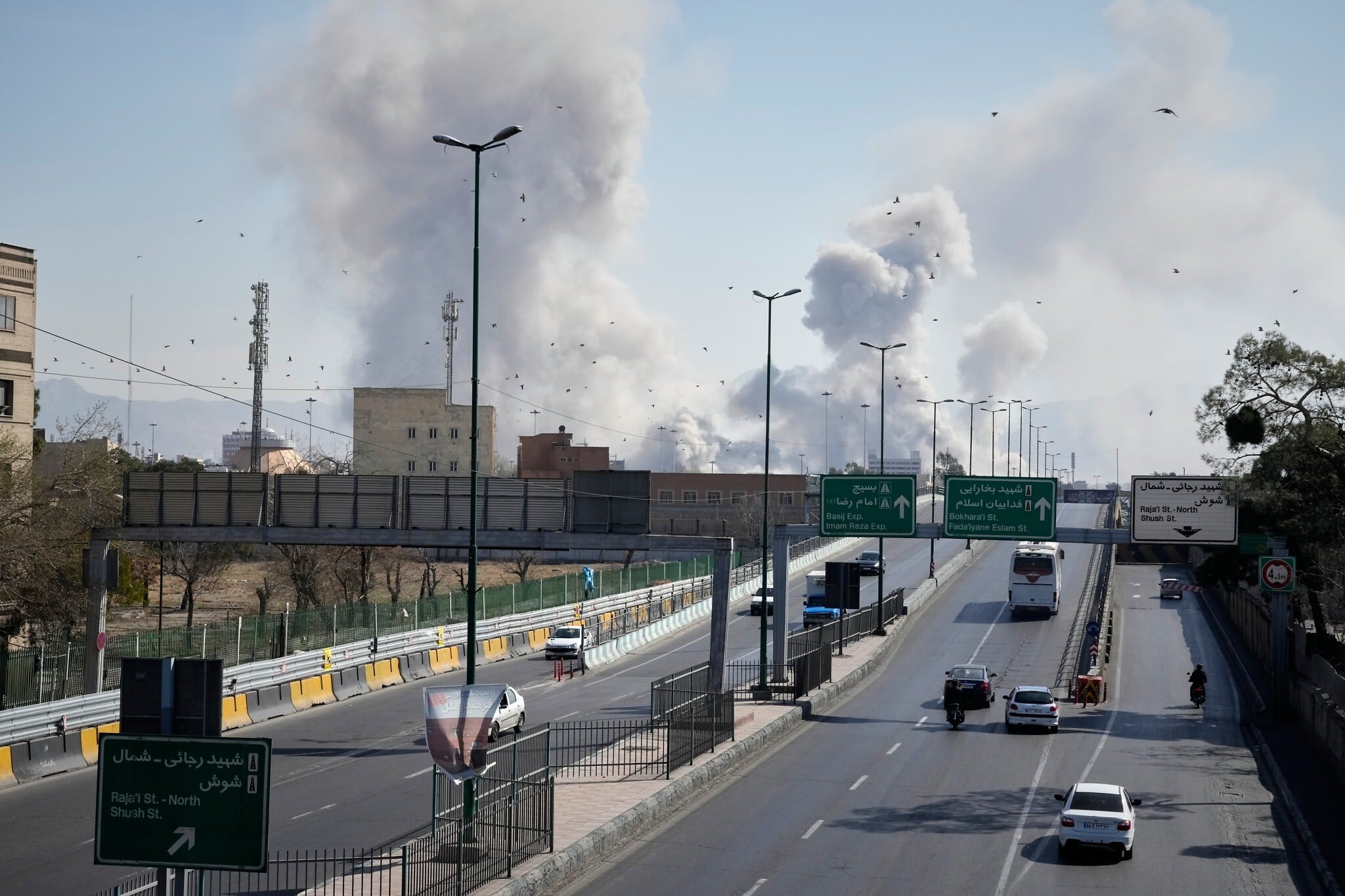
Plumes of smoke rise as strikes hit the city during the US–Israeli military campaign in Tehran, Iran, Thursday, March 5, 2026. (AP/Vahid Salemi)
‘No expansion in objectives’
After US President Donald Trump told Reuters that the United States must be involved in choosing the next leader of Iran, Hegseth denied that there was any intention that the military’s objectives were widening.
“There’s no expansion in our objectives. We know exactly what we’re trying to achieve,” Hegseth said, adding that Trump is “having a heck of a say in who runs Iran given the ongoing operation.”
In brief remarks at the White House, Trump again urged the Iranian people to “help take back your country” and promised the US would grant Iranians “immunity” amid the war and ongoing dangers under the current Iranian regime.
“So you’ll be perfectly safe with total immunity,” Trump said, without giving any details about what that meant. “Or you’ll face absolutely guaranteed death.”

A member of the Iranian community holds a poster during a rally outside the Iranian embassy in Bucharest, Romania, Thursday, March 5, 2026. (AP/Andreea Alexandru)
The Pentagon earlier this week said the military campaign, known as Operation Epic Fury, is focused on destroying Iran’s offensive missiles, missile production and Navy, while not allowing Tehran to have a nuclear weapon.
The administration has been criticized, however, for what has appeared to be a series of shifting narratives regarding the objectives and justification for the operation, muddying public perception of the war.
An NBC poll published Wednesday found that 52% of US voters believe Trump was wrong to order military action against Iran, versus 41% who agreed with the decision. The poll surveyed 1,000 registered voters and carried a margin of error of ±3.10%. Other polls taken since the conflict broke out have shown similar levels of dissatisfaction with Trump’s handling of Iran.
Nonetheless, Trump’s decision to strike Iran won enough support from Republican lawmakers in the US House on Thursday to defeat a resolution to halt the bombardment. The Senate voted down a similar measure a day earlier.
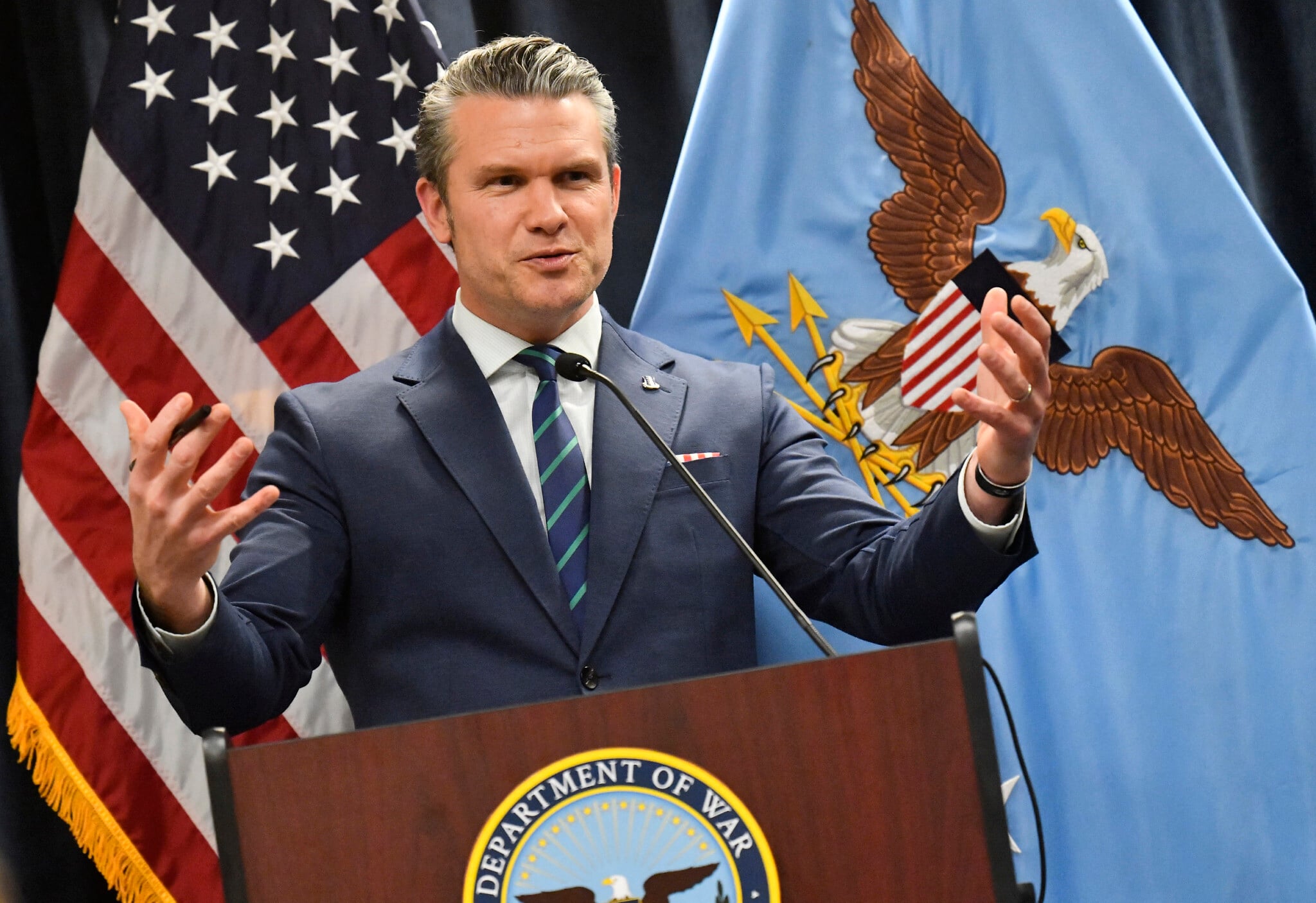
US Secretary of Defense Pete Hegseth speaks during a press conference at US Central Command (CENTCOM) headquarters at MacDill Air Force Base in Tampa, Florida, on March 5, 2026. (Photo by Octavio Jones / AFP)
The war has killed six US soldiers. Iran says at least 1,230 people have been killed in strikes, including 175 people who died in a February 28 strike on an elementary school in southern Iran.
An analysis by The New York Times found that the attack occurred at the same time as a series of US attacks on an adjacent naval base belonging to Iran’s Islamic Revolutionary Guard Corps.
The US has said it is investigating the strike, while insisting that it doesn’t target civilians intentionally.
US military investigators believe it is likely that US forces were responsible for the strike, but have not yet reached a conclusion or completed their investigation, two US officials told Reuters late Thursday.
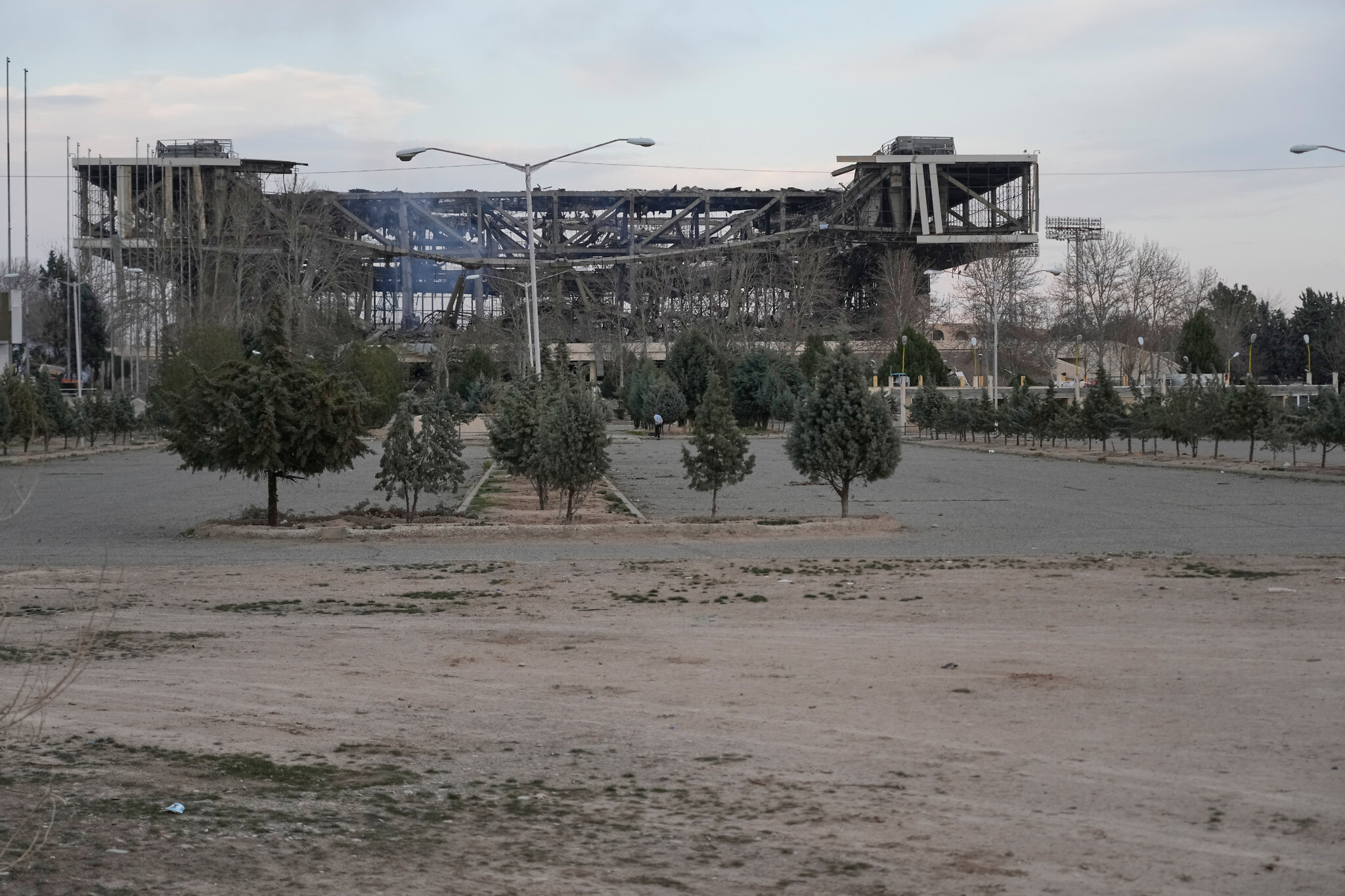
The damaged 12,000-seat Azadi indoor stadium is seen after being struck during ongoing US–Israeli military strikes in Tehran, Iran, Thursday, March 5, 2026. (AP/Vahid Salemi)
Iranian authorities have been the only ones to provide a death count from what would be the deadliest strike of the US-Israeli war against the Islamic Republic. Their figures have not been independently confirmed.
Iran’s ambassador to Egypt told the Associated Press on Thursday that Tehran had not requested talks with the US to bring an end to the war, denying comments by Trump that Iran wants to negotiate.
He said a lack of trust makes such engagement impossible after talks for a possible nuclear deal twice failed and ended with war.
“There will be no trust in Trump,” Ferdousi Pour said.