
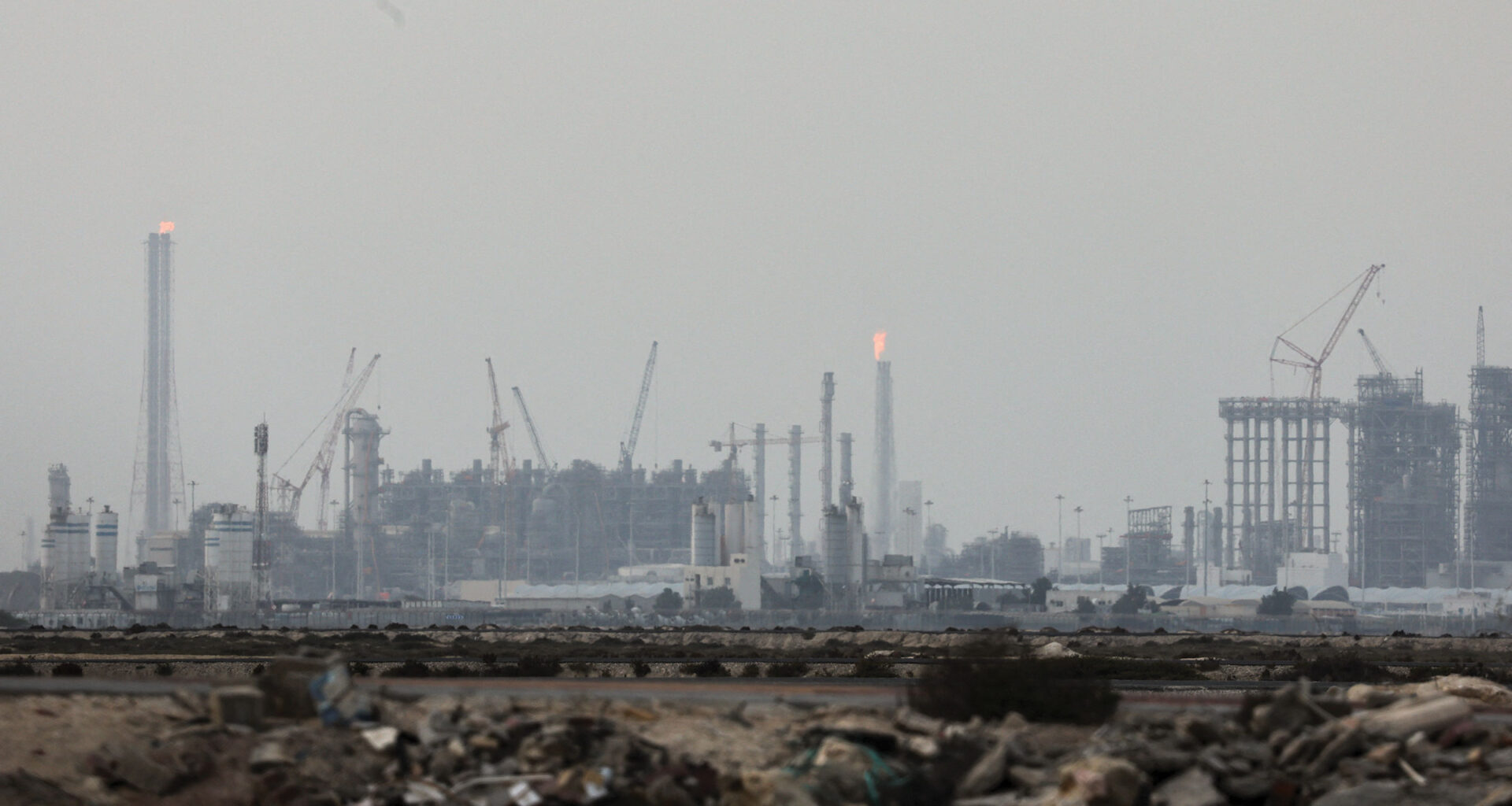
The war in Iran has taken one-third of the world’s helium supply off the market. And if the conflict continues for more than 2 weeks, disruption for helium users could take months to resolve.
That was the assessment from a panel of experts assembled by the industrial gas media group Gasworld for a webinar on March 4. The impact on helium supply comes from Iran’s drone and missile attacks on Qatar and its blockade of the Strait of Hormuz, a major shipping channel that connects the Persian Gulf to the rest of the world by sea.
Helium is critical for several scientific and industrial endeavors. As a cryogenic liquid, it cools superconducting magnets in spectrometers, cryostats, and imaging devices. Deep-sea divers use it in breathing mixtures because it doesn’t dissolve easily into blood. And Qatar is home to one of only two plants that produce semiconductor-grade helium, which is ionized and used to etch silicon wafers.
The Iran war began on Feb. 28, when the US and Israel collaborated on a wave of airstrikes that killed Iran’s supreme leader, Ali Khamenei, and several other civilian and military leaders. Iran has retaliated with drone and missile attacks on neighboring countries, including Qatar, the source of roughly one-third of the world’s helium supply.
On March 2, state-owned QatarEnergy halted production at Ras Laffan Industrial City, where the firm extracts and liquefies up to 17 metric tons per day of helium as part of its natural gas processing and export operations. Helium often accumulates in the same geological reservoirs as natural gas.
QatarEnergy says the site was targeted by Iranian munitions but has not disclosed whether they penetrated the region’s air defense system. The next day, the firm also halted production of urea, polymers, methanol, and other chemical products.
If the conflict resolves and QatarEnergy can resume producing liquid helium and shipping it out through the Strait of Hormuz within about 2 weeks, the market will recover easily, helium consultant Phil Kornbluth said during the webinar. It takes about 3 weeks for helium to go from container-filling stations in Qatar to delivery at a customer’s facility, he said. The helium is distributed by the industrial gas firms Linde, Air Liquide, and Iwatani.
But if the Ras Laffan plant is unable to export for much more than 2 weeks, the industrial gas firms will be forced to rework their logistics and contracts, and even relocate equipment and personnel to cope with the loss of the Qatari supply. Unwinding those changes later could take months, Kornbluth said.
The Donald J. Trump administration initially predicted that hostilities would take 4–5 weeks. But on March 4, US defense secretary Pete Hegseth said they could go on for 8 weeks or more. “The only limits we have in this is President Trump’s desire to achieve specific effects on behalf of the American people,” he said. “We’re just getting started.”
Even if the war drags on, Iran may not be able to sustain its disruption of trade in the region, Megan Sutcliffe, a Middle East analyst at the geopolitical risk consulting firm Sibylline, said during the Gasworld webinar. “Our best assessment would indicate that Iran still has the resources to maintain some form of harassment-enforced blockade for 2 weeks, under the assumption that the government remains in place in Tehran and that decision-making retains at least a degree of centralization,” she said.
But if QatarEnergy’s natural gas or helium equipment is actually hit, the market disruption will be much worse, Kornbluth said. Depending on the extent of the damage, it could take the firm a year or more to get everything back online. “With all these missiles and drones flying around, it’s hard to imagine this is going to have a clean outcome with no negative surprises,” he said.
A major industrial gas supplier, which Kornbluth declined to name, has already begun assessing customers a helium surcharge. Force majeure declarations and supply allocations, if they happen, would indicate the helium market is headed for a full global shortage. “The world can’t compensate for the loss of a third of its helium supply,” he said.

Chemical & Engineering News
ISSN 0009-2347
Copyright ©
2026 American Chemical Society