
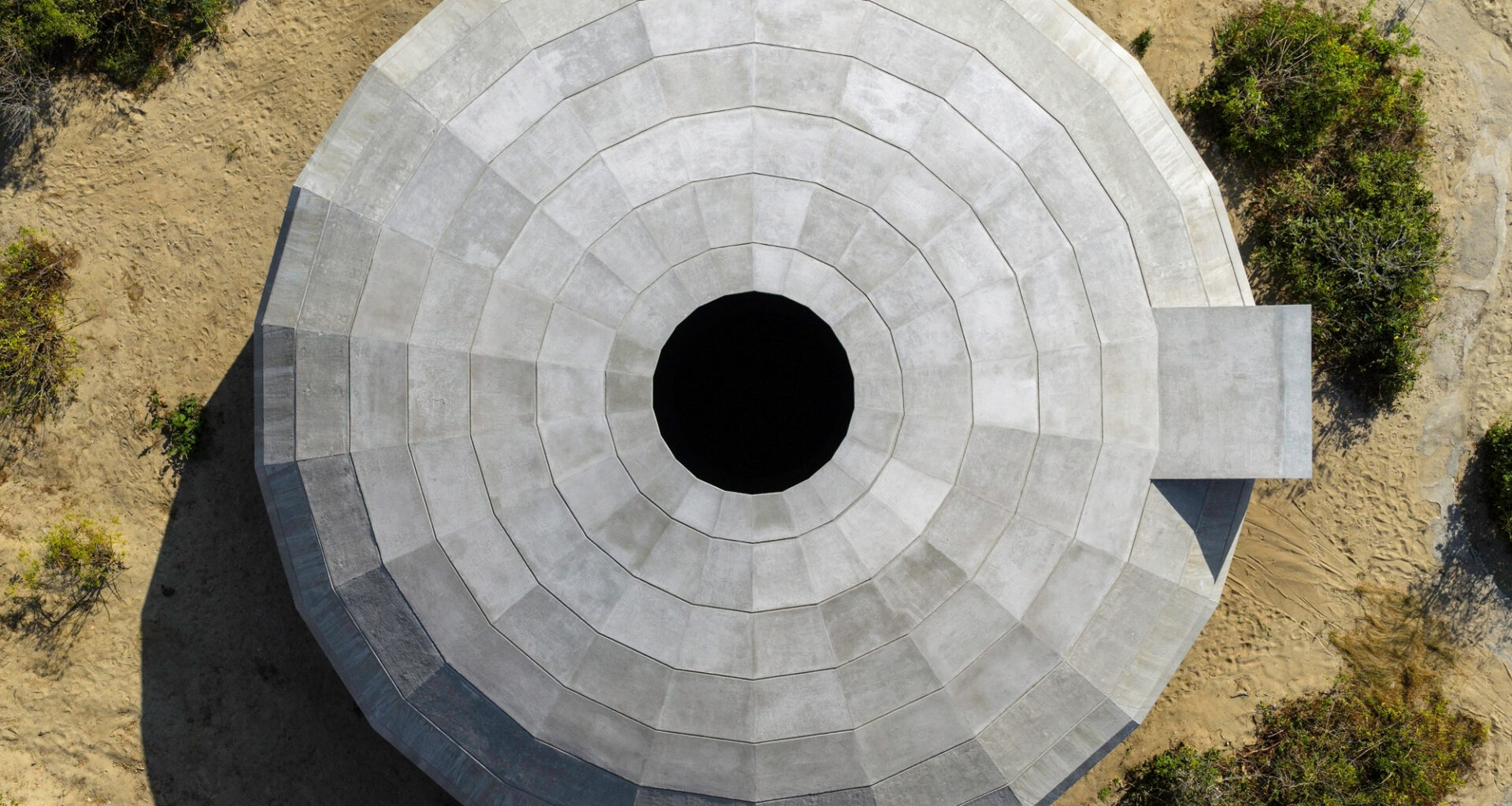
The New York office of OMA has created an incubator for mushroom production on the campus of arts organisation Fundación Casa Wabi in Oaxaca, Mexico.
An OMA team led by architect Shohei Shigematsu completed the 200-square-metre dome, alongside other pavilions by famed architects on the Casa Wabi property, which is north of the city of Puerto Escondido in Oaxaca.
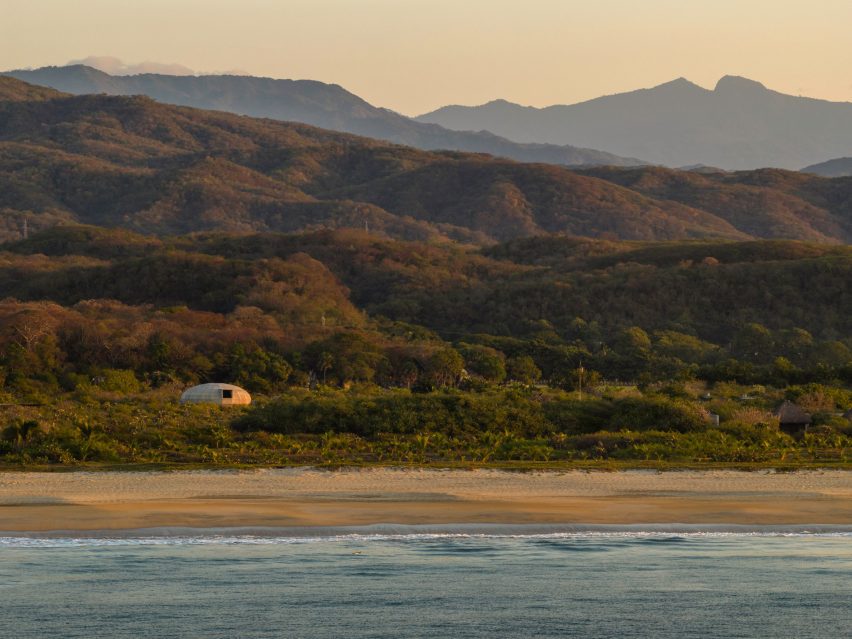 OMA has completed the Mushroom Pavilion at Casa Wabi
The Mushroom Pavilion was designed to “convey its simple yet important function” according to OMA.
Formally, it is an ellipsoidal dome made of concrete panels that radiate around an oculus, which brings a specific amount of light into the space for cultivation and gatherings.
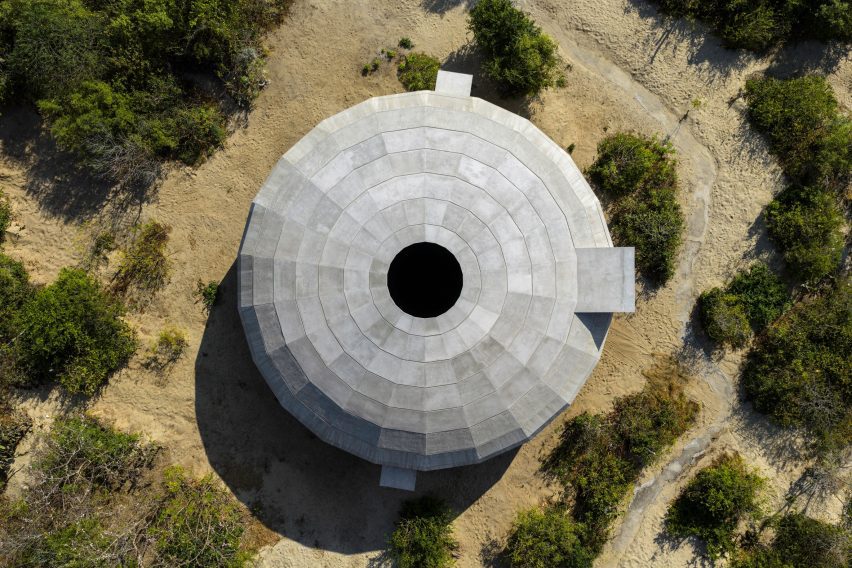 OMA created a domed structure for the beachfront site
“We conceived a pavilion for the very specific function of mushroom cultivation while offering a space for people to come together,” said Shigematsu.
“The result is an incubator of both food and community that’s spatially fit to support all types of activities for the locals, visitors, and the foundation.”
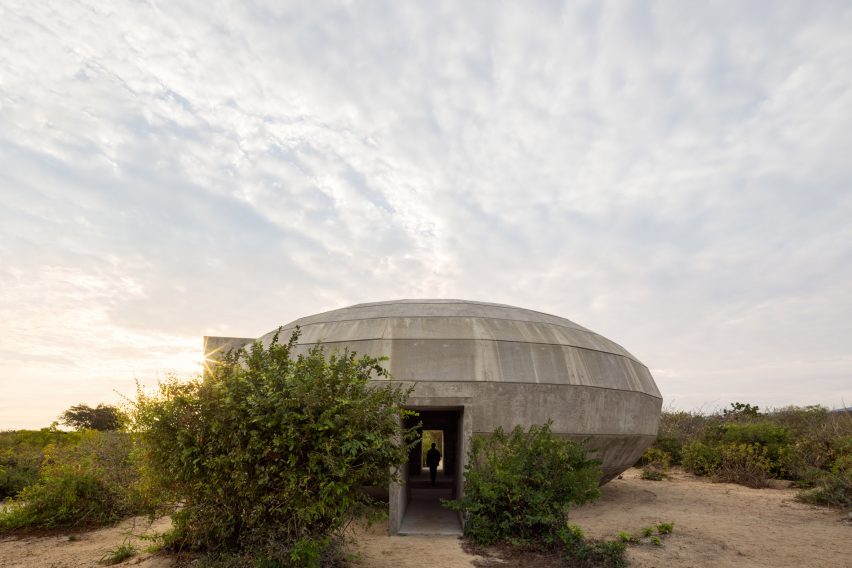 Poured-in-place concrete was made to retain the iron-rich water, allowing for the development of a patina over time
The dome itself is composed of poured-in-place concrete. It has been “stamped” with burlap, a move the architects said was to retain the water of the region, which is high in iron and will give the concrete a specific patina over time.
Under the patchworked intrados, steps ring the circular space, illuminated in part by the oculus.
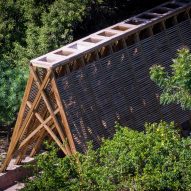
CCA orients wooden Casa Wabi pavilion around orchid cultivation
The chamber has been divided into three areas by walkways, each area for a different stage of the mushroom process – one for fruiting, one for incubation and one for storage – with additional space for people to sit.
OMA described this set up as a “panopticon viewing experience”. The different stages of the process can be shown all at once.
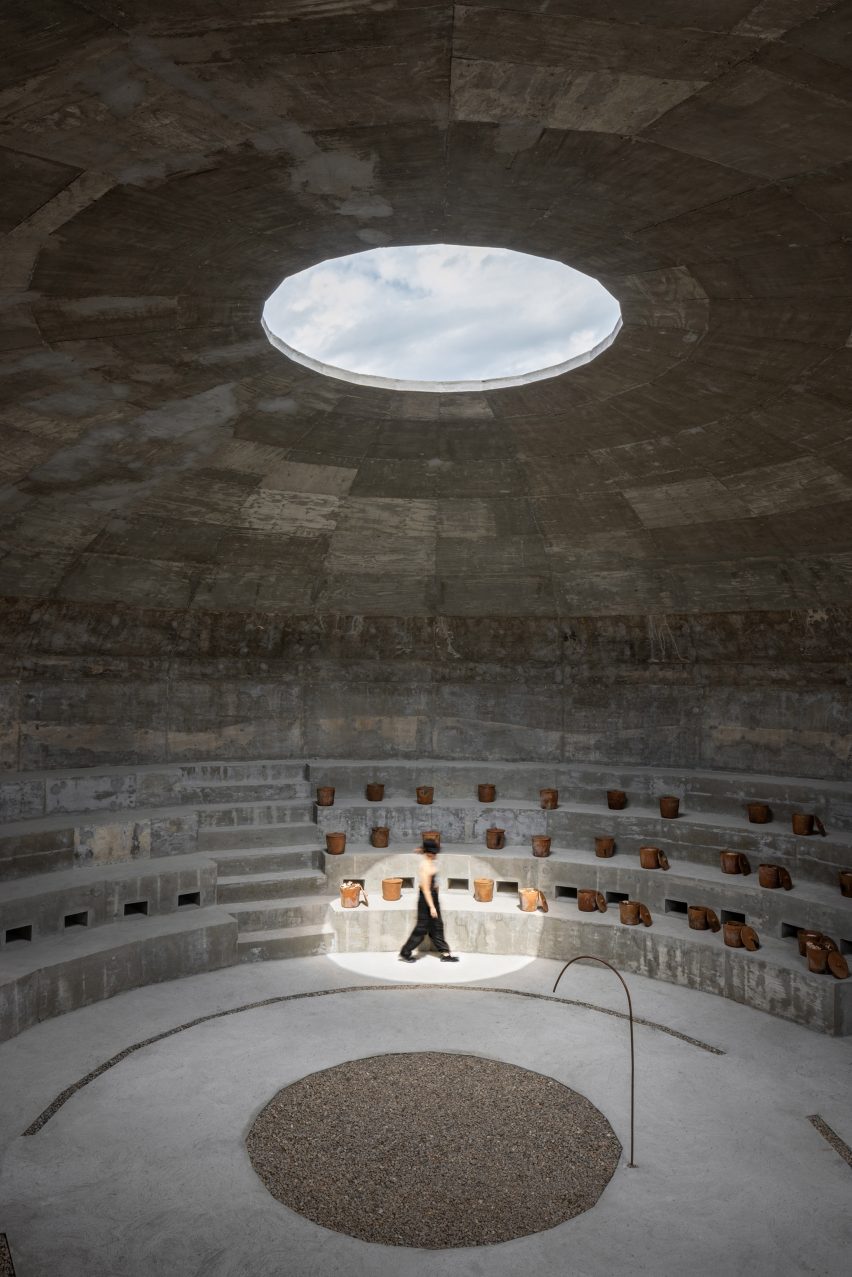 An oculus brings light into the interior gathering and cultivation space
While the inward focus of the process is paramount, OMA also made concessions to the landscape, despite the closed nature of the structure.
From inside, a staircase leads up to a rectangular viewing platform that protrudes from the top of the structure, which allows for views of the ocean-side landscape.
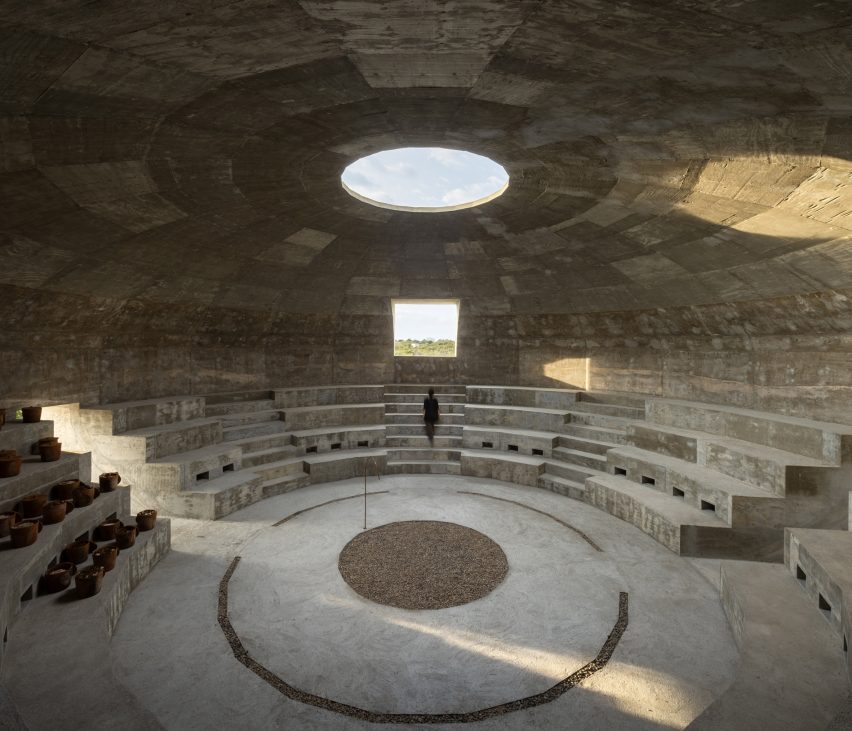 A set of stairs leads to a rectangular viewfinder window
Fundación Casa Wabi, led by Mexican artist Bosco Sodi, has a primary building that serves as a residence, gallery and workshop that was designed by Japanese architect Tadao Ando.
The Japanese influence on the organisation of the property was meaningful to Shigematsu, himself Japanese.
“As a Japanese architect, it was especially meaningful to contribute an art campus guided by Japanese philosophy and spatial traditions,” he said.
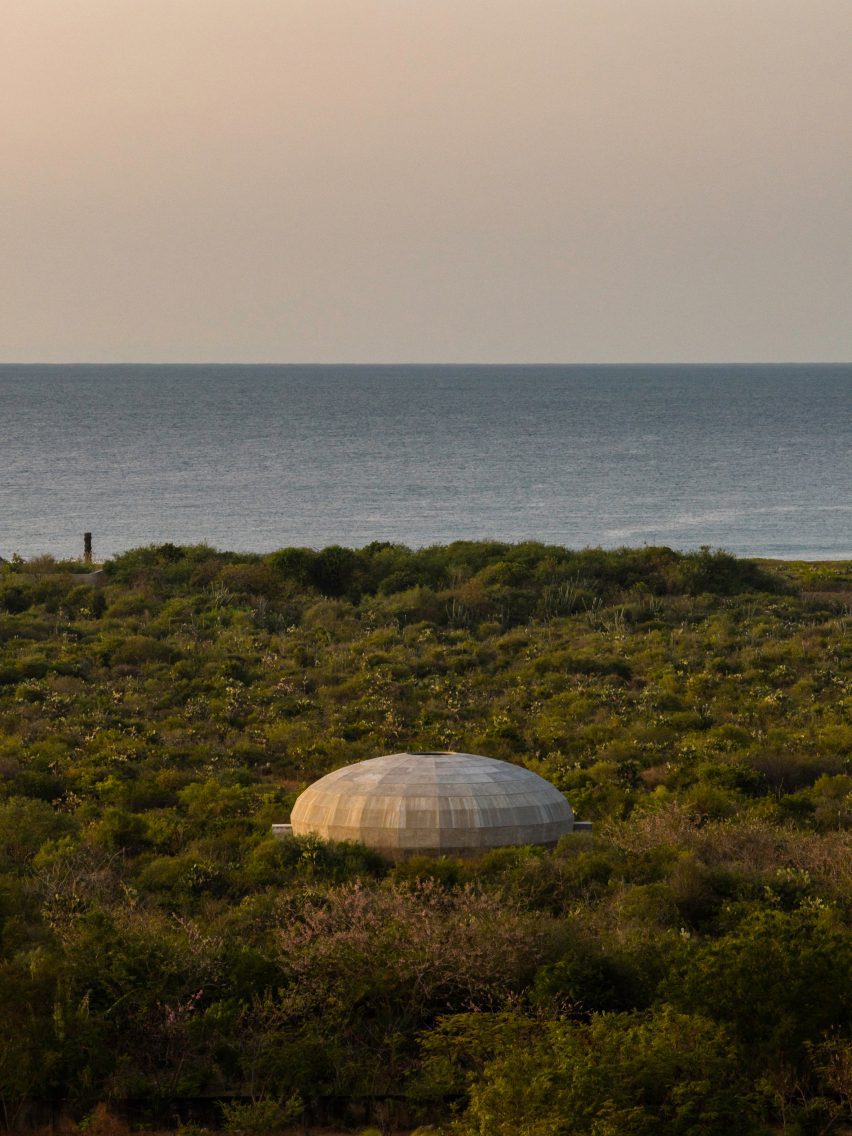 The building is among dozens of structures at Fundación Casa Wabi
The Casa Wabi property is anchored on the Ando building, but the practice of commissioning architects to construct functional pavilions on the property has become a regular exercise.
In 2020, Kengo Kuma designed a blackened-wood chicken coop, while Mexican architect Alberto Kalach, who also designed the Casa Wabi Mexico City outpost, designed a ceramics workshop with an imposing chimney.
A variety of other architectural marvels dot the coastline adjacent to Casa Wabi, such as a retreat designed as an “ode to antiquity” by Mexican architect and Tezontle co-founder Carlos H Matos.
The photography is by Rafael Gamo.
Project credits:
Partner-in-charge: Shohei Shigematsu
Project architects: Shary Tawil, Caroline Corbett
Team: Dylan Wei, Francesco Rosati