
A massive Israeli strike Friday morning destroyed the underground Tehran bunker of Iran’s late supreme leader Ali Khamenei, which was being used by senior regime officials, the IDF announced, as the US-Israeli bombing campaign against the Islamic Republic continued into its seventh day.
Meanwhile, US President Donald Trump said the assault would not let up until Iran announced its unconditional surrender. And IDF Chief of Staff Lt. Gen. Eyal Zamir said Israel was “crushing the Iranian terror regime, and will seize every opportunity to deepen our achievements.”
In the opening strike of the war, the IDF struck and killed Khamenei while he was at his compound, but not in the bunker buried deep underground.
According to the military, Friday saw some 50 Israeli Air Force fighter jets drop around 100 bombs on the bunker, completely destroying it.
The bunker was located under the “leadership complex” in Tehran. Its rooms and tunnels were spread across multiple streets and included “many entry points and rooms for gatherings of senior members of the Iranian terror regime,” the army said. “The underground bunker was built beneath the [leadership] compound and was a secure emergency asset for managing the war by the leader, who was eliminated before he managed to use it.”
Get The Times of Israel’s Daily Edition
by email and never miss our top stories
By signing up, you agree to the terms
The military added that “the compound continued to be used by senior members of the Iranian regime” even after the killing of Khamenei days ago.
The results of the strike were not yet clear, and the military did not immediately name the officials targeted.
The Military Intelligence Directorate’s Unit 8200 and Unit 9900 — which are tasked with signal and visual intelligence, respectively — mapped out the site over a years-long effort, enabling Friday’s “precise” strike, according to the IDF.
The IDF has struck sites at Iran’s leadership complex in Tehran several times amid the conflict.
Israeli Air Force fighter jets strike the underground bunker of Iran’s former supreme leader, Ali Khamenei, in Tehran, in footage published by the military on March 6, 2026. (Israel Defense Forces)
The first attack of the war killed Khamenei at the complex. Another strike on a nearby building killed eight top Iranian officials, according to the military. On Tuesday, the IDF said it hit several sites at the complex, including Iran’s presidential bureau and the headquarters of Iran’s Supreme National Security.
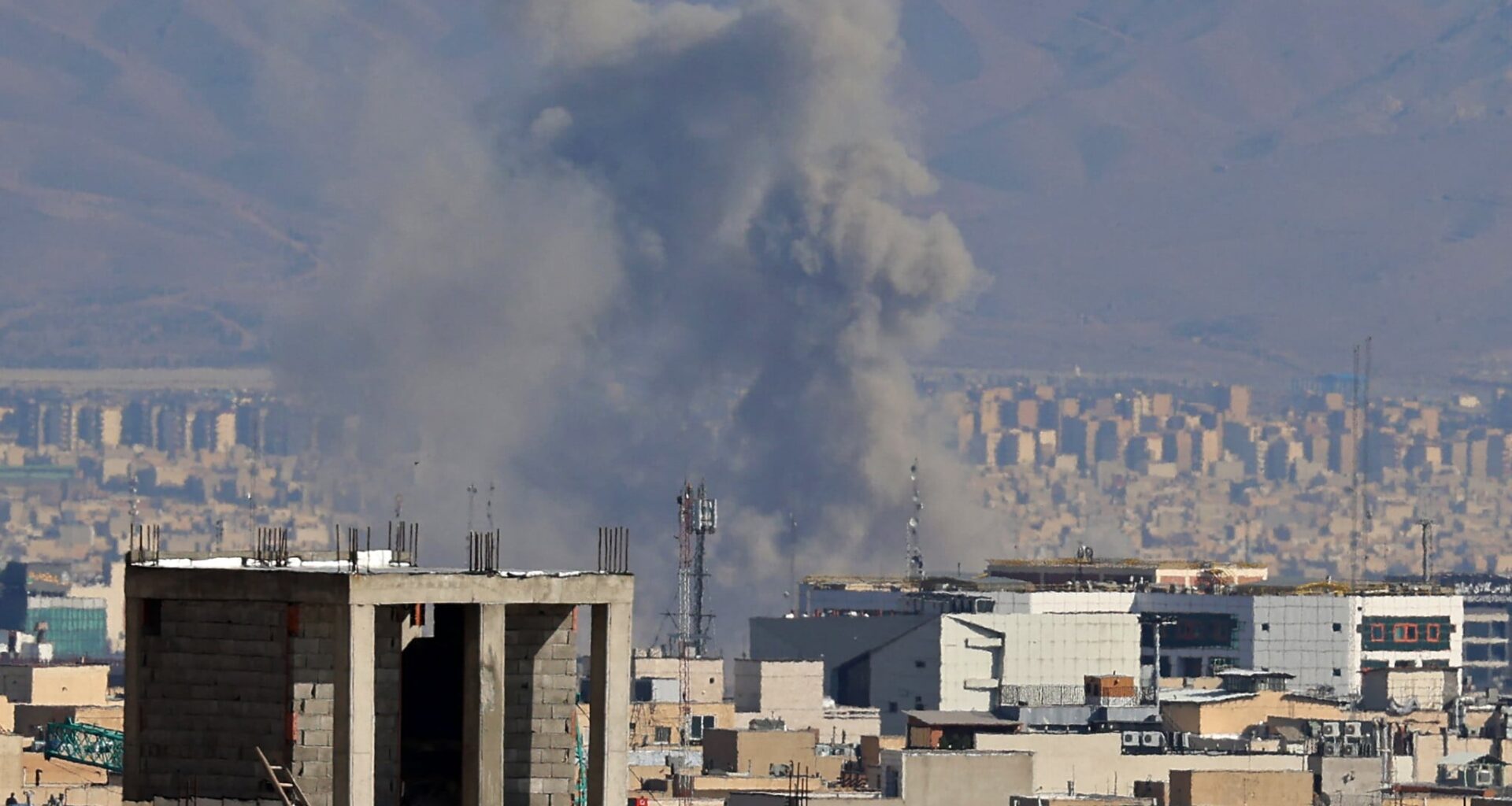
Witnesses in Tehran described Friday’s airstrikes as particularly intense, shaking homes in the area. Others reported explosions around the Iranian city of Kermanshah in an area that is home to multiple missile bases.
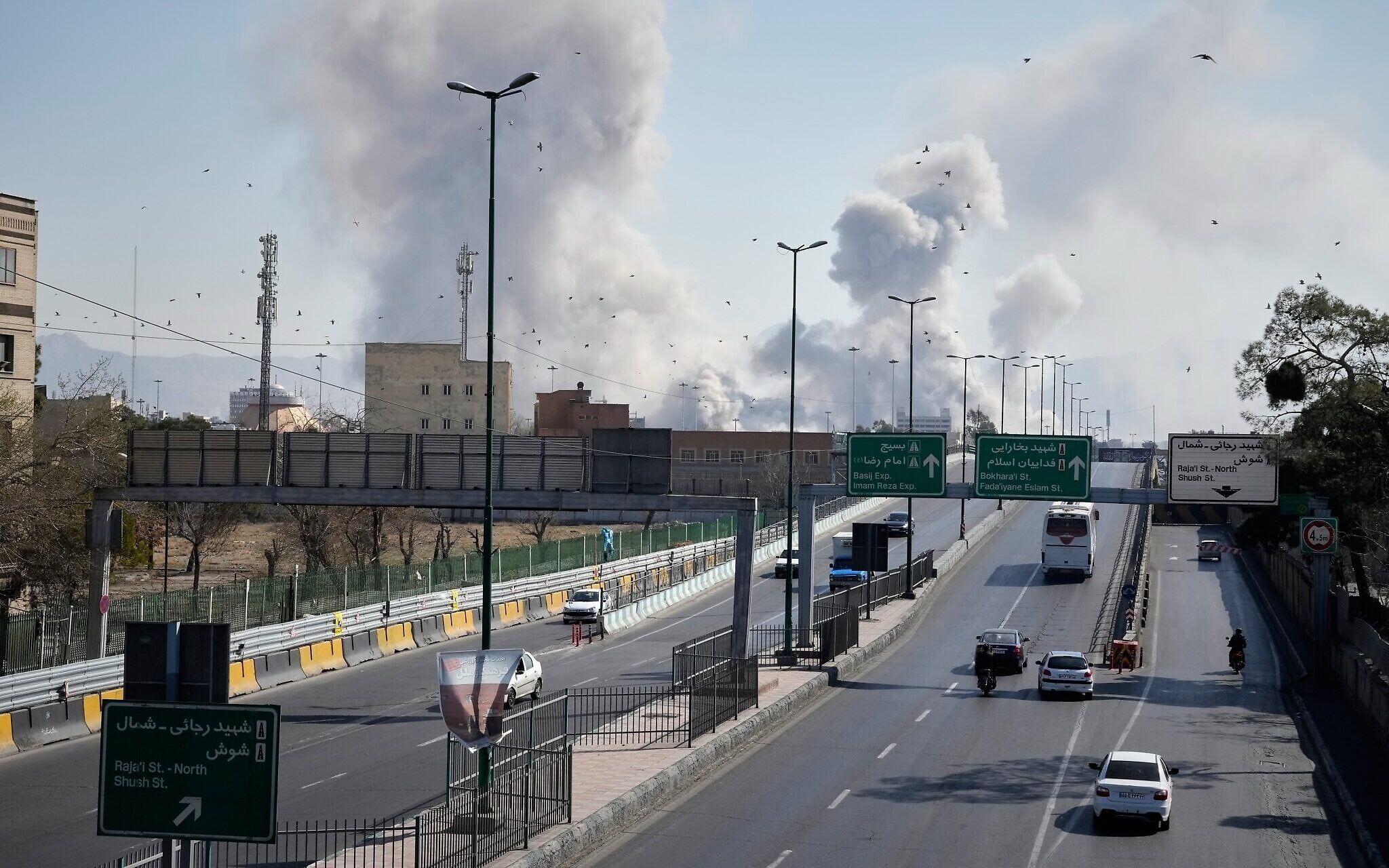
Plumes of smoke rise as strikes hit the city during the US–Israeli military campaign in Tehran, Iran, March 5, 2026. (AP Photo/Vahid Salemi)
Hours later, the IDF said it carried out another strike in Tehran, this time targeting “a senior Iranian terror regime commander.”
According to Israeli security sources, the target of the strike was Asghar Hijazi, acting chief of staff of the supreme leader’s office.
The IDF said that further details on the strike would be provided later. Hijazi’s state was not yet known.
Hijazi was close to Khamenei and was a key figure in the Islamic Republic’s senior leadership structure.
“For years, he has been considered one of the most influential figures in the supreme leader’s office,” said Raz Zimmt, Director of the Iran and Shiite Axis Program at the Institute for National Security Studies think tank. He added that Hijazi was “far more than just the chief of staff,” as he “served as Khamenei’s representative in sensitive political and security consultations.”
#Israel Defense Forces Spokesperson says that the #IDF attacked a senior commander of the #Islamic Republic Regime in #Tehran minutes ago#IranWar#BREAKING
????????❌???????? Israeli sources reports that the Senior Iranian Commander is actually Seyyed Asghar Hijazi, the Deputy Chief of… pic.twitter.com/mhxNkVnRvE
— Mahalaxmi Ramanathan (@MahalaxmiRaman) March 6, 2026
In all, the IDF said it hit over 400 Iranian military targets in western Iran on Friday, including ballistic missile launchers and warehouses containing drones.
The army said it estimated that Iran still has 100-200 remaining ballistic missile launchers, after destroying over 300 of them so far in the current war. It is continuing to “hunt down” launchers to “reduce as much as possible the scope of fire towards Israel,” the military added.
חיל האוויר תוקף ברגעים אלו במערב איראן: הותקפו יותר מ-400 תשתיות של משטר הטרור האיראני
הותקפה מערכת הגנה שהייתה בדרכה לעמדת שיגור
חיל האוויר ממשיך לתקוף במערב איראן. לאורך היום, הוטלו חימושים רבים לעבר יותר מ-400 מטרות של משטר הטרור האיראני במספר מרחבים במערב איראן.
בין… pic.twitter.com/qlRN4jpTB6
— צבא ההגנה לישראל (@idfonline) March 6, 2026
According to the military, the Air Force has dropped over 6,500 bombs in Iran since the start of the war. In all, IAF fighter jets have carried out 2,500 sorties and 150 separate waves of strikes, the IDF said.
The military said it was now increasing strikes targeting Iranian regime sites in Tehran, as well as against Iran’s weapon production facilities across the country — including those used to manufacture missiles and launchers — as it moves into a new phase of the war.
Trump: No deal without unconditional surrender
Iran’s President Masoud Pezeshkian said Friday that “some countries” had begun seeking to mediate an end to the war. But shortly afterward, Trump declared that there would be no agreement with Tehran without a complete surrender.
“There will be no deal with Iran except UNCONDITIONAL SURRENDER!” he said in a Truth Social post.
“After [Iran’s unconditional surrender], and the selection of a GREAT & ACCEPTABLE Leader(s), we, and many of our wonderful and very brave allies and partners, will work tirelessly to bring Iran back from the brink of destruction, making it economically bigger, better and stronger than ever before,” Trump wrote.
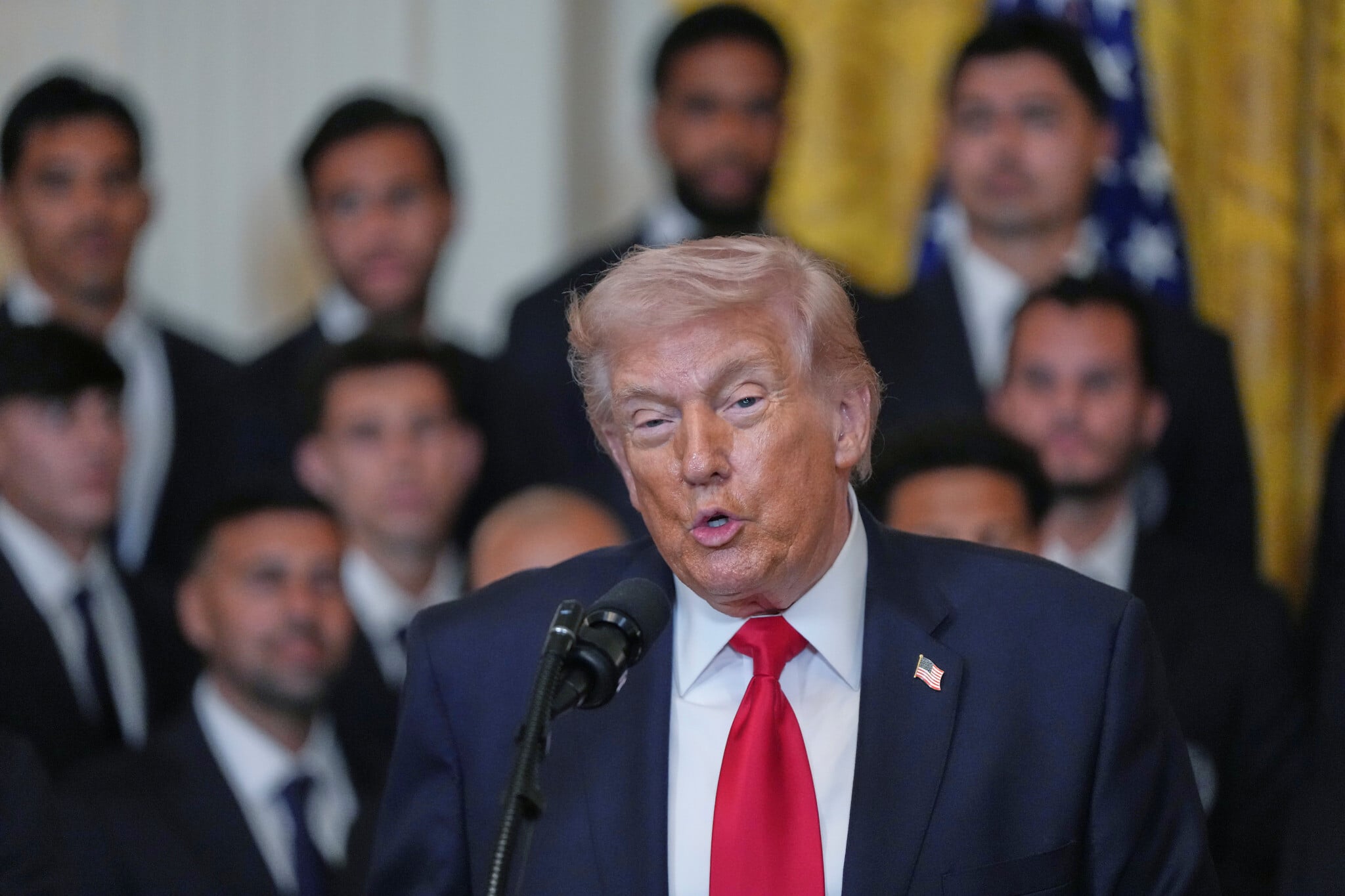
US President Donald Trump speaks during an event to honor the 2025 Major League Soccer champions Inter Miami in the East Room of the White House, Thursday, March 5, 2026, in Washington. (AP Photo/Julia Demaree Nikhinson)
“IRAN WILL HAVE A GREAT FUTURE,” he declared.
White House press secretary Karoline Leavitt later told Fox News that what Trump meant by unconditional surrender “is when he — as commander-in-chief of the US military and the leader of the free world — determines that Iran can no longer pose a threat to the United States.”
Speaking later with Axios, Trump said unconditional surrender could mean the total destruction of the Islamic Republic’s military capabilities and not necessarily a former capitulation by Iran.
“Unconditional surrender could be that [the Iranians] announce it. But it could also be when they can’t fight any longer because they don’t have anyone or anything to fight with,” he said.
The remarks raised fresh questions over the Trump administration’s assertions that regime change is not one of the goals of the war. The US president said several times on Thursday that he wanted a role in the selection of the country’s next leader.
Pezeshkian, in his announcement that some countries have begun mediation efforts to end the war, stressed that any talks must first address those who started the war.
“Some countries have begun mediation efforts,” he said. “Let’s be clear: We are committed to lasting peace in the region, yet we have no hesitation in defending our nation’s dignity and sovereignty.
“Mediation should address those who underestimated the Iranian people and ignited this conflict,” the Iranian president said in a post on X.
Rubio said to tell Arabs war will last ‘several more weeks’
According to a Friday report in Axios citing unnamed sources, US Secretary of State Marco Rubio told Arab foreign ministers in a series of phone calls Thursday that the war with Iran is expected to last several more weeks.
Rubio told the ministers that the US is focused on targeting Iran’s missile launchers, stockpiles and manufacturing sites, Axios said. The secretary tried to explain that the goal of the war is not regime change, even though he acknowledged that the US wants different people running Iran.
Rubio said there is currently no dialogue with the regime, as such contact at this stage would undermine military objectives, Axios added.
While Iran has targeted Israel and the US military with its retaliatory missile and drone strikes, it has also launched hundreds of ballistic missiles and thousands of drones at the Arab states in the Gulf, targeting energy infrastructure and civilian sites as well as US bases in the region, in an apparent bid to press Arab leaders to lobby for an end to the war.
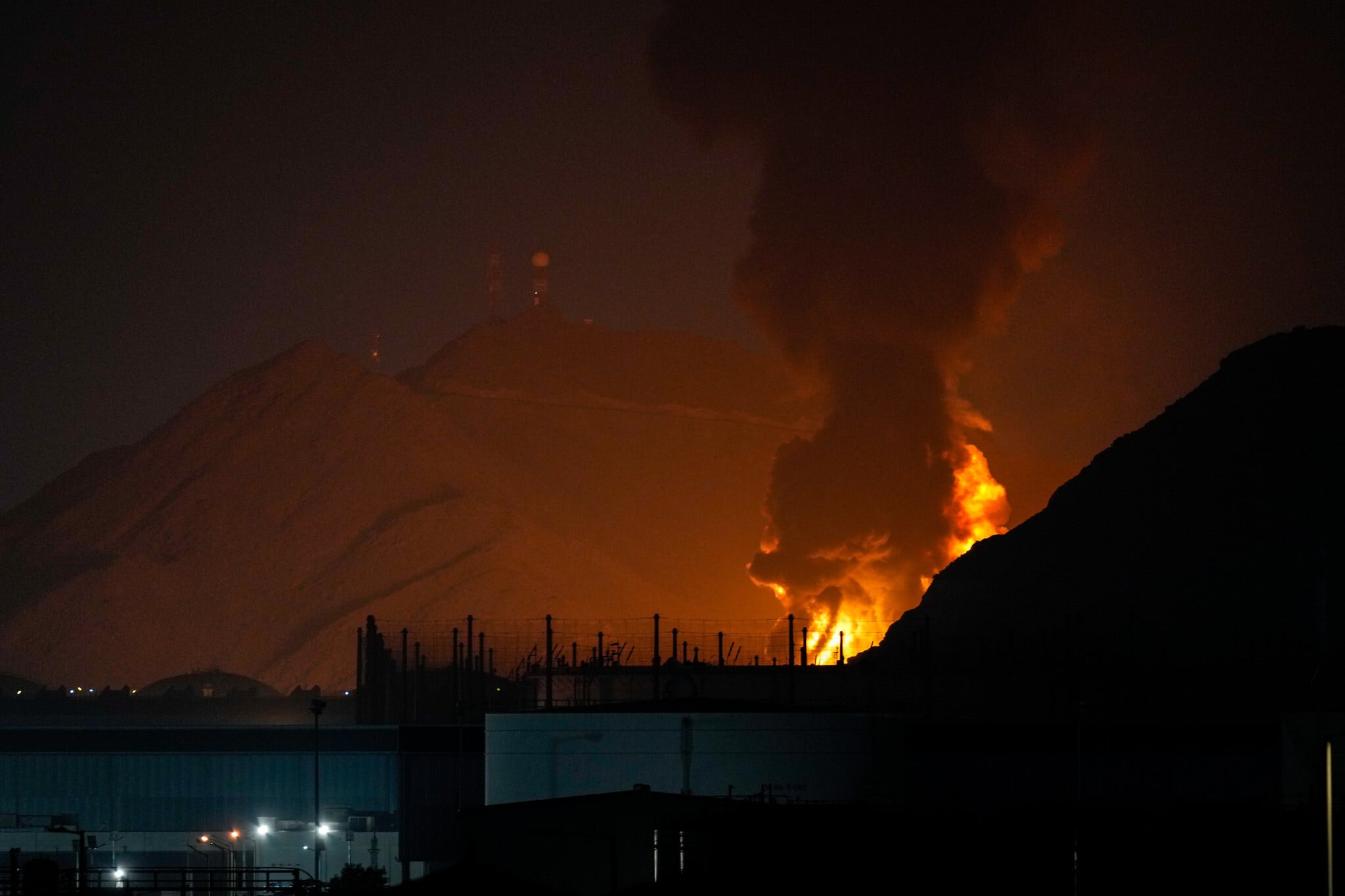
A large fire and plume of smoke are visible after, according to the authorities, debris of an Iranian-intercepted drone hit the Fujairah oil facility, in Fujairah, United Arab Emirates, Tuesday, March 3, 2026. (AP Photo/Altaf Qadri)
On Friday, Saudi Arabia’s defense ministry said its military intercepted and destroyed a cruise missile near the central Al-Kharj area.
Iranian strikes also targeted Iraq on Friday, with an Iraqi security official saying that four drones struck Basra airport and two oil facilities in the south of the country.
“One drone crashed into the cargo terminal at Basra airport,” the official said, adding that two others hit a US company in the Burjesia oil complex, and a fourth struck the Rumaila oil field, where energy giant BP operates.
Amid the strikes, Kuwait has begun cutting production at some oil fields after running out of room to store its bottled-up crude, The Wall Street Journal reported Friday, citing people familiar with the matter.
The country, which is a founding member of the Organization of the Petroleum Exporting Countries (OPEC), is discussing limiting its production and refining capacity further, to just what it needs to cover domestic consumption, WSJ said.
Additionally, Qatari Energy Minister Saad al-Kaabi told the Financial Times that he expects all Gulf energy producers to shut down exports within weeks if the Iran conflict continues and drives oil to $150 a barrel.
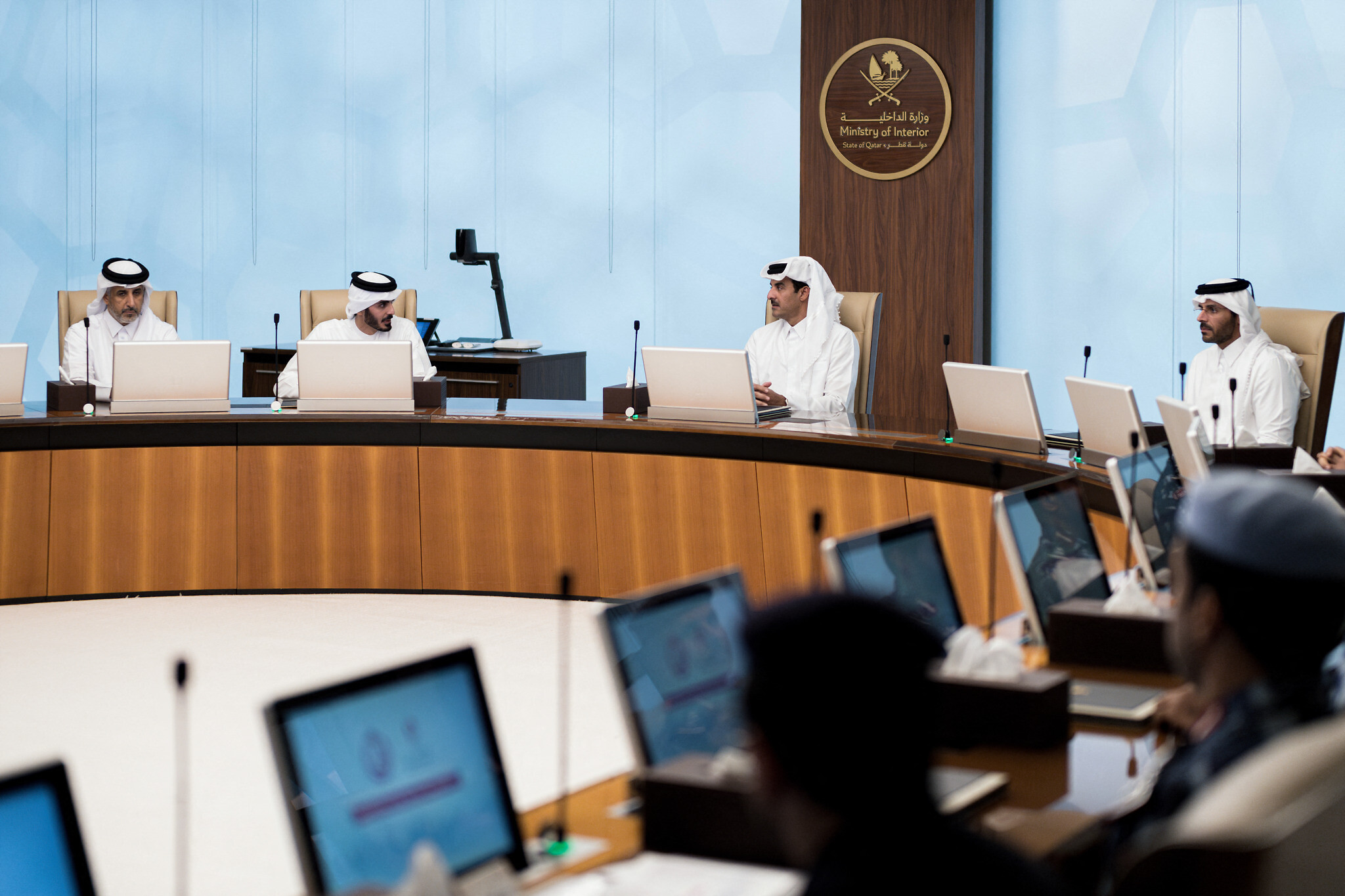
This handout picture released by Qatar’s Amiri Diwan on March 5, 2026, shows Qatar’s Emir Sheikh Tamim bin Hamad al-Thani (C) visiting the National Command Centre for the Ministry of Interior on March 5, 2026. (Qatar Amiri Diwan / AFP)
Qatar halted its production of liquefied natural gas on Monday, as Iran continued to strike Gulf countries in retaliation for Israeli and US attacks. The country’s LNG production is responsible for about 20 percent of global supply and plays a major role in balancing both Asian and European markets’ demand for the fuel.
“If this war continues for a few weeks, GDP growth around the world will be impacted,” Kaabi said. “Everybody’s energy price is going to go higher. There will be shortages of some products and there will be a chain reaction of factories that cannot supply.”
Kaabi said that even if the war ended immediately, it would take Qatar “weeks to months” to return to a normal cycle of deliveries. Analysts and economists have highlighted the potential impact of the war on economies globally.
Senior Israeli official says war going ‘much better than expected’
While Iran has not stopped launching missiles and drones across the region, the Israeli military said Friday that the frequency has decreased significantly, estimating that the number of ballistic missiles launched from Iran at Israel has slowed to around 20 per day in recent days.
On the first day of the war on Saturday, some 90 ballistic missiles were fired toward Israel. The following day, Sunday, the number dropped to around 60.
On Monday, Tuesday, Wednesday and Thursday, roughly 20 missiles were fired each day in multiple salvos, each consisting of a small number of projectiles.
Iran has launched dozens more ballistic missiles at other countries in the Middle East during the conflict. In total, Iranian media claims about 500 ballistic missiles have been fired.
CENTCOM chief Adm. Brad Cooper said Thursday that Iran’s ballistic missile attacks have decreased by 90% since the first day of the war.
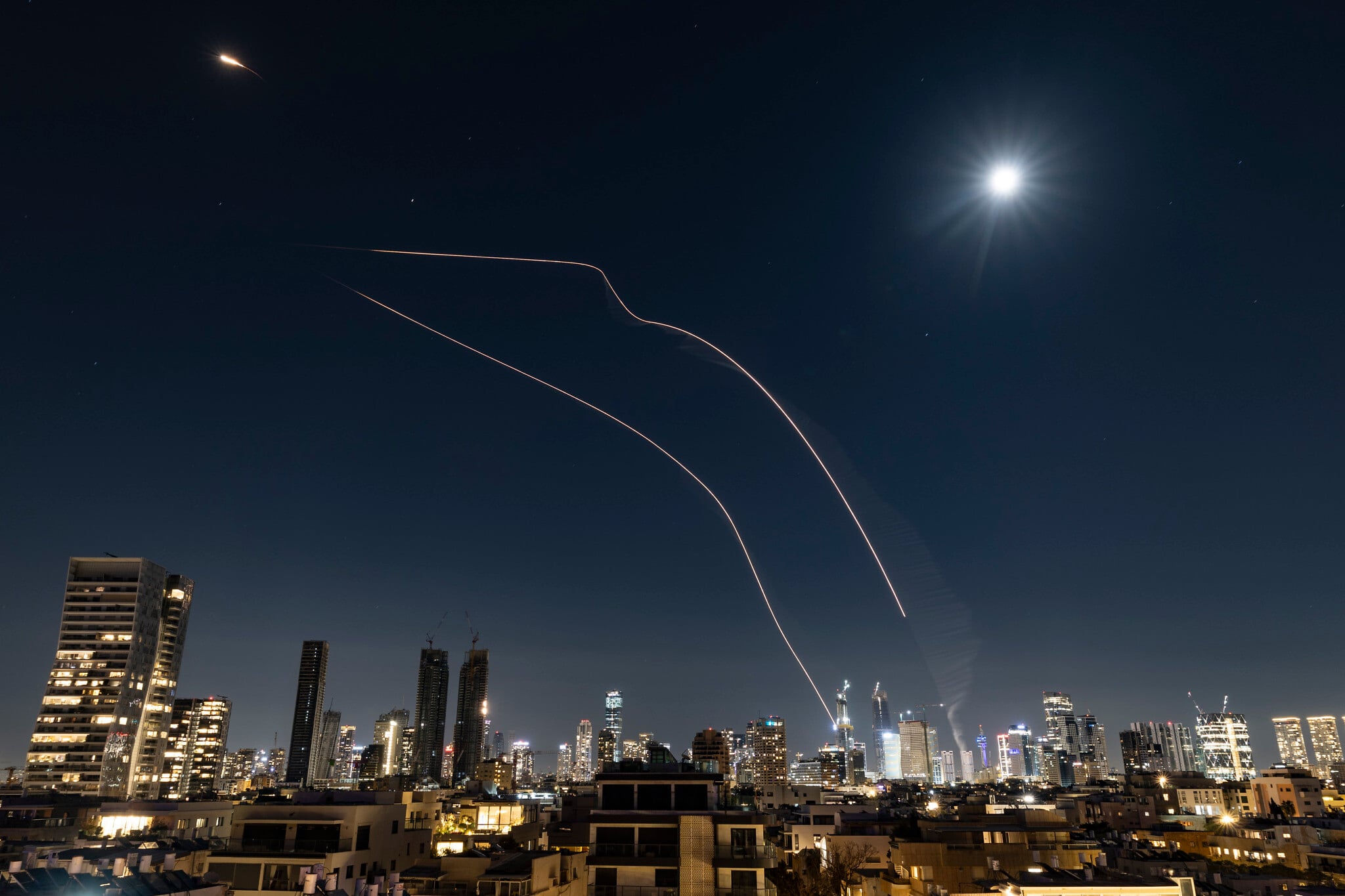
Anti-missile batteries fire interception missiles toward incoming ballistic missiles launched from Iran, as seen over Tel Aviv, during the war with Iran and ongoing missile fire toward Israel, March 5, 2026. (Chaim Goldberg/Flash90)
As Iran seems to be slowing its missile and drone campaign, a senior Israeli official told The Times of Israel Friday that the Israeli-US campaign against Iran is “proceeding much better than expected.”
“Nobody could have expected such smooth execution,” said the official. “With such payloads being dropped, and such a complex level of coordination required — no one could have anticipated such success so soon.”
The official stressed that there is still much to be done, “but the achievements are epic.”