
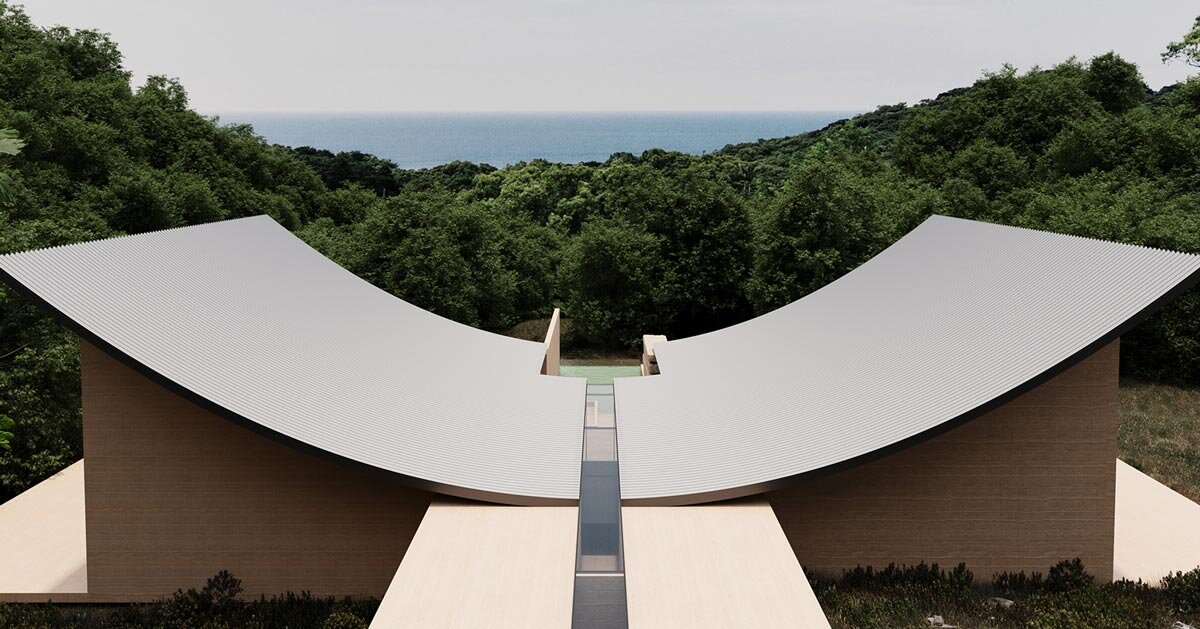
An Inhabitable Topography in Yakushima’s Primeval Forest
Villa Sensorium by Poesis Studio and designer Gracielo Mielli is conceived as an inhabitable landscape within the primeval forest of Yakushima Island, Japan. The architectural design draws inspiration from the island’s mountain ridges, split and eroded by waterfalls, and translates these forms into a continuous curved roof folded along a central axis. A linear skylight bisects the roof, channeling both daylight and rain into the interior and defining the spatial and experiential heart of the villa.
Water operates as both an organizer and a sensory element throughout the project. Rainfall is intentionally revealed through the skylight, landing on a central dining table and creating a direct connection between natural phenomena and daily living. This central water axis extends outward, transforming into a linear swimming pool that echoes the movement of streams descending from the mountains. Rainwater is collected and guided along terraces, shaping outdoor spaces and reinforcing the integration of precipitation into the architectural composition.
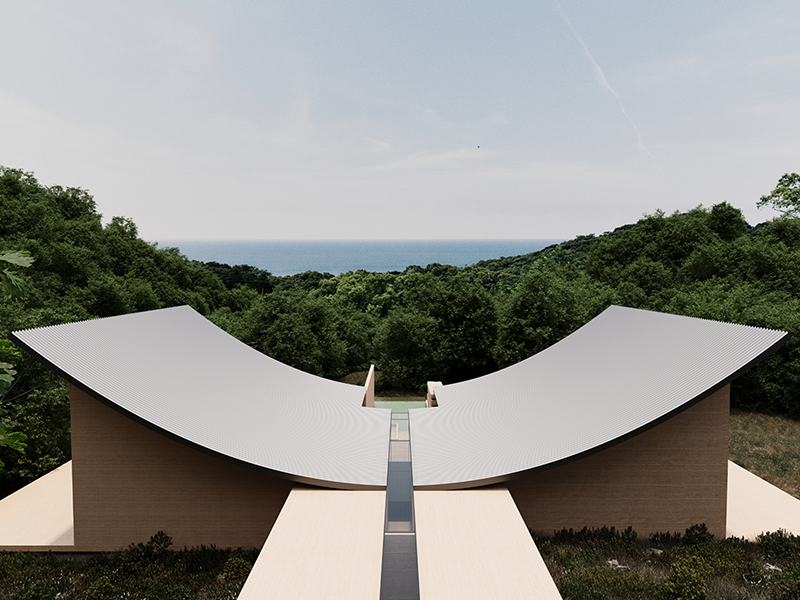
the architectural form is inspired by the mountain ridges of the island | all images courtesy of Poesis Studio
forest’s textures inspire Sensorium Villa by Poesis Studio
The villa’s program responds to the surrounding terrain, with communal areas positioned along the water axis and the master bedroom partially sunken into the moss-covered forest floor. Interior and exterior surfaces gradually dissolve into the landscape, blurring the boundary between built form and forest. Materiality and form are informed by the textures and colors of the ancient ecosystem, fostering a continuous dialogue between architecture and site.
Sensorium Villa by Poesis Studio and designer Gracielo Mielli positions architecture as inhabitable topography, where rain, gravity, and time shape both spatial organization and sensory experience. The project demonstrates a strategy in which dwelling is embedded within the forest, creating a seamless connection between human occupation and the natural environment.
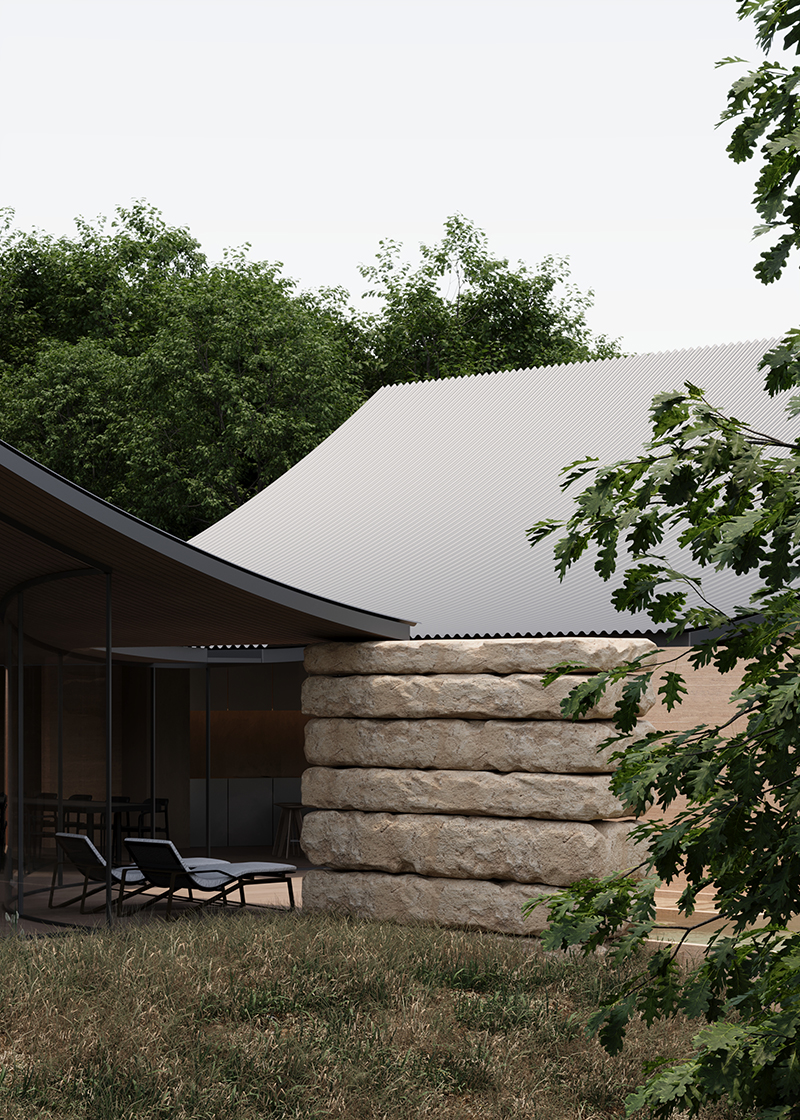
a sweeping roof and stacked stone walls sit quietly at the forest’s edge
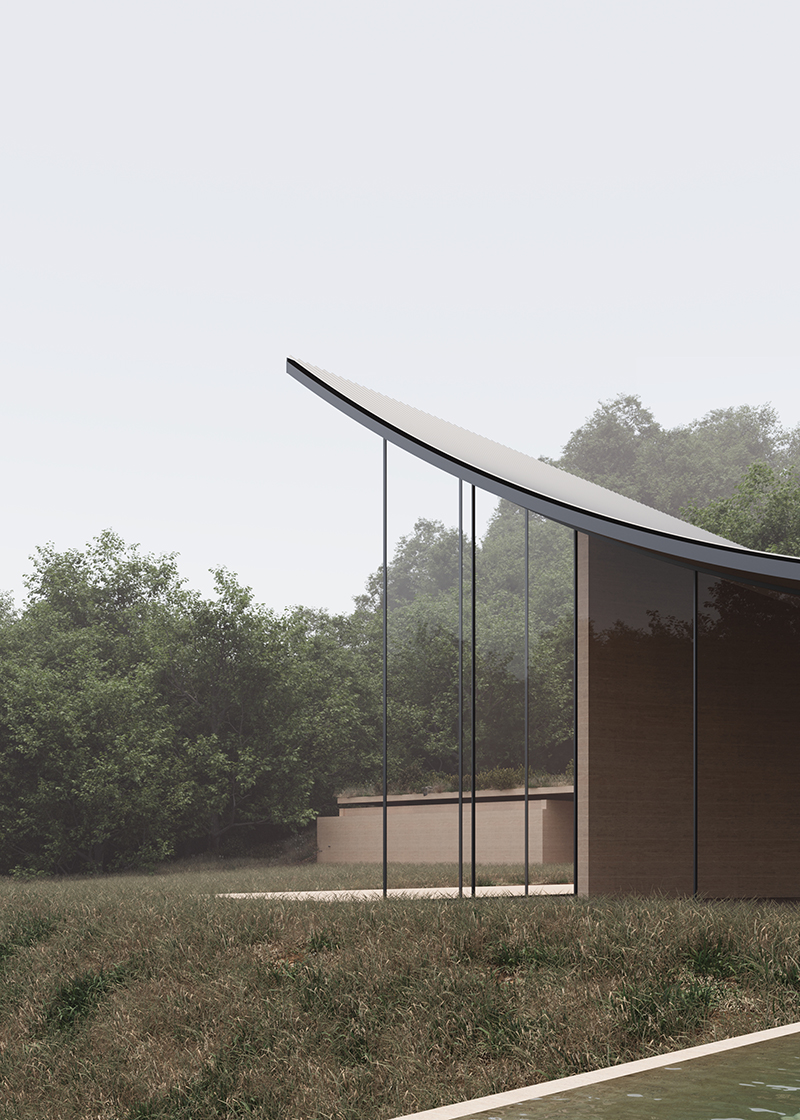
a gently curving roof hovers over slender columns and floor-to-ceiling glass, framing a tranquil forest
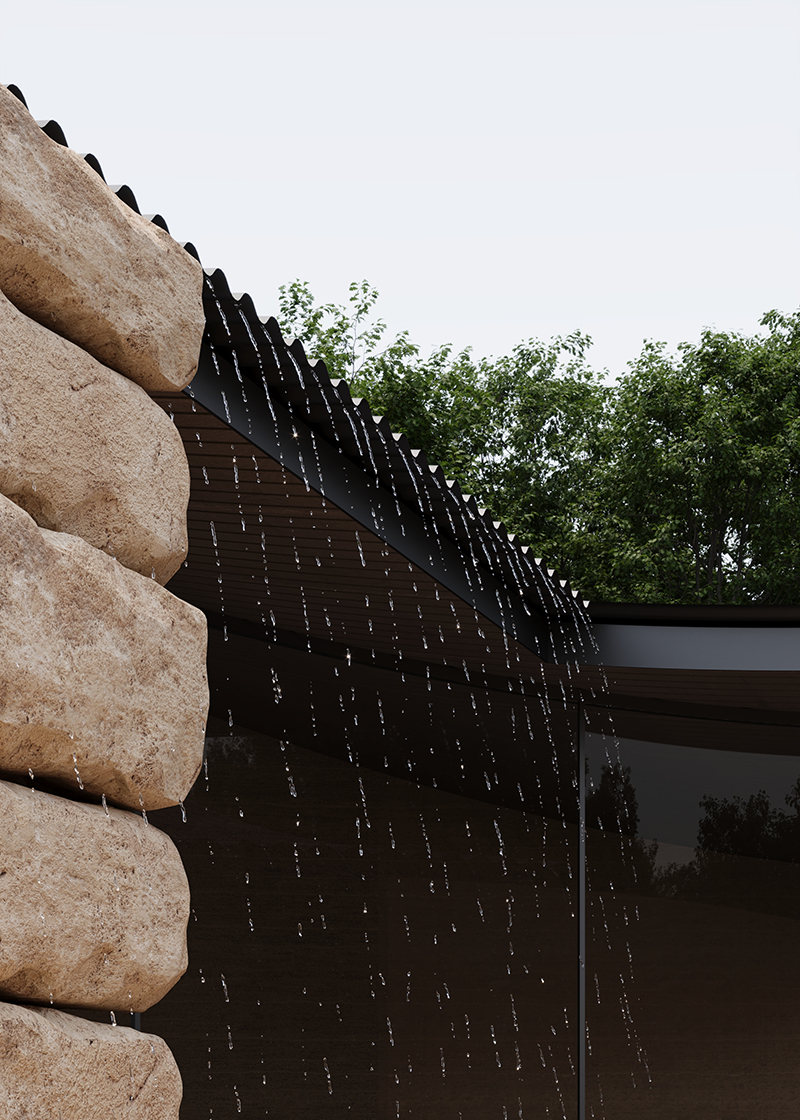
rainwater is guided across terraces, reinforcing the presence of water in all spaces