
Oil prices broke through $90 a barrel on Friday over fears the disruption to energy supplies from the Middle East could lead to new inflationary pressures that have the potential to delay interest rate cuts in the UK and US.
Brent crude, the global benchmark, was 10.5 per cent higher at $94.37 a barrel by lunchtime in New York, up 28.3 per cent this week, the best weekly performance since early May 2020 and a gain of more than 40 per cent since the start of the year.
As the hostilities between Iran and the United States and Israel gathered pace, government bond yields rose sharply on the view that the Bank of England and the US Federal Reserve may have to delay widely expected rate cuts.
UK bond yields suffered one of their worst weeks since the 2022 Kwasi Kwarteng mini-budget under the premiership of Liz Truss. The yield on the benchmark ten-year gilt rose by around 0.50 percentage points over the week to 4.57 per cent. The US Treasury equivalent climbed 0.20 percentage points over the same period to 4.17 per cent, while Germany’s increased by the same amount to 2.87 per cent.
The rise in UK gilt yields is a blow to Rachel Reeves. On Tuesday, the chancellor told the Commons during her spring statement that the Office for Budget Responsibility had raised its fiscal headroom estimate to £23.6 billion from the £21.7 billion in the November budget forecast. This week’s increase in UK sovereign debt yields is likely to have reduced at least some of that additional headroom.
The sharp rally in energy prices was sparked by the US and Israel launching strikes on Iran on Saturday, prompting Tehran to stop tankers moving through the Strait of Hormuz, which handles about one-fifth of global daily oil supply.
With the strait effectively closed for seven days, about 140 million barrels of oil, equal to around 1.4 days of global demand, has been unable to reach the market.
Only nine commercial ships have passed through the Strait of Hormuz since Monday, data from the tracking organisation Marine Traffic shows, compared with the 50 ships that crossed the strait on a single day before the US-Israeli strikes on Iran.
The disruption has raised fears that crude prices could reach $100 a barrel, with Qatar’s energy minister warning that they could hit $150 a barrel if supplies remain constrained. The record price for Brent was $146.08 a barrel on July 3, 2008, during the financial crisis.
“Every day the strait stays closed, prices will go higher,” Giovanni Staunovo, a commodity analyst at UBS, said. “The belief in the market was that Trump might pull back at some point because he doesn’t want to have high oil prices, but the longer that takes, the clearer it is how much is at risk.”
David Fyfe, chief economist at Argus, believes a three-month or six-month closure of the strait could potentially lead to crude prices trading at between $100 and $150 a barrel through the summer.
While there are some ways to re-route crude supplies, “substantial volumes” will still be stuck unless the strait reopens, he said.
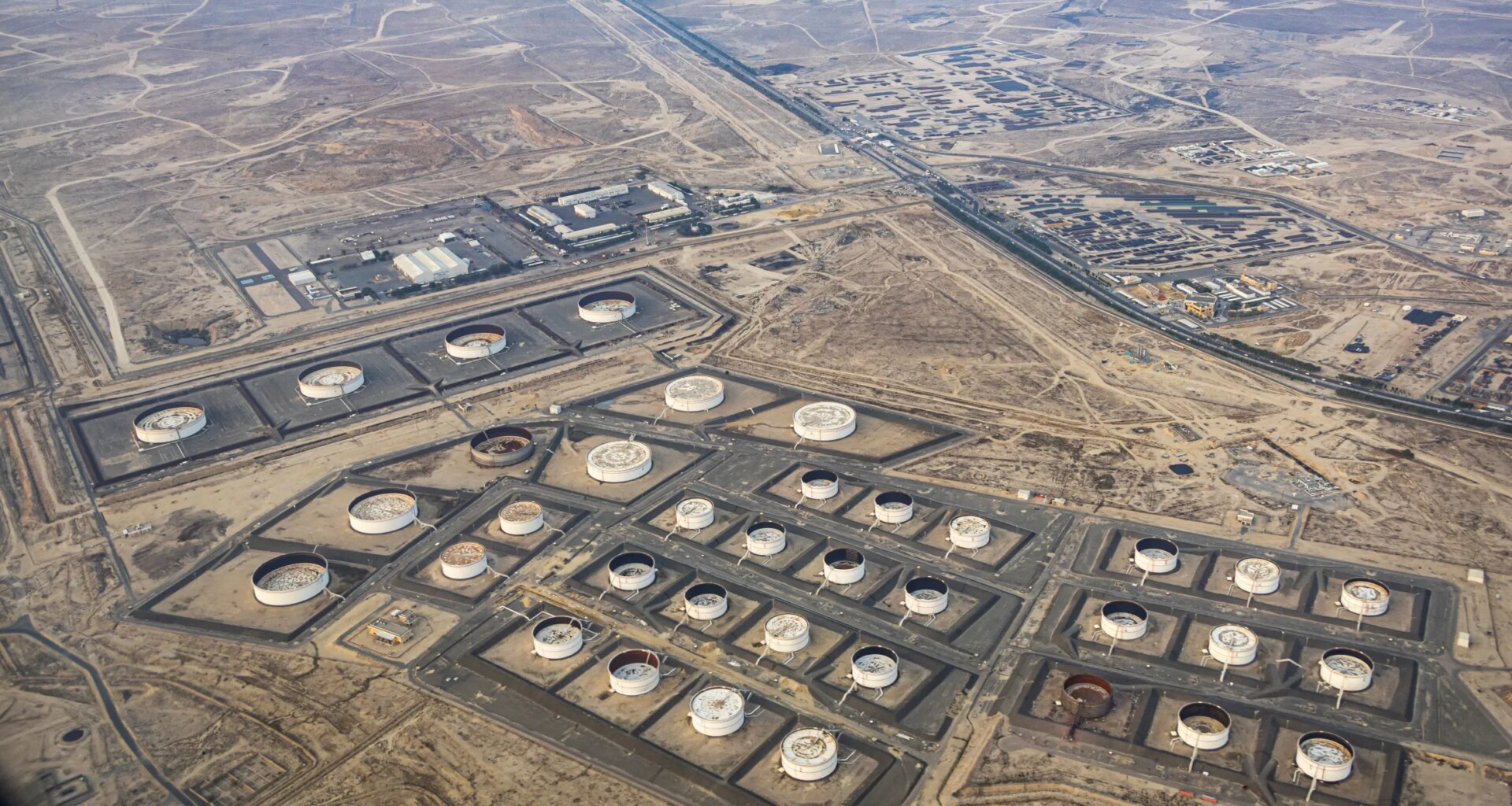
Kuwait has already started cutting production at some oil fields due to lack of space to store its bottled-up crude, according to The Wall Street Journal.
Goldman Sachs estimates that if oil prices increase by $10 and remain elevated for three months, US consumer price inflation could rise to 3 per cent in May, up from 2.4 per cent in January. Oxford Economics has warned the conflict will add 0.4 percentage points to UK inflation in 2026.
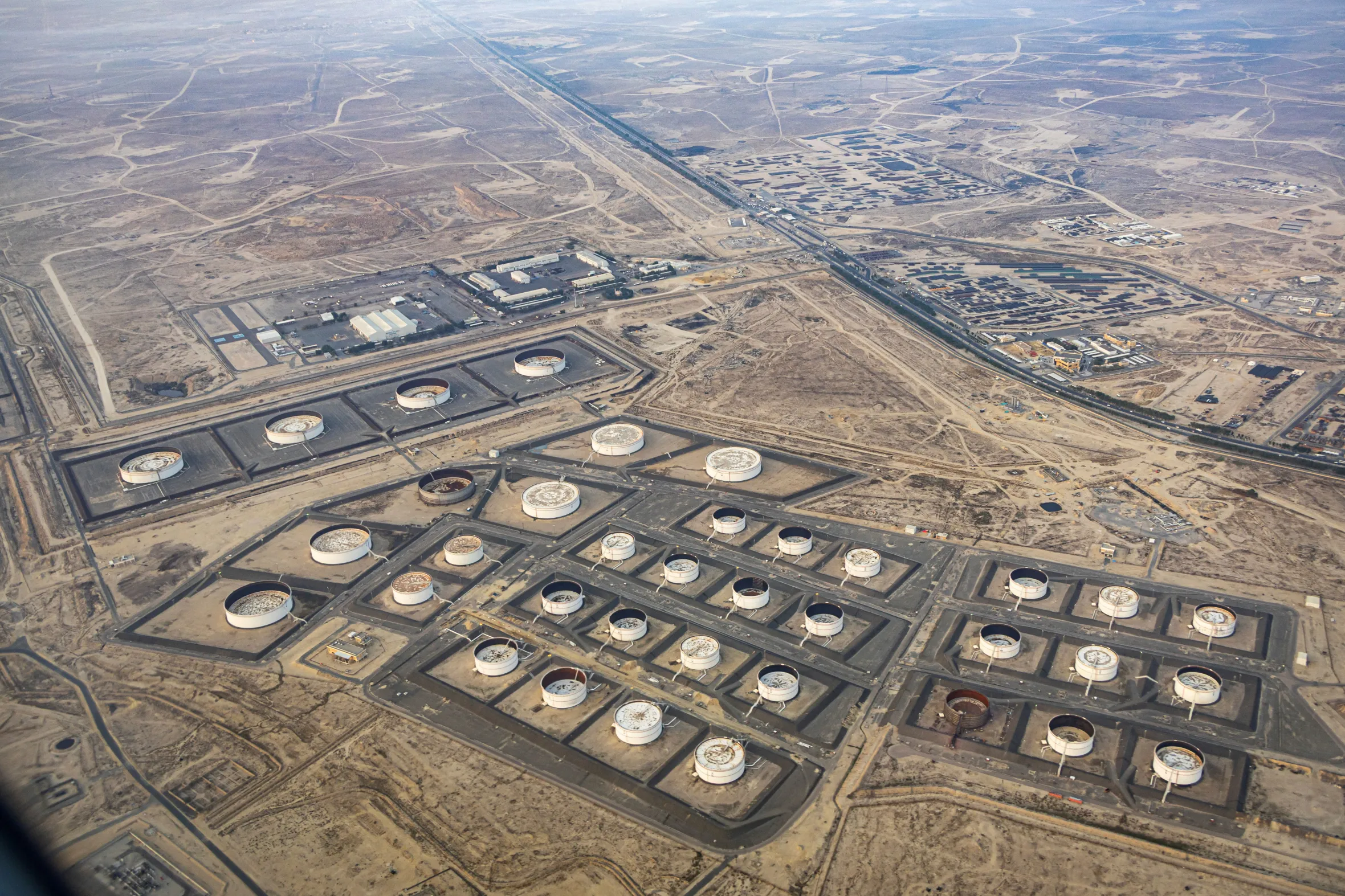 Crude oil depots in KuwaitReuters
Colin Walker, head of Transport at the Energy and Climate Intelligence Unit, said higher oil prices could result in a litre of petrol jumping to around £1.90.
Inflationary worries and the prospect of weaker economic growth continued to unsettle equity markets, with the FTSE 100 falling a further 129.19 points, or 1.2 per cent, to 10,284.75, taking its weekly losses to 5.7 per cent, its biggest weekly decline since the “liberation day” US tariff shock last April. The more UK-focused FTSE 250 also suffered its worst week in 11 months, as it retreated 5.3 per cent.
London’s losses were mirrored on Wall Street where the Vix, or “fear index”, a measure of expected volatility in future share prices, has risen about 38 per cent this week, its biggest weekly increase since April.
By the close of normal trading in New York, all three main equity indices were down more than 1 per cent on the back of developments in the Middle East and weak jobs data in February.
Over the week the S&P 500 dropped 2 per cent, while the Nasdaq was down 1.2 per cent. The Dow Jones industrial average had a weekly fall of 3 per cent.
Brian Jacobsen, chief economic strategist at Annex Wealth Management, said. “A negative payrolls number combined with a big jump in oil prices will have traders worrying about stagflation risks.”