

Listen to this article
Estimated 4 minutes
The audio version of this article is generated by AI-based technology. Mispronunciations can occur. We are working with our partners to continually review and improve the results.
The 22 zebra mussels found along the St. John River last year suggest levels of the invasive shellfish in New Brunswick’s longest river are likely still manageable — for now.
That’s according to a researcher leading the fight to keep them out of waterways before they multiply too quickly to prevent them from taking over docks, dams and drainage pipes.
“We’re catching this very early,” said Meghann Bruce, research scientist with the Canadian Rivers Institute. “We started monitoring…as soon as we knew they were connected to the system.”
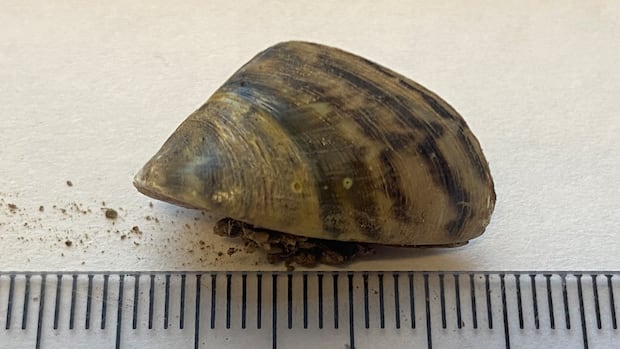
Zebra mussels are small shellfish that get their name from the zig-zag pattern on their shell. They get their bad reputation from their ability to overtake other species living in lakes or rivers, and the damage they inflict on hard surfaces they latch onto.
Bruce said the species has “infested” Lake Temiscouata in Quebec, which connects to the St. John River, also known as the Wolastoq, likely bringing juvenile mussels into this province.
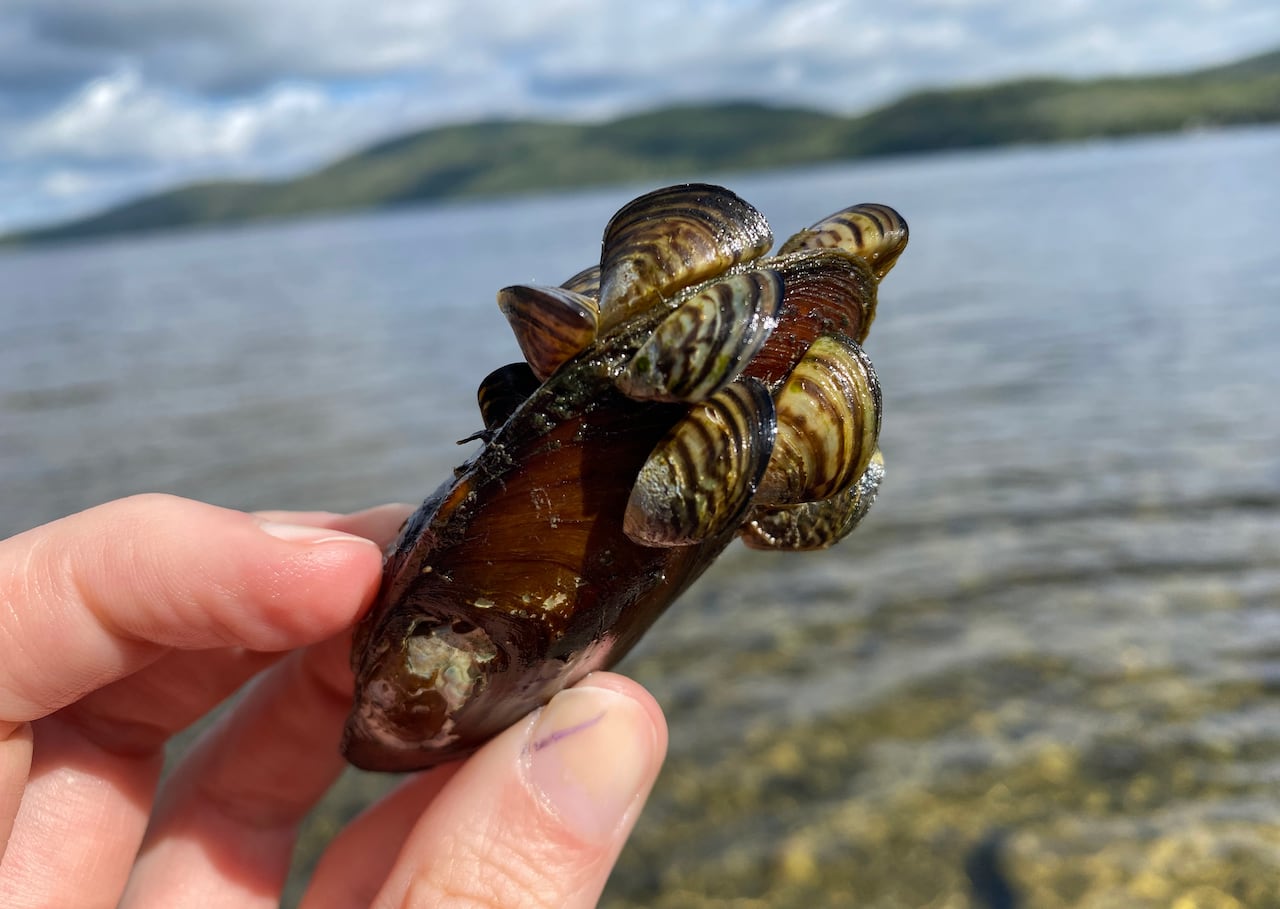 Researcher Meghann Bruce found zebra mussels had latched on to a native mussel when she searched Lake Temiscouata in Quebec to compare its water quality to waterways in New Brunswick. (Submitted by Meghann Bruce)
Her team scoured 81 locations along the river between May and early November last year.
One of the hard surfaces researchers have come to realize zebra mussels could be prone to growing on is the Mactaquac Dam.
Nineteen of the 22 adult mussels Bruce’s team collected were attached to N.B. Power’s hydroelectric generating station just west of Fredericton.
Two others were found at the Beechwood Generating Station, about 25 kilometres south of Perth-Andover. Another was found at the junction of Belleisle Bay and the Wolastoq, making it the furthest downstream discovery the search has uncovered so far.
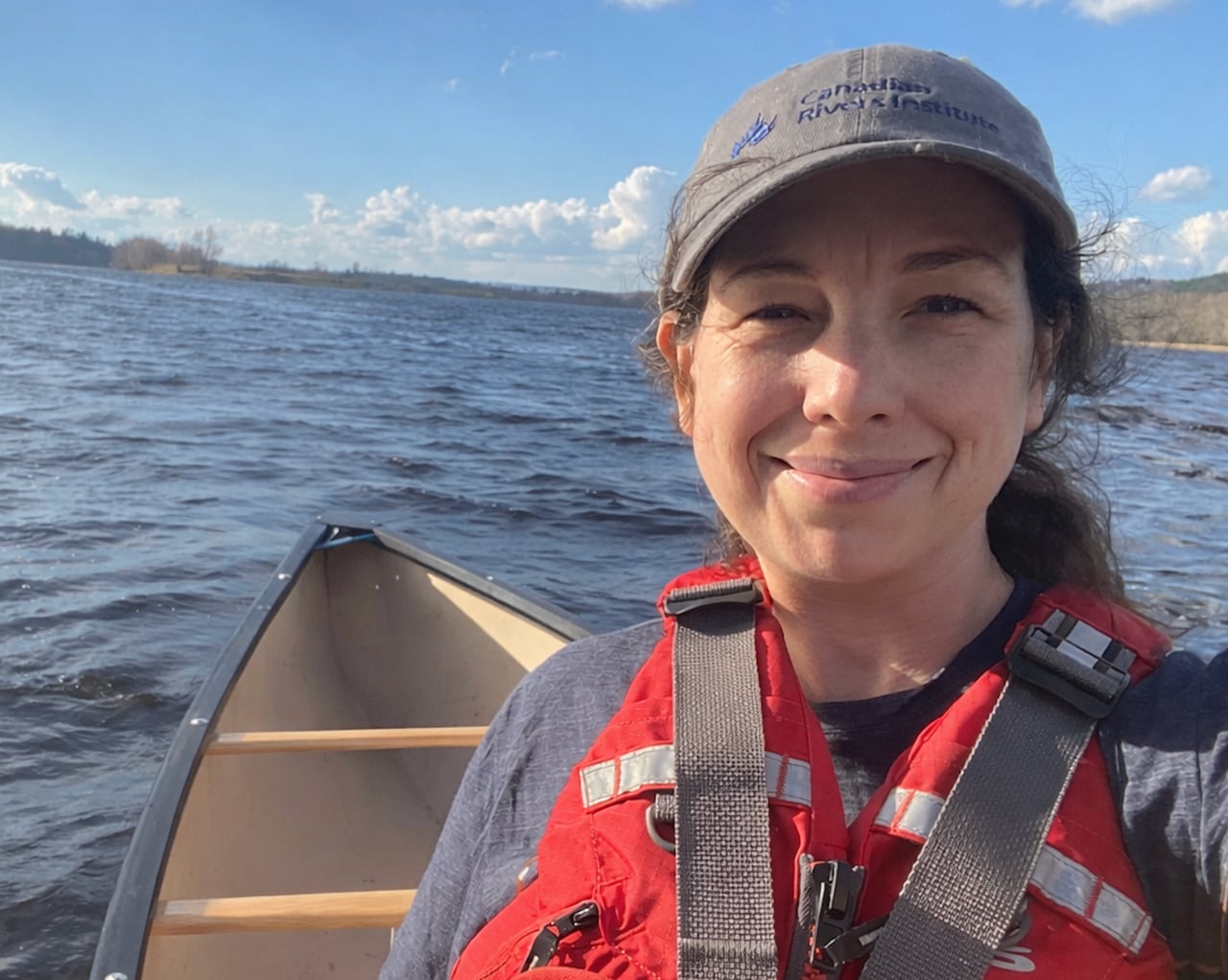 Through her work at the Canadian Rivers Institute and the University of New Brunswick, Meghann Bruce leads research efforts and collaborates with N.B. Power staff to find samples. (Submitted by Meghann Bruce)
Bruce said it’s still too early in their research to say for certain why the majority were found on the Mactaquac Dam. She believes the structure could be creating a “lake-like environment” as it slows the water’s flow for zebra mussels to safely land.
While she couldn’t put a dollar figure to the amount of damage zebra mussels have caused to infrastructure so far, she said they are “very problematic.”
The institute has been working with N.B. Power for 10 years on various research projects, Bruce said.
It’s why when the utility anticipated the species may pose a threat to its infrastructure, it enlisted Bruce to survey the river.
“Once they have colonized dams, management is required to stay operational,” she said.
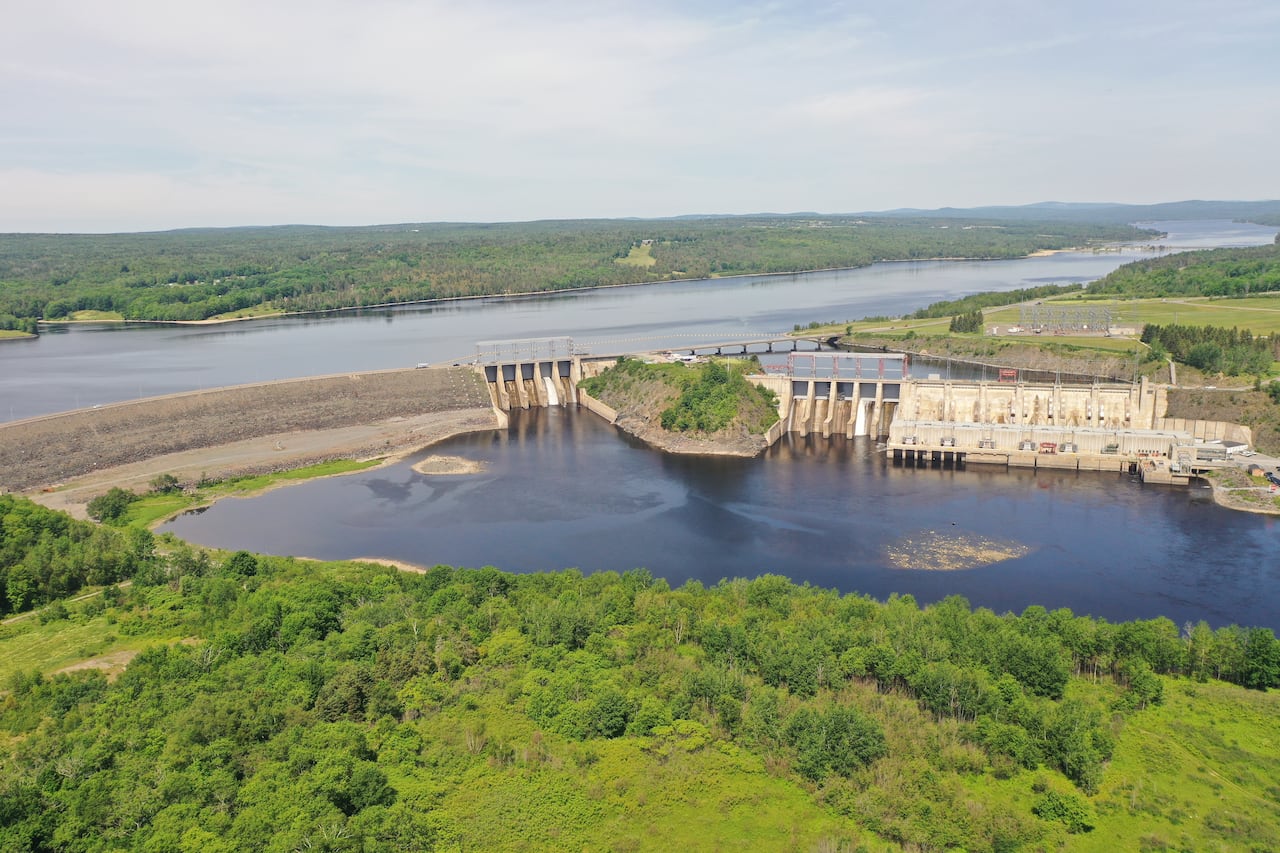 When divers who inspect N.B. Power’s Mactaquac Dam find zebra mussels on the infrastructure, they contact Meghann Bruce of the Canadian Rivers Institute and send her the sample to be analyzed. (Shane Fowler/CBC)
In an email Wednesday, a spokesperson for N.B. Power said the utility is taking proactive steps thanks to the information it is getting from Bruce’s efforts.
“The utility has installed bio‑monitoring technology at the Beechwood facility and will be installing zebra mussel monitoring at other hydro stations,” the email said.
Divers working on routine maintenance of N.B. Power’s dams are now trained, Bruce said, to identify and remove zebra mussels they find during their work underwater.
Bruce’s team is also trying to determine which water conditions make for the perfect resting place for a zebra mussel.
“It does look like the areas in the upper part of the river are more ideal for colonization than they are as you go down the river,” Bruce said of the initial findings.
Knowing the type of environment the shellfish prefer will help Bruce create a plan of attack to get as many mussels out of the water as possible.
“Every time you take an adult out of the population, you’re removing that many more offspring that they could have had,” she said. “So, it kind of slows the impacts.”
Bruce said her team will start another round of surveying in the spring as soon as the ice thaws and it’s safe to enter the river.
Meanwhile, she wants the public to remember they can slow the spread of zebra mussels by rinsing equipment they bring in and out of waterways, like the underside of boats and engines.
It’s also helpful to keep boats out of the water to dry as often as possible.
“As soon as those boats are dry, those juveniles will die,” Bruce said.