
Support CleanTechnica’s work through a Substack subscription or on Stripe.
If there is a lesson to be drawn from the horrific events in the Middle East initiated by the corrupt government in Washington, it is that the path to peace is through renewable energy — not armaments, boots on the ground, or “regime change.” Writing on The Climate Brink on Substack, Andrew Dessler, a professor of atmospheric sciences at Texas A&M, said, “When people debate the cost of fossil fuels versus renewables, the conversation almost always centers on the price at the pump or the cost per kilowatt-hour of your electricity bill. That’s understandable — those are the costs you can see — but they’re not the whole story.”
Dessler says the discussion usually focuses on subsidies for renewable energy, but fossil fuels get enormous subsidies as well. They are deeply hidden, however, as they are spread across government budgets, healthcare systems, and military spending in ways most people can’t connect back to their energy choices. To the extent that they do get attention, most of it goes to the implicit subsidy for fossil fuels from climate change and air pollution, which economists have valued at trillions of dollars per year.
Hidden Costs Of Fossil Fuels
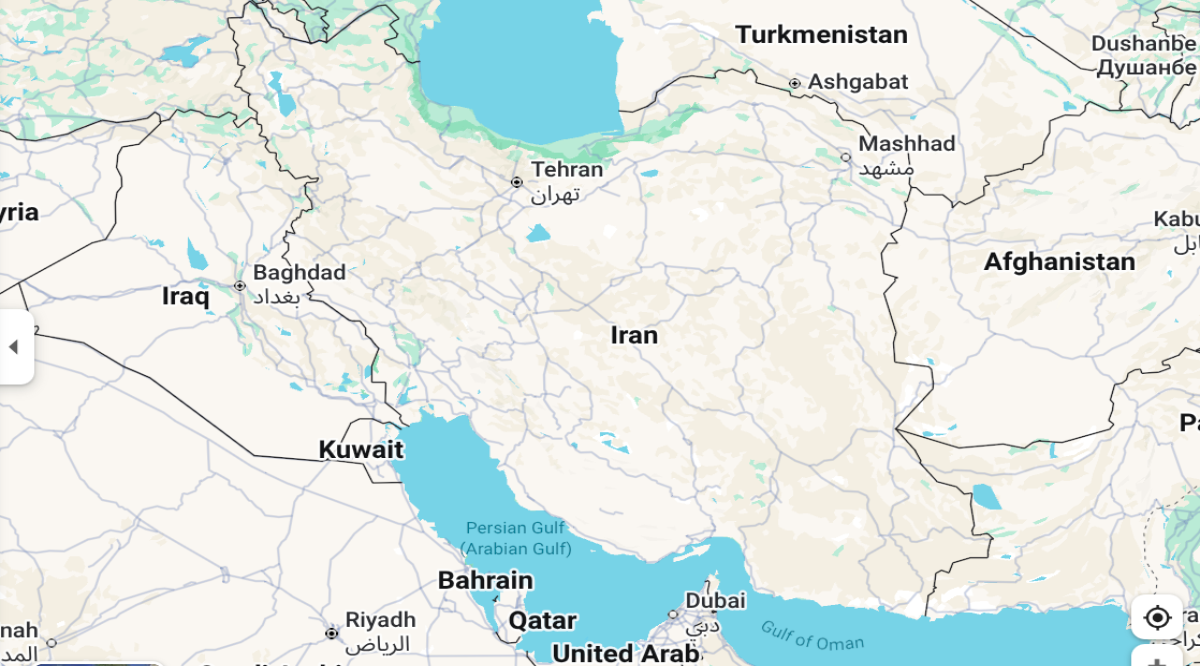
“There’s another hidden subsidy that few talk about — national security. As oil prices surge in response to US attacks on Iran, that cost is impossible to ignore.” According to Securing America’s Future Energy, a nonpartisan national security organization led by retired senior military officers, about one fifth of the entire Department of Defense base budget exists, at least in part, to keep oil flowing through vulnerable choke points like the Strait of Hormuz, the Suez Canal, and shipping lanes in the South China Sea.
The US each year spends more than $81 billion to protect the global supply of oil, but that cost does not appear at the gas pump. That makes it a subsidy, paid for by taxpayers, which makes oil look cheaper than it actually is. Spread across all US oil consumption, it is equivalent to about $11 per barrel — or about 28 cents per gallon — money that is hidden in the defense budget.
For a typical fill-up, that subsidy amounts to about $5.00, and that is just to be ready for war, Dessler says. Once the shooting starts, the costs go up exponentially. The 2003 Iraq War’s cost was estimated to be $3 trillion, which translates to nearly $10,000 per US citizen. Dessler says:
“When you add it all up, fossil fuels are not cheap. They’ve never been cheap. We’ve just been brilliant at hiding the costs — in the defense budget, in emergency rooms, in FEMA disaster relief, and so forth. And it’s not just the cost of fighting the war. Despite trillions spent protecting global oil routes, we will always be economically vulnerable to disruption in oil supplies.
“Why? Because oil is a globally priced commodity, meaning everyone pays the same price. When something disrupts supply anywhere in the world, prices go up everywhere, including the US. This happens despite the United States being the largest oil producer in the world.
“We saw this play out in real time just last week. Following U.S. and Israeli strikes on Iran, oil prices surged. Gas prices are following. And this was before the conflict escalated to directly threaten the Strait of Hormuz, through which roughly 20 percent of the world’s petroleum and LNG flows every day.
“Fossil fuel pushers don’t want you to understand this. And they particularly don’t want you to recognize that the price of solar energy and wind energy is not affected by events in the Middle East [emphasis added]. A missile strike on Iranian oil infrastructure has zero effect on the cost of generating electricity from a solar panel in Texas or a wind turbine in Iowa. The ‘fuel’ — sunlight and wind — is free, domestic, and geopolitically inert.”
Geopolitical Risks
One of the primary reasons why China is pushing electric vehicles so strongly with government policy is that it imports most of its oil, which has opened it to enormous geopolitical risk. Electric vehicles charged by solar energy are an important way for China to address the national security problems created by fossil fuels, Dessler says.
“In many parts of the country and world, solar and wind are now the cheapest sources of new electricity generation — not because of subsidies but because the underlying economics have shifted irreversibly. Renewable energy is the only credible path to energy and economic security. Drill, baby, drill is a fantasy — and an expensive one. More drilling means more pain, not more security.”
The unprovoked attack on Iran has cut the world off from LNG. Liquefied natural gas from Qatar was a safe energy bet for countries across Europe and Asia, but now they face an energy crisis. On March 5, 2026, Qatar shut down LNG production at a facility in Doha after Iranian attacks targeting energy installations, cutting off nations from India to Italy from a crucial energy source and potentially increasing costs for key industries in the United States.
“It’s worth pausing to appreciate what fossil fuels made possible. They powered our civilization for the last 200 years. But the transition to renewable energy isn’t a rejection of that legacy. It is the next chapter and a better one,” Dessler contends.
Krugman On Renewables & Energy Security
Paul Krugman agrees. In his Substack post on March 6, 2026, he wrote that by attacking Iran, the deranged US president made a strong case for renewable energy, not because it does less damage to the environment but because dependence on fossil fuels is a threat to national security. “In a dangerous world, it’s infinitely safer to rely on the sun and the wind than to depend on fossil fuels that must be transported long distances, from nations that are untrustworthy, often exploitative, and located in regions that frequently devolve into war zones.”
Anyone with a fourth grade education should be able to comprehend Krugman’s argument, and yet most of those leading the US government cannot. “The current situation in the Middle East is essentially the worst-case scenario for world energy supplies. Normally around 20 percent of the world’s oil supply transits through the Strait of Hormuz. It’s also a crucial route for shipment of liquefied natural gas and fertilizer. That passage is now effectively closed and there are no good alternatives. Oil industry experts predict that the squeeze on oil supplies will become much more severe if the Strait isn’t re-opened within a few days.”
Krugman notes that while the price of oil has increased, the price of gasoline has gone up much more quickly. Are oil companies taking advantage of the situation to extract additional profits? What do you think?
The so-called US president — in his lucid moments — rails against renewable energy, probably because the fossil fuel industry has so generously supported his lunacy for their own private benefit. But Krugman suggested the UK and other European nations must be wishing they were getting an even larger share of their energy from renewables rather than natural gas, which would free them both from the idiocy of Trump’s delusions and the Middle East war.
Choices
Writing in the Financial Times this week, Alan Beattie puts energy policy in the context of geopolitical rivalry by saying the competing positions of the economic superpower are:
From the US you get forced into trade deals promising a future of burning fossil fuels whose price is subject to wildly destructive US adventurism.
From China you get reliably cheap EVs and green tech to generate renewables.
Krugman adds, “The problem with demands that nations ‘burn, baby, burn’ isn’t just American adventurism. It’s also the fact that relying on the United States for LNG, which is what doing things Trump’s way would amount to, is itself unsafe. Are you sure that Trump or a Trump-like future president won’t cut off energy supplies to nations that annoy him? I’m not.
“So the US war against Iran is making a strong case for nations around the world to seek energy independence. And for those nations that don’t have large fossil fuel reserves, that means wind and solar (and, yes, nuclear.) Donald Trump, hero of renewable energy? Who knew?”
The bottom line for Krugman is the old law of unintended consequences. Or put another way, “Be careful what you wish for, you just might get it.” Renewables equal energy security. Fossil fuels equal someone always has a knee on your neck. What do you think is a better long-term strategy for you and your community?
Sign up for CleanTechnica’s Weekly Substack for Zach and Scott’s in-depth analyses and high level summaries, sign up for our daily newsletter, and follow us on Google News!
Advertisement
Have a tip for CleanTechnica? Want to advertise? Want to suggest a guest for our CleanTech Talk podcast? Contact us here.
Sign up for our daily newsletter for 15 new cleantech stories a day. Or sign up for our weekly one on top stories of the week if daily is too frequent.
CleanTechnica uses affiliate links. See our policy here.