
Bangladesh has moved quickly to avert potential fuel and gas shortages triggered by the Middle East war, securing critical imports from alternative markets to keep national energy demand met throughout March.
Officials said the government finalised imports of 2.80 lakh tonnes of refined diesel from Malaysia, Singapore and other sources, ensuring supply for the rest of the month.
Two LNG shipments from Singapore have also been secured as contingency, while Bloomberg reported that an LNG cargo from Qatar is en route to Bangladesh, easing fears of disruption.

Keep updated, follow The Business Standard’s Google news channel
Concerns had mounted that the conflict involving Iran, the United States and Israel could destabilise global energy supply chains, particularly through the Strait of Hormuz, a vital route for Bangladesh’s crude oil imports from Saudi Arabia and the UAE.
Iran has since clarified that it will not obstruct vessels from other nations, except those of the US and Israel, allowing Bangladesh’s shipments to continue.
‘No reason for panic’
Energy and Power Minister Iqbal Hasan Mahmud Tuku told reporters after meeting Prime Minister Tarique Rahman that reserves remain sufficient. “Two more oil tankers will arrive on 9 March. There is no reason for panic,” he said, urging consumers not to queue overnight at petrol pumps.

Simultaneously, international news agency Bloomberg has reported that an LNG cargo from Qatar is currently en route to Bangladesh, a development that is expected to alleviate fears of a gas shortage.
Officials said Bangladesh had 1,15,473 tonnes of diesel in stock as of 4 March, enough to meet demand for about nine days.
Monir Hossain Chowdhury, joint secretary (operations) at the Energy and Mineral Resources Division, told TBS that a significant portion of the diesel is already en route to Bangladesh, while the rest is being loaded and will arrive shortly.
“Therefore, the amount of diesel required for March has already been confirmed. There should be no shortage if consumers refrain from panic buying,” he said.
Bangladesh’s monthly diesel demand is 3.80 lakh tonnes, he said, adding, “We now have over 1 lakh tonnes of diesel in stock. Besides, 2.80 lakh tonnes of refined diesel imports have been finalised.”
Monir further said, “A significant portion of this is being imported from Malaysia and Singapore. Some of this fuel is already en route to Bangladesh, while further shipments are currently being loaded and are expected to arrive shortly.”
He said that there is an existing agreement to import 1.80 lakh tonnes of diesel from India each month, and that supply is currently arriving on a regular basis.
“However, due to the storage capacity at Parbatipur being limited to 5,000 tonnes, it is not possible to increase imports from the neighbouring country at this time, even if desired.”
Monir said, “We have agreements with various countries for the import of an additional 1 lakh tonnes of diesel. None of those countries have yet indicated that they would be unable to meet the supply.
“Even if they fail to deliver, we have alternative suppliers available, and we will be able to procure imports from these backup sources if the need arises.”
Supply at pumps
However, transport operators in Dhaka reported that petrol pumps are supplying diesel in limited quantities due to increased demand.
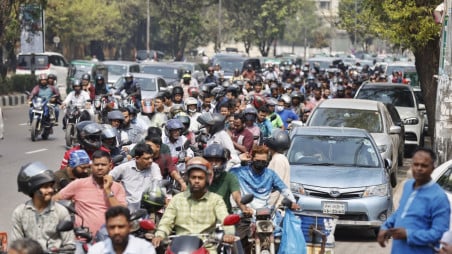
Some long-distance bus and truck operators said they were receiving less fuel than required, forcing them to reduce the number of trips.
Monir Hossain Chowdhury said, “As long as no one buys excess diesel, there is no reason for a shortage at the pumps.”
No crisis for other fuels
Stocks of other fuels also remain adequate. As of 4 March, the country currently has 28,152 tonnes of octane, sufficient for around 15 days, and 17,364 tonnes of petrol, enough for roughly eight days, officials said.
Although Bangladesh mainly produces octane domestically, a small portion is imported to supplement supply. Officials said around 40,000 tonnes of petrol and octane are expected to arrive later this month to stabilise supply further.
Furnace oil reserves currently stand at 66,192 tonnes, enough to meet power plants’ demand for approximately 59 days, suggesting that electricity generation is unlikely to be disrupted.
Officials also confirmed that the jet fuel supply remains stable. Bangladesh had 41,084 tonnes of jet fuel in stock as of 4 March, sufficient for 36 days, while another 20,000 tonnes are expected to arrive between 22 and 25 March.
The number of flights departing from Bangladesh to the Middle East has significantly decreased, which in turn has reduced the demand for jet fuel. Consequently, there is no anticipated shortage of jet fuel.
Kamrul Islam, GM (PR) of US-Bangla Airlines, told TBS, “So far, we have not yet seen the impact of the war on jet fuel. However, we are concerned that if the war continues in this manner, the issues of a potential jet fuel shortage or price hikes could emerge.”
Gas scare managed
Bangladesh imports LNG from Qatar and Oman under G2G (government-to-government) agreements.
To conserve the potential gas, the government has temporarily halted gas supply to all but one fertiliser factory, while sufficient fertiliser stocks remain available.
So far, there have been no major reports of gas shortages affecting households, industries or filling stations.
The Bloomberg on Friday (6 March) reported that Qatar appears to have loaded its first liquefied natural gas cargoes after the widening conflict in the Middle East forced it to halt fuel production and declare an unprecedented force majeure to buyers.
The vessel Al Ghashamiya loaded this week at the nation’s Ras Laffan export terminal and is now waiting in the Persian Gulf, and a second tanker, the Lebrethah, departed from the terminal Friday, according to Bloomberg.
The Lebrethah is signalling Bangladesh as its next destination, with an estimated arrival on 14 March, but the trip still depends on navigation in the crucial Strait of Hormuz, which is effectively closed for commercial ships in the wake of the Iran war.
Four LNG, two LPG vessels head to Chattogram
Four vessels carrying about 2.47 lakh tonnes of LNG and two ships transporting nearly 35,000 tonnes of liquefied petroleum gas (LPG) are heading to Chattogram Port after crossing the Strait of Hormuz before tensions escalated in the Middle East, easing concerns over any immediate gas supply disruption when the country is going through a panic of fuel shortage.
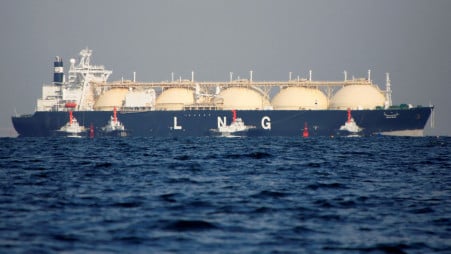
Altogether, 15 vessels carrying LNG, LPG and cement raw materials are now arriving at Chattogram.
Of them, 12 have already reached the port while three more are expected within this week. The ships are carrying nearly 7.50 lakh tonnes of cargo in total.
Two LNG carriers have already arrived at Chattogram carrying about 1.26 lakh tonnes of LNG from Qatar.
Two more vessels are scheduled to reach the port’s outer anchorage tomorrow and Wednesday, respectively.
Together, the four ships are bringing roughly 2.47 lakh tonnes of LNG to Bangladesh.
An LPG carrier was scheduled to arrive at Chattogram yesterday carrying 22,172 tonnes of LPG from Sohar Port in Oman.
Another vessel, carrying 19,316 tonnes of LPG from the same port, had already reached the port before the war.
The two ships together are delivering nearly 35,000 tonnes of LPG for Meghna Fresh LPG, a concern of Meghna Group of Industries.