
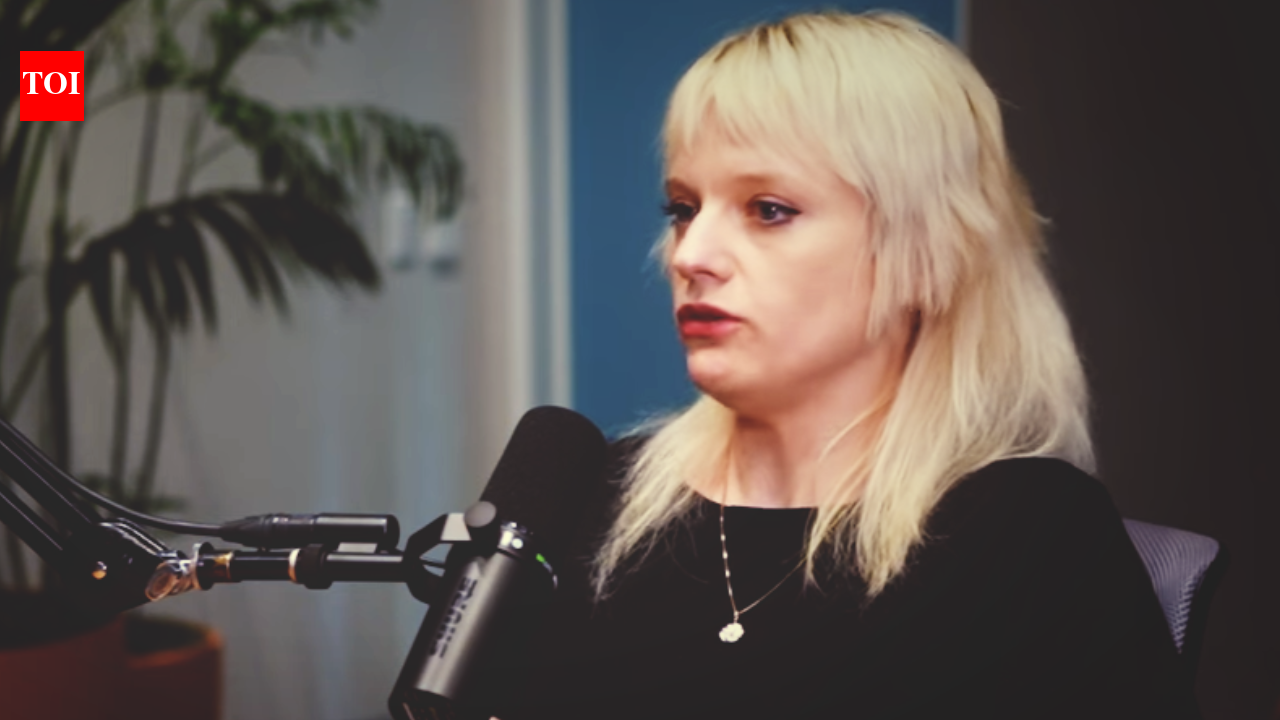
 When people imagine the engineers building today’s most advanced artificial intelligence systems, they usually picture computer scientists, mathematicians and software developers. At the AI company Anthropic, however, one of the key figures shaping its flagship chatbot comes from a very different discipline: philosophy. Amanda Askell is a trained philosopher whose job is to help teach machines not just how to answer questions but how to behave responsibly.Askell works on guiding the behaviour of Claude, one of the world’s most advanced conversational AI systems. Her work focuses on helping the model respond with caution, honesty and empathy while avoiding harmful behaviour. In simple terms, she helps design the ethical framework that shapes how Claude interacts with millions of users around the world.
A philosopher shaping AI behaviour at Anthropic
Askell joined Anthropic in 2021, the same year the company was founded by former researchers from OpenAI who wanted to focus on building safer artificial intelligence systems.Within Anthropic, Askell leads work on what the company calls “personality alignment.” This field focuses on shaping how an AI system communicates, reasons and responds to difficult questions.Instead of simply programming rules into a chatbot, her team studies how the system reasons and guides it toward behaviours such as:honesty in its answerscuriosity and opennesscaution when dealing with sensitive topicsrespect for human autonomy.The goal is to ensure that AI systems behave in ways that are helpful and responsible rather than misleading or harmful.
Architect of Claude’s “constitution”
One of Askell’s most influential contributions is her role in developing Constitutional AI, a method used to train models like Claude.Rather than relying only on human moderators to correct mistakes, Constitutional AI gives the model a set of guiding principles. These principles act as a “constitution” that the AI can use to evaluate and improve its own responses.Askell helped write this constitution, which outlines values that Claude should prioritise when interacting with users.The framework encourages the AI to follow principles such as:prioritising safetyavoiding harmful or illegal assistancebeing transparent when it is uncertainrespecting users and avoiding discrimination.Inside Anthropic, this document has sometimes been described informally as the system’s “moral framework.”
Why Anthropic hired a philosopher
Anthropic’s leadership believes that technical engineering alone cannot solve the ethical challenges posed by increasingly powerful AI systems.Modern AI tools interact with millions of people and can influence decisions, beliefs and information flows. Because of this, companies building advanced AI increasingly rely on experts who understand moral reasoning and ethics.Askell has argued that designing ethical AI requires humility rather than rigid certainty.“People are quite dangerous when they have moral certainty,” she has said when discussing AI ethics.Instead, she believes AI systems should be capable of weighing competing considerations and explaining their reasoning rather than simply following strict rules.
How she approaches teaching AI morality
Askell often describes AI training as more similar to shaping a personality than programming a traditional piece of software.Her work involves helping models learn how to reason about ethical situations by:analysing how the AI responds to difficult questionsgiving examples of ethical reasoningallowing the model to critique its own answersreinforcing behaviour that prioritises safety and honesty.The goal is to develop AI systems that can respond thoughtfully even in situations involving uncertainty or conflicting values.Askell has also said developers want systems like Claude to recognise the responsibility behind their creation.“We want Claude to know that it was brought into being with care.”
Academic background and philosophical training
Before moving into the AI industry, Askell built her career in academic philosophy.Her academic path includes studies at several major institutions:Master’s degree in philosophy from the University of DundeeBachelor of Philosophy from the University of OxfordPhD in philosophy from New York University.Her research focused on ethics, decision theory and rational choice, fields that examine how intelligent agents should make decisions in complex moral situations.These ideas turned out to be directly relevant to one of the most pressing questions in artificial intelligence: how machines should behave when interacting with humans.
From OpenAI researcher to Anthropic leader
Before joining Anthropic, Askell worked as a researcher at OpenAI between 2018 and 2021.During that time she focused on issues related to AI safety and alignment, a field concerned with ensuring that powerful AI systems behave in ways consistent with human values.This problem, often referred to as the AI alignment challenge, has become one of the central research questions in modern artificial intelligence.Askell’s experience working at the intersection of philosophy and AI safety positioned her as a natural fit for Anthropic’s mission.
Growing influence in the AI world
As artificial intelligence becomes more powerful and widely used, the importance of ethical design has grown dramatically.Askell’s work has received increasing recognition in the technology community, including being named to the TIME100 AI list in 2024, which highlights influential figures shaping the future of artificial intelligence.Her role reflects a broader shift within the technology industry, where companies are beginning to recognise that building powerful AI systems requires not only technical expertise but also deep thinking about ethics and human values.
A new kind of job in the age of AI
Amanda Askell represents a new kind of role emerging inside the AI industry. She is not a traditional engineer writing code but a philosopher helping shape the character of intelligent machines.As AI systems become more capable and integrated into everyday life, the questions she works on are likely to become even more important.In the coming years, the challenge may not only be how powerful artificial intelligence can become, but how responsibly it behaves once it arrives.