
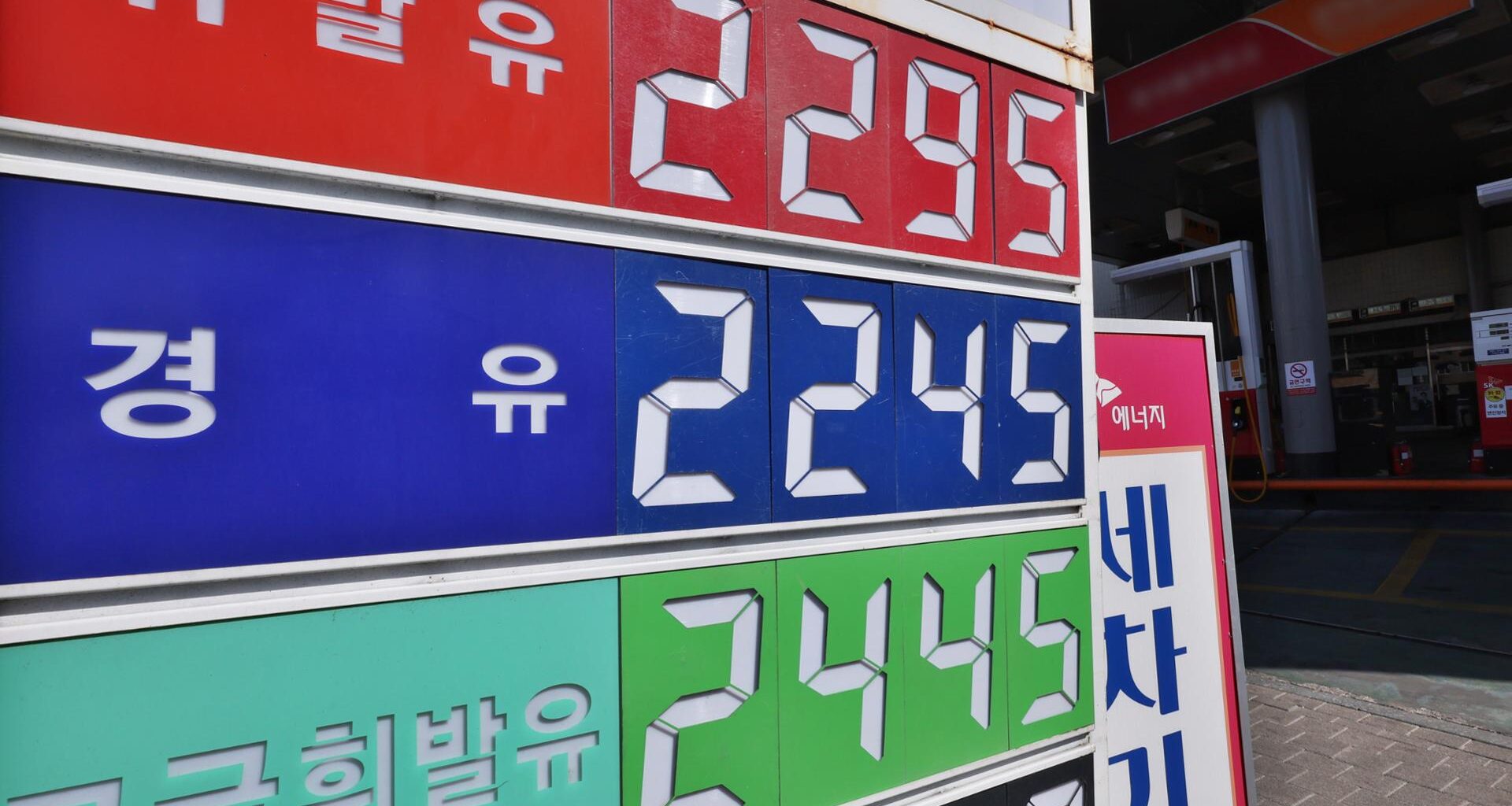
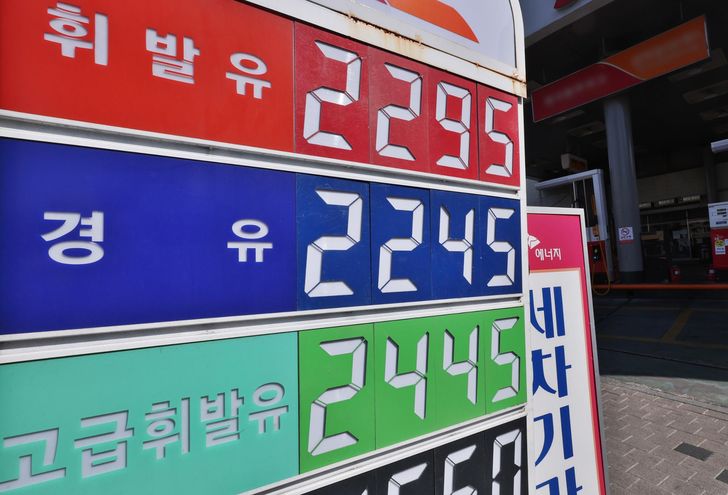
Gasoline and diesel prices displayed at a gas station in Seoul, Sunday, are hiked to over 2,200 won per liter, the highest level since Russia began its full-fledged invasion of Ukraine in 2022. Yonhap
Korea’s major oil refiners are moving to cut supply prices of oil to contribute to the country’s efforts to curb surging prices at gas stations nationwide, while the U.S.-Israel conflict with Iran destabilizes trade.
The development came as President Lee Jae Myung last week warned against possible collusion to fix oil prices by refiners and gas station operators here, as the country’s gasoline and diesel prices rose sharper than other comparable markets.
According to industry sources Sunday, major refiners here have either adjusted their supply prices or plan to cooperate with the government and rest of the domestic oil industry to stabilize prices at domestic gas stations.
The sources added that several refiners slightly lowered their supply prices for gas stations late last week as part of efforts to support the government’s push to contain fuel prices.
Other refiners which have not yet decided to cut their supply prices also vowed to “cooperate with the government’s oil price stabilization policies as much as possible,” according to the sources.
The companies’ cooperative stances with the government came after the country’s three major private oil groups — Korea Petroleum Association, Korea Oil Distribution Association and Korea Oil Station Association — released a joint statement Friday agreeing for cooperation to prevent surging global crude oil prices from spiking prices at the pump.
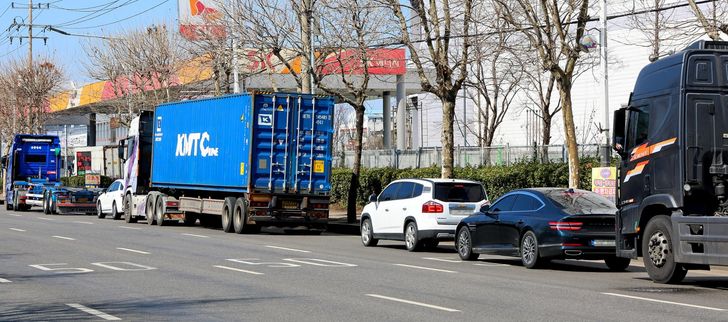
Vehicles are lined up at a gas station in Incheon, Saturday, in an apparent effort to find cheaper gas amid surging prices. Yonhap
The country last week saw fuel prices rise at un unusually steep pace following the crisis that was sparked by the Middle East conflict. It raised concerns over possible collusion by gas stations and prompted renewed calls for stronger government intervention.
According to Opinet, a fuel price information system operated by the state-run Korea National Oil Corp., average gasoline prices across the nation on Saturday reached 1,894.86 won ($1.28) per liter, up nearly 10 percent from 1,723 won on March 3. Diesel prices climbed even more sharply, rising 17.24 percent over the same period to reach 1,917.34 won per liter on Sunday.
This contrasts sharply with the past, when it typically took two to three weeks for global oil price changes to be reflected in the domestic market, prompting the government to suspect excessive profit-taking.
Lee said Friday the authorities would crack down on unfair market practices. “Collusion is a serious crime and those who engage in the practice will find out that they will have to pay a heavy price in the end,” he said.
Deputy Prime Minister and Finance Minister Koo Yun-cheol also said the same day that authorities are closely monitoring a range of potential irregularities, while Justice Minister Jung Sung-ho also ordered prosecutors to respond sternly to any attempts to fix oil prices.
To contain the price surge, the government is even considering introducing a fuel price cap system for the first time in nearly 30 years, but questions remain over its effectiveness.
If gas stations halt sales or shorten operating hours to avoid losses stemming from the price ceiling, it could result in fuel shortages.
Fiscal burdens also remain a hurdle. Under the Petroleum and Alternative Fuel Business Act, losses incurred by businesses due to government-imposed price controls must be compensated with taxpayer money. This means the government has to cover losses at refiners and gas stations in return for the price cap.
As the refiners moved to lower supply prices despite taking losses, the upward trend over the weekend was contained, with the price of gasoline increasing 5.46 won or 0.3 percent on Sunday from a day earlier. However, industry officials say the government ultimately needs to secure crude oil supplies at the national level to prevent further price hikes.