
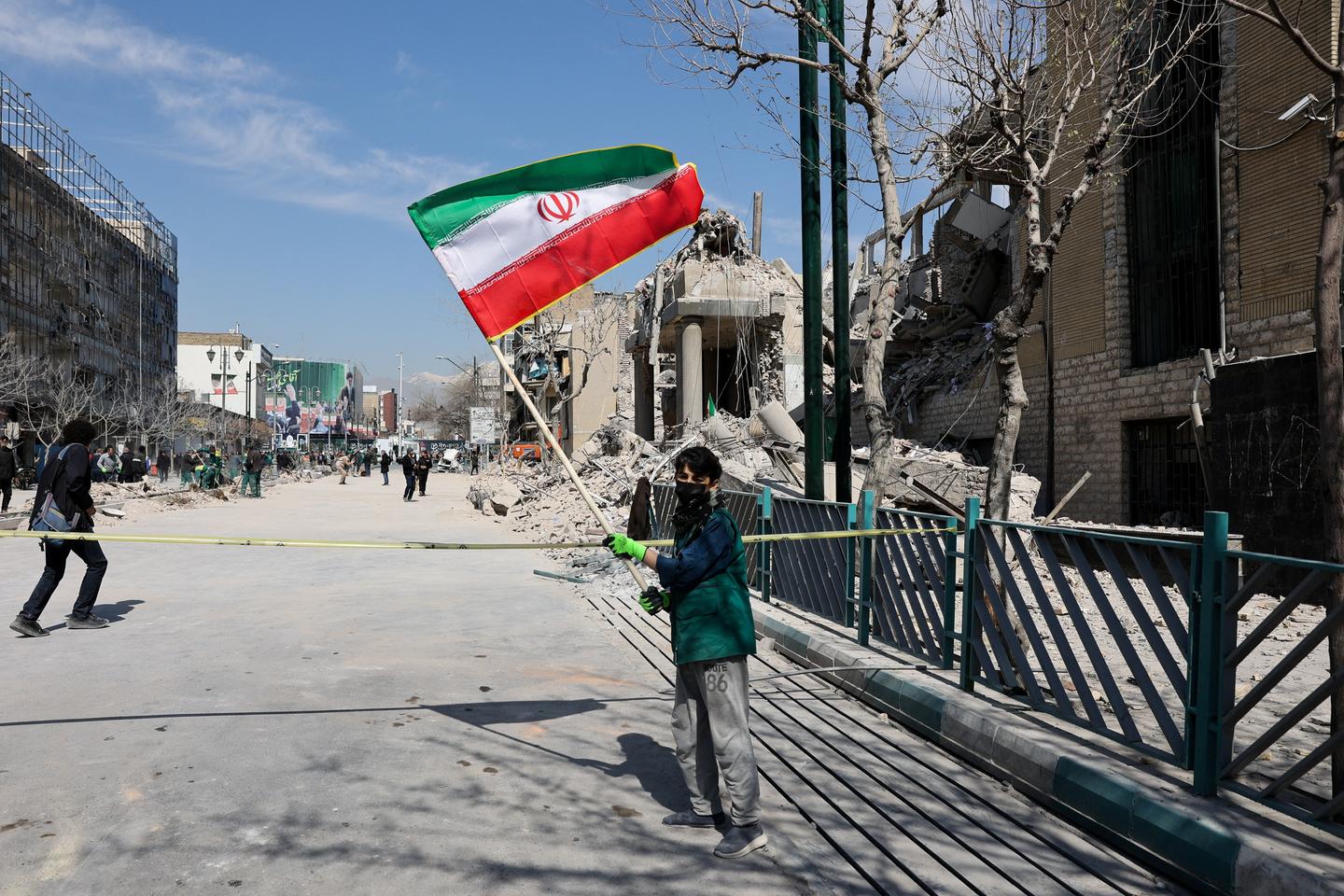
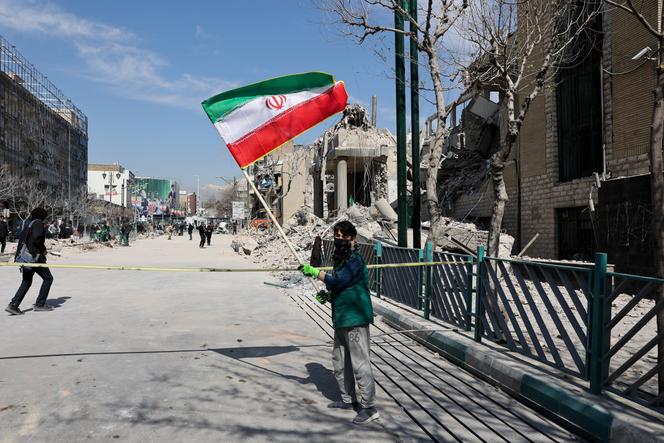
 After an Israeli-American strike on a police station in Tehran, March 4, 2026. MAJID ASGARIPOUR/WANA VIA REUTERS
Hope. Resignation. Anxiety. Powerlessness. Anger. Since the start of the war, Iranians have been deeply divided over the Israeli-American attacks launched on their country on February 28.
Soheila (a pseudonym for her protection, like all those quoted in this article), a business owner in her forties reached by phone, said she regularly argues with her husband on this issue. After January’s massacre of anti-regime protesters, she saw no solution other than foreign intervention to rid Iran of those in power. So when supreme leader Ali Khamenei was killed during the first strikes, Soheila was overjoyed. Her husband, an engineer, could not understand how bombs could “bring democracy to Iran.”
On Monday, March 2, as usual, Soheila went up to the roof of their apartment building in central Tehran to see which neighborhood had been hit by the latest strikes. As she filmed the smoke rising over the southern part of the capital on her phone, a neighbor suddenly joined her on the roof. The man, an intelligence services worker, confronted her aggressively: “Stop filming! Are you spying by taking photos and videos? Who are you going to send them to?” Soheila retorted, “Shut up, you regime agent! I’m not afraid.” The neighbor’s wife, who was with him, then called the police to report the “infidel.” The irony: nobody answered. A mundane scene, but one that reveals much about the divisions currently running through Iranian society.
You have 78.1% of this article left to read. The rest is for subscribers only.