
Israel Defense Forces chief Lt. Gen. Eyal Zamir warned on Sunday that there was “no safe place” for the Iranian regime to hide as Israel and the US continued to strike targets across Iran on the ninth day of their joint campaign against the Islamic Republic.
Iran, in turn, kept up its attacks on Israel and the Gulf states, firing nine ballistic missile salvos at Israel throughout the day, setting off sirens across the country and repeatedly sending millions of people rushing to shelter.
Zamir spoke after the IDF announced that an Israeli Navy strike in Beirut, Lebanon overnight had killed five commanders of Iran’s Quds Force, the extraterritorial arm of the Islamic Revolutionary Guard Corps.
“I tell you that there is no safe place for the arms of Iranian evil, anywhere in the Middle East, not in Beirut and not anywhere else,” he said during an assessment with Home Front Command chief Maj. Gen. Shai Klapper and other military officials.
Among the targets recently struck by the Israeli Air Force was the headquarters of Iran’s Islamic Revolutionary Guard Corps’ air force in Tehran, IDF spokesman Brig. Gen. Effie Defrin said at a press conference on Sunday evening.
Get The Times of Israel’s Daily Edition
by email and never miss our top stories
By signing up, you agree to the terms
He said Iran “managed the fire of missiles and drones at Israel and countries in the region” from the headquarters.
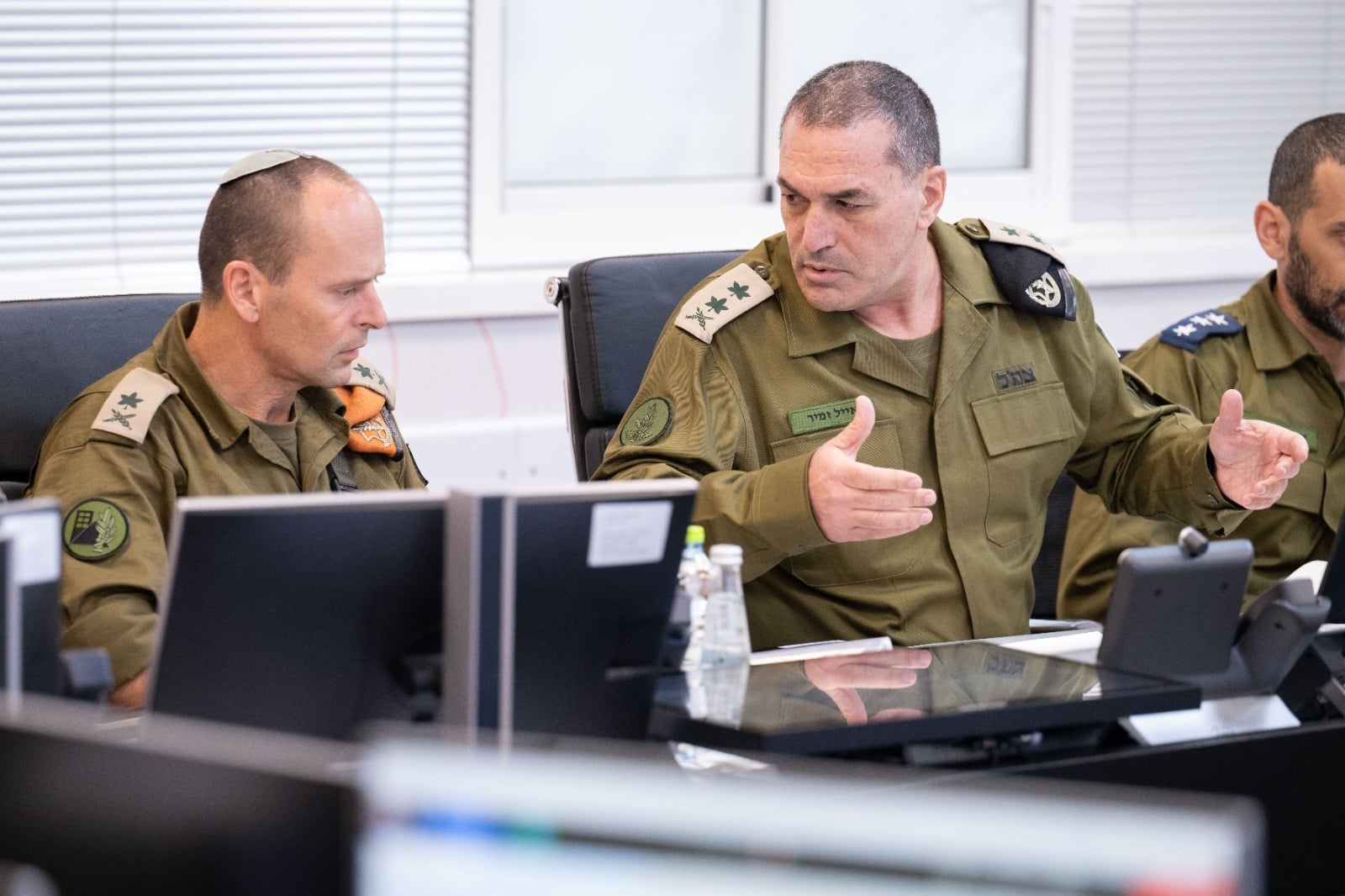
IDF Chief of Staff Lt. Gen. Eyal Zamir (right) and Home Front Command chief Maj. Gen. Shai Klapper are seen during an assessment, March 8, 2026. (Israel Defense Forces)
The IDF also announced that recent waves of airstrikes had targeted the IRGC space and satellite headquarters.
The headquarters, the IDF said, “served as a reception, transmission and research center for the Iranian Space Agency, which is affiliated with the regime’s military.”
It said the headquarters included “research facilities as well as a command-and-control structure for the Khayyam satellite,” launched by Iran in August 2022, which the IDF said was used by the IRGC to “advance terror activities and monitor the State of Israel and countries in the region.”
Additionally, as part of the waves of strikes, the IDF said it also hit 50 bunkers at one of Iran’s internal security forces bases that were used to store ammunition; a base of the Basij paramilitary force; headquarters of the internal security forces; and a compound belonging to the IRGC ground forces.
❌ ارتش دفاعی اسرائیل مقر نیروی هوافضای سپاه پاسداران را در قلب تهران هدف قرار داد
این مقر به عنوان مرکز فرماندهی و کنترل اصلی نیروهای هوایی رژیم استفاده میشد.
از این مقر، فرماندهی یگان موشکهای بالستیک، سامانه پهپادها و دیگر واحدهای این نیرو فعالیت میکردند.
این مقر مسئول… pic.twitter.com/Enydb9kAKw
— ارتش دفاعی اسرائیل | IDF Farsi (@IDFFarsi) March 8, 2026
Separately, the military provided details on a strike carried out on Saturday against the newly appointed military secretary to Iran’s supreme leader, Abolghasem Babaeian, who was appointed last week despite the supreme leader’s role being vacant following the assassination of Ali Khamenei.
The IDF confirmed that it killed Babaeian, saying that it did so within an hour of having received “real-time emerging intelligence.”
IAF fighter jets took off for Iran while the intelligence was being consolidated, and within 50 minutes of the information being received, the jets launched the munitions that killed Babaeian, the military said.
It said that in addition to being the intended head of the military bureau of the supreme leader, Babaeian was also chief of staff at the Khatam-al Anbiya Central Headquarters, also known as Iran’s military emergency command.
“Babaeian was responsible for coordinating between regime bodies to advance actions against the State of Israel and to operate the regime’s emergency mechanisms,” the IDF said.
He was appointed to the role after the previous chief of Khamenei’s military bureau, Mohammad Shirazi, was killed in the opening strikes of the war alongside the supreme leader.
‘Perseverance and patience’
Zamir, during his assessment with the Home Front Command chief, acknowledged the “prolonged state of emergency” that the Israeli public has been living in since the outbreak of war with Hamas on October 7, 2023, but stressed the need for continued “perseverance and patience” as the battle against Iran proceeds.
“It will take a long time yet; you need to be prepared for that, and however long it takes, it will take,” Zamir said.
Iran, too, appeared to be in it for the long haul, with parliament speaker Mohammad Baqer Qalibaf vowing that it was not seeking a ceasefire.
“If the enemy attacks us from any country, Tehran will respond decisively,” he told Iran’s state TV, adding that “aggressors” should be punished.

Israelis take cover in Tel Aviv as a siren sounds warning of incoming ballistic missiles fired from Iran toward Israel, March 8, 2026. (Dor Pazuelo/Flash90)
Nine missile salvos were fired at Israel from Iran between midnight on Sunday and the following evening. One salvo, the sixth of the day, apparently included a cluster warhead and resulted in the injury of six people, two of them seriously.
Iran has launched multiple ballistic missiles at Israel carrying cluster bomb warheads during the ongoing conflict, indiscriminately spreading small bombs in wide areas of the country.
The Health Ministry said on Sunday evening that since the start of the war with Iran on February 28, 2,072 people had been treated at hospitals across the country, 155 of whom were still hospitalized in intensive care.
Among those hospitalized, it said, nine were in serious condition, 42 in moderate condition, and 98 in good condition. An additional three people were being treated for anxiety and four were undergoing medical evaluations.
Attacks launched from populated areas
Ten people have been killed in Iranian attacks on Israel since February 28, in addition to 18 people in the Gulf, and seven US service members.
The death of the seventh American soldier was announced by US Central Command on Sunday, after they succumbed to wounds sustained in an attack on troops in Saudi Arabia on March 1.
“This is the seventh service member killed in action during Operation Epic Fury,” CENTCOM said, adding that the soldier’s identity will be withheld until 24 hours after next-of-kin notification.
The US military, on Sunday, accused the Iranian regime of firing ballistic missiles and drones from within heavily populated civilian areas, and urged civilians to stay home to avoid being harmed.
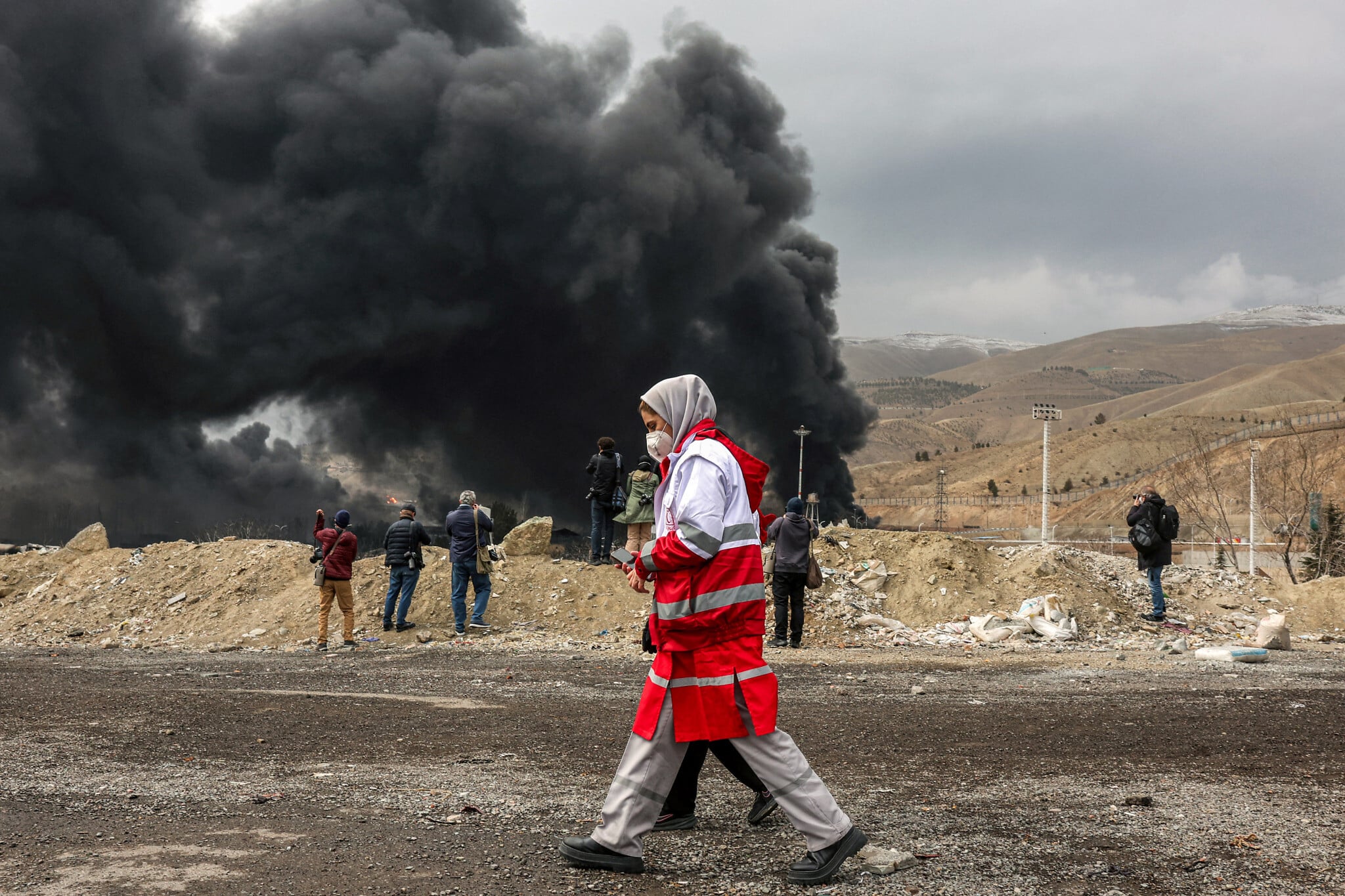
Members of Iran’s Red Crescent society walk near smoke plumes from an ongoing fire following an overnight airstrike on the Shahran oil refinery in northwestern Tehran on March 8, 2026. (AFP)
It said this practice was primarily occurring in the cities of Dezful, Isfahan and Shiraz, and warned that the “dangerous decision risks the lives of all civilians in Iran since locations used for military purposes lose protected status and could become legitimate military targets under international law.”
“The US military takes every feasible precaution to minimize harm to civilians but cannot guarantee civilian safety in or near facilities used by the Iranian regime for military purposes,” the CENTCOM statement added, urging “civilians in Iran to stay home.”
“The Iranian regime is knowingly endangering innocent lives,” it said.
Cracks emerge over oil strikes
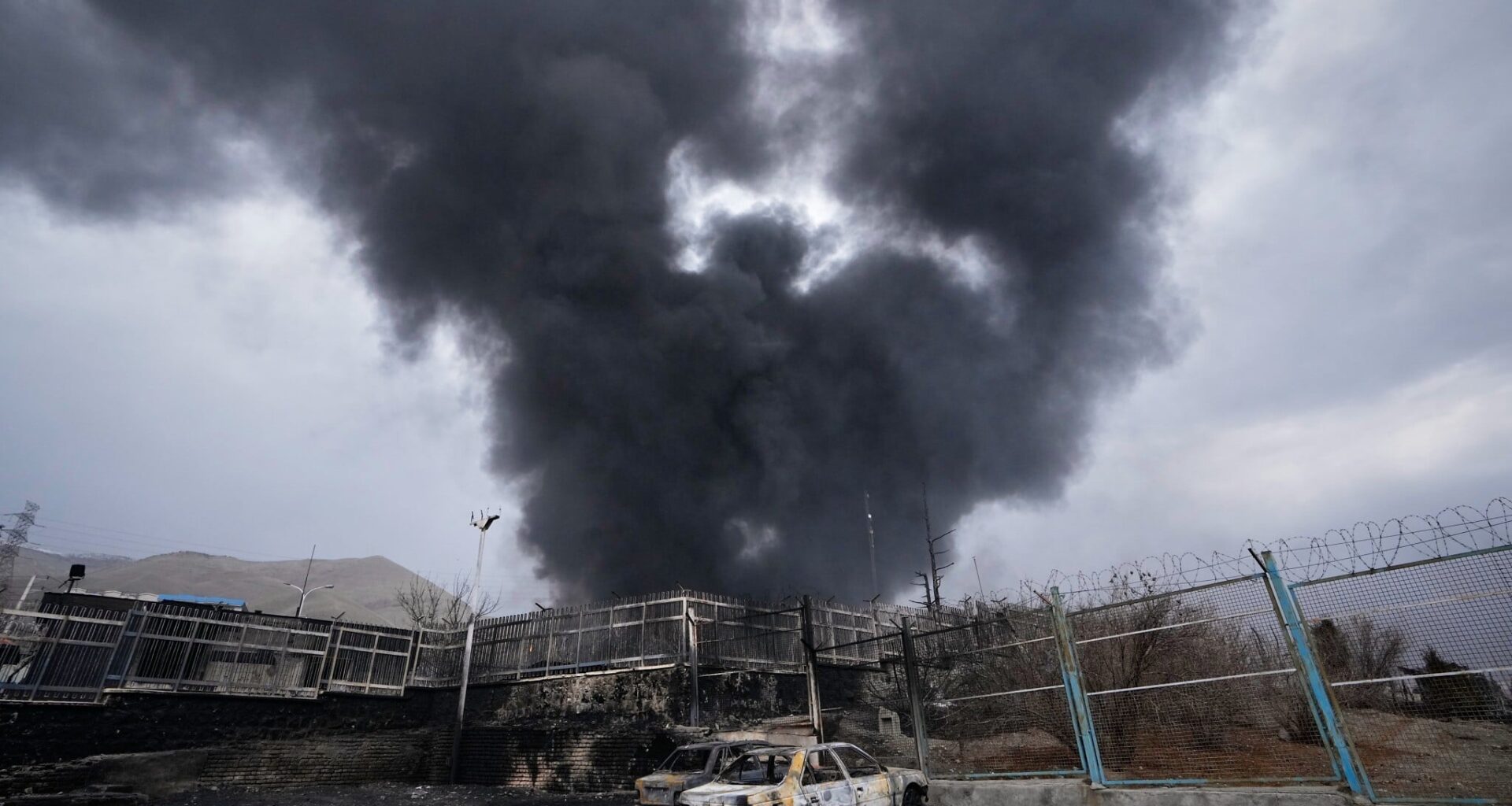
Meanwhile, thick black smoke hung over Tehran on Sunday, after strikes on oil storage facilities had lit up the sky with plumes of orange flame the previous night.
The strikes, carried out by Israel, sparked fury in Iran, which declared that they amounted to a war crime and a “dangerous new phase” of the conflict.
In what would appear to be daylight between the two allies, reports suggested on Sunday that the US was not too pleased about the strikes either.
A senior American official told Israel’s Channel 12 that Jerusalem had informed Washington in advance about the plans to target oil infrastructure, but did not indicate that the strikes would be as intensive as they were.
“We don’t think it was a good idea,” the official said, adding that the US military had expected a largely symbolic strike and was surprised by the scope of the operation.
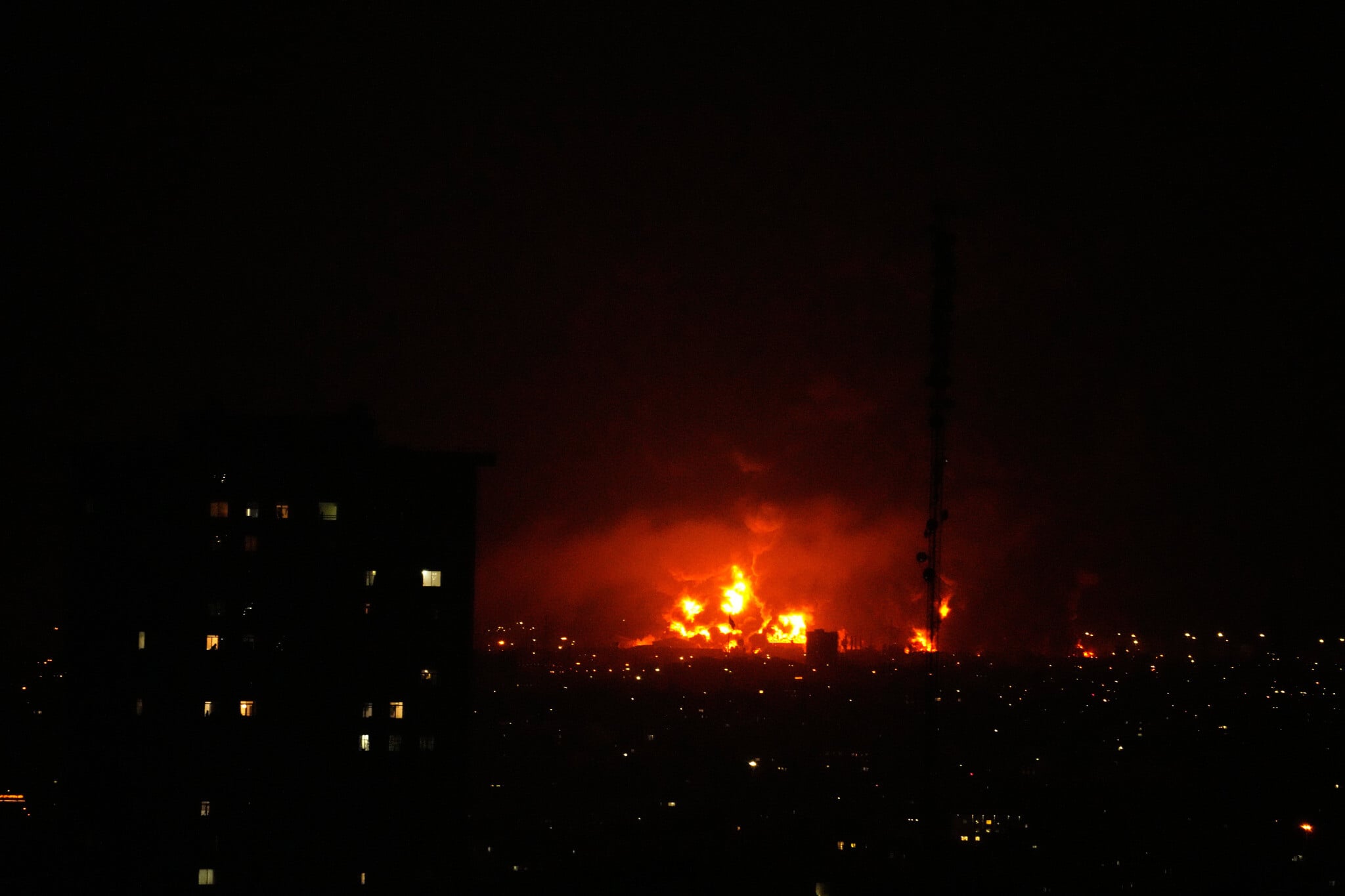
Flames rise from an oil storage facility south of the capital Tehran as strikes hit the city during the US–Israeli military campaign, March 7, 2026. (AP/Vahid Salemi)
According to the official, US officials are concerned that targeting infrastructure that also supplies fuel to Tehran’s civilian population could backfire by strengthening the Iranian regime and turning public opinion against Israel and the US.
An Israeli security official cited by Channel 12 said the strikes on the fuel depots were intended in part to send a message to Tehran to stop targeting civilian sites in Israel.
The report also said the discussion over the strikes has so far taken place mainly at the military level, without a clear political message being conveyed between the governments.
To that end, the report said US President Donald Trump would be dispatching his envoys Steve Witkoff and Jared Kushner to Israel on Tuesday.
Earlier on Sunday, US Energy Secretary Chris Wright said the US would not target Iranian energy infrastructure, but seemingly downplayed the Israeli strikes, saying they had targeted “local fuel depots to fill up the gas tank.”
“The US is targeting zero energy infrastructure. There are no plans to target Iran’s oil industry, their natural gas industry, or anything about their energy industry,” Wright said.
Iran’s military warned that it would begin targeting oil sites in the region if Israel continued to strike its energy infrastructure.
“The governments of Islamic countries are expected to warn the criminal America and the savage Zionist regime of such cowardly, inhumane actions as soon as possible,” Ebrahim Zolfaghari, a spokesman for Iran’s central military command, told state TV.
“Otherwise, similar measures will be taken in the region, and if you can tolerate oil at more than $200 per barrel, continue this game,” he said.
The war has all but shut down the Strait of Hormuz, through which nearly 20 percent of the world’s crude oil and about 20% of liquefied natural gas usually transit.
Energy markets have been disrupted, and oil prices have surged. West Texas Intermediate, the US benchmark for oil, rose 12% just on Friday and is up 36% in a week.
Iran accounts for about 4% of world oil production, according to the US Energy Information Administration. Its oil industry is subject to international sanctions, but some oil is still exported, mainly to China, oil industry data shows.
Diana Bletter contributed to this report.