
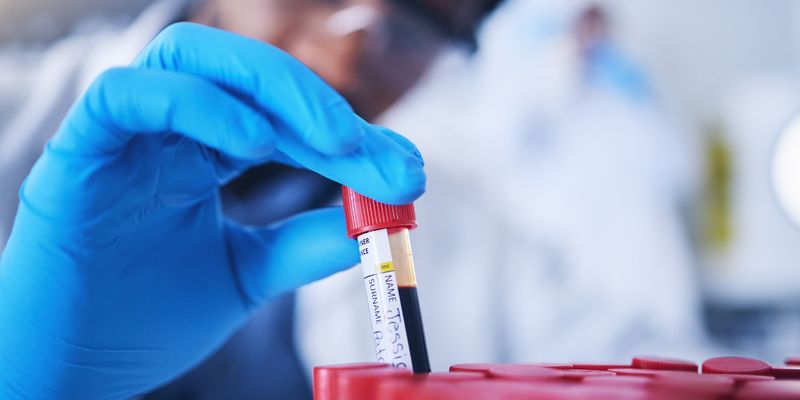
Machine learning helps translate complex DNA fragment patterns into disease-specific signatures, offering a new path for early detection.
Researchers at the Johns Hopkins Kimmel Cancer Center have developed an innovative liquid biopsy test that uses AI to detect early liver fibrosis and cirrhosis. Unlike traditional tests that focus on specific gene mutations, this approach examines genome-wide cell-free DNA (cfDNA) fragmentation patterns, revealing subtle signs of liver disease — and potentially other chronic conditions — long before conventional methods can.
Published in Science Translational Medicine, this study marks the first systematic use of fragmentome technology to identify chronic noncancer conditions. This work opens the door to a new era of liquid biopsies, where a simple blood sample could provide detailed insights into a person’s overall health, risk for disease progression, and even early warning signs for conditions that currently go undetected.
From cancer to chronic disease
The origins of this study trace back to 2023, when Victor Velculescu, co-director of the Cancer Genetics and Epigenetics Program at Johns Hopkins Kimmel Cancer Center, and his team were analyzing liver cancer fragmentomes. They noticed that individuals with fibrosis or cirrhosis had fragmentation profiles that appeared largely normal but showed subtle signals of early disease. This prompted a focused investigation into fragmentation patterns specific to liver fibrosis and cirrhosis, laying the groundwork for the current study.
Building on this insight, the researchers first tested a cohort of 570 patients with suspected serious illness to develop a fragmentation comorbidity index. This index distinguished individuals with high versus low Charlson Comorbidity Index scores — a common measure of overall health burden — and independently predicted overall survival. In some cases, it proved even more specific than traditional inflammatory markers.
Continue reading below…
“The fragmentome can serve as a foundation for building different classifiers for different diseases, and importantly, these classifiers are disease-specific and do not cross-react,” Akshaya Annapragada, first author of the study and PhD student working in the Velculescu lab, explained in the press release. “A liver fibrosis classifier is distinct from a cancer classifier. This is a unique, disease-specific test built from the same underlying platform.”
Encouraged by these early results, the team expanded their approach to a larger study of 1,576 individuals with liver disease and other comorbidities. Using whole-genome sequencing, they analyzed millions of cfDNA fragments across thousands of genomic regions. Researchers examined fragment size, distribution, and patterns in repetitive regions of the genome that had previously been underexplored. Each analysis evaluated roughly 40 million DNA fragments, generating a dataset far larger than that of most liquid biopsy tests.
Using machine learning algorithms, the team identified disease-specific fragmentation signatures, enabling high-sensitivity detection of early liver disease, advanced fibrosis, and cirrhosis.
“This builds directly on our earlier fragmentome work in cancer,” said Velculescu. “For many of these illnesses, early detection could make a profound difference, and liver fibrosis and cirrhosis are important examples. Liver fibrosis is reversible in its early stages, but if left undetected, it can progress to cirrhosis and ultimately increase the risk of liver cancer.”
How fragmentomics works
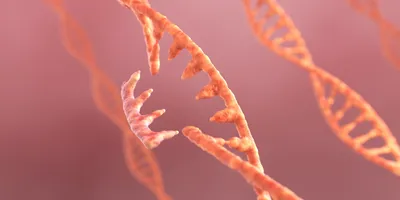
Fragmentomics is an emerging field that studies the patterns of circulating cfDNA fragments found in the bloodstream. These fragments originate from dying cells throughout the body, which release pieces of DNA into circulation. Rather than remaining intact, this DNA is typically highly fragmented, producing characteristic size distributions and genomic patterns that can provide clues about where the DNA came from and what biological processes are occurring in the body.
The term fragmentomics refers to analyzing the entire collection of these fragments — known as the fragmentome — to understand their structure, origin, and biological function. In the case of cfDNA, researchers examine not only the DNA sequence but also features such as fragment length, endpoints, and how fragments are distributed across the genome. Together, these characteristics create complex signatures that reflect cellular activity, tissue damage, or disease processes.
“The fact that we are not looking for individual mutations is what makes this study so powerful,” said Annapragada. “We are analyzing the entire fragmentome, which contains a tremendous amount of information about a person’s physiologic state. The scale of these data, coupled with machine learning, enables development of specific classifiers for many different health conditions.”
Addressing a major health gap
In the US, an estimated 100 million people have liver conditions that put them at high risk for cirrhosis and cancer. Existing blood-based markers often fail to detect early fibrosis, and imaging tools like ultrasound or magnetic resonance imaging may not be accessible to all patients.
“Many individuals at risk don’t know they have liver disease,” Velculescu said. “If we can intervene earlier — before fibrosis progresses to cirrhosis or cancer — the impact could be substantial.” Early detection of precursor conditions could also allow physicians to treat underlying health issues, potentially preventing cancer development altogether.
Continue reading below…
While the study primarily focused on liver disease, researchers also detected fragmentomic signals associated with cardiovascular, inflammatory, and neurodegenerative conditions. Although the current cohort size was insufficient to develop classifiers for each of these diseases, the findings suggest broader applicability of cfDNA fragmentomics in chronic disease detection.
A promising future for liquid biopsies
The researchers emphasized that the liver fibrosis assay described in the study is still a prototype and not yet ready for clinical use. Future work will focus on refining and validating the liver disease classifier in larger patient populations, as well as exploring fragmentomic signatures associated with other chronic conditions.
This approach could ultimately support a new generation of multi-disease liquid biopsies, capable of detecting early physiological changes across a wide range of conditions. Because fragmentomic patterns reflect the biological state of tissues throughout the body, a single blood test could potentially reveal signals of inflammation, organ damage, or disease progression long before symptoms appear.
If validated in larger studies, fragmentomics combined with machine learning could transform how clinicians detect and monitor disease — shifting medicine toward earlier intervention and more proactive care. For conditions such as liver fibrosis, where early-stage disease is often silent but still reversible, that shift could make a critical difference for millions of patients.