
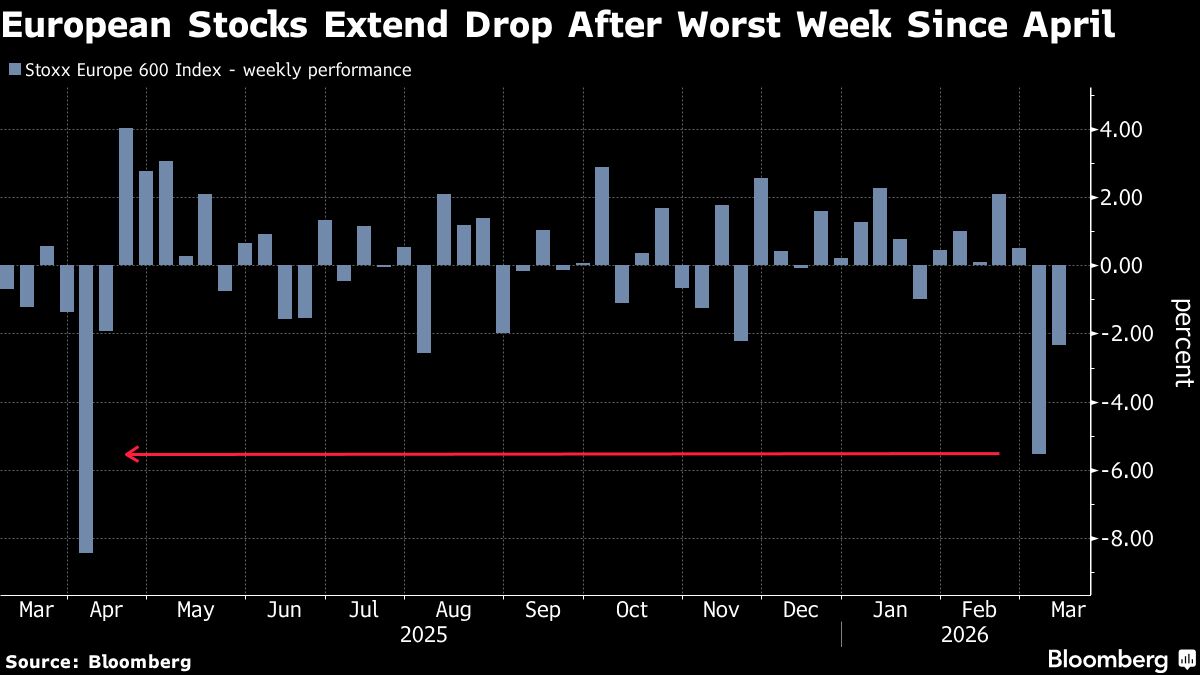
(Bloomberg) — European stocks dropped for a third day as intensifying conflict in the Middle East sent oil prices soaring to about $100 a barrel, reigniting fears that inflation could curb economic growth.
The Stoxx Europe 600 Index was down 0.6% at the close. Miners, real estate, autos, retail as well as travel and leisure stocks led the losses. The energy sector outperformed, with oil majors like Shell Plc and BP Plc up and , respectively.
Most Read from Bloomberg
Airlines shares declined, with Lufthansa AG dropping . Richemont SA was down as luxury stocks came under pressure amid concerns about weakening consumer demand.
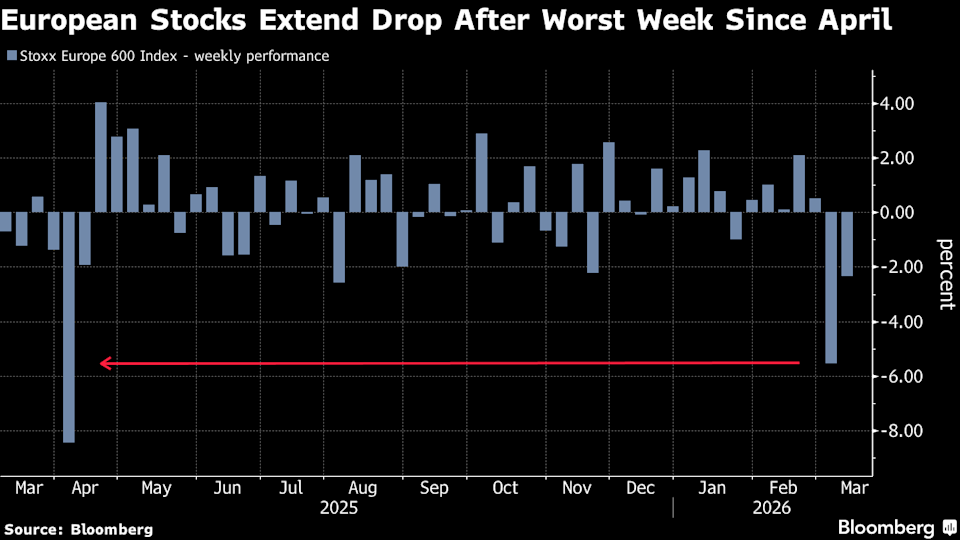
Europe’s main equities benchmark posted its biggest weekly drop since April last week. The conflict in the Middle East showed little sign of abating after Iran named the son of the late Ayatollah Ali Khamenei as its new supreme leader and military strikes continued.
Brent crude pared some of its earlier advance to trade higher at $ a barrel after Group of Seven finance ministers said they were ready to take any steps needed to support global energy supply. European natural gas futures surged as much as 30% before trimming gains.
“I believe that Brent above $100 is a real risk for inflation and the economy,” said Andrea Gabellone, head of global equities at KBC Securities. “The EU economy is the most vulnerable with a double hit from oil and gas price spike, and let’s not forget, another war closer to home.”
In individual stocks, Roche Holding AG fell after a study of its experimental breast-cancer drug in combination with another treatment failed to meet the trial’s main goal.
Joachim Klement, head of strategy at Panmure Liberum:
“Investors are panicking about the escalation of the Iran war and the impact on European natural gas and oil prices. Last week, markets were playing elevated, but not excessive, oil and gas prices. The escalation over the weekend has shifted the emphasis to a possible repeat of the energy price shock similar to 2022 after Russia invaded Ukraine.”
“The more oil prices spike and the longer they stay high, the more Trump will be forced to find an exit ramp from the Iran war or ensure the Strait of Hormuz remains open.”
Wolf von Rotberg, equity strategist at Bank J Safra Sarasin:
“We have not yet seen markets capitulate, but rather a measured reaction to rising oil prices. As oil infrastructure has been hit over the weekend, a prolonged rise in oil prices has become more likely and a quick reversal of recent moves increasingly difficult, even if the strikes were to stop.”
Mathieu Racheter, head of equity strategy at Julius Baer:
“Our base case still assumes that oil prices will ultimately retreat below $100 as policy responses and market adjustments ease supply fears, although the weekend’s news flow raises the probability of a more persistent energy shock. This distinction matters because equities historically struggle when oil remains above $100 for an extended period, as higher energy costs tighten financial conditions and pressure margins.”
“For now, we retain a defensive tilt and a focus on quality, while continuing to view oil & gas stocks – which we upgraded last week – as a useful partial hedge against supply-driven energy shocks.”
Carl Dooley, head of EMEA trading at TD Cowen:
“I think the concoction of Europe’s Stoxx 600 moving into negative territory for the first time this year, plus more sectors now screening as short-term technically oversold than at any time since April last year, is enough for a sharp rally, given general levels of uncertainty and fear”
For more on equity markets:
War Is Not the Only Risk Out There for Markets: Taking Stock
M&A Watch Europe: Kelda, Netfonds, CoolIT Systems, ENI, Lonza
Stock Futures Drop as Iran War Oil Spike Boosts Inflation Threat
You want more news on this market? Click here for a curated First Word channel of actionable news from Bloomberg and select sources. It can be customized to your preferences by clicking into Actions on the toolbar or hitting the HELP key for assistance. To subscribe to a daily list of European analyst rating changes, click here.
–With assistance from Nick Heubeck and Michael Msika.
Most Read from Bloomberg Businessweek
©2026 Bloomberg L.P.