
For the first time in over three decades, South Korea is doing something it hoped it would never do again: telling the market what it can charge for fuel.President Lee Jae Myung’s order is more than a mere policy reversal, however.
For a country that imports nearly every barrel it consumes, it is an act of pre-emptive self-defence – the reflex of an economy watching the Middle East burn and knowing exactly what that means.
Fuel prices have already surpassed 1,900 won (US$1.28) per litre at some Korean petrol stations for the first time in more than three years.
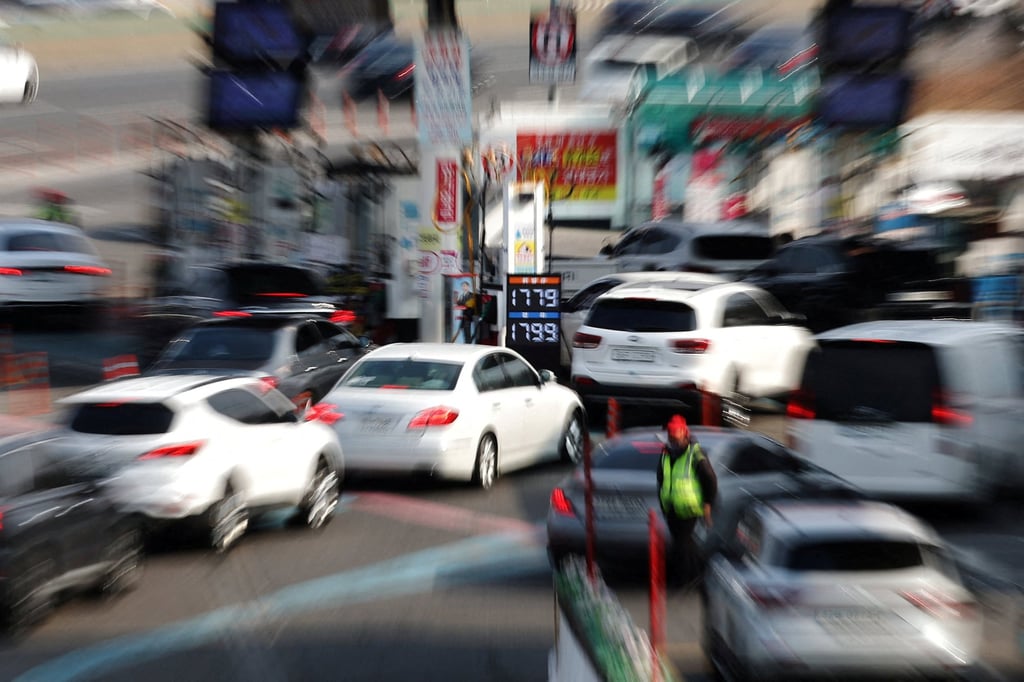 A board shows prices as cars queue at a petrol station in Seoul, South Korea, on Monday. Photo: Reuters
Behind that number lies a cascade of anxieties, from surging import costs to sluggish growth, creeping inflation and the spectre of stagflation.