
Photographer: Nick Claeskens / @nickclaeskens
Photographer: Lucid / @lucid.lucid
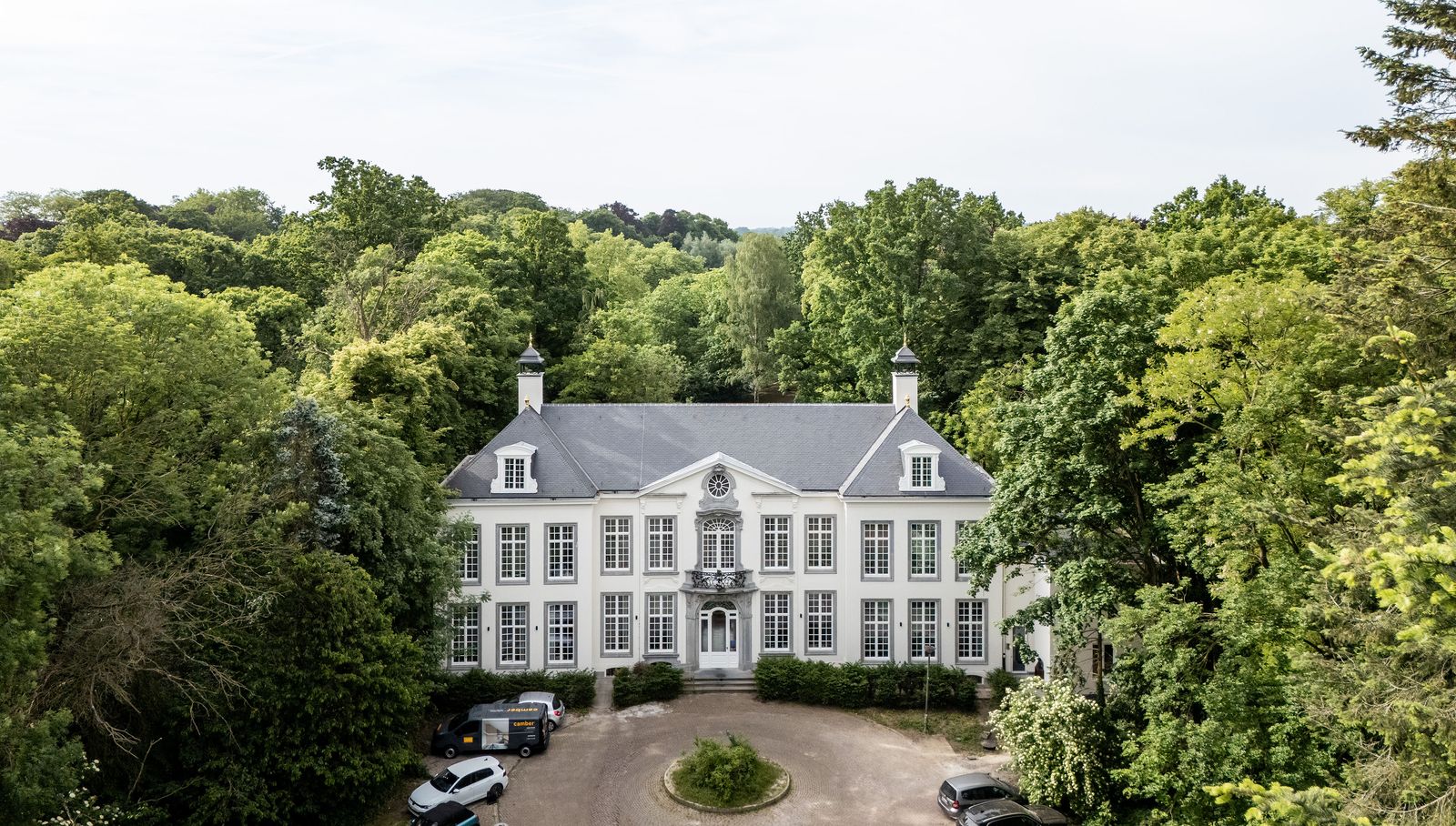
From the Architect: “Boekenberg Castle, a listed monument set within a historic landscape, was designed in the 18th century by architect Jan Pieter van Baurscheit in the French classicist rococo style. Originally, it served as a ‘pleasure garden,’ a country retreat where wealthy city dwellers could relax. The playful style of the rococo goes hand in hand with a strictly organized structure, symmetry, and carefully planned sight lines. The original floor plan was designed along distinct axes, with the main public spaces located on the ground floor and oriented toward the garden. The central axis ran all the way through the castle grounds: from the entrance gate, through the main hall, and out toward the pond in the park beyond.
“Over the years, the castle has experienced an eventful history marked by changing functions, renovations, decay, and neglect. During recent rest0ration and renovation works, a fire broke out, completely destroying the staircase, attic, and roof. The water used to extinguish the fire also caused considerable damage to other parts of the building. Through a feasibility study, the client, Symbiosi, aimed to give this exceptional location a meaningful new purpose. Their ambition was to explore new forms of housing while offering a counterweight to traditional property development, which increasingly reserves unique locations for the ‘happy few.’ The result: the transformation of the Boekenberg Castle into a cohousing project for senior citizens. The project, designed by a team of architects from Rooilijn, Polygoon, and Steenmeijer, provides space for nine compact residential units, completed by shared facilities such as a kitchen, communal area, guest room, care room, and laundry room. By living together, sharing time and space, and committing to each other, middle-aged and senior residents create a care delay—an alternative to traditional forms of residential care. Moreover, the project also embraces a community-oriented role, for instance through reading clubs or book cafés that recall the literary salons of earlier times. In this way, the original purpose of the castle as a place of rest and pleasure becomes once again tangible, while also opening to a wider public.
“Although the interior has undergone significant changes over the years, key elements of 18th-century domestic culture remain visible: social cohesion, harmony, hierarchy, and proportion. The restoration focused on repairing the original structure: later disruptive additions were removed, and authentic elements were brought back into view. The new layout respects the heritage value: communal areas are located on the ground floor along the central axis, while the residential units nestle within the existing spatial qualities. New additions are conceptualized as contemporary interpretations of classical elements. For instance, the restored facades of the building extension refer to their original composition and proportions, and the new steel staircase, with its pastel green color, typical of rococo, evokes the elegance of earlier days.
“The castle’s location within a public park makes the transition between public and private spaces an important consideration. For this reason, the private residential units are primarily located on the upper floors, while collective functions occupy the ground floor, making them visible and easily accessible to the neighborhood. An alternative form for living the second half of life requires an innovative approach: residents retain their autonomy and privacy, while also enjoying opportunities for social connection and care support. As with other co-housing projects, the key is to strike a balance between communal interaction and personal space. A separate entrance through the extension allows residents to move around discreetly, without crossing communal areas, and the circulation areas on the upper floors are light and spacious, providing spaces for both chance encounters and quiet moments.
“The decision was made to offer a variety of living arrangements with studios and one-bedroom units suitable for one or two people. Because residents benefit from shared spaces, the private units remain compact, keeping the project affordable and inclusive. Both private and shared spaces are designed for aging in place with step-free access, an entry ramp, and well-planned sanitary facilities. The compact kitchens allow inhabitants to function independently without being obliged to share meals. Considerable attention was also given to creating a warm atmosphere through the choice of materials, colors and proportions. The design was developed in collaboration with the future residents. Their input helped refine the plans and strengthened support for the project.