
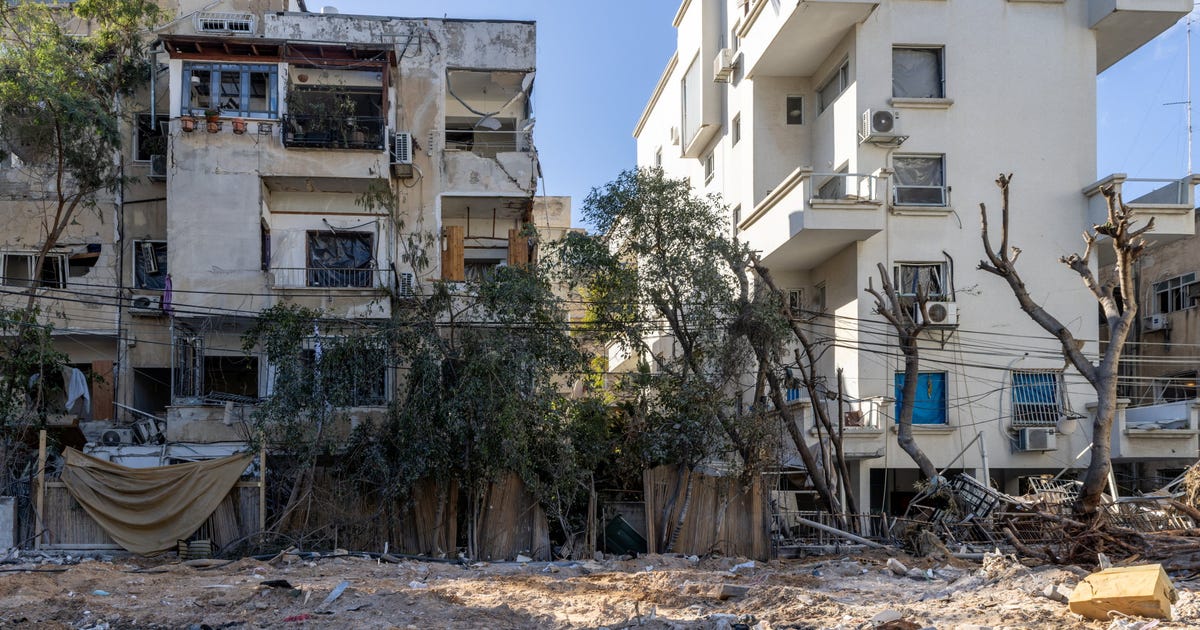
Recalling the first day of the war with Iran is still traumatic for journalist and activist Anat Saragusti, whose apartment building in central Tel Aviv began to shake as she ran to seek shelter from Iranian missiles targeting the city following the U.S.-Israel attack that morning.
“I didn’t believe my eyes,” she says of what awaited her when she returned. “The whole living room was covered with broken glass – the carpets, the sofa, the chairs – all over. It was really so scary.” The missile that damaged Saragusti’s home killed one woman and turned several apartment buildings into rubble.
Matching the shattering of the glass in her home, said Saragusti, who monitors press freedom at the Union of Journalists in Israel, is the ongoing shattering of her trust in Prime Minister Benjamin Netanyahu’s government as the war continues, and her dissatisfaction with what she views as an overly-compliant media.
Most Israelis, Saragusti said on the Haaretz Podcast, are “glued to television screens” where retired IDF generals spout military facts and statistics. “There is no room for alternative voices, questions or doubts” regarding the war and “what the end game will be.”
“They promised us in the last war in Iran in June that we destroyed the majority of the infrastructure for the ballistic missiles and the nuclear plan of Iran. Then in nine months, [Iran rebuilt] everything from scratch? I don’t understand that. I feel that they are lying to us.”