
If you are eating your toast and marmalade, set your slice aside now. I’m going to tell you a gory story. To better understand the horses he painted, George Stubbs set out to really get under their skin. Stubbs, born in 1724, was the son of a currier. His father cleaned, scraped and stretched the leather that came from the tanners and the young Stubbs was practical, unsqueamish and almost unseemly in his fascination for what lies beneath.
In his early thirties, he worked for 18 months in an isolated farmhouse in Lincolnshire close to a tannery with a ready supply of dead horses. He devised hooks and pulleys for puppeteering the carcasses into lifelike attitudes, before flaying layers of skin, stripping muscles, getting down to bare bones. He worked on each specimen for six to seven weeks — in one case for as many as 11. Vinegar may have arrested the worst of the decay, but it must have been putrid work.
There’s little gristle in the National Gallery’s new one-room show, which takes as its jumping off point one of the gallery’s most loved paintings — Stubbs’s Whistlejacket, a picture all the more marvellous for being unfinished. The rearing horse, unbridled, unridden is as handsome a symbol of the romantic spirit as any historian could wish.
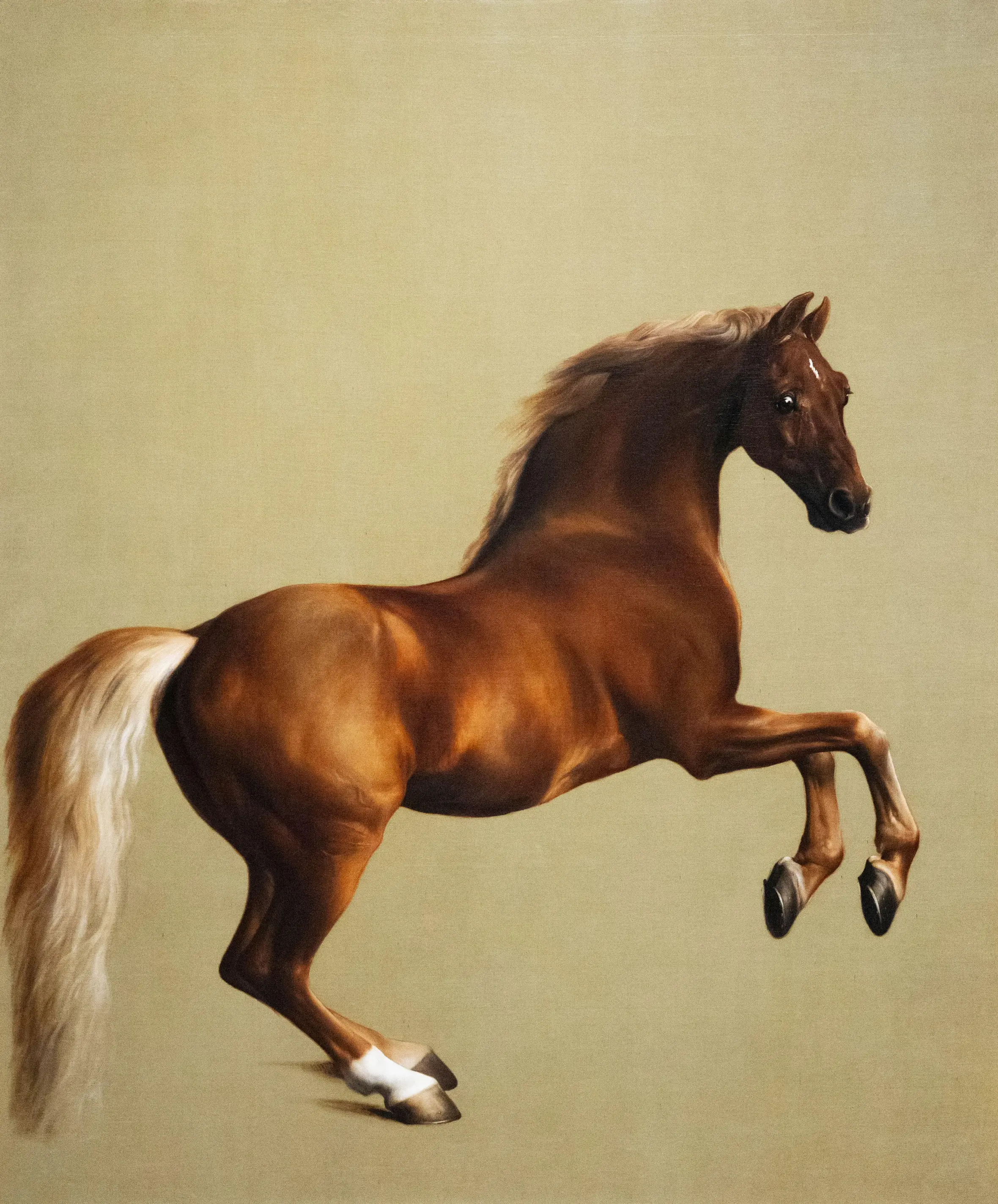 Whistlejacket by George Stubbs, c 1762Alamy
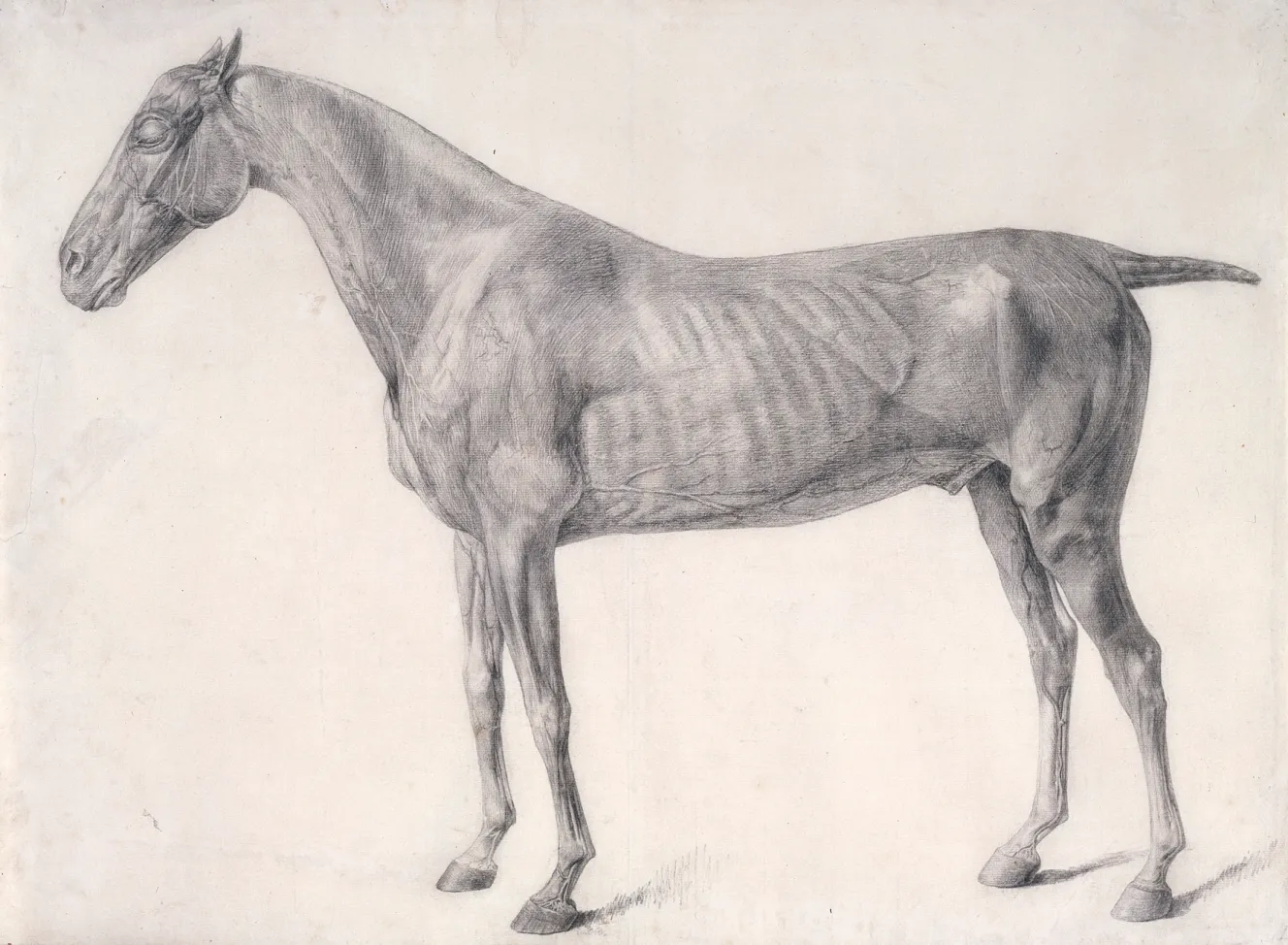 Stubbs studied, flayed and dissected horses to capture their form with uncanny fidelityThe National Gallery london
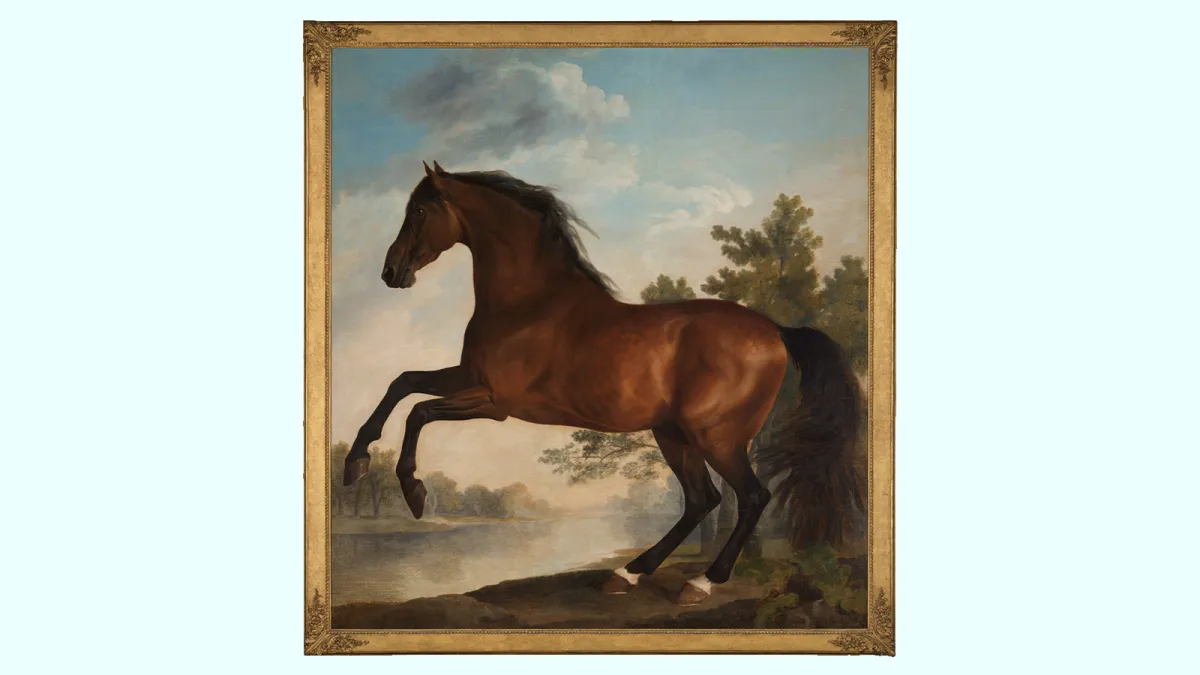
The Marquess of Rockingham, having commissioned Whistlejacket intending it for an equestrian portrait of George III, decided it could not be improved by either a landscape or rider and so commissioned Stubbs to begin work on a new horse — Scrub, a bay horse — as an alternative mount for the king. Again, the horse remained without a rider, though Scrub gained a rather indifferent landscape background. Scrub has been lent from a private collection and this is a rare opportunity to see it in public.
Scrub near enough repeats the Whistlejacket pose without quite pulling off the Whistlejacket trick. The mane and tail of Scrub are more cursory, less fully realised than Whistlejacket’s and the head less successful. You notice the clever twist of Whistlejacket’s head, which shows you almost both eyes. Scrub is a truer profile and more like a horse from a frieze than a living, breathing, rearing steed.
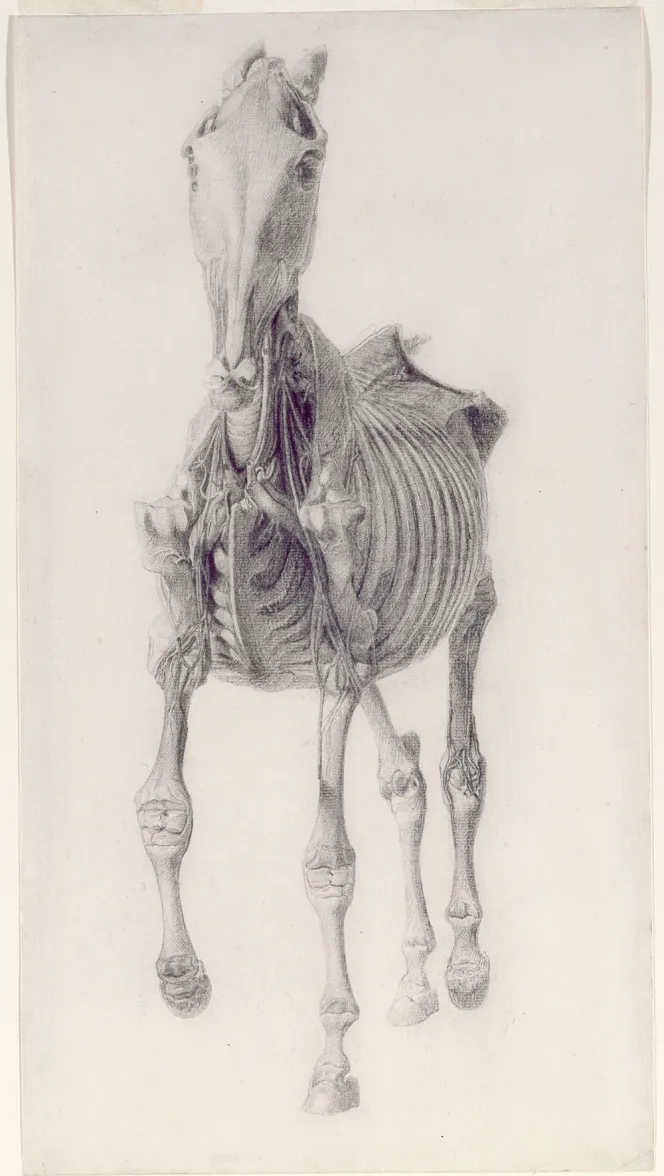 Stubbs’s anatomical drawings are ghostly and strangeThe National Gallery london
A display case of Stubbs’s anatomical drawings are ghostly and strange. Here are spectral stallions, every, nerve, tendon and sinew turned inside out. More of these, please, and less of the tidy parade-ground pictures on the opposite wall. This is a neat trot around the paddock. Where’s the knacker’s yard nastiness? You need the gory details to appreciate the uncanny fidelity of the paintings.
I admit I’m not a horsey person. I can admire a horse, I was once positive, if not passionate about ponies and I once lost £10 at Ascot on a horse named Zoffany. But I do thrill to 18th-century painting (hence betting on a Zoffany) and this is rather a polite, pony-club approach to an artist who married the marvellous and the macabre.
★★★☆☆
The exhibition runs Mar 12 to May 31 at the National Gallery, London, nationalgallery.org.uk