
Dozens of docked fishing trawlers and other vessels have been stranded as a result of Australia’s worsening fuel shortages, which some distributors have described as the worst they have seen.
Across the country, retailers have started rationing fuel or limiting sales to emergencies, while some towns, farmers and transport companies have been cut off completely.
Economists warn petrol prices nationwide could rise by 40 cents a litre in weeks, due to the impact on fuel supplies from the escalating conflict in the Middle East.
Iran war live updates: For the latest news on the Middle East crisis read our blog.
The fallout from the conflict has led officials to warn against panic buying.
Federal Energy Minister Chris Bowen has met representatives from the diesel and petrol industry to discuss the issue.
How the Middle East war spiked Australia’s fuel prices
“They have confirmed to me that every single contract is being honoured,” Mr Bowen said in Canberra.
“There has been a big spike in extra orders, over and above contracts — spot orders if you like, the spot market — and inevitably, when you’re seeing a huge increase in demand, they’re having trouble keeping up with that.
“This is not a supply problem.”
Spot market purchases are made by fuel distributors who do not have other business contracts with companies, such as those that operate service stations, to supply them fuel.
Loading
Danny Kreutzer, the founder of Queensland-based fuel transport company Westlink Petroleum, said his requests for fuel from Brisbane-based terminals to service his spot market clients were virtually cut off in the wake of the war in Iran.
“We were only getting 10 per cent of our usage,” he told the ABC.
“Eighty per cent of our business is farmers, transport operators [and] lot feeds.
“We’re just down to selecting who needs the fuel the most.
“I’m 59 years old. I’ve been in this business with my dad since I was 14 … and I’ve never seen it as bad as what it is right now.
“I’ve never been in a situation where I’ve had to park so many trucks up.”
Read more about the Iran war:
Mr Kreutzer said the 90 per cent reduction in his fuel supplies meant he lost about 405,000 litres of petrol a day.
He said it meant he only had enough to justify one truck transporting fuel while 37 others in Westlink’s transport fleet were at a standstill.
Long queues form at servos as fuel prices climb
Gretta Barton, co-founder of independent Bartranz Petroleum, has worked in the fuel distribution industry for 30 years.
She said wholesale fuel price spikes after the conflict in the Middle East began were the “worst” she had seen, “times by 100”.
“There’s been plenty of world events that have caused fuel prices to spike quickly, and normally Australia can ride it out,” she said.
“This situation is very different … We saw 40-cent hikes overnight by one of our suppliers.
“On an average week, not even a busy week, we would distribute 1 million litres of fuel. We can now only pick up 50,000 litres a day.”
Bartranz Petroleum distributes petrol to farmers, transport companies, fishing trawlers and companies that use heavy machinery.
ACCC watching fuel price hikes
Ms Barton said many of her clients could face financial ruin if the shortages persisted.
“We have trucks parked [and] when wheels don’t turn on a truck, it’s not good,” she said.
“If this were to continue much longer, the maths just doesn’t work. People are going to be completely out of fuel.
“You’ve got piggeries that, if they can’t fuel their generators, all the animals will die.
“We’ve got farmers needing to get crops out of the ground. They need fuel for their tractors … It’s hundreds of thousands of dollars [of crop lost].”
Debbie Gostelow, who owns a trucking and transport company in Far North Queensland, told ABC NewsRadio the shortages had raised significant concerns for her drivers.
“If we take these jobs, does it mean that we get 1,000 kilometres from home and not be able to fill up again?” she said.
“We’ve had truck drivers reporting … that some servos have stopped filling trucks. They can’t fill them to the brim — and we need that.
“We haven’t heard anything from anyone in government about whether there is security for our suppliers to make sure we can get home, to make sure we can get to the end of the job.
“Heaven help us if we’ve got a full load of cattle on and we get to one of our centres and they’re low on fuel.”
In Mooloolaba, on Queensland’s Sunshine Coast, the bowsers on fishing wharves are running empty.
Pavo Walker, CEO of wild-caught tuna and swordfish company Walker Seafoods, said this week’s haul could be the “last catch” for the foreseeable future.
“We’ve been informed that the three major fishing wharves at Mooloolaba have no fuel for us,” he said.
“There is no guarantee of any road tankers that are going to fill them up any time soon.”
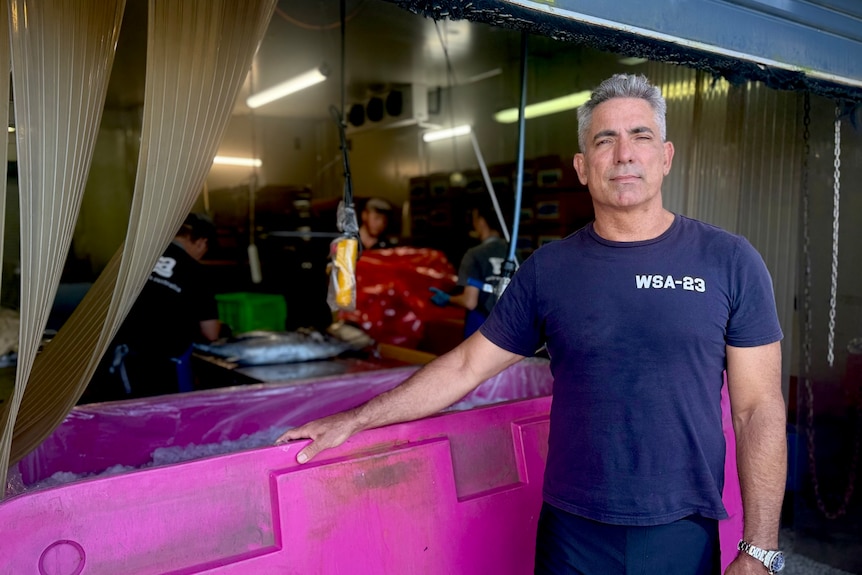
Pavo Walker from Walker Seafoods says he’s “extremely worried”. (ABC News: Jessica Ross)
He said his boats required 20,000 to 30,000 litres at a time to be able to fish in deep water.
“We can’t just go fishing 100 metres out the front of the break wall. We need 100 per cent of fuel to go fishing,” he said.
“I’m extremely worried. We’ve got 50 staff relying on the business. We have costs and loans and everything else.”
Mr Walker said ongoing shortages were likely to affect Easter seafood supplies.
“It’s all a bit of a disaster,” he said.
Expert analysis on the Middle East:
Veteran commercial fisherman Noel Cattell, who has worked Queensland waters for more than 50 years, said the situation operators were facing was unlike anything he had seen.
“This time I’m really worried. It’s looking grim,” he said.
His trawler burns hundreds of litres of fuel on a typical night at sea.
“Anywhere from 650 to 800 litres, if you do big nights,” he said.
“If the fuel price goes up to anywhere from $2.50 to $3 a litre, we are pretty well out of business for the time being.”
In Western Australia, farmers Jake and Emily Turner have stopped using machines on their farm in the state’s Wheatbelt, thanks to fuel shortages.
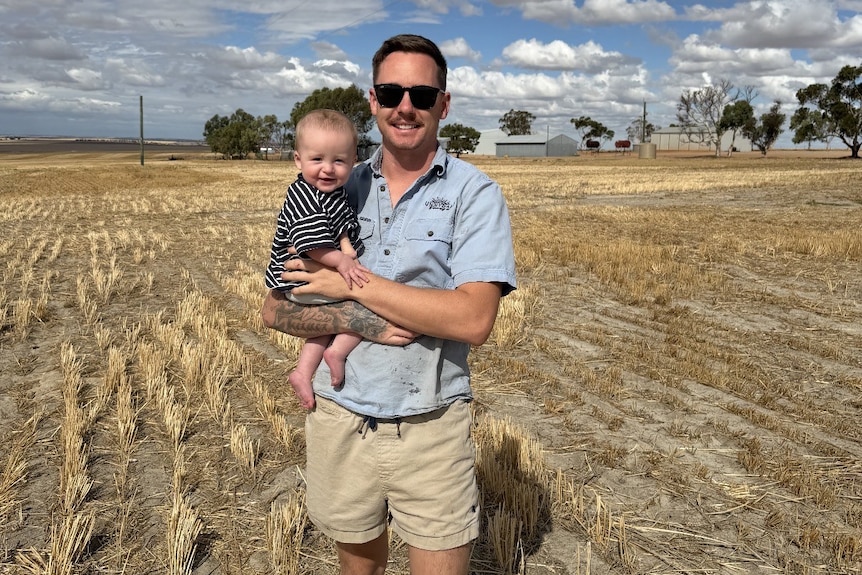
Jake Turner says his family has needed to stop using heavy machinery as a result of fuel shortages. (Supplied: Jake Turner)
Mr Turner said the farm, 50 kilometres west of Corrigin, has less than 500 litres of fuel left, and tractors used to prepare soil for seeding could use almost 200 litres of diesel an hour.
“We are normally spraying now. The sprayer is running seven days a week this time of year, getting ready for seeding and we are spreading lime as well,” Mr Turner said.
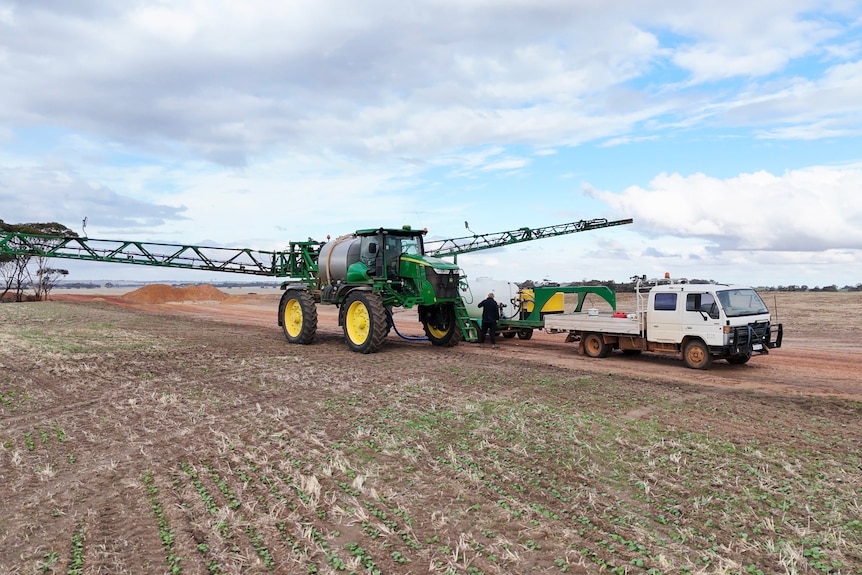
Fuel shortages are set to significantly impact WA’s crop preparations. (Supplied: Jake Turner)
Mr Turner ordered 20,000 litres of fuel two weeks ago. He received a phone call on Monday to let him know the delivery was at least two weeks away.
For all grain farmers, March is a crucial month for preparing paddocks for crops planted next month.
The Turners are anxious about the coming weeks.
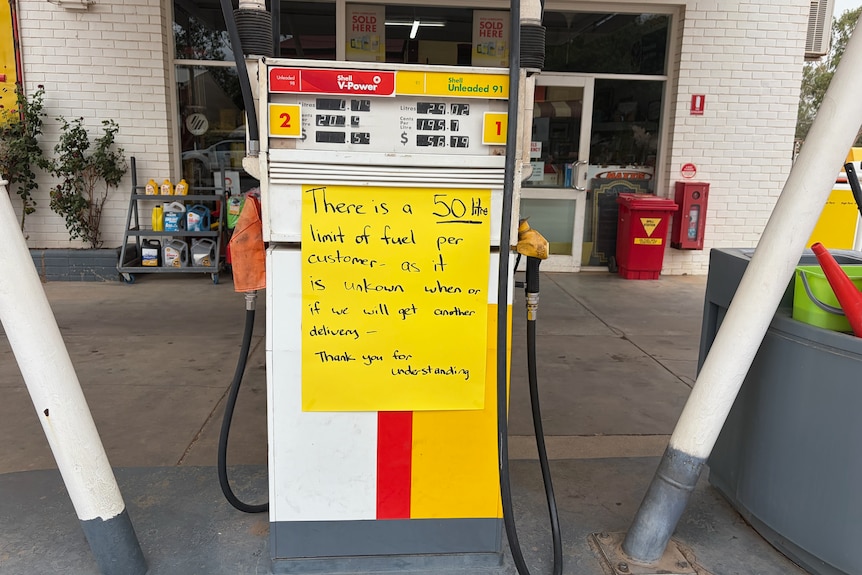
At a service station in York, in the WA’s Wheatbelt, customers are limited to 50 litres of fuel at a time. (ABC News: Mark Bennett)
“We are 10 days in [to the war] and we are feeling the impact. We have turned a farming operation off from front to back. There is no [adequate] fuel reserve,” Mr Turner said.
Digby Stretch, president of the Pastoralists and Graziers Association of Western Australia, said farmers across the state were reconsidering their grain pre-seeding programs due to diesel supply challenges.
“There’s a lot of angst, a lot of soul-searching going on as to how much we should do. Do we close up shop and save the fuel that’s in the tanks for seeding?” he said.
He said the situation should be a wake-up call for governments.
“It begs the question again and again: How in an energy-rich country like Australia are we not able to cushion ourselves from these geopolitical problems that come along?” he said.
Mr Kreutzer and Ms Barton contend their supplies were impacted by larger companies, such as BP and Ampol, refusing to release petrol stocks to distributors for fear of selling them at a loss due to global price spikes.
The ABC has contacted BP Australia and Ampol for comment.
Mr Kreutzer said the prices had increased dramatically at the start of the month.
“But you don’t know where the endgame is at the end of the month,” he said.
Ms Barton believed some of her clients would not survive financially another week without adequate petrol supplies.
“Farmers will stand to lose hundreds of thousands of dollars, transport companies will go under, the little independently owned service stations will go under,” she said.
“It is that bad.”
The Australian Competition and Consumer Commission (ACCC) is investigating local fuel prices and sales to determine if recent spikes are justified.
The watchdog has written to fuel companies requesting information about their fuel reserves and the prices they are charging.
ACCC deputy chair Mick Keogh said he wanted to know if there had been any illegal activity, like price gouging, or anti-competitive behaviour.
“We’re going to understand if those prices [in Australia] seem out of kilter with the sorts of international trends that we’re seeing,” he said.
Loading…