
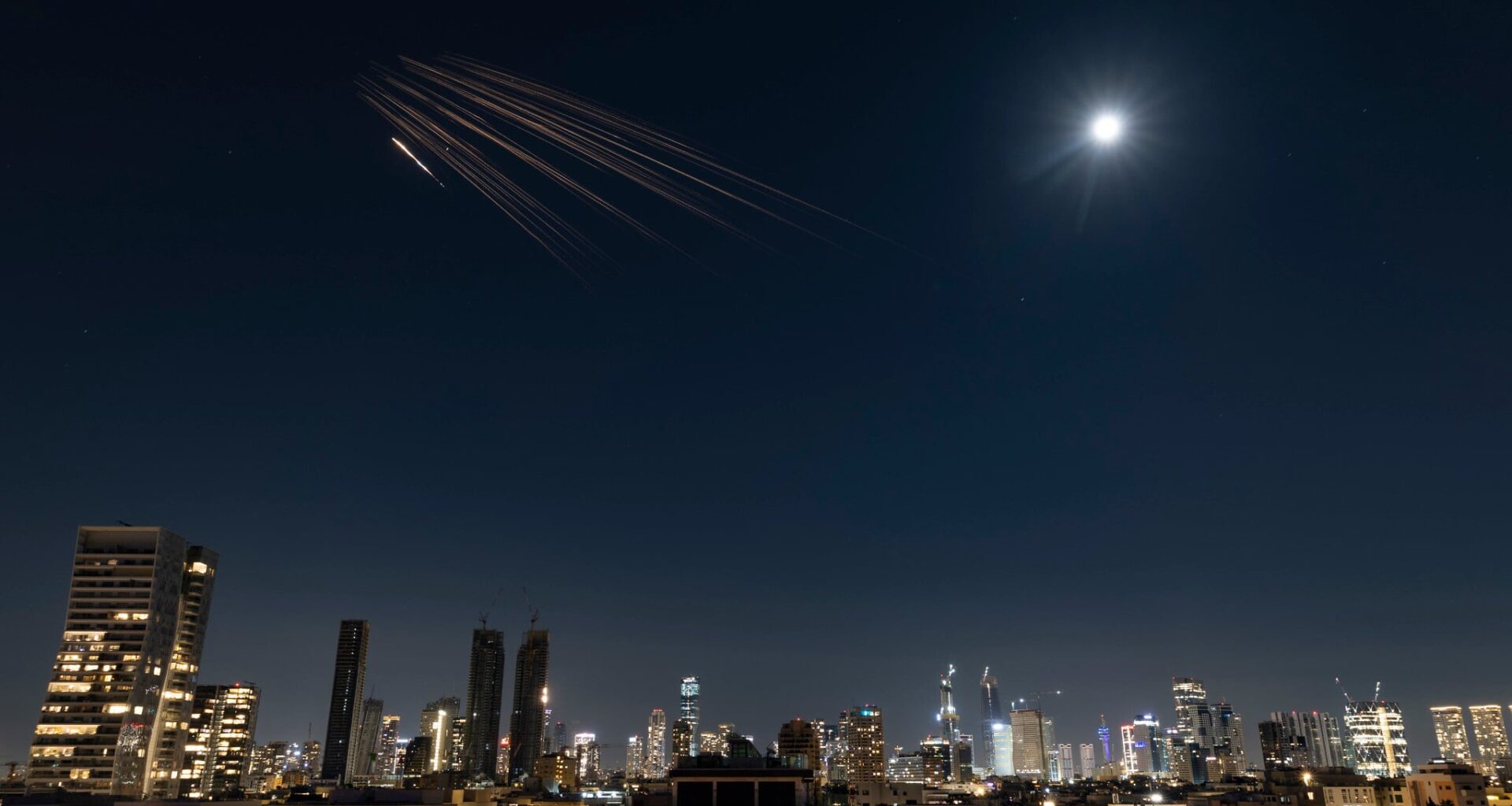
About half of the roughly 300 ballistic missiles Iran has launched at Israel in the current war carried cluster bomb warheads, according to Israel Defense Forces assessments published Tuesday, a day after the munitions killed two people and seriously wounded another in central Israel.
The data comes as Iran continues to fire missiles at Israel. On Tuesday, most of the missiles were intercepted, but one — carrying a large warhead — exploded in an open area outside Beit Shemesh, near Jerusalem, according to footage and first responders. No injuries were reported.
Cluster bomb warheads indiscriminately spread dozens of submunitions, each with several kilograms of explosives, over a radius of around 10 kilometers (6 miles).
The interception of such missiles has been effective but challenging, military officials said, stressing that Israel’s air defenses are not hermetic.
Iran also fired cluster munitions at Israel at least three times during the two countries’ 12-day war in June, Amnesty International has said, based on analysis of photos and videos, as well as media reports.
Get The Times of Israel’s Daily Edition
by email and never miss our top stories
By signing up, you agree to the terms
Use of the munitions is banned under the 2008 Convention on Cluster Munitions, whose over 100 signatories include much of Europe and Africa as well as the UK, Australia and Canada, but not Israel, Iran or the US.
No injuries are reported in Iran’s latest ballistic missile attack on Israel, the fourth today.
One missile struck an open area just outside Beit Shemesh, first responders say and footage shows.
Sirens had sounded across the Jerusalem area, the West Bank, and parts of southern… pic.twitter.com/j6sovAsDwz
— Emanuel (Mannie) Fabian (@manniefabian) March 10, 2026
The current war began on February 28 when the US and Israel launched a bombing campaign on Iran in a bid to topple its clerical leadership and destroy its nuclear and ballistic missile programs.
Iran has responded by launching hundreds of missiles and drones across the region, including at Israel. Iran’s strikes in Israel have killed 12 people and wounded over 2,000, according to health authorities.
The IDF Home Front Command says Iran’s missile fire at Israel has been aimed at population centers, along with military facilities and key infrastructure.
In recent days, the attacks have comprised just a small number of missiles at a time. The IDF believes Iran is struggling to carry out coordinated, larger barrages toward Israel.
On the first day of the war, some 90 ballistic missiles were fired toward Israel. The following day, the number dropped to around 60.
Over the following six days, roughly 20 missiles were fired each day in multiple salvos, each consisting of a small number of projectiles.
On Sunday and Monday, fewer than 20 missiles were launched on each day, also in small volleys or single missiles.
The IDF, meanwhile, reported that it has so far destroyed or disabled more than 300 Iranian ballistic missile launchers during strikes — about 60% of Iran’s total stockpile.
דקות ספורות לפני שיגור מאיראן: חיל האוויר איתר וחיסל חוליית שיגור ומנע ירי לעבר שטח מדינת ישראל
חיל האוויר זיהה אמש (ב’), מספר חיילים במערך הטילים הבליסטיים וכלי הטיס הבלתי מאוישים של משטר הטרור האיראני, בעת שפעלו במערב איראן ותכננו לשגר טילים לעבר מדינת ישראל.
מיד לאחר הזיהוי,… pic.twitter.com/wJxvYTQZya
— צבא ההגנה לישראל (@idfonline) March 10, 2026
On Tuesday, the Israeli Air Force said it struck an armed ballistic missile launcher in western Iran overnight and killed several Iranian soldiers minutes before they could attack Israel.
After the soldiers were identified, preparing to launch the missiles, an IAF drone was dispatched to the area and “destroyed the missile launcher, and then eliminated the launch team, minutes before they were set to fire at the State of Israel,” the military said, publishing footage of the strikes.
You appreciate our wartime journalism

You clearly find our careful reporting of the Iran war valuable, at a time when facts are often distorted and news coverage often lacks context.
Your support is essential to continue our work. We want to continue delivering the professional journalism you value, even as the demands on our newsroom have grown dramatically during this ongoing conflict.
So today, please consider joining our reader support group, The Times of Israel Community. For as little as $6 a month you’ll become our partners while enjoying The Times of Israel AD-FREE, as well as accessing exclusive content available only to Times of Israel Community members.
Thank you,
David Horovitz, Founding Editor of The Times of Israel