
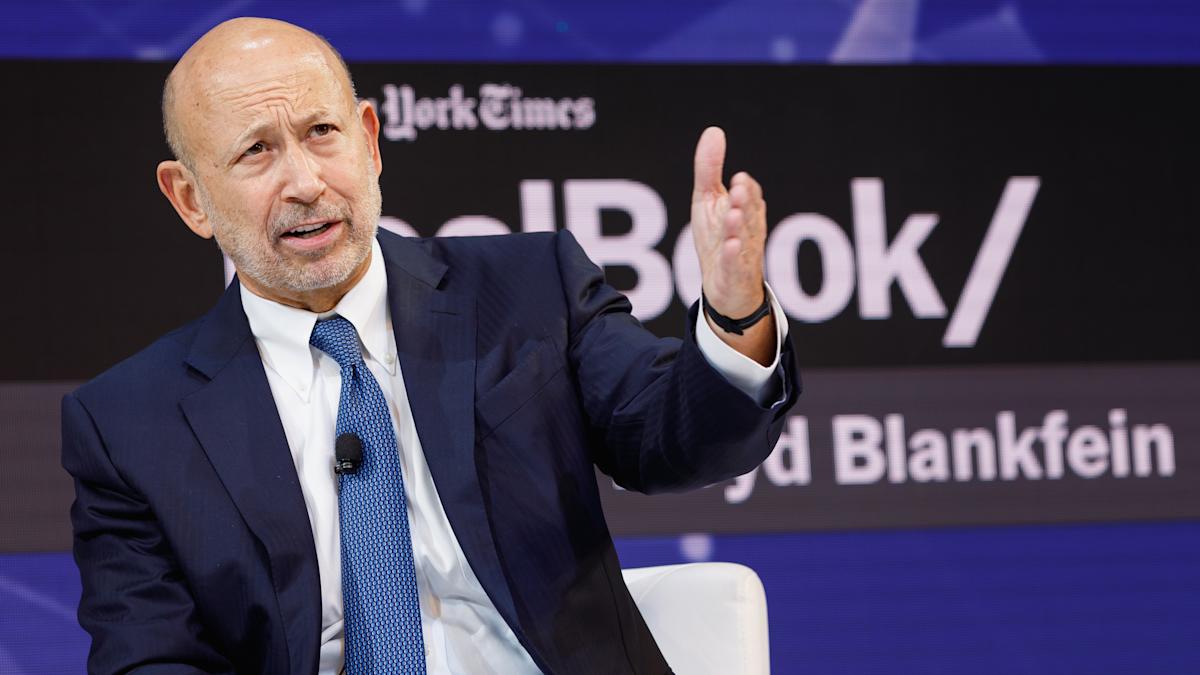
The man who steered Goldman Sachs through the last financial crisis thinks the next one may already be taking shape — and this time, your 401(k) could be caught in the crossfire.
Lloyd Blankfein, who ran Goldman Sachs from 2006 to 2018, sounded the alarm on the $1.8 trillion U.S. private credit market on a Bloomberg News podcast last week (1). These are direct loans outside public markets made by non-bank lenders — like asset managers, private equity firms and debt funds — to companies that can’t or won’t borrow from traditional banks.
The sector exploded after 2008, when tighter bank regulations created a lending vacuum. Fast forward nearly 18 years later and it’s become one of Wall Street’s favorite products. Blankfein, however, says the signs of excess are hard to ignore.
“It sort of smells like that kind of a moment again,” he told Bloomberg, referring to the run-up to the 2008 crisis. “I don’t feel the storm, but the horses are starting to whinny in the corral.”
In a separate interview, Blankfein sharpened the warning, stating we’re “due for a kind of a reckoning.”
“Everyone says, ‘Oh, the world’s not leveraged.’ That’s exactly what everybody said in the mortgage crisis, until you suddenly discover that there was a lot of mortgage risk in Iceland.”
Private credit has long been the domain of sophisticated institutional investors — think pension funds, endowments and sovereign wealth funds. They understood the risks: these loans are hard to value, rarely marked to market and often nearly impossible to sell in a downturn.
Losses don’t materialize overnight the way they did with Lehman Brothers, an American financial services firm that fell victim to the 2008 financial crisis and filed for bankruptcy that year (2). Instead, losses gradually surface and erode returns, hitting pension funds, insurers and retirement accounts slowly, over months or years.
The problem now is who’s holding the bag. In fact, Blankfein specifically called out Wall Street firms for pushing private credit toward everyday investors at exactly the wrong moment.
Story Continues
Last August, President Trump signed an executive order that opened 401(k) plans to alternative assets, including private credit and private equity (3). BlackRock, the world’s largest asset manager, announced plans to launch a 401(k) target-date fund in the first half of this year with a 5% to 20% private investments allocation (4).
Related: How to build a nest egg your grandkids will thank you for
But the underlying data is unsettling. As PYMNTS reports, the IMF’s Financial Stability Report found that by the end of 2024, more than 40% of private credit borrowers had negative free operating cash flow (5). These companies, which are surviving on lender forbearance and accounting flexibility, can’t seem to cover their costs from their own operations.
Blankfein isn’t the only one worried, as JPMorgan Chase CEO Jamie Dimon has been sounding the alarm over private credit since Q3 2025.
As Fortune reports, after JPMorgan wrote down $170 million on a private credit loan to auto-parts maker Tricolor (6), Dimon warned, “When you see one cockroach, there are probably more.”
By February this year, his “anxiety (was) high” about elevated asset prices, he told CNBC (7). And days before Blankfein’s podcast appearance aired, Dimon told Bloomberg he’d seen rivals doing “dumb things,” like boosting income through riskier loans (8).
Read More: The average net worth of Americans is a surprising $620,654. But it almost means nothing. Here’s the number that counts (and how to make it skyrocket)
In February, Blue Owl Capital permanently halted redemptions from one of the asset management company’s retail-focused debt funds (9), and shares fell nearly 6%. In light of this, the private credit downturn could already be happening.
“This is a canary in the coal mine,” Dan Rasmussen of Verdad Capital told CNBC. “The private markets bubble is finally starting to burst.”
One of the structural flaws with private market deals is that private credit funds make multi-year loan commitments while offering quarterly redemptions. When conditions turn and investors all want out at once, there’s no orderly exit. And if things go south, it’s retirees and policyholders who absorb the losses — not hedge fund managers.
Blankfein’s warning is that the system is complacent, and when something does eventually give, the losses will find whoever’s last in line. With 401(k)s now in the mix, that could mean you.
The slow-motion nature of a private credit unraveling is what makes it particularly dangerous for retirement savers. Unlike a stock market crash that shows up in your balance immediately, losses in private credit funds can be masked by infrequent valuations for months before they appear on a statement.
To protect your finances, check your 401(k) holdings for any allocation to private credit, alternative lending or business development company (BDC) funds — the vehicles that channel retail money into these loans.
Many target-date funds are beginning to include these exposures without making them obvious. If you’re within 10 years of retirement, the illiquidity risk is especially worth reviewing with a financial advisor, since you may not have the runway to wait out a multi-year collapse.
Join 250,000+ readers and get Moneywise’s best stories and exclusive interviews first — clear insights curated and delivered weekly. Subscribe now.
We rely only on vetted sources and credible third-party reporting. For details, see our editorial ethics and guidelines.
Bloomberg (1, 8); Economics Observatory (2); WhiteHouse.gov (3); CNBC (4, 7, 9); PYMNTS (5); Fortune (6).
This article provides information only and should not be construed as advice. It is provided without warranty of any kind.