
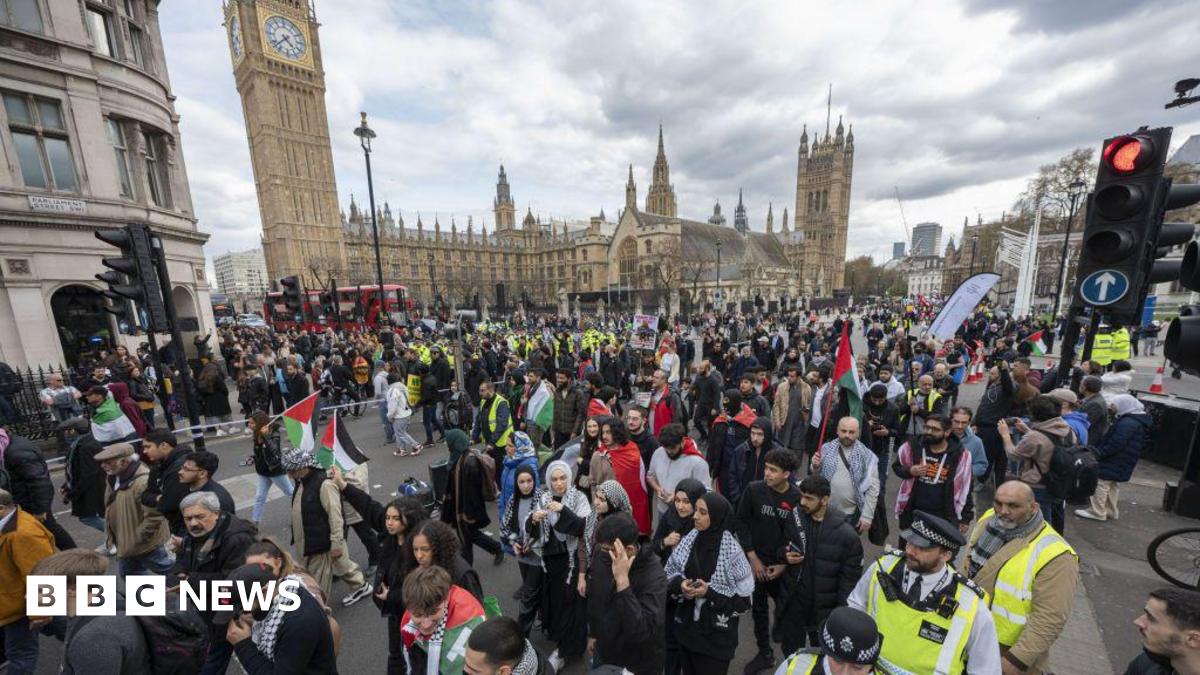
Faisal Bodi, of the Islamic Human Rights Commission, said a ban would mean a “sad day for freedom of expression”.
In a statement, Home Secretary Shabana Mahmood said: “I am satisfied doing so is necessary to prevent serious public disorder, due to the scale of the protest and multiple counter-protests, in the context of the ongoing conflict in the Middle East.
“Should a stationary demonstration proceed, the police will be able to apply strict conditions. I expect to see the full force of the law applied to anyone spreading hatred and division instead of exercising their right to peaceful protest.”
Later addressing the House of Commons, Mahmood told MPs she “reveres” the “precious” right to protest in the UK, and stressed this ban is “narrowly focused on specific circumstances in a unique moment”.
Shadow Home Secretary Chris Philp told the Commons that he supports the ban, but said he was also concerned about other events “lamenting the death of Ayatollah Khamenei” – the Iranian leader killed in US-Israeli strikes on Iran.
Met Police Commissioner Sir Mark Rowley told BBC London he recognises the right to protest and freedom of speech, but in this case intelligence assessments and professional judgement told them the protests and counter-protests were “creating such a risk of violence that those marches needed to be banned”.
The force said the ban applied to the Al Quds march and any associated counter-protest marches, and would be in place from 16:00 on Wednesday. It will last one month.
The Met described the Al Quds march as “uniquely contentious”, saying it originated in Iran and it is organised by a group “supportive of the Iranian regime”.
“This Al Quds march has got more tricky in recent years, its history is it’s a construct of the Khomeini regime in Iran, that creates a unique threat and provocation in the UK,” Sir Mark said.
“The counter protests are looking equally tricky, that’s why we’ve taken the unique step of going to the home secretary.”