The Trade Desk is testing whether advertisers can build campaigns on its platform using generative AI.
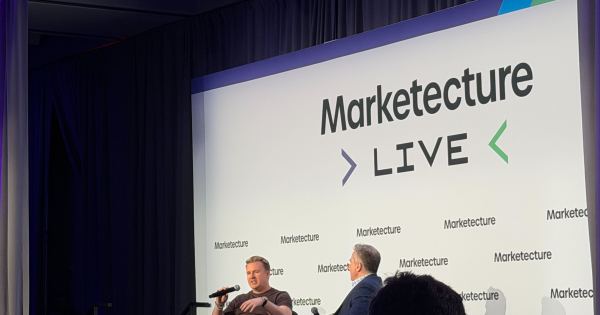
Speaking at Marketecture Live in New York City on Wednesday, CEO Jeff Green said the company is running a closed beta that allows some advertisers to create campaigns through Anthropic’s Claude—offering an early glimpse at how the company is exploring large language models to potentially reshape programmatic ad buying. Green stopped short of sharing further details about the test.
The effort follows The Trade Desk’s earnings last month, when Green hinted the company plans to launch an agentic AI framework for partners in 2026. At the panel, he argued programmatic advertising is especially well suited to automation given the scale and speed of campaign decisions.
“I don’t think that there is an industry in the world that is more conducive to AI than programmatic advertising,” Green said during a panel with Marketecture Media founder Ari Paparo. “We are looking at 20 million ad impression opportunities every single second, representing millions of ad campaigns and billions of users on the other side—and we have 10 milliseconds or less.”
Ad companies are in an arms race to deploy AI agents that could shake off old habits on building and managing campaigns. Rivals such as Amazon have already begun opening parts of their ad tech stack to AI agents, ADWEEK previously reported.

The Trade Desk’s efforts with Claude follow Green’s recent remarks suggesting that the company would gain access to chatbot inventory. While he did not confirm whether that includes AI chatbots such as ChatGPT, he also declined to comment on the company’s reported talks with OpenAI.
Instead, he suggested that the economics of generative AI will push many companies toward advertising as they search for sustainable revenue models.
“All of the AI companies have a serious problem,” Green said. “Their capex and valuations are massive, and they have really high expectations on the way that they’re going to make money.”
At the heart of the discussion was Amazon’s DSP offering. Green reiterated a view that has stirred debate across ad tech: that Amazon may eventually step back from operating a demand-side platform for the open internet.
The reason, he argued, is antitrust risk. Green pointed to Google’s ongoing regulatory battles as a cautionary tail, suggesting the company’s participation in open web ad tech has been the source of most of its legal troubles. Amazon, he added, has even more at stake because its advertising business intersects with retail, cloud infrastructure, and streaming video.
“It would be a strategic mistake for Amazon,” Green said. “Their role in the open internet will be shorter than Google’s, because of the macro impact on their business.”
Green also pointed to retail media as a major area of opportunity for programmatic platforms—even though The Trade Desk has yet to operate product listing ads at scale, he said. When pressed about whether agency groups such as Dentsu and WPP had moved away from OpenPath—a development previously reported by ADWEEK—Green declined to comment.