
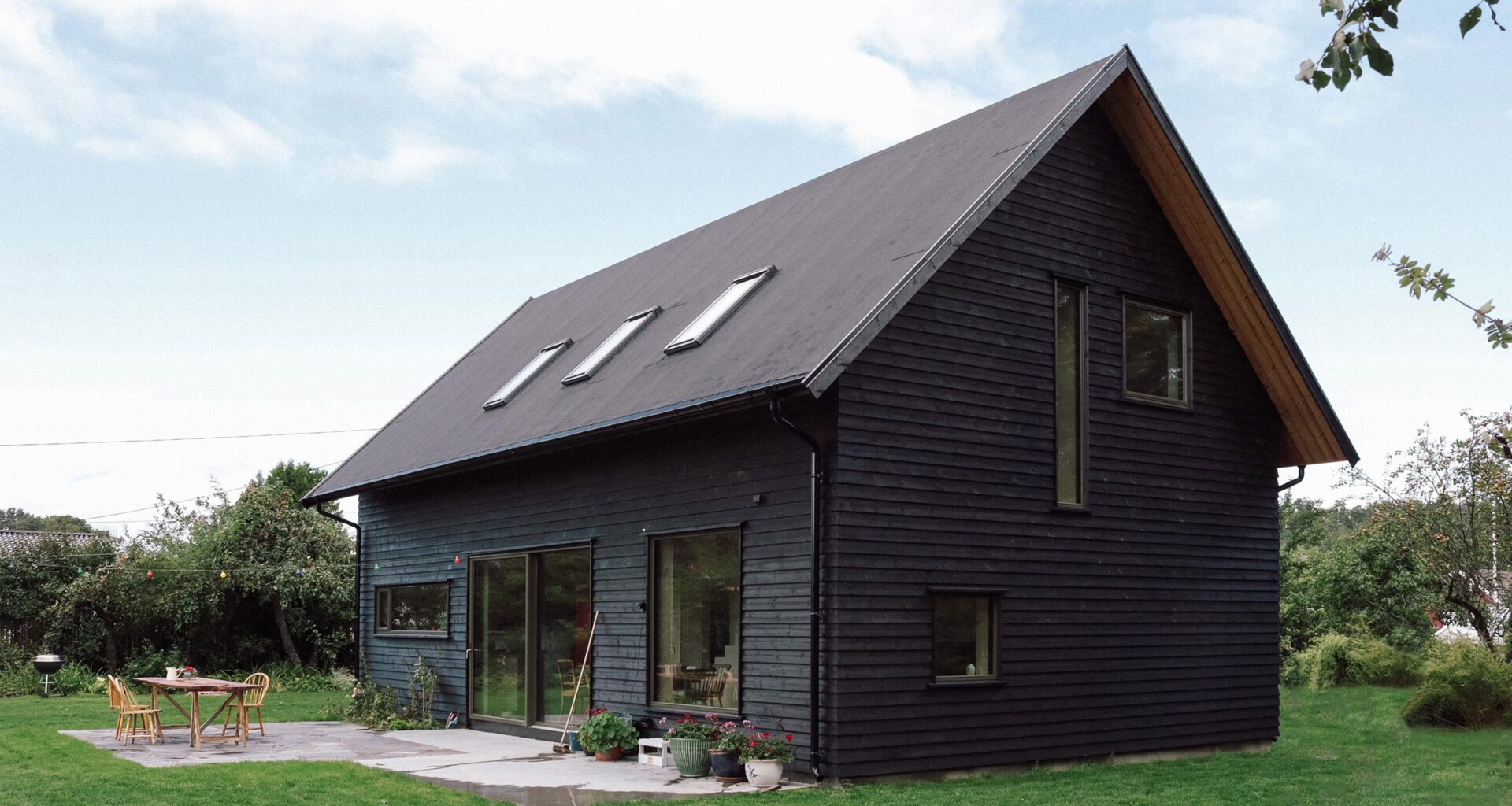
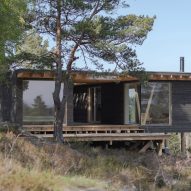
Local studio Waelgaard Salim Arkitekter has completed House Grimstad, a barn-like dwelling in Norway that contrasts black tar-stained timber cladding with warm interiors lined in spruce.
The 160-square-metre building was designed as a holiday home for a family of four on a site surrounded by fruit trees and farms on the outskirts of the town of Grimstad.
Working with a small footprint and a limited budget, Waelgaard Salim Arkitekter looked to demonstrate how a deliberately simple form and material palette can create generous, warm-feeling spaces.
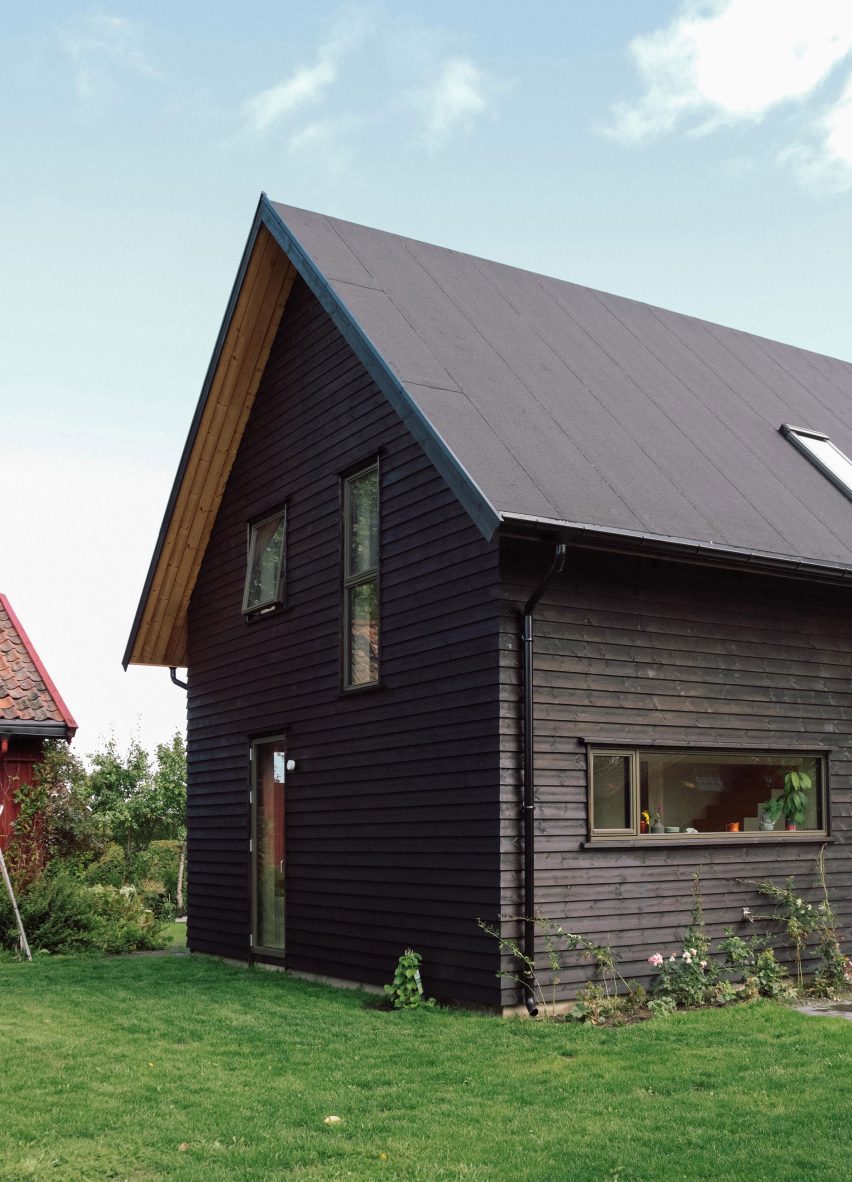 Waelgaard Salim Arkitekter has completed a holiday home in Norway
“The project began with a simple question: how little do we need to build in order to create a generous home?” founders Siri Waelgaard and Alexander Minge Salim told Dezeen.
“As a young practice, this project became a test of reduction. We asked ourselves how far we could simplify without losing generosity,” they added.
“We wanted to make a low-cost house that still feels rich, not through complexity, but through light, proportion and material presence.”
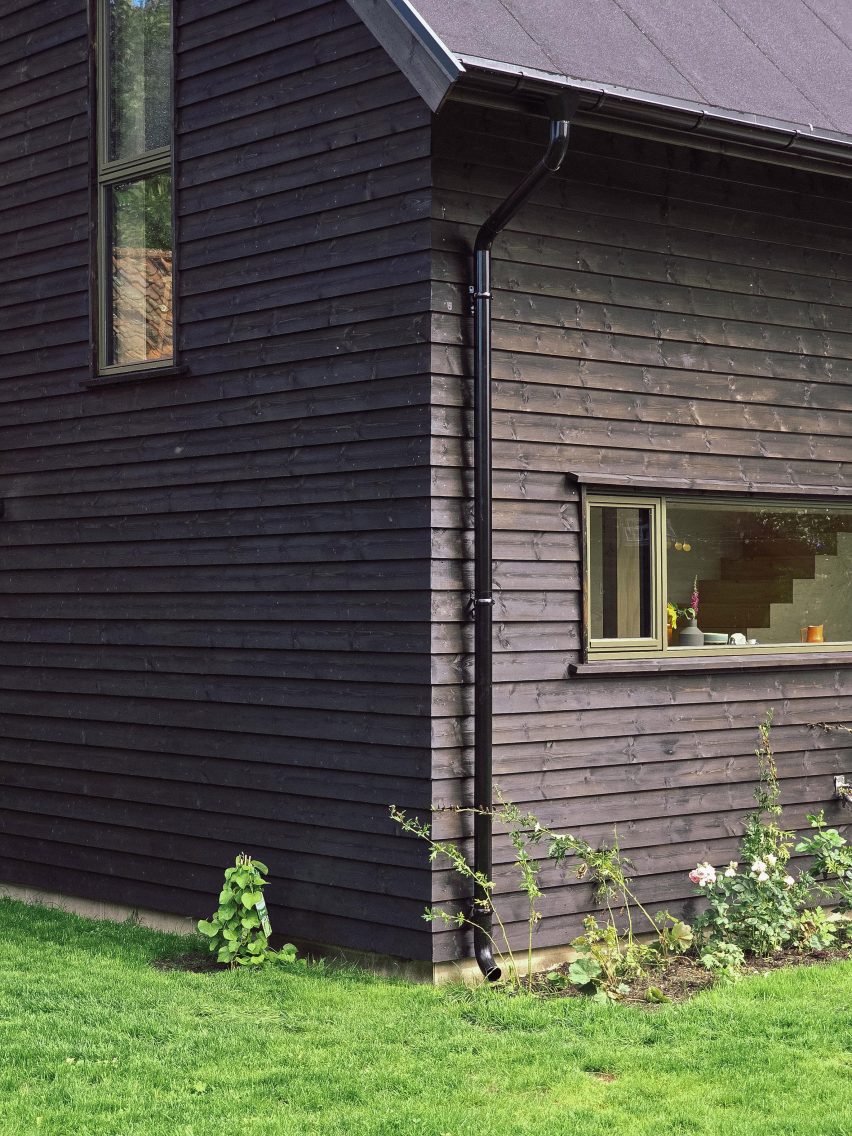 It is clad in tar-stained timber
Spread across two storeys, the home is divided into an open-plan ground floor containing living, dining, kitchen and study areas, and a more compartmentalised first floor housing bedrooms.
The U-shaped ground floor wraps a central, timber-lined stair and bathroom core, with a double-height dining space that is illuminated by a skylight and opens onto a garden terrace.
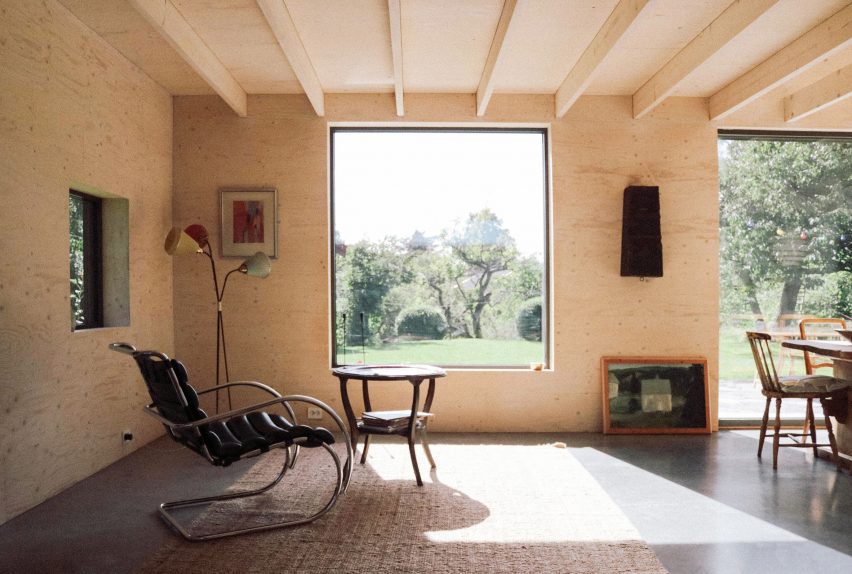 Spruce plywood lines the interior
Strategically-placed windows of different sizes ensure each space has a relationship to the surrounding garden, ranging from a horizontal window in the kitchen, a large square opening for a reading corner and a tall, skinny window on the landing.
The glue-laminated timber (glulam) structure has been left exposed throughout the interiors of House in Grimstad, accompanied by walls and ceilings lined entirely in spruce ergoboard.
Erling Berg creates I/O Cabin as a summer house for “inside-outside” living
While often covered, this exposed boarding was chosen as a cost-effective way to create a warm atmosphere and as a material that a single carpenter could easily handle during construction.
Externally, the pale tone of these boards is contrasted by planks of dark, tar-stained heartwood pine that will weather over time.
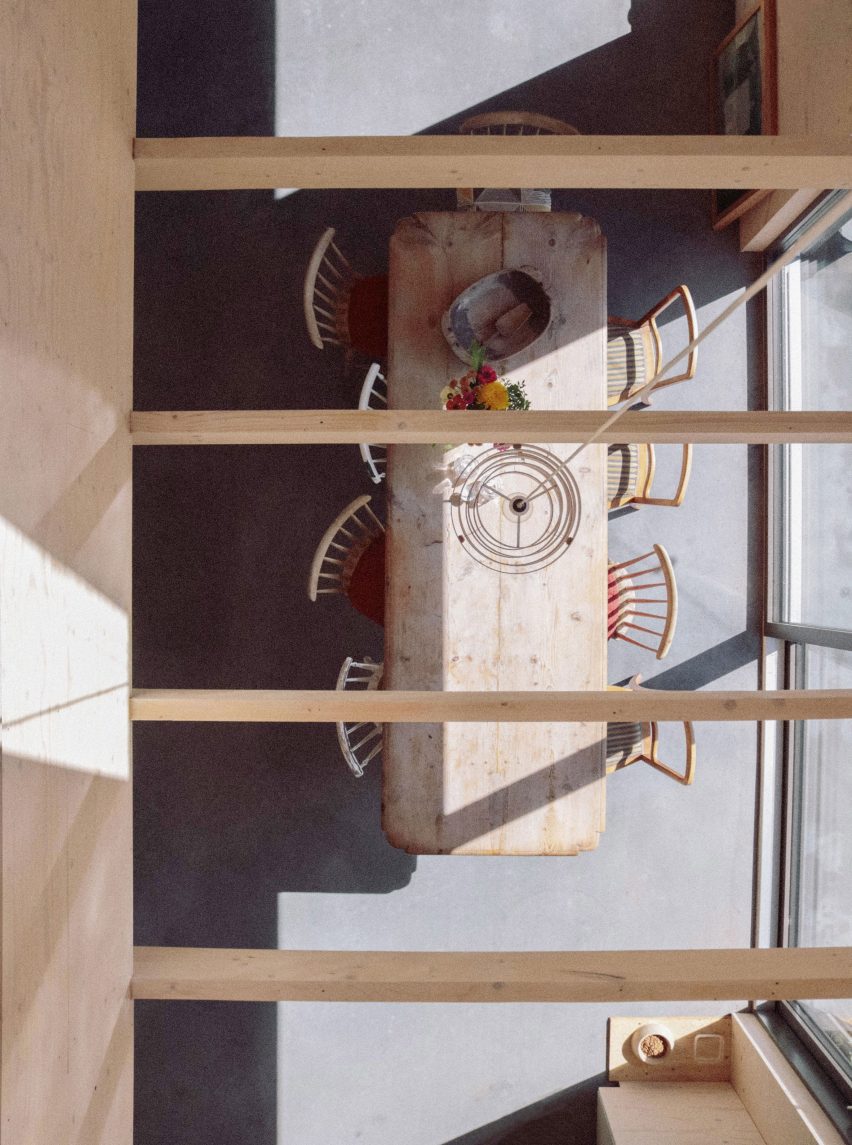 Living and dining areas are held on the ground floor
Concrete floors were used on the home’s ground floor and solid pine boards for the first floor, while the roof is topped with asphalt rolls.
“The intention was to use materials that are strong, natural and able to withstand time without constant maintenance,” said Waelgaard and Salim.
“We tried to avoid layered finishes and instead allowed the construction to remain visible,” they added. “Aging is not something to resist, but something to welcome.”
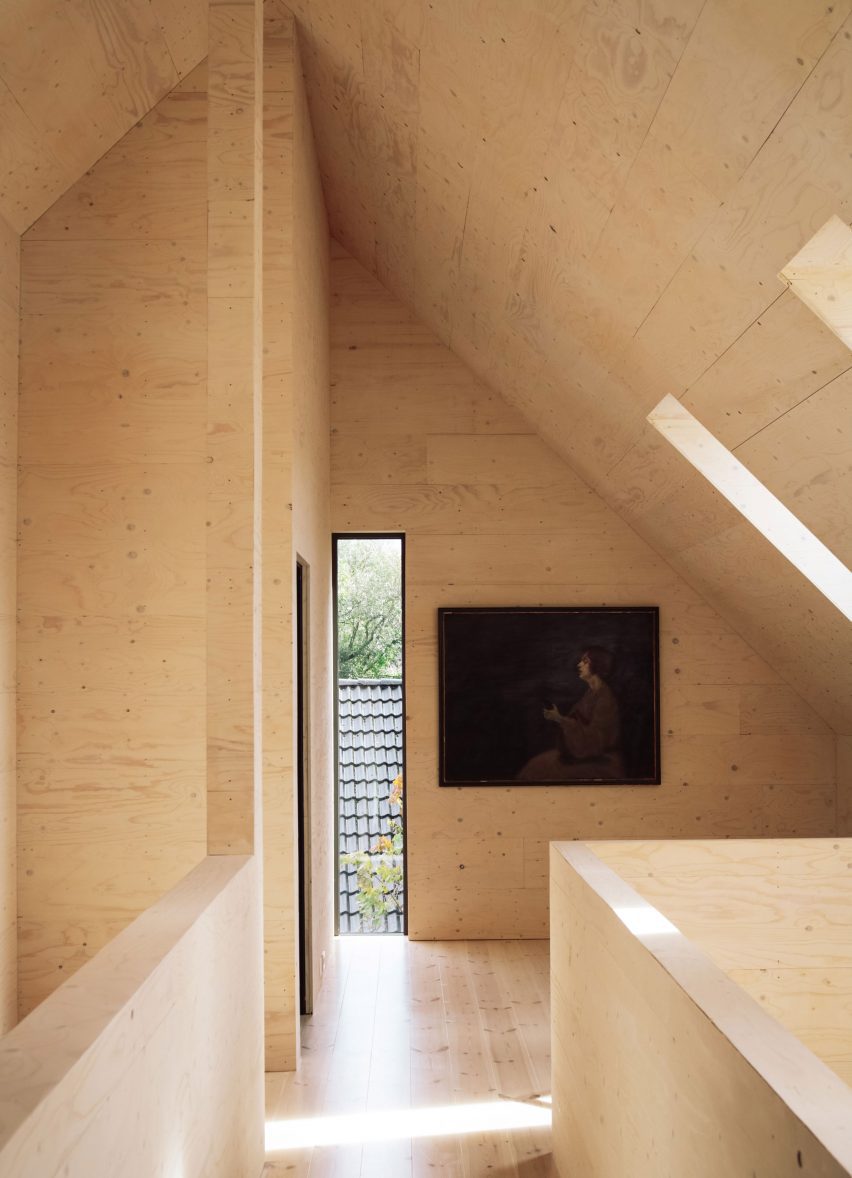 The bedrooms are contained on the upper floor
Elsewhere in Norway, architecture practice Rever & Drage recently expanded a traditional red-painted home in Raelingen, using a matching red palette of timber, brick and steel, and Rabagast Studio created Watercave, a timber sauna that floats on a lake.
The photography is courtesy of Waelgaard Salim Architects.